Chapter VII. Oliver Cowdery
Life of Joseph the Prophet, pp. 34 to 44
His Introduction to the Family. A Revelation to him and Joseph. His Historic Importance. A Revelation that John tie Beloved never tasted Death. John the_Baptist appears to Joseph and Obver and confers on them the Aaronic Priesthood.
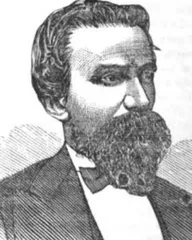
At about this time there came to the help of the work the personage who above all others sustained the most peculiar relation to the Prophet at the opening of the dispensation. It was Oliver Cowdery, the man who became the scribe and chief witness of the Book of Mormon, and who with Joseph received the priesthood under the hands of John the Baptist.
" On the 15th day of April, 1829, Oliver Cowdery came to my house, until which time I had never seen him. He stated to me that having been teaching school where my father resided, and my father being one of those who sent to school, he went to board for a season at his house, and while there, the family related to him the circumstance of my having received the plates, and accordingly he had come to make enquiries of me.
" Two days after the arrival of Mr. Cowdery, I commenced to translate the Book of Mormon, and he commenced to write for me, which having continued for some time, I enquired of the Lord through the Urim and Thummim, and obtained the following revelation :
1. A great and marvelous work is about to come forth unto the children of men. Behold, I am God, and give heed unto my word, which is quick and powerful, sharper than a two-edged sword, to the dividing asunder of both joints and marrow ; therefore give heed unto my words.
2. Behold the field is white already to harvest, therefore whoso desireth to reap, let him thrust in his sickle with his might, and reap while the day lasts, that he may treasure up for his soul everlasting salvation in the kingdom of God : yea, whosoever will thrust in his sickle and reap, the same is called of God ; therefore, if you will ask of me you shall receive ; if you will knock it shall be opened unto you.
3. Now, as you have asked, behold, I say unto you, keep my commandments, and seek to bring forth and establish the cause of Zion, seek not for riches but for wisdom, and behold, the mysteries of God shall be unfolded unto you, and then shall you be made rich. Behold, he that hath eternal life is rich.
4. Verily, verily, I say unto you, even as you desire of me, so it shall be unto you ; and if you desire, you shall be the means of doing much good in this generation. Say nothing but repentance unto this generation: keep my commandments, and assist to bring forth my work, according to my commandments, and you shall be blessed.
5. Behold thou hast a gift, and blessed art thou because of thy gift. Remember it is sacred and
cometh from above : and if thou wilt 'inquire, thou shalt know mysteries which are great and marvelous: therefore thou shalt exercise thy gift, that thou mayest find out mysteries, that thou mayest bring many to the knowledge of the truth ; yea, convince them of the error of their ways. Make not thy gift known to any, save it be those who are of thy faith. Trifle not with sacred things. If thou wilt do good, yea, and hold out faithful to the end, thou shalt be saved in the kingdom of God, which is the greatest of all the gifts of God ; for there is no gift greater than the gift of salvation.
6. Verily, verily, I say unto thee, blessed art thou for what thou hast done, for thou hast inquired of me, and behold as often as thou hast inquired, thou hast received instruction of my Spirit. If it had not been so, thou wouldst not have come to the place where thou art at this time.
7. Behold thou knowest that thou hast inquired of me, and I did enlighten thy mind ; and now I tell thee these things, that thou mayest know that thou hast been enlightened by the Spirit of truth ; yea, I tell thee, that thou mayest know that there is none else save God, that knowest thy thoughts and the intents of thy heart : I tell thee these things as a witness unto thee, that the words or the work which thou hast been writing is true.
8. Therefore be diligent, stand by my servant Joseph faithfully, in whatsoever difficult circumstances he may be for the word's sake. Admonish him in his faults, and also receive admonition of him. Be patient ; be sober; be temperate ; have patience, faith, hope and charity.
9. Behold, thou art Oliver, and I have spoken unto thee because of thy desires ; therefore treasure up these words in thy heart. Be faithful and diligent in keeping the commandments of God, and I will encircle thee in the arms of my love.
10. Behold, I am Jesus Christ, the son of God. I am the same that came unto my own, and my own received me not. I am the light which shineth in darkness, and the darkness comprehendeth it not.
ii. Verily, verily, I say unto you, if you desire a further witness, cast your mind upon the night that you cried unto me in your heart, that you might know concerning the truth of these things. Did I not speak peace to your mind concerning the matter? What greater witness can you have than from God? And now, behold, you have received a witness, for if I have told you things which no man knoweth, have you not received a witness ? And, behold, I grant unto you a gift, if you desire of me, to translate even as my servant Joseph.
12. Verily, verily, I say unto you, that there are records which contain much of my gospel, which have been kept back because of the wickedness of the people; and now I command you, that if you have good desires — a desire to lay up treasures for yourself in heaven — then shall you assist in bringing to light, with your gift, those parts of my scriptures which have been hidden because of iniquity.
13. And now, behold, I give unto you, and also unto my servant Joseph, the keys of this gift, which shall bring to light this ministry; and in the mouth of two or three witnesses shall every word be established.
14. Verily, verily, I say unto you, if they reject my words, and this part of my gospel and ministry, blessed are ye, for they can do no more unto you than unto me ; and if they do unto you, even as they have done unto me, blessed are ye, for you shall dwell with me in glory; but if they reject not my words, which shall be established by the testimony which shall be given, blessed are they, and then shall ye have joy in the fruit of your labors.
15. Verily, verily, I say unto you, as I said unto
my disciples, where two or three are gathered together in my name, as touching one thing, behold, there will I be in the midst of them, even so am I in the midst of you. Fear not to do good, my sons, for whatsoever ye sow, that shall ye also reap ; therefore if ye sow good, ye shall also reap good for your reward.
16. Therefore, fear not, little flock, do good ; let earth and hell combine against you, for if ye are built upon my rock, they cannot prevail. Behold, I do not condemn you, go your ways and sin no more, perform with soberness the work which I have commanded you; look unto me in every thought ; doubt not, fear not; behold the wounds which pierced my side, and also the prints of the nails in my hands and feet; be faithful, keep my commandments, and ye shall inherit the kingdom of heaven. Amen.
The historic importance of this revelation is worthy of note, for it is substantially Joseph's first manifesto, as a prophet, that a " great and marvelous work" is "about to come forth unto the children of men." Personally addressed to Oliver Cowdery, yet did the subject matter concern the whole world. The rise of the Latter-day Church is now clearly announced, and the promise established in the ministry of Joseph and Oliver, who were afterwards classed by revelation as the first and second elders of the church. There is also an historic value in the emphasis of this association, as it corrects that wide-spread, but radically false, statement that it was Joseph and Sidney Rigdon who devised what some have pleased to term "the scheme of Mormonism." This statement is found in all our popular encyclopedias, and yet there is a well-defined Mormon
history, personally known to thousands, dating back years before Sidney Rigdon and Joseph ever met. The circumstantial narrative of Oliver Cowdery's first intercourse with Joseph is, therefore, very necessary to the integrity of history. It is thus told by the mother of the Prophet:
"In April, [1829] Samuel and Mr. Cowdery set out for Pennsylvania. The weather, for some time previous, had been very wet and disagreeable — raining, freezing, and thawing alternately, which had rendered the roads almost impassable, particularly in the middle of the day. Notwithstanding, Mr. Cowdery was not to be detained, either by wind or weather, and they persevered until they arrived at Joseph's.
"Joseph had been so hurried with his secular affairs, that he could not proceed with his spiritual concerns as fast as was necessary for the speedy completion of the work. There was also another disadvantage under which he labored: his wife had so much of her time taken up with the care of her house, that she could write for him but a small portion of the time. On account of these embarrassments, Joseph called upon the Lord, three days prior to the arrival of Samuel and Oliver, to send him a scribe, according to the promise of the angel, and he was informed that the same should be forthcoming in a few days. Accordingly, when Mr. Cowdery told him the business that he had come upon, Joseph was not at all surprised.
Here is a connecting passage from Joseph himself, which will complete the account of the introduction of Oliver Cowdery to the Prophet and his family:
" After we had received this revelation [as previously quoted], he (Oliver Cowdery) stated to me that after he had gone to my father's to board, and after the family communicated to him concerning my having got the plates, that one night after he had retired to bed he called upon the Lord to know if these things were so, and that the Lord manifested to him that they were true, but that he had kept the circumstance entirely secret, and had mentioned it to no being; so that after this revelation having been given he knew that the work was true, because that no being living knew of the thing alluded to in the revelation, but God and himself."
There was a prophet-like boldness about Joseph that at least must astonish the intellectual skeptic, even as it charms the reverent disciple. And at no period of his life was this more striking than between his fourteenth and twenty-fourth year, when he was almost entirely unlettered, with no teacher but the angel, or, to put the most skeptical construction, with no other inspirer than his own daring genius. Till Oliver Cowdery came he had no adequate communion of thought with mortal, and even then Oliver was but the scribe and Joseph as the archangel of a dispensation, — being already familiar with the knowledge of the eternities, or at least holding in his hands a key to unlock the mysteries of the heavens. A case illustrative of this occurred at the very opening of the intercourse between Joseph and his scribe. He says:
" During the month of April I continued to translate, and he to write, with little cessation, during
which time we received several revelations. A difference of opinion arising between us about the account of John the Apostle, mentioned in the New Testament (John, xxi-v, 22), whether he died or continued, we mutually agreed to settle it by the Urim and Thummim, and the following is the word which we received :
1. And the Lord said unto me, John, my beloved, what desirest thou ? For if ye shall ask, what you will, it shall be granted unto you. And I said unto him, Lord, give unto me power over death, that I may live and bring souls unto thee. And the Lord said unto me, Verily, verily, I say unto thee, because thou desirest this thou shalt tarry until I come in my glory, and shalt prophesy before nations, kindred, tongues, and people.
2. And for this cause the Lord said unto Peter, If I will that he tarry till I come, what is that to thee? for he desired of me that he might bring souls unto me, but thou desiredst that thou mightest speedily come unto me in my kingdom. I say unto thee, Peter, this was a good desire, but my beloved has desired that he might do more, or a greater work yet among men than what he has before done ; yea, he has undertaken a greater work, therefore I will make him as naming fire and a ministering angel : he shall minister for those who shall be heirs of salvation who dwell on the earth : and I will make thee to minister for him and for thy brother James ; and unto you three I will give this power and the keys of this ministry until I come.
3. Verily, I say unto you, ye shall both have according to your desires, for ye both joy in that which ye have desired.
This is the revelation that originated the view of
the church that John the Revelator never tasted death. It was also afterwards discovered by Joseph and Oliver, in their work of translating the Book of Mormon, that there were three Nephites who received the same extraordinary promise that they should tarry until the second coming of the Lord, performing a peculiar ministry among the nations, moving at their will, unknown except to a few chosen ones to whom they might reveal themselves. We shall meet these "three Nephites" hereafter.
As the history of Joseph's ministry and work opens to the view he will be seen to rise from the mere translator of a sacred book to his character as Prophet of a new dispensation, and founder of the Church of Jesus Christ of Latter-day Saints. Already the Ancients of the East as well as the West — Apostles and Prophets of dispensations — are fast coming with their keys of power and authority into his ministry. The Book of Mormon is but the initial. This Prophet is raising a mighty structure, with the keystones of all the ages, and it is very important, for a comprehension of his character and mission, that this view of him should be taken from the beginning. Immediately is to follow a grand illustration of this, for John the Baptist appears, to confer the keys of his ministry, bringing also a promise of the coming of Peter, James, and John the Revelator, with the keys of the priesthood of Melchisedeck. The Prophet narrates:
" We still continued the work of translation when, in the ensuing month (May, 1829), we on a certain day went into the woods to pray and enquire of the Lord respecting baptism for the remission of sins,
as we found mentioned in the translation of the plates. While we were thus employed, praying and calling upon the Lord, a messenger from heaven descended in a cloud of light, and having laid his hands upon us, he ordained us, saying unto us, ' Upon you my fellow-servants, in the name of Messiah, I confer the priesthood of Aaron, which holds the keys of the ministering of angels, and of the gospel of repentance, and of baptism by immersion, for the remission of sins ; and this shall never be taken again from the earth, until the sons of Levi do offer again an offering unto the Lord in righteousness.' He said this Aaronic priesthood had not the power of laying on of hands for the gift of the Holy Ghost, but that this should be conferred on us hereafter, and he commanded us to go and be baptized, and gave us directions that I should baptize Oliver Cowdery, and afterwards that he should baptize me.
" Accordingly, we went and were baptized; I baptized him first, and afterwards he baptized me; after which I laid my hands upon his head and ordained him to the Aaronic priesthood ; afterwards he laid his hands on me and ordained me to the same priesthood — for so we were commanded.
" The messenger who visited us on this occasion, and conferred this priesthood upon us, said that his name was John, the same that is called John the Baptist in the New Testament, and that he acted under the direction of Peter, James, and John, who held the keys of the priesthood of Melchisedeck, which priesthood he said should in due time be conferred on us, and that I should be called the first
elder and he the second. It was on the 15th day of May, 1829, that we were baptized, and ordained under the hand of the messenger.
" Immediately on our coming up out of the water, after we had been baptized, we experienced great and glorious blessings from our Heavenly Father. No sooner had I baptized Oliver Cowdery than the Holy Ghost fell upon him, and he stood up and prophesied many things which should shortly come to pass. And again, as soon as I had been baptized by him, I also had the spirit of prophecy, when, standing up, I prophesied concerning the rise of the Church, and many other things connected with the Church and this generation of the children of men. We were filled with the Holy Ghost, and rejoiced in the God of our salvation."