Chapter XVII. The Two Covenants
Life of Joseph the Prophet, pp. 203 to 210
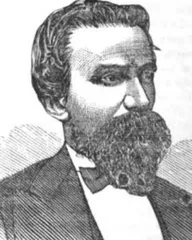
The Dispensation of Abraham not done away in Christ. The Eternal Plan in its Fullness. Mormonism Harmonizing the Gospel Themes of the Ages. The Gospel of Christ known unto Moses and the Ancients. Its Fullness Revealed through Joseph.
JOSEPH.
Elias appeared, and committed the dispensation of the gospel of Abraham. — Vision of "Joseph in the temple.
There are two Covenants ! The one is in Abraham, the Father of the Faithful ; the other in Christ, the Saviour of the world.
The one is a race covenant, pertaining specially to the chosen people. The other is the covenant of the Son of God, pertaining to the redemption of all the sons and daughters of Adam, through faith in Christ. The greater embraces the lesser, and fulfills, not supplants, it. The covenant made to Abraham was nascent in the promise of the covenant to be revealed in the chosen of his loins, at his coming.
There was, therefore, the gospel of Abraham, in which all Israel believed, but which was not to the Gentiles as a covenant to them ; and there was also
the gospel of Christ, to be preached unto every creature, that the Gentile as well as the Jew might be saved in his ministry.
In the record of the vision of Joseph and Oliver in the temple, it is said ; " After this Elias appeared, and committed the dispensation of the gospel of Abraham, saying, that in us and our seed, all generations after us should be blessed."
This is the same as at the beginning, and is positive testimony that the dispensation of Abraham has been renewed in Joseph. It was, therefore, not "done away in Christ."
What the gospel of Jesus was maybe seen in the testament of him by his apostles at his first coming, and in the still greater testament of Joseph and his apostles, for this is not only concerning his first coming, death, and resurrection, but also concerning his second coming in the dispensation of the fullness of times, as Messiah and Lord of ,the whole earth.
The dispensations of Jesus also embrace the dispensation of Moses, as well as the covenant of his father Abraham.
Joseph reveals the fact that the knowledge of Jesus — of his pre-existence and predestination — of his advents and ministries on the earth — was had from the beginning. This was known to Adam by revelation from the Father, known to Enoch, Noah, Abraham, and the Prophets. The gospel of Christ was preached unto these, by Patriarchs, one to another, and also revealed from the heavens to them, but kept hid to the world because of unbelief.
'Tis a supreme view of the gospel of Christ, — giving such a universal sweep to his ministry,
scarcely aught of which sectarian divines have conceived or incorporated in their expoundings.
Himself fully understanding this everlasting mystery of "God manifest in the flesh," Jesus answered the Jews, when they were discussing with him the subject of Abraham :
" Your father Abraham rejoiced to see my day : and he saw it and was glad.
"Then said the Jews unto him, Thou art not yet fifty years old, and hast thou seen Abraham ?
"Jesus said unto them, Verily, verily, I Say unto you, before Abraham was I am.
" Then took they up stones to cast at him."
And still has this remained a mystery to this day.
But Joseph has unlocked the mysteries of the heavens and the earth, and revealed the eternal plan of the Father, in its fullness, showing the Christ in his ministry from the foundation of the world to the "consummation of all things" in his millennial reign.
The answer of Jesus to the Jews, that Abraham saw his day and rejoiced, might be supplemented ; for not only did Abraham see it, but Adam, Enoch, Xoah, Melchisedeck, and the ancient prophets of this continent saw the day of Jesus and rejoiced.
Thus is the subject expounded in Mormonism, harmonizing the views and gospel themes of all the ages.
Moses attempted to reveal the gospel of the Christ to Israel, but could not because of the unbelief of the covenant people.
When the great Lawgiver came clown from the
Mount, and saw the return of Israel to the idolatry of Egypt, he broke the first tables of stone, being unable to give them a revelation of the perfect gospel, which, according to Joseph, is never in any dispensation more nor less than the gospel of the Only Begotten Son, who was with the Father in all his works from before the foundation of the world.
Not in every dispensation, however, have these divine lawgivers and prophets been able to reveal much of the "fullness of the everlasting gospel," in consequence of the hardness of the hearts of the chosen people, and the prevalence in their midst of the idolatry of surrounding nations.
It is very understandable how Israel, — educated for several centuries in Egypt, and afterwards repeatedly taken captive by the great empires of the ancient world, — should have been often overwhelmed with heathenism and led away to the worship of strange gods. Therefore both Moses and the Prophets came short of revealing unto them the "fullness of the gospel of Jesus Christ," which Joseph says was known unto that great Lawgiver, and also unto many of the Jewish Prophets who came after him.
True, the children of Israel had just been redeemed from Egyptian bondage and the direct influence of Egyptian civilization, but they had not been educated up to a knowledge of Jehovah, his purposes and his economy. They understood but little of the " dispensation of the gospel to Abraham," nor of the vast meaning of the covenants, more than that thereby they were accepted by the God of their fathers, as the chosen people in whom
Jehovah would show forth his power in the eyes of the Gentiles, and glorify himself in making them a great nation.
But the divine mysteries of the " dispensation of the gospel committed to Abraham," in which the Christ was revealed to him as his " Seed," in whom all nations and peoples should be blessed, were not understood at any time, only by a few of the descendants of the Hebrew Patriarch.
So when Moses came down from the sacred Mount, after his long personal communion with Jehovah, he found that the people of Israel had set up the "golden calf," after the pattern of the Egyptian worship of the "creative potency" as represented by the "sacred bull."
" And it came to pass, as soon as he drew nigh unto the camp, that he saw the calf and the dancing: and Moses' anger waxed hot, and he cast the tables out of his hands, and brake them beneath the Mount."
So the Lord was not able to reveal unto his people at that time the "fullness of the gospel" which he had revealed unto Abraham, but he gave unto them instead what is known as the Mosaic economy.
But the "Law of Moses" was not the perfect covenant of Jehovah, begun in Abraham. Paul says:
" For the promise, that he should be heir of the world, was not to Abraham, nor to his seed, through the law, but through the righteousness of faith." — ■ Romans.
" And the Scripture, foreseeing that God would
justify the heathen through faith, preached before the gospel unto Abraham, saying, In thee shall all nations be blessed." — *-Galatians.
There can be but one intelligent interpretation of this, namely, that the Spirit which gave the Scripture foresaw this, and preached the gospel unto Abraham before the law was given to Moses. In fact, it was Jehovah himself who had said to Abraham, "In thee shall all nations of the earth be blessed." Again says Paul to the Galatians, continuing his subject:
" Christ hath redeemed us from the curse of the law. * * That the blessing- of Abraham might come on the Gentiles through Jesus Christ ; that we might receive the promise of the Spirit through faith. * * *
" Now to Abraham and his seed were the promises made. He saith not, And to thy seeds, as of many; but as of one, And to thy seed, which is Christ.
" And this I say, that the covenant, that was confirmed of God in Christ, the law which was four hundred and thirty years after, cannot disannul, that it should make the promise of none effect. *
"Wherefore then serveth the law ? it was added because of transgressions, till the seed should come to whom the promise was made , and it was ordained by angels in the hand of a mediator. * * ""'
" Wherefore the law was our schoolmaster to bring us unto Christ, that we might be justified by faith."
It is evident that the gospel of Christ was also known unto Moses with the divine mysteries of the everlasting covenant made between Jehovah and Abraham ; for Paul says to the Corinthians*
" Moreover, brethren, I would not that ye should be ignorant, how that all our fathers were under the cloud, and all passed through the sea ;
" And were baptized unto Moses in the cloud and in the sea ;
" And did all eat the same spiritual meat ;
" And did all drink the same spiritual drink : for they drank of that Spiritual Rock that followed them : and that Rock was Christ."
Writing to the Hebrews concerning their fathers in the wilderness, the Apostle uses this remarkable language:
" For unto us was the gospel preached, as well as unto them; but the word did not profit them, not being mixed with faith in them that heard it."
In keeping with these views of Paul (not derived therefrom, but given by revelation), the Prophet Joseph early taught the disciples that the gospel of Jesus Christ was preached from the days of Adam, by those ancients who held the keys of dispensations.
And these administered to Joseph in the temple at Kirtland — Moses, Elias, Elijah, and also Jesus; besides, on various occasions, others of the presiding spirits of the just administered to him, on those occasions each committing the keys of his own dispensation, with its peculiar subject, blessing and endowment. Hence the record of the temple: "And Moses appeared unto us, and committed unto us the keys of the gathering of Israel.
" After this Elias appeared and committed the
dispensation of Abraham, saying, that in us and our seed, all generations after us should be blessed."
The special mission of this angel, Elias, — the Restorer, as his name signifies, — was to renew the covenant of Abraham. Then Elijah, with the power to turn the hearts of the fathers to the children, appeared and declared:
" Therefore the keys of this dispensation are committed into your hands, and by this ye may know that the great and dreadful day of the Lord is near."
But all these dispensations, covenants, keys and endowments are comprehended in the " fullness of the everlasting gospel of Jesus Christ," revealed through Joseph the Prophet.