Chapter XXXVI. Appeal to Gov. Carlin
Life of Joseph the Prophet, pp. 406 to 411
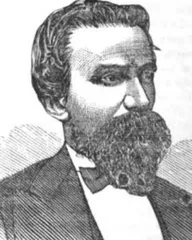
Joseph's Reflections and Diary Jottings. He Boldly Returns to Nauvoo. Gov. Carlin shows his Hand. Joseph Submits to Arrest. Glimpses of Doctrine and Revelation. Free- . dom Again.
AND REVELATION FREEDOM AGAIN.
In this emergency Emma wrote a touching appeal to Gov. Carlin, in behalf of her husband and the saints, in which she manifested no little skill as a logician and much pathos as an advocate.
The Governor made courteous reply, but took a very inconsistent view of the situation, even advising the Prophet to submit to arrest and take his chances of acquittal at the hands of Missouri justice. Knowing too well the inevitable outcome of such a proceeding, Joseph promptly decided to disregard the Governor's advice.
In the meantime, the reflections of his solitude are penned in his diary, and from it we are enabled to get the deepest glimpses of his character. Who can doubt the sincerity of the man when brought face to face with such passages as the following, — penned for no eye to see, — the very inmost of his soul laid bare :
"O Thou, who seest and knoweth the hearts of
all men ; thou eternal, omnipotent, omniscient, and omnipresent Jehovah — God — thou Eloheim, that sitteth, as saith the Psalmist, ' enthroned in heaven,' look down upon thy servant Joseph at this time, and let faith on the name of thy son Jesus Christ, to greater degree than thy servant ever yet has enjoyed, be conferred upon him, even the faith of Elijah ; and let the lamp of eternal life be lit up in his heart, never to be taken away; and let the words of eternal life be poured upon the soul of thy servant, that he may know thy will, thy statutes, and thy commandments, and thy judgments, to do them "
But though humble and suppliant in the presence of God, Joseph was truly fearless in the presence of men. At this very time (August 29th), on the occasion of a conference at Nauvoo, he suddenly appeared on the stand, to the surprise and delight of all present, and, among other things, gave the following specimen of his metal :
" I don't want you to fight, but go and gather tens, hundreds, and thousands, to fight for you. If oppression comes I will then show them that there is a Moses and a Joshua amongst us."
But renewed efforts being made by the officers to arrest him, he again eluded them, remaining in the city, however, at the residence of Bishop Hunter. In the meantime the ladies of the Relief Society petitioned Governor Carlin in his behalf, but with no better effect than had previously been seen.
Yet the spirit of his mission prevailed in Joseph, notwithstanding the distractions of the times, for at that moment he addressed to the church one of his great revelations, the principal subject of it being
is
408 LIFE OF JOSEPH THE PROPHET.
baptism for the dead and the mission of Elijah in the last days.
Finally, Gov. Carlin resolved to show his hand, and on the 2d of October he proclaimed a reward of 200 for Joseph's arrest. This seems to have been 'part of a concerted plan, as the Governor of Missouri, at the same time, offered a reward of $300 for the same purpose. There is a vein of grim humor in Joseph's diary entry of the fact. Says he : " It is not expected that much will be effected by the rewards."
Just at this time James Arlington Bennett interposed a characteristic letter in the New York Herald, sagaciously urging Joseph to execute his now well known purpose of the exodus. Manifest destiny was clearly pointing the saints westward, and daring spirits throughout the country already began seriously to contemplate the prospect of Joseph and his people pioneering the nation to the Pacific coast. And thus, though hedged about by enemies and trouble, Joseph was fast rising in the public mind to the position of an extraordinary personage in the age.
Thomas Ford having now [December, 1842] succeeded Governor Carlin, Joseph sent to him a petition requesting immunity from arrest under Carlin's proclamation. To this the Governor made answer as follows :
Springfield, Dec. 17th, 1842.
Dear Sir : — Your petition requesting me to rescind Governor Carlin's proclamation and recall the writ issued against you, has been received and duly
considered. I submitted your case and all the papers relating thereto to the Judges of the Supreme Court, or at least to six of them, who happened to be present. They were unanimous in the opinion that the requisition from Missouri was illegal and insufficient to cause your arrest, but were equally divided as to the propriety and justice of my interference with the acts, of Governor Carlin. It being, therefore, a case of great doubt as to my power, and I not wishing, even in an official station, to assume the exercise of doubtful powers, and inasmuch as you have a sure and effectual remedy in the courts, I have decided to decline interfering. I can only advise that you submit to the laws and have a judicial investigation of your rights. If it should become necessary for this purpose, to repair to Springfield, I do not believe that there will be any disposition to use illegal violence towards you ; and I would feel it my duty in your case, as in the case of any other person, to protect you with any necessary amount of force from mob violence whilst asserting your rights before the courts, going to and returning.
I am most respectfully yours,
Thomas Ford.
This being supported by a letter from Joseph's counsel, and also a note from Grand Master Adams, he resolved to offer no further obstacle to the officers of the law, and was accordingly arrested, under Governor Carlin s proclamation, by his friend Gen. Law. A writ of habeas corpus was at once applied for and duly obtained, whereupon Joseph journeyed to Springfield, where court was in session. There a new writ was issued by Governor Ford, and Joseph, finding bail, was released until the day
set down by the court for a hearing in the case. There being little business pending, the trial was appointed for an early day.
During his stay in Springfield, pending trial, the Prophet was visited by man)- ladies and gentlemen of distinction, and their conversations, mostly upon religious topics, called forth from him a number of doctrinal points, and opinions upon popular subjects. Among these it will be profitable to reproduce some of the more striking and peculiar. For instance, the following view concerning- Christ's millennial reign, giving a decidedly different idea of that subject from the one popularly entertained among theologians. Joseph says:
"While in conversation at Judge Adams' during the evening [December 30th, '42], I said, Christ and the resurrected saints will reign over the earth during the thousand years. They will not probably dwell upon the earth, but will visit it when they please, or when it is necessary to govern it. There will be wicked men on the earth during the thousand years." * * *
And this to a company of distinguished gentlemen, Sunday, January 1 st, 1 843, explaining the nature of a prophet:
" If any person should ask me if I were a prophet I should not deny it, as that would give me the lie, for, according to John, the testimony of Jesus is the spirit of prophecy; therefore, if I profess to be a witness or teacher, and have not the spirit of prophecy, which is the testimony of Jesus, I must be a false witness. But if I be a true teacher and witness, I must possess the spirit of prophecy, and that
constitutes a prophet. And any man who says he is a teacher or preacher of righteousness, and denies the spirit of prophecy, is a liar, and the truth is not in him; and by this key false teachers and imposters may be detected."
And the following, concerning the negro, is almost an exact prophecy of what has since happened. It is the more noteworthy as showing Joseph's position on the subject of human rights, just twenty years before Lincoln issued his immortal edict of emancipation :
" Had I anything to do with the negroes I would confine them by strict law to their own species, and put them on a national equalization"
On the following Wednesday (January 4th) his case came on for trial, and as it involved a question of inter-State law, hinging upon the Constitution of the United States, no little interest was taken in the proceedings. It being, however, a mere question of law, to be judicially determined upon the facts, a decision was reached without much delay, and on the following day the opinion of the court was formally given by Judge Pope. The opinion was able and exhaustive, and closed with the judgment and order that " said Joseph Smith be fully released and discharged."
The Prophet is again emancipated. Justice, for once, has been done. But the awful will of heaven must be fulfilled. The martyr's testament must seal the dispensation. Doubt it or wonder at it as we please, this is the law; and Joseph's life and death are but another wondrous proof of it.