Chapter XLVI. The Escape from Nauvoo
Life of Joseph the Prophet, pp. 526 to 539
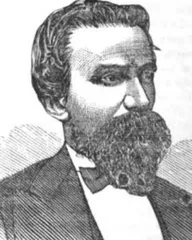
Voluntary Return. " We are Going Back to be Slaughtered—- The Journey to Carthage. Joseph and Hyrum Arrested for Treason. Committed to Jail. Supineness of Gov. Ford.
JAIL SUPINENESS OF GOV. FORD.
The records of events hereafter mentioned are gathered from authentic and trustworthy sources, and are given verbatim from a collation of facts, made by the church authorities.
"June 22, 1844. About 9 p. m. Hyrum came out of the mansion and gave his hand to Reynolds Cahoon, at the same time saying, ' A company of men are seeking to kill my brother Joseph, and the Lord has warned him to flee to the Rocky Mountains to save . his life. Good-bye, Brother Cahoon, we shall see you again.' In a few moments afterwards Joseph came from his family. His tears were flowing fast. He held a handkerchief to his face, and followed after brother Hyrum without uttering-- a word. * * *
"At about midnight Joseph, Hyrum, and Dr. Richards called for O. P. Rockwell at his lodgings and all went up the river bank until they found Aaron Johnson's boat, which they got into and
started about 2 a. m. to cross the Mississippi River. O. P. Rockwell rowed the skiff, which was very leaky, so that it kept Joseph, Hyrum and the Doctor busy baling out the water with their boots and shoes to prevent it from sinking.
" Sunday, 23d. At daybreak arrived on the Iowa side of the river. Sent O. P. Rockwell back to Nauvoo with instructions to return the next night o with horses for Joseph and Hyrum, pass them over the river in the night secretly, and be ready to start for the Great Basin in the Rocky Mountains. * *
"At 1 p. m. Emma sent over O. P. Rockwell, requesting him to entreat of Joseph to come back. Reynolds Cahoon accompanied him with a letter which Emma had written to the same effect, and she insisted that Cahoon should persuade Joseph to come back and give himself up. When they went over they found Joseph, Hyrum and Willard in a room by themselves, having flour and other provisions on the floor ready for packing.
" Reynolds Cahoon informed Joseph what the troops intended to do, and urged upon him to give himself up, inasmuch as the Governor had pledged his faith and the faith of the State to protect him while he underwent a legal and fair trial. Reynolds Cahoon, L. D. Wasson and Hiram Kimball accused Joseph of cowardice for wishing to leave the people, adding that their property would be destroyed, and they left without house or home — like the fable, when the wolves came the shepherd ran from the flock, and left the sheep to be devoured. To which Joseph replied, ' If my life is of no value to my friends, it is of none to myself.'
"Joseph said to Rockwell, 'What shall I do?' Porter replied, 'You are the oldest, and ought to know best ; and as you make your bed I will lay with you.' Joseph then turned to Hyrum, who was talking with Cahoon, and said, ' Brother Hyrum, you are the oldest, what shall we do?' Hyrum said, ' Let us go back and give ourselves up, and see the thing out.' After studying a few moments Joseph said, ' If you go back I shall go with you, but we shall be butchered.' Hyrum said, ' No, no ; let us go back and put our trust in God, and we shall not be harmed. The Lord is in it. If we live or have to die, we will be reconciled to our fate.'
" After a short pause Joseph told Cahoon to request Captain Daniel C. Davies to have his boat ready by half past five o'clock, to cross them over the river. * * *
"About 4 p. m. Joseph, Hyrum, the Doctor and others started back. While walking towards the river Joseph fell behind with O. P. Rockwell. The others shouted to him to come on. Joseph replied, ' It is of no use to hurry, for we are going back to be slaughtered.' * * They re-crossed the river at half past five. When they arrived at his mansion in Nauvoo Joseph's family surrounded him, and he tarried there all night. * * *
" Monday, 24th. * * Governor Ford having sent word by \\\e fiosse that those eighteen persons [Joseph, Hyrum, and the others included in Morrison's original warrant] should be protected by the militia of the State, they, upon the assurance of that pledge, at half past six a. m., started for Carthage, Willard Richards, Daniel Jones, Henry G. Sherman,
Alfred Randall, James Davis, Cyrus H. Wheelock, A. C. Hodge, and several other brethren, together with James W. Woods as counsel, accompanying them. * * *
"Joseph paused when they got to the temple, and looked with admiration first on that and then on the city, and remarked, ' This is the loveliest place and the best people under the heavens.' As he passed out of the city he called on Daniel H. Wells, Esq., who was unwell, and on parting he said, 1 Squire Wells, I wish you to cherish my memory, and not think me the worst man in the world either.'
"At ten minutes to ten a. m, they arrived at Albert G. Fellows' farm, four miles west of Carthage, where they met Captain Dunn with a company of about sixty mounted militia, on seeing which Joseph said, ' Do not be alarmed, brethren, for they cannot do more to you than the enemies of truth did to the ancient saints — they can only kill the body.' The company made a halt, when Joseph, Hyrum and several others went into Fellows' house with Captain Dunn, who presented an order from Governor Ford for all the State arms in possession of the Nauvoo Legion, which Joseph immediately countersigned. * *
"Captain Dunn requested the company to return to Nauvoo to assist in collecting the arms, and pledged his word, as a military man, that Joseph Smith and his friends should be protected even if it were at the expense of his own life, and his men responded to that pledge by three cheers. * *
"Joseph and his company then returned with
Captain Dunn, and arrived in Nauvoo at half past two p. m. * *
" When the fact of the order for the State arms was known in Nauvoo, many of the brethren looked upon it as another preparation for a Missouri massacre; nevertheless, as Joseph requested that it should be complied with, they very unwillingly gave up the arms. * *
" The company (about fifteen) then [six p. m.] started again for Carthage, and when opposite to the Masonic Hall Joseph said, ' Boys, if I don't come back take care of yourselves ; I am going like a lamb to the slaughter.' * *
O
" The company arrived at Fellows' house, four miles west of Carthage, about nine p. m., where they stopped about half an hour and partook of such refreshments as they had brought with them. Capt. Dunn and his company of mounted militia returning with the State arms from Nauvoo, joined them here and escorted them into Carthage, where they arrived at five minutes before twelve at night, and went to Hamilton's tavern. * *
" Next morning the prisoners voluntarily surrendered themselves to the constable, Mr. Bettisworth, who held the writ against them. * *
"Tuesday, 25th. At eight a. m. President Smith had an interview with Wm. G. Flood, of Quincy, U. S. Receiver of Public Moneys. While in conversation with him Constable Bettisworth arrested Joseph for treason against the State of Illinois. * * Hyrum Smith was also arrested at the same time for treason. * *
" Several of the officers of the troops in Carthage,
and other gentlemen, curious to see the Prophet, and to gratify a propensity to see the elephant, visited Joseph in his room. Gen. Smith asked them if there was anything in his appearance that indicated he was the desperate character his enemies represented him to be, and he asked them to give him their honest opinion on the subject. The reply was, ' No, sir. Your appearance would indicate the very contrary, Gen. Smith, but we cannot see what is in your heart, neither can we tell what are your intentions.' To which Joseph replied: ' Very true, gentlemen, you cannot see what is in my heart, and you are therefore unable to judge me or my intentions ; but I can see what is in your hearts, and will tell you what I see. I can see you thirst for blood, and nothing but my blood will satisfy you. It is not for crime of any description that I and my brethren are thus continually persecuted and harrassed by our enemies, but there are other motives, and some cf them I have expressed, so far as relates to myself; and inasmuch as you and the people thirst for blood, I prophesy, in the name of the Lord, that you shall witness scenes of blood and sorrow to your entire satisfaction. Your souls shall be perfectly satiated with blood, and many of you who are now present shall have an opportunity to face the cannon's mouth from sources you think not of; and those people that desire this great evil upon me and my brethren, shall be filled with regret and sorrow because of the scenes of desolation and distress that await them. They shall seek for peace, and shall not be able to find it. Gentlemen, you will find what I have told you to be true.' * :i:
"Joseph, Hyrum and thirteen others were taken before Robert F. Smith, a justice of the peace residing in Carthage (he being also captain of the Carthage Greys), on the charge of riot in destroying the printing press of the Nauvoo Expositor. * * [Whereupon they gave bonds for their appearance at the next term of the Circuit Court, and the justice adjourned court without taking up the charge of treason against Joseph and Hyrum.]
" At eight, Constable Bettisworth appeared at the lodgings of Joseph and Hyrum, and insisted that they should go to jail. [The officer exhibited a mittimus from Justice Smith, which he had given without having the prisoners brought before him for examination.] :;: * Joseph remonstrated against such barefaced, illegal and tyrannical proceedings, but the constable still insisted that they should go to jail.
"Elder John Taylor says: 'As I was informed of this illegal proceeding, I went immediately to the Governor and informed him of it. Whether he was apprised of it before or not I do not know, but my opinion is that he was. I represented to him the character of the parties who had made oath, the outrageous nature of the charge, the indignity offered to men in the position which they occupied, and that he knew very well that it was a vexatious prosecution, and that they were not guilty of any such thinof.
" ' The Governor replied that he was very sorry that the thing had occurred; that he did not believe the charges, but that he thought that the best thing to be done in the premises was to let the law take its course.
"'I then reminded him that we had come out there at his instance, not to satisfy the law, which we had done before, but the prejudices of the people, in relation to the affair of the press; that we had given bonds, which we could not by law be required to do, to satisfy the people, at his instance, and that it was asking too much to require gentlemen in their position in life to suffer the degradation of being immured in a jail at the instance of such worthless scoundrels as those who had made this affidavit.' [The one because of which they were held for treason.]
" ' The Governor replied that it was an unpleasant affair, and looked hard, but that it was a matter over which he had no control, as it belonged to the judiciary; that he, as the Executive, could not interfere with their proceedings, and that he had no doubt but that they would be immediately dismissed.
"' I told him that we had looked to him for protection from such insults, and that I thought we had a right to do so from the solemn promises he had made to me and Dr. Bernhisel in relation to our coming without a guard or arms; that we had relied upon his faith, and had a right to expect him to fulfill his engagements after we had placed ourselves implicitly under his care and complied with all his requests, although extrajudicial.
"' He replied that he would detail a guard if we required it, and see us protected, but that he could not interfere with the judiciary.
"'I expressed my dissatisfaction at the course taken, and told him that if we were to be subject to mob rule, and to be dragged contrary to law into
prison at the instance of every infernal scoundrel whose oaths could be bought for a dram of whiskey, his protection availed very little, and we had miscalculated his promises.
" 'Seeing there was no prospect of redress from the Governor, I returned to the room and found the constable Bettisworth very urgent to hurry brothers Joseph and Hyrum to prison, whilst the brethren were remonstrating with him.
" ' At the same time a great rabble was gathered in the streets and around the door, and from the rowdyism manifested I was afraid there was a design to murder the prisoners on the way to the jail.
" ' Without conferring with any person, my next feeling was to procure a guard, and seeing a man habited as a soldier in the room, I went to him and said, " I am afraid there is a design against the lives of the Messrs. Smith. Will you go immediately and bring your captain, and, if not convenient, any other captain of a company, and I will pay you well for your trouble."
" ' He said he would, and departed forthwith, and soon returned with his captain, whose name I have forgotten, and introduced him to me. I told him of my fears, and requested him immediately to fetch his company. He departed forthwith, and arrived at the door with them just at the time that the constable was hurrying the brethren down stairs.
"'A number of the brethren went along, and one or two strangers, and all of us, safely lodged in prison, remained there during the night.'
"June 26th, 9:27 A.M. The Governor, in company with Col. Geddes, arrived at the jail, when a
lengthy conversation was entered into in relation to the existing difficulties ; and after some preliminaryremarks, at the Governor's request Brother Joseph gave him a general outline of the state of affairs in relation to our difficulties, the excited state of the country, the tumultuous, mobocratic movements of our enemies, the precautionary measures used by himself (Joseph Smith), the acts of the City Council, the destruction of the press, and the moves of the mob and ourselves up to that time.
"The Governor left [at 10:30 a. m.] after saying that the prisoners were under his protection, and again pledging himself that they should be protected from violence, and telling them that if the troops marched the next morning to Nauvoo, as he then expected, they should probably be taken along in order to insure their personal safety. * *
"While Joseph was writing at the jailor's desk, William Wall stepped up, wanting to deliver a verbal message to him from his uncle John Smith- He turned around to speak to Wall, but the guard refused to allow them any communication. * *
"Joseph remarked, ' 1 have had a good deal of anxiety about my safety since I left Nauvoo, which I never had before when I was under arrest. I could not help those feelings, and they have depressed me.' * *
" The Prophet, Patriarch and their friends took turns preaching to the guards, several of whom were relieved before their time was out because they admitted they were convinced of the innocence of the prisoners. They frequently admitted they had been imposed upon, and more than once it was
heard, ' Let us go home, boys, for I will not fight any longer against these men.'
" During the day Hyrum encouraged Joseph to think that the Lord, for his church's sake, would release him from prison. Joseph replied, 'Could my brother Hyrum but be liberated, it would not matter so much about me.' * *
" 2:30. Constable Bettisworth came with Alexander Simpson and wanted to come in with an order to the jailor demanding the prisoners, but as Mr. Stigall, the jailor, could find no law authorizing a justice of the peace to demand prisoners committed to his charge, he refused to give them up until discharged from his custody by due course of law. * *
" 20 minutes to 4. Upon the refusal of the jailor to give up the prisoners, the constable, with the company of Carthage Greys, under the command of Frank Worrill, marched to the jail, and, by intimidation and threats, compelled the jailor, against his will and conviction of duty, to deliver Joseph and Hyrum to the constable, who forthwith and contrary to their wishes, compulsorily took them.
"Joseph, seeing the mob gathering and assuming a threatening aspect, concluded it best to go with them, and putting on his hat, walked boldly into the midst of a hollow square of the Carthage Greys, yet evidently expecting to be massacred in the streets before arriving at the court house, politely locked arms with the worst mobocrat he could see, and Hyrum locked arms with Joseph, followed by. Dr. Richards, and escorted by a guard. Elders Taylor, Jones, Markham and Fullmer followed
outside the hollow square, and accompanied them to the court room. * *
" On motion of counsel for the prisoners examination was postponed till to-morrow at 12 o'clock, noon, and subpoenas were granted to get witnesses from Nauvoo, twenty miles distant, whereupon the prisoners were remanded to prison. * *
" 5:30. Returned to jail, and Joseph and Hyrum were thrust into close confinement. * *
" 8 p. m. Counselors Woods and Reid called with Elder J. P. Greene, and said that the Governor and military officers had held a council which had been called by the Governor, and they decided that the Governor and all the troops should march to Nauvoo at eight o'clock to-morrow, except one company of about fifty men, in order to gratify the troops, and return next day, the company of fifty men to be selected by the Governor from those of the troops whose fidelity he could most rely on to guard the prisoners, who should be left in Carthage jail, and that their trial be deferred until Saturday, the 29th. * *
"They retired to rest late. * * 5:30 a. m., arose. Joseph requested Daniel Jones to descend and inquire of the guard the cause of the intrusion in the night. Frank Worrill, the officer of the guard, in a very bitter spirit, said : ' We have had too much trouble to bring old Joe here to ever let him escape alive, and unless you want to die with him, you had better leave before sundown ; and you are not a d — d bit better than him for taking his part ; and you'll see that I can prophecy better than old Joe, for neither he nor his brother, nor anyone
who will remain with them, will see the sun set to-day.' * *
"10:30. Gov. Ford went to Nauvoo some time this forenoon, escorted by a portion of his troops, the most friendly to the prisoners, and leaving the known enemies to the Prophet [the Carthage Greys], ostensibly to guard the jail, having previously disbanded the remainder. * *
"3:15 p. m. The guard began to be more severe in their operations, threatening among themselves, and telling what they would do when the excitement was over. * *
" 4 p. m. The guard was again changed, only eight men being stationed at the jail, whilst the main body of the Carthage Greys were in camp about a quarter of a mile distant, on the public
•k- ■*:- square.
"5:20. Jailor Stigall returned to the jail and said that Stephen Markham had been surrounded by a mob, who had driven him out of Carthage, and he had gone to Nauvoo. * *
" Before the jailor came in his boy brought in some water, and said the guard wanted some wine. Joseph gave Dr. Richards two dollars to give the guard, but the guard said one was enough, and would take no more.
" The guard immediately sent for a bottle of wine, pipes and two small papers of tobacco, and one of the guard brought them into the jail soon after the jailor went out. Dr. Richards uncorked the bottle and presented a glass to Joseph, who tasted, as also brother Taylor and the Doctor, and the bottle was then given to the guard, who turned
to go out. When at the top of the stairs some one below called him two or three times and he went down.
" Immediately there was a little rustling at the outer door of the jail and a cry of surrender, and also a discharge of three or four firearms followed instantly. The doctor glanced an eye by the curtain of the window, and saw about a hundred armed men around the door."