Chapter XXXIV. Journalistic Comity
Life of Joseph the Prophet, pp. 386 to 395
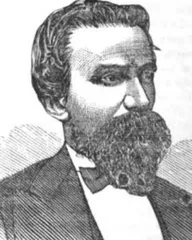
Judge Douglas. Felicitation. Joseph's Creed. Free Masonry. An Observer's Opinion. The Female Relief Society. General Bennett. Grand Review of the Nauvoo Legion.
The New York Herald seems to have been the first leading journal in the country to give the Mormon people a fair presentation to the general public. This called forth a formal vote of gratitude from the saints, expressed through the city council of Nauvoo. The resolution — framed and presented by Joseph — is quite a curiosity of history, and the whole matter is the more worthy of record in view of that great journal's subsequent injustice and inconsistency :
"Resolved, By the City Council of the City of Nauvoo, that the high-minded and honorable editor of the New York Weekly Herald, James Gordon Bennett, Esq., is deserving of the lasting gratitude of this community for his very liberal and unprejudiced course towards us as a people, in giving us a fair hearing in his paper, thus enabling us to reach the ears of a portion of the community, who otherwise would ever have remained ignorant of our principles and practices.
" Resolved, That we recommend our fellow-citizens to subscribe for said paper, and thus be found patronizing true merit, industry, and enterprise."
And just at this time was formed what may be considered almost a covenant between Joseph and Stephen A. Douglas, as witness this sentence from a communication by Joseph to the Times and Seasons, Dec. 20th, 1 841:
" We claim the privilege of freemen, and shall act accordingly. Douglas is a master spirit, and his friends are our friends. We are willing to cast our banners in the air, and fight by his side in the cause of humanity and equal rights, the cause of liberty and the law."
Perhaps no one of America's galaxy of great men was more thoroughly impressed with the extraordinary genius of Joseph than this " Master Spirit;" and he did not fail to express his convictions upon this point when occasion demanded.
The auspicious opening of 1842 prompted Joseph to indulge in the following bit of felicitation :
" The new year has been ushered in and continued thus far under the most favorable auspices, and the saints seem to be influenced by a kind and indulgent Providence in their dispositions and means to rear the temple of the Most High God, anxiously looking forth to the completion thereof as an event of the greatest importance to the church and the world, making the saints in Zion to rejoice, and the hypocrite and sinner to tremble. Truly this is a day long to be remembered by the saints of the last days, — a day in which the God of heaven has begun
J
88 LIFE OF JOSEPH THE PROPHET.
to restore the ancient order of his kingdom unto his servants and his people, — a day in which all things are concurring to bring about the completion of the fullness of the gospel, a fullness of the dispensation of dispensations, even the fullness of times, — a day in which God has begun to make manifest and set in order his church, those things which the ancient prophets and wise men desired to see, but died without beholding, — a day in which those things begin to be made manifest which have been hid from before the foundation of the world, and which Jehovah has promised should be made known in his own due time unto his servants, to prepare the earth for the return of his glory, even a celestial glory, and a kingdom of priests and kings to God and the Lamb forever, on Mount Zion, or the hundred and forty and four thousand whom John the Revelator saw, which should come to pass in the restitution of all things."
The Prophet and his people were now attracting considerable public attention, both in America and Great Britain, and numerous inquiries began to pour in concerning their history and tenets. In answer to one of these, — the since famous John Wentworth of Chicago, — Joseph gave a concise sketch of the movement up to date, and an outline of theological dogma accepted by the saints. Beginning at the date of the document's appearing, we quote as follows:
" * * * We have commenced to build a city, called ' Nauvoo,' in Hancock County. We number from six to eight thousand here, besides vast numbers in the county around, and in almost every
I county of the State. We have a city charter granted us, and charter for a Legion, the troops of which now number fifteen hundred. We have also a char- / ter for a university, for an agricultural and manufacturing society, have our own laws and administrators, and possess all the privileges that other free I and enlightened citizens enjoy.
" Persecution has not stopped the progress of truth, but has only added fuel to the flame ; it has spread with increasing rapidity. Proud of the cause which they have espoused, and conscious of their innocence and of the truth of their system, amidst calumny and reproach, have the elders of this church gone forth and planted the gospel in almost every State in the Union. It has penetrated our cities, it has spread over our villages, and has caused thousands of our intelligent, noble, and patriotic citizens to obey its divine mandates and be governed by its sacred truths. It has also spread into England, Ireland, Scotland and Wales. In the year of 1840, where a few of our missionaries were sent, over five thousand joined the standard of truth. There are numbers now joining in every land.
" Our missionaries are going forth to different nations, and in Germany, Palestine, New Holland, the East Indies, and other places, the standard of truth has been erected. No unhallowed hand can stop the work from progressing; persecutions may rage, mobs may combine, armies may assemble, calumny may defame, but the truth of God will go forth boldly, nobly, and independent, till it has penetrated every continent, visited every clime, swept every country, and sounded in every ear, till the
purposes of God shall be accomplished, and the Great Jehovah shall say the work is done.
" We believe in God the Eternal Father, and in his son Jesus Christ, and in the Holy Ghost.
" We believe that men will be punished for their own sins, and not for Adam's transgression.
"We believe that through the atonement of Christ all mankind may be saved by obedience to the laws and ordinances of the gospel.
" We believe that these ordinances are, ist. Faith in the Lord Jesus Christ ; 2d. Repentance; 3d. Baptism by immersion for the remission of sins ; 4th. Laying on of hands for the gift of the Holy Ghost.
"We believe that a man must be called of God by ' Prophecy,' and by laying on of hands, by those who are in authority to preach the gospel and administer in the ordinances thereof.
" We believe in the same organization that existed in the primitive church, namely, apostles, prophets, pastors, teachers, evangelists, &c.
"We believe in the gift of tongues, prophecy, revelations, visions, healings, interpretations of tongues, &c.
" We believe the Bible to be the word of God, as far as it is translated correctly ; we also believe the Book of Mormon to be the word of God.
" We believe all that God has revealed, all that he does now reveal, and we believe that he will yet reveal many great and important things pertaining to the kingdom of God.
"We believe in the literal eatherino- of Israel and in the restoration of the ten tribes ; that Zion will be built upon this continent ; that Christ will reign
personally upon the earth, and that the earth will be renewed and receive its paradisiacal glory.
" We claim the privilege of worshiping Almighty God according to the dictates of our own consciences, and allow men the same privilege, let them worship how, where, or what they may.
"We believe in being subject to kings, presidents, rulers and magistrates, in obeying, honoring and sustaining the law.
" We believe in being honest, true, chaste, benevolent, virtuous, and in doing good to a// men. Indeed, we may say that we follow the admonition of Paul, ' We believe all things, we hope all things ; ' we have endured many things, and hope to. be able to endure all things. If there is anything virtuous, lovely, or of good report, or praiseworthy, we seek after these things."
A most important item is recorded by the Prophet, under date of March 14th, 1842. He says :
" In the evening I received the first degree in Free Masonry, in the Nauvoo Lodge, assembled in my general business office."
It will be remembered what an unconquerable aversion Joseph manifested, even as a boy of fifteen, to receiving any particle of faith or authority from the churches of Christendom, and also that he was commanded by the personage in the first vision to join none of them. What then is the significance of his becoming a Free Mason ? This : He understood that the chain of Masonry is the endless chain of brotherhood and priesthood, linking all the worlds, — the heavens and the earths, — but he believed that this earth had lost much of its purpose,
its light, its keys, and its spirit, — its chief loss being, the key of revelation. For instance, his conception might be expressed in the statement that the Masonic Church on earth ought to be in constant communion with the Masonic Church in the heavens, thus constituting a universal brotherhood indeed, notwithstanding its many nations, races, religions, civilizations, and lawgivers.
In this connection may properly be quoted some portions of an article communicated to the Advocate, printed at the home of the Grand Master of the State, and presumably from his pen :
" Having recently had occasion to visit the city of Navoo [the occasion was that of installing the officers of the Nauvoo Lodge], I cannot permit the opportunity to pass without expressing the agreeable disappointment that awaited me there. I had supposed, from what I had previously heard, that I should witness an impoverished, ignorant, and bigoted population, completely priest-ridden, and tyranized over by Joseph Smith, the great prophet of these people.
" On the contrary, to my surprise, I saw a people apparently happy, prosperous, and intelligent. Every man appeared to be employed in some business or occupation. I saw no idleness, no intemperance, no noise, no riot ; all appeared to be contented, with no desire to trouble themselves with anything except their own affairs. With the religion of these people I have nothing to do ; if they can be satisfied with the doctrines of their new revelation, they have a right to be so. The constitution of the country guarantees to them the right of
worshiping God according to the dictates of their own conscience ; and if that can be so easily satisfied, why should we, who differ with them, complain ? * * *
" During my stay of three days I became well acquainted with their principal men, and more particularly with their Prophet. I found them hospitable, polite, well informed and liberal. With Joseph Smith, the hospitality of whose house I kindly received, I was well pleased. Of course, on the subject of religion we widely differed, but he appeared to be quite as willing to permit me to enjoy my right of opinion, as I think we all ought to be to let the Mormons enjoy theirs. But instead of the ignorant and tyranical upstart, judge my surprise at finding him a sensible, intelligent, companable, and gentlemanly man. In frequent conversations with him he gave me every information that I desired, and appeared to be only pleased at being able to do so. He appears to be much respected by all the people about him, and has their entire confidence. He is a fine looking man, about thirty- "-shryears of age, and has an interesting family." * *
At about this date was organized the Female Relief Society, which has subsequently, in Utah, grown into a flourishing and powerful organization.
At about this date also began the somewhat curious relations between the Mormon people and James Arlington Bennett, of Long Island. He it was whose letters in the New York Herald, before alluded to, created quite a Mormon sensation in that day. Perhaps in some respects he took the clearest view of Joseph yet given by any Gentile, —
publishing him as the " Western Mohamet," the " Prophet of America," &c. As we have seen, the City Council of Nauvoo took cognizance of the journal in question, and Joseph conferred upon the talented writer the office of Inspector-General of the " Nauvoo Legion.
Here is the record of that memorable military review by "Lieutenant-General Joseph Smith," which has been so often illustrated and alluded to in America and abroad:
"Saturday, 7th [April, 1842]. The Nauvoo Legion was on parade, by virtue of an order of the 25th of January, 1842, and was reviewed by Lieutenant-General Joseph Smith, who commanded through the day. * * * The weather was very fine. * * * In the afternoon the Legion was separated into cohorts, and fought an animated sham battle. * * * At the close of the parade Gen. Smith delivered a most animating and appropriate address, in which he remarked that his soul was never better satisfied than on this occasion."
One of the interesting features of the day was the presence of Judge Douglas and several eminent lawyers, court having been adjourned for the purpose. But a somewhat startling view is also brought to light in the significant fact that Gen. John C. Bennett repeatedly requested the Prophet to take part in the sham battle, urging him, in one instance, to command the first cohort in person, without his staff Joseph, with the prophecy of his martyrdom now ever with him, seems to have taken the extreme significance of the case as the proper view. He says, under date of that day:
" If General Bennett's true feelings towards me are not made manifest to the world in a very short time, then it may be possible that the gentle breathings of that Spirit, which whispered me on parade that there was mischief concealed in that sham battle, were false. A short time will determine the point. Let John C. Bennett answer at the day of judgment — Why did you request me to command one of the cohorts, and also to take my position without my staff, during the sham battle on the 7th of May, 1842, where my life might have been the forfeit, and no man have known who did the deed?"
Clearly Joseph felt that John C. Bennett was seeking to play the Judas to his chief. But on that occasion the cup passed from him, though, as he doubtless knew, it was but a postponement of the day of his inevitable sacrifice.