Chapter XLV. Gems from Joseph's Last Sermons
Life of Joseph the Prophet, pp. 492 to 525
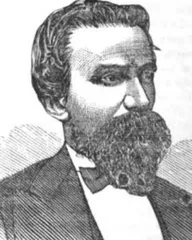
Unique Views and Character Sayings.
Preaching on the subject of the Comforters, he said :
There are two Comforters spoken of. The First Comforter is the Holy Ghost. * * * Now what is this other Comforter? It is the Lord Jesus Christ himself. When any man obtains this last Comforter he will have the personage of Jesus Christ to attend him, or appear unto him from time to time, and even he will manifest the Father unto him. They will take up their abode with him, and the visions of the heavens will be opened unto him, and the Lord will teach him face to face, and he may have a perfect knowledge of the mysteries of the kingdom of God ; and this is the state and place the ancient Saints arrived at when they had such glorious visions: Isaiah, Ezekiel, John upon the Isle of Patmos, St. Paul in the three heavens, and all the Saints who held communion with the general assembly of the Church of the First Born."
In his sermon on the Ancient of Days, alreadyquoted, he says :
" The Saviour, Moses, and Elias, gave the keys of the Priesthood to Peter, James, and John, on the Mount, when they were transfigured before him. How have we come at the Priesthood in the last days? It came down in regular succession. Peter, James, and John had it given to them, and they gave it to others." [Presumably referring to himself and Oliver Cowdery.]
On the subject of continuous communion with heaven, he says:
" Salvation cannot come without revelation ; it is in vain for any man to minister without it. No man is a minister of Jesus Christ without being a Prophet. No man can be a minister of Jesus Christ except he has the testimony of Jesus, and this is the spirit of prophecy."
Of the personal companionship of the Ancients of various dispensations — the communion of the living with the dead — the following is illustrative:
Abel magnified the Priesthood which was conferred upon him, and therefore has become an angel of God by receiving his body from the dead, holding still the keys of his dispensation ; and he was sent down from heaven unto Paul to minister consoling words and to commit unto him a knowledge of the mystery of godliness. And if this was not the case, I would ask how did Paul know so much about Abel, and why should he talk about his speaking after he was dead ? That he spoke after he was dead must be by being sent down out of heaven to minister."
This of Enoch : " He is reserved also unto the presidency of a dispensation. He is a ministering aneel, to minister to those who shall be heirs of salvation, and appeared unto Jude as Abel did unto Paul. Therefore Jude spoke of him — ' And Enoch, the seventh from Adam, revealed these sayings : Behold the Lord cometh with ten thousand of his Saints.' Paul was also acquainted with Enoch."
The patriarchal linking of these various dispensations the Prophet Joseph makes perfect, commencing with Adam, who was "the first to hold the spiritual blessings, to whom was made known the plan of ordinances for the salvation of his posterity unto the end, and to whom Christ was first revealed, and through whom Christ has been revealed from heaven, and will continue to be revealed henceforth. Adam holds the keys of the dispensation of the fullness of times, i, e., the dispensation of all the times have been and will be revealed through him, from the beginning to the end. * * * God purposed in himself that there should not be eternal fullness until every dispensation should be fulfilled and gathered together in one, and that all things whatsoever that should be gathered together in one in those dispensations unto the same fullness and eternal glory, should be in Christ Jesus ; therefore he set the ordinances to be the same forever and ever, and set Adam to watch over them, to reveal them from heaven to man, or to send angels to reveal them : ' Are they not all ministering spirits, sent forth to minister to those who shall be heirs of salvation ? ' * * * This, then, is the nature of the Priesthood ; every man holding the presidency
of his dispensation, and one man holding the presidency of them all, even Adam, who received his presidency and authority from the Lord, but cannot receive a fullness until Christ shall present the kingdom to the Father, which shall be at the end of the last dispensation."
The unfolding of this perfect patriarchal order will enable the general reader to better understand the grand example of the Latter-day Saints in being baptized for their dead, which has been so often burlesqued by Gentile writers through their own poverty of comprehension of the subject. It is the theme which most occupied Joseph in his last days. In his address to the Church, while hiding from his enemies, September, 1842, he said:
" I now resume the subject of the baptism for the dead, as that seems to occupy my mind and press itself upon my feelings the strongest since I have been pursued by my enemies. * * *
" And now, my dearly beloved brethren and sisters, let me assure you that these are principles in relation to the dead and the living that cannot be lightly passed over, as pertaining to our salvation. For their salvation is necessary and essential to our salvation, as Paul says concerning the fathers 'that they without us cannot be made perfect ;' neither can we without our dead be made perfect.
" And now, in relation to the baptism for the dead, fwill give you another quotation of Paul, 1 Corinthians, xv., 29, ' Else what shall they do which are baptized for the dead, if the dead rise not at all; why are they then baptized for the dead.'
" And again, I will give you a quotation from one of the Prophets, who had his eye fixed on the restoration of the Priesthood, the glories to be revealed in the last days, and in an especial manner this most glorious of all subjects belonging to the everlasting gospel, viz., the baptism of the dead, for Malachi says, ' Behold, I will send you Elijah the Prophet before the coming of the great and dreadful day of the Lord ; and he shall turn the heart of the fathers to the children, and the heart of the children to their fathers, lest I come and smite the earth with a curse.'
" I might have rendered a plainer translation to this, but it is sufficiently plain to suit my purpose as it stands. It is sufficient to know, in this case, that the earth will be smitten with a curse, unless there is a welding link of some kind or other between the fathers and the children, upon some subject or other, and behold what is that subject? It is the baptism for the dead. For we without them cannot be made perfect ; neither can they without us be made perfect. Neither can they nor we be made perfect without those who have died in the gospel also ; for it is necessary in the ushering in of the dispensation of the fullness of times, which dispensation is now beginning to usher in, that a whole and complete and perfect union, and welding together of dispensations, and keys, and powers, and glories should take place, and be revealed from the days of Adam even to the present time ; and not only this, but those things which never have been revealed from the foundation of the world, but have been kept hid from the wise and prudent, shall be revealed unto
babes and sucklings in this the dispensation of the fullness of times."
Thus it may be seen that baptism for the dead is not a silly ordinance performed by the Saintsto "save" their relations and friends "by proxy," without any reference to the consent or condition of those concerned, but rather is it, in the view which the Prophet has presented, a grand welding of generations and dispensations " upon some subject," bringing the "living and the dead" into the same "everlasting- covenant." Notice that this "welding" of those who have obeyed the gospel in this age to those of relations who have passed away without obeying the gospel, also extends back to the righteous fathers to whom the covenants were originally made. They are the prime actors. Their hearts are turned towards their children. Couple with this the view which the Prophet gives of the patriarchal action commencing with Adam. Speaking of the Ancients to whom the covenants were made and who held the keys of dispensations, he says :
" These men are in heaven, but their children are on earth. Their bowels yearn over us. God sends down men for this reason (to weld the heavens and the earth). And the Son of Man shall send forth his angels, &c. All these authoritative characters will come down and join hand in hand in bringing about this work. * * Thus angels come down and combine together to gather their children. We cannot be made perfect without them, nor they without us. When these things are done the Son of Man will descend, the Ancient of Days sit. We may come to an innumerable company of angels,
have communion with and receive instruction from them."
This subject is also connected with that of preaching the gospel to the dead, as m'ay be seen in the following gems of universal gospel culled from an article in his history headed "Baptism for the Dead:"
" The great designs of God in relation to the salvation of the human family are very little understood. * * * While one portion of the human race are judging and condemning the other without mercy, the Great Parent of the universe looks upon the whole of the human family with a fatherly care and paternal regard. He views them as his offspring, and without any of those contracted feelings that influence the children of men, causes his sun to rise on the evil and the good, and sends his rain on the just and unjust. He holds the reins of judgment in his hands, and will judge all men 'according to the deeds done in the body whether they be good or evil,' or whether these deeds were done in England, America, Spain, Turkey, or India. He will judge them, not according to what they have not, but according to what they have. Those who have lived without law will be judged without law, and those who have a law will be judged by that law. He will award judgment or mercy to all nations according to their several deserts, their means of obtaining intelligence, &c; and when the designs of God shall be made manifest, and the curtain of futurity be withdrawn, we shall all of us eventually have to confess that the Judge of all the earth has done right.
" The situation of the Christian nations after
death is a subject that has called forth all the wisdom and talent of the philosopher and the divine, and it is an opinion which is generally received that the destiny of man is irretrievably fixed at his death, and that he is either made eternally happy or eternally miserable ; that if a man dies without a knowledge of God he must be eternally damned, without any mitigation of his punishment, alleviation of his pain, or the most latent hope of a deliverance while endless ages shall roll along. However orthodox this may be, we shall find that it is at variance with the testimony of holy writ, for our Saviour says, 'that all manner of sin and blasphemy shall be forgiven men wherewith they shall blaspheme ; but the blasphemy against the Holy Ghost shall not be forgiven, neither in this world nor in the world to cornel evidently showing that there are sins which may be forgiven in the world to come, although the sin of blasphemy cannot be forgiven. Peter, also, in speaking concerning our Saviour, says that ' he went and preached unto the Spirits in prison, which sometime were disobedient, when once the long suffering of God waited in the days of Noah.' Here then we have an account of our Saviour preaching to the Spirits in prison. And what did he preach to them ? That they were to stay there ? Certainly not ! Let his own declaration testify. * He hath sent me to heal the broken hearted, to preach deliverance to the captives, and recovering of sight to the blind, to set at liberty them that are bruised.' Luke iv., 18. Isaiah has it—' To bring out the prisoners from the prison, and them that sit in darkness from the prison house.' * *
" It is common for many of our orthodox preachers to suppose that if a man is not what they call converted, if he dies in that state he must remain eternally in hell without any hope ; infinite years in torment must he spend, and never, never, never have an end. And yet this eternal misery is made frequently to rest upon the merest casualty. The breaking of a shoe-string, the tearing of a coat of those officiating, or the peculiar location in which a person lives, may be the means, indirectly, of his damnation, or the cause of his not being saved. I will suppose a case which is not extraordinary. Two men who have been equally wicked, who have neglected religion, are both of them taken sick at the same time. One of them has the good fortune to be visited by a praying man, and he gets converted a few minutes before he dies. The other sends for three different praying men ; they none of them can go in time. The man dies and goes to hell. One of these is exalted to Abraham's bosom. He sits down in the presence of God and enjoys eternal uninterrupted happiness, while the other who was equally as good as he, sinks to eternal damnation and hopeless despair, because the praying man had a boot to mend, or the buttonhole of a coat to work, or a handle to solder on to a saucepan.
"The plans of Jehovah are not so unjust. * * If human laws award to each man his deserts, and punish all delinquents according to their crimes, surely the Lord will not be more cruel than man. * * * To say that the heathen would be damned because they did not believe the gospel, would be
preposterous ; and to say that the Jews would all be damned that do not believe in Jesus, would be equally absurd. * * *
" And now as the great purposes of God are hastening to their accomplishment, and the things spoken of in the Prophets are fulfilling, as the kingdom of God is established on the earth, and the ancient order of things restored, the Lord has manifested to us this duty and privilege, and we are commanded to be baptized for our dead, thus fulfilling the words of Obadiah, when speaking of the glory of the latter day : 'And Saviours shall come up upon Mount Zion to judge the remnant of Esau, and the kingdom shall be the Lord's.' A view of these things reconciles the Scriptures, justifies the ways of God to man, places the human family upon an equal footing, and harmonizes with every principle of righteousness, justice and truth. We will conclude with the words of Peter: ' For, for this cause was the gospel preached also to them that are dead, that they might be judged according to men in the flesh, but live according to God in the spirit."'
Thus may it be understood that baptism for the dead is but one of the provisions of a grand and everlasting economy, that it is connected with the preaching of the gospel to the spirit world and a general salvation of the whole human family, with the exception of those who sin against the Holy Ghost, and the welding of the patriarchal links of the heavens and the earth, in the which work "the angels come down and combine for the gathering of their children."
It was in contemplation of this very subject that
Joseph declared that one hundred and forty and four thousand Saviours would stand upon Mount Zion in the midst of angelic hosts that no man can number, and these he has identified with the one hundred and forty-four thousand whom John saw who "follow the Lamb whithersoever he goeth." Thus vast and continuous is the work of salvation, both of the "living and the dead," as presented in the Prophet's revelations of the Father's everlasting plan and the ministry of his Son Jesus Christ.
It will be interesting here to make a passing note of the fact that since the date of the revelation on baptism for the dead the Latter-day Saints have been baptized for not less than a million of the dead. Thus their work continues here and behind the vail, those preaching to the spirits applying what has been done on earth by the living. There is deep philosophy in the affirmation of the Prophet that baptism for the dead is the welding link, the something upon which the two worlds can unite in a common gospel ministry, the very key by which Elijah turns the hearts of the fathers to the children and the hearts of the children to the fathers.
It is generally acknowledged by those present that one of the Prophet's greatest discourses was the funeral sermon of Elder King Follett, delivered in the presence of 20,000 Saints, in April, 1844, about two months before his martyrdom. This fact makes the case more significant, for the sermon is really a grand revelation of who God is, and the object of man's creation, rather than an ordinary funeral address. After a preface on the person of the deceased
and the occasion, he launched out into the vast subject, of which the following is a digest :
" Before I enter fully into the investigation of the subject which is lying before me, I wish to pave the way and bring up the subject from the beginning, that you may understand it.
"In the first place, I wish to go back to the morn of creation. There is the starting point for us to look to in order to understand and be fully acquainted with the mind, purposes, and decrees of the Great Eloheim who sits in yonder heavens as he did at the creation of this world. It is necessary for us to have an understanding of God himself in the beginning.
" There are but a few beings in the world who understand rightly the character of God. The great majority of mankind do not comprehend anything, either that which is past or that which is to come, as it respects their relationship to God. * * If a man learns nothing more than to eat, drink and sleep, and does not comprehend the designs of God, then the beast comprehends as much. If men do not comprehend the character of God they do not comprehend themselves. I want to go back to the beginning, and so lift your minds into a more' lofty sphere and a more exalted understanding than what the human mind generally aspires to.
" I want to ask this congregation — every man, woman and child — to answer the question in their own heart, What kind of a being is God ? Ask yourselves; turn your thoughts into your hearts, and say if any of you have seen, heard, or communed with him. This is a question that may
occupy your attention for a long time. I again repeat the question, What kind of a being is God? Does any man or woman know ? The Scriptures inform us that ' This is life eternal, that they might know thee, the only true God, and jesus Christ whom thou hast sent.' * * *
" My first object is to find out the character of the only wise and true God, and what kind of a being he is ; and if I am so fortunate as to be the man to comprehend God, and explain or convey the principles to your hearts, so that the Spirit seals them upon you, then let every man and woman henceforth sit in silence, and never lift their hands or voices against the man of God ; but if I fail to do it, it becomes my duty to renounce all further pretensions to revelations and inspiration, or to be a Prophet. * * *
"What sort of a being was God in the beginning? Open your ears and hear, all ye ends of the earth, for I am going to prove it to you by the Bible, and to tell you the designs of God in relation to the human race, and why he interferes with the affairs of man.
" God himself was once as we are now, and is an exalted Man, and sits enthroned in yonder heavens ! That is the great secret. If the vail was rent to-day, and the Great God who holds this world in its orbit and who upholds all worlds and all things by his power, was to make himself visible, — I say if you were to see him to-day you would see him like a man in form, like yourselves in all the person and image, in very form as a man ; for Adam was created in the fashion, image and likeness of God, and
received instruction from, and walked, talked and conversed with him, as one man talks and communes with another.
" In order to understand the subject of the dead, it is necessary that we should understand the character and being of God, and how he came to be so ; for I am going to tell you how God came to be God.
" We have imagined and supposed that God was God from all eternity. I will refute that idea and will take away the vail, so that you may see. * * God himself, the Father of us all, dwelt on an earth the same as Jesus himself did. I wish I was in a suitable place to tell it, and that I had the trump of an archangel, so that I could tell the story in such a manner that persecution would cease forever.
"What did Jesus say? 'As the Father hath power in himself, even so hath the Son power.' To do what ? Why, what the Father did. The answer is obvious. Jesus, what are you going to do ? To lay down my life as my Father did, and take it up again. Do you believe it ? * * *
" Here then is eternal life, to know the only wise and true God ; and you have got to learn how to be Gods yourselves, and to be kings and priests to God, the same as all Gods have done before you, namely, by going from one small degree to another, and from a small capacity to a great one ; from grace to grace, from exaltation to exaltation, until you attain to the resurrection of the dead, and are able to dwell in everlasting burnings, and to sit in glory, as do those who sit enthroned in everlasting power. And I want you to know that God, in the
last days, while certain individuals are proclaiming his name, is not trifling with you or me.
" These are the first principles of consolation. How consoling to the mourners when they are called to part with a husband, wife, father, mother, child, or dear relative, to know that although the earthly tabernacle is laid down and dissolved, they shall rise again to dwell in everlasting burnings in immortal glory, not to sorrow, suffer, or die any more, but they shall be heirs of God and joint heirs with Jesus Christ. What is it ? To inherit the same power, the same glory, and the same exaltation, until you arrive at the station of a God and ascend the throne of eternal power, the same as those who have gone before. What did Jesus do ? Why I do the things I saw my Father do when worlds came rolling into existence. My Father worked out his kingdom with fear and trembline, and I must do the same ; and when I get my kingdom I shall present it to my father, so that he may obtain kingdom upon kingdom, and it will exalt him in glory. He will then take a higher exaltation, and I will take his place, and thereby become exalted myself. So that Jesus treads in the tracks of his Father, and inherits what God did before ; and God is thus glorified and exalted in the salvation and exaltation of all his children. It is plain beyond disputation, and you thus learn some of the first principles of the gospel about which so much hath been said.
11 When you climb up a ladder you must begin at the bottom and ascend step by step, until you arrive at the top ; and so it is with the principles of the
gospel : you must begin with the first, and go on until you learn all the principles of exaltation. But it will be a great while after you have gone through the vale before you will have learned them. It is not all to be learned in this world. It will be a great work to learn our salvation and exaltation even beyond the grave."
The inspired speaker then gave his rendering of Genesis comprehending the genesis of the Gods as well as of man. He said it should read:
"The head one of the Gods brought forth the Gods."
Then he came to the creation or genesis of man, which he rendered thus :
" In the beginning the head of the Gods called a council of the Gods, and they came together and concocted a plan to create the world and people it. When we begin to learn in this way we learn what kind of a being we have to worship ; and having a knowledge of God we know how to approach him, and how to ask so as to receive an answer. When we thus understand the character of God he begins to unfold the heavens to us ; when we are ready to come to him he is ready to come to us.
" Now, I ask, why the learned men who are preaching salvation say that God created the heavens and the earth out of nothing? You ask the learned doctors of divinity and they will answer, ' Don't the Bible say he created the world ? ' And they infer from the word create that it must have been out of nothing. Now the word create came from the word baurau, which does not mean to create out of nothing. It means to organize. God
had materials to organize the world out of chaos, chaotic matter, which is element, and in which dwells all the glory. Element had an existence from the time He had. The pure principles of element can never be destroyed ; they may be organized and reorganized, but not destroyed. They had no beginning, and can have no end.
" I have another subject to dwell upon which is calculated to exalt man, associated with the subject of the resurrection of the dead, namely, the soul — the mind of man — the immortal spirit. Where did it come from ? Doctors of divinity say that God created it in the beginning. But it is not so. The very idea lessens man in my estimation. * * *
" We say that God himself is a self-existent being. Who told you so ? It is correct enough, but how did it get into your heads? Who told you that man did not exist in like manner upon the same principles ? Man does exist upon the same principles. * * * The mind or the intelligence which man possesses is co-equal with God himself. * *
" I am dwelling on the immortality of the spirit of man. Is it logical to say that the intelligence of spirits is immortal, and yet that it had a beginning? The intelligence of spirits had no beginning, neither will it have an end. That is good logic. There never was a time when there were not spirits, for they are co-equal with our Father in heaven.
" I take my ring from my finger and liken it to the mind of man — the immortal part — because it has no beginning. Suppose you cut it in two ; then it has a beginning and an end ; but join it aain and it continues one eternal round. So with
the spirit of man. As the Lord liveth if it had a beginning, it will have an end. * * * God never had the power to create himself at all. God himself could not create himself.
" Intelligence is eternal, and exists upon a self-existent principle. It is a spirit from age to age, and there is no creation about it. All the minds and spirits that God ever sent unto the world are susceptible of enlargement.
11 The first principles of man are self-existent with God. God himself, finding he was in the midst of spirits and glory, because he was more intelligent, saw proper to institute laws whereby the rest could have a privilege to advance like himself. The relationship we have with God places us in a situation to advance in knowledge. He has power to institute laws to instruct the weaker intelligences, that they may be exalted with himself, so that they might have one glory upon another, and all that knowledge, power and development requisite in order to save them in the world of spirits. * * *
" I want to talk more of the relation of man to God, to open your eyes in relation to your dead. All things whatsoever God of his infinite wisdom has seen fit and proper to reveal to us, while we are dwelling in mortality, in regard to our mortal bodies, are revealed to us in the abstract, and independent of affinity of this mortal tabernacle, but are revealed to our spirits precisely as though we had no bodies at all ; and those revelations which will save our spirits will save our bodies. God reveals them to us in view of no eternal dissolution of the body or tabernacle. * * * When his
commandments teach us it is in view of eternity, for we are looked upon by God as though we were in eternity. God dwells in eternity, and does not view things as we do."
The Prophet next branched out into the subject of the "redemption of our dead," and continued thus:
"The greatest responsibility in this world that God has laid upon us is to seek after our dead. The Apostle says, ' They without us cannot be made perfect,' for it is necessary that the sealing power should be in our hands to seal our children and our dead for the fulness of the dispensation of times — a dispensation to meet the promises made by Jesus Christ before the foundation of the world for the salvation of man.
" Now I will speak of them. I will meet Paul half way. I say to you, Paul, you cannot be perfect without us. It is necessary that those who are gone before and those who come after us should have salvation in common with us ; and thus hath God made it obligatory upon man. Hence God said, ' I will send Elijah the prophet, and he shall turn the hearts of the fathers to the children,' &c.
" I have a declaration to make as to the provisions which God hath made to suit the conditions of man, made from before the foundation of the world. v" He has made a provision that every spirit in the eternal world can be ferreted out and saved ; he has wrought out salvation for all men, unless they have committed the sin against the Holy Ghost ; and every man who has a friend in the eternal world can save him, unless he has committed
the unpardonable sin. And so you can see how far each can be a Saviour. * * *
" Knowledge saves a man ; and in the world of spirits no man can be exalted but by knowledge ! If a man has knowledge he can be saved, although if he has been guilty of great sins he will be punished for them ; but when he consents to obey the gospel, whether here or in the world of spirits, he is saved.
" A man is his own tormentor and his own condemner. Hence the saying, They shall go into a lake that burns with fire and brimstone. The torment of disappointment in the mind of man is as exquisite as a lake burning with fire and brimstone. * *
" All sins shall be forgiven except the sin against the Holy Ghost, for Jesus will save all except the Sons of Perdition. What must a man do to commit the unpardonable sin ? He must receive the Holy Ghost, have the heavens opened unto him, and know God, and then sin against him. After a man has sinned against the Holy Ghost there is no repentance for him."
The speaker dwelt at considerable length on this subject, and also upon the different glories of the resurrection, which have already been finely and fully presented in the great " vision " of himself and Sidney Rigdon. He then closed with the following remarks upon himself, which have special point, being nearly the closing testimony of his mortal ministry:
" I have no enmity against any man. I love you all, but I hate some of your deeds. I am your best
friend, and if persons miss their mark it is their own fault. If I reprove a man and he hates me, he is a fool ; for I love all men, especially these my brethren and sisters. You don't know me ; you never knew my heart. No man knows my history. I cannot tell it. I shall never undertake it. I don't blame anyone for not believing my history. If I had not experienced what I have I could not have believed it myself. I never did harm any man since I was born into the world. My voice is always for peace. I cannot lie down until my work is finished. I never think any evil, nor do anything to the harm of my fellow-man. When I am called by the trump of the archangel, and weighed in the balance, you will know me then. I add no more. God bless you all. Amen."
But no verbal report could reproduce this great sermon. These but the huntings, culled from a synopsis compiled from the journals of Apostles Willard Richards and Wilford Woodruff, and the scribes present. In those days there was no professional reporter in the church, so many of the Prophet's sermons have been lost, and the few preserved are but imperfectly rendered. This sermon occupied three hours and a half, and its delivery is said to have held the thousands present as by a spell of heaven. Indeed, on all great occasions a superhuman spirit and power possessed the Prophet which no language could describe, but the magic influence of which still survives in the memory of his disciples.
His last sermon was preached in the grove, east of the Temple, June 16th, just eleven days before
his martyrdom. The rain fell severely during this morning service, both upon himself and the multitude. It may be taken as an example that no storm of any kind could disperse his faithful disciples when Joseph stood before them.
After the prayer by Bishop Whitney the choir sang — " Mortals, awake ! with angels join ! " Then Joseph arose and read the third chapter of Revelations. Considering the occasion it was a remarkable chapter, which he intended to closely apply to himself and disciples :
" Be watchful, and strengthen the things which remain, that are ready to die : for I have not found thy works perfect before God."
Then the closing verses :
" As many as I love, I rebuke and chasten : be zealous therefore and repent.
" Behold I stand at the door and knock : if any man hear my voice, and open the door, I will come in to him, and will sup with him, and he with me.
" To him that overcometh will I grant to sit with me in my throne, even as I also overcame, and am set down with my Father in his throne."
Scarcely ever before had Joseph taken the Book of Revelations as a basis for a sermon, though in his "keys" he had expounded some of its passages; but now the Spirit seemed to lead him to that special chapter, the burden of which is, " Behold I come quickly!" Ending the reading of the lesson of "the Spirit unto the Churches," he swelled the theme with his text from Rev., i chap., 6th v. :
" And hath made us kings and priests unto God
and his Father ; to him be glory and dominion forever and ever. Amen."
But no sectarian orthodoxy was in that last sermon of the Prophet. Strangely enough his subject was the "plurality of Gods."
" It has been my intention for a long time," he said, "to take up this subject and lay it clearly before the people, and show what my faith is in relation to this interesting matter. And if it rains I will preach this doctrine, for the truth shall be preached. I will preach the plurality of Gods. I have selected this text for that express purpose. I wish to declare, I have always and in all congregations, when I have preached on the subject of Deity, proclaimed the plurality of Gods. * *
"Our text says, 'And hath made us kings and priests unto God and his Father.'"
The speaker then launched out into the grand controversy, proving his points from the Scriptures. Calling up Paul, he observed : " Paul, if Joseph Smith is a .blasphemer, you are. I say there are Gods many and Lords many, but to us only one, and we are to be in subjection to that one. No man can limit the bounds of eternal existence. Hath he beheld the eternal world, and is he authorized to say that there is only one God ? Some say I do not interpret the Scriptures as they do. They say it means the heathen Gods. I testify that Paul had no allusion to the heathen Gods. I have it from God himself. I have a witness of the Holy Ghost.
" I will show from the Hebrew Bible that I am correct. The first words show a plurality of Gods. An unlearned boy must give you a little Hebrew."
After analyzing the Hebrew he corrected the translation of Genesis thus :
" In the beginning the head of the Gods brought forth the Gods, or, as others have translated it,
' The head of the Gods called the Gods together.'
The head one of the Gods said, ' Let us make man in our own image.' * *
" In the very beginning the Bible shows there is a plurality of Gods beyond the power of refutation. It is a great subject I am dwelling on. The word Eloheim ought to be translated in the plural all the way through — Gods. The heads of the Gods appointed one God for us ; and when you take a view of the subject it sets one free to see all the beauty, holiness and perfection of the Gods. All I want is to get the simple naked truth, and the whole truth."
The Prophet next took up the Relation of Jesus with his Father and their " oneness," into which Jesus prayed that his disciples might be brought with them, and then he thus develops the Patriarchal tree of heaven :
"If Jesus Christ was the Son of God, and John discovered that God, the Father of Jesus Christ, had a Father, you may suppose that he had a Father also. Where was there ever a son without a father ? And where was there ever a father without first being a son ? Whenever did a tree or anything spring into existence without a progenitor? Paul says that which is earthly is in the likeness of that which is heavenly. Hence, if Jesus had a Father, can we not believe that he had a Father also ? I despise the idea of being scared to death at such doctrine, for the Bible is full of it."
Thus it will be seen that to the very last sermon of his life Joseph as a Prophet was still grappling with the economy of the heavens and the earth, still beating down the structure of modern theology, and restoring the divine ideas of the ancients.
In consequence of the rain only the bare notes of the discourse could be taken by the scribe, and at length the note-book had to be closed, but still Joseph pursued his subject, and still the thousands were gathered around him.
Thus the Prophet preached his last sermon in the ministry of his mortality; but his ministry in the spirit world was about to open. And strangely prophetic thereof was the crowning inspiration of his work on earth, the subject which most occupied his mind during the two closing years, namely, "salvation of the dead" and the preaching of the gospel to the spirit world. The burden of eternity was pressing upon him ; the keys of his mission to the living and the dead had been committed to his hand by the archangels of dispensations who administered to him, and as the vast work of the life to come drew near, his prophetic intuitions seemed to seize that work behind the vail with superhuman grip. Mark the following from his last sermon but one, delivered Sunday, May 12, 1844:
" I do not believe the Methodist doctrine of sending honest men and noble-minded men to hell along with the murderer and the adulterer. They may hurl all their hell and fiery billows upon me, for they will roll off me as fast as they come on. But I have an order of things to save the poor fellows at any rate, and get them saved ; for I will send
men to preach to them in prison, and save them if I can.
" There are many mansions for those who obey a celestial law, and there are other mansions for those who come short of the law, every man in his own order. * * * I am going on in my progress for eternal life. It is not only necessary that you should be baptized for your dead, but you will have to go through all the ordinances for them, the same as you have gone through to save yourselves. There will be one hundred and forty-four thousand Saviours on Mount Zion, and with them an innumerable host that no man can number. Oh ! I beseech you to go forward ; go forward, and make your calling and election sure. * * * In regard to the law of the Priesthood, there should be a place where all nations shall come up from time to time to receive their endowments ; and the Lord has said this shall be the place for the baptism for the dead. Every man who has been baptized, and belongs to the kingdom, has a right to be baptized for those who have gone before ; and as soon as the law of the gospel is obeyed here by their friends who act as proxy for them, the Lord has administrators there to set them free. A man may act as proxy for his relatives ; the ordinances of the gospel which were laid out before the foundation of the world have thus been fulfilled by them, and we may be baptized for those whom we have much friendship for; but it must first be revealed to the man of God, lest we should run too far."
Without designing to enlarge Joseph's words by commentary or interpretation, one cannot but be
struck with the suggestiveness of his statement that "all nations shall come up from time to time to receive their endowmeiits" at some appointed place ; " and the Lord has said this shall be the place for the baptism for the dead ! " So that the vast view in the Prophet's vision took in the " endowment of nations," in some sense or other, and their coming up to a place where "the living might hear from the dead," and together engage in the grand work of this dispensation of the fullness of times, in which he has declared in these very sermons, God shall gather together all things in one in Christ Jesus, from Adam down to the present day, comprehending the righteous fathers to whom the covenants were made, those also in the spirit world who had not the privilege of the gospel on the earth, with those who are living on earth in this millennial period. Couple with this his statement that God will send down the angels to combine in this work to gather their children, turning- their hearts to the fathers, and we catch glimpses of some divine business in the age, the stupendous import of which has perhaps never entered into the heart of any but Joseph to conceive, excepting Jesus who inspired him with his glorious purposes.
Nor must it be thought that Joseph merely designed to " send men to preach to the spirits in prison." He was going there himself: going to open the prison house and let the captives free. Hence he said, " I will save them if I can. They may hurl all their hell and fiery billows upon me, for they will roll off me as fast as they come on." Salvation for the dead was the burden of the Spirit
now, and thus his soul in the closing of his mortal ministry was all-prophetic of the vast work of his ministry beyond.
Taking the keys which he has given in his own mission, we can easily comprehend why his time had now come, why he had said he should not be " offered up " till his work on earth was done, with his startling affirmation, " Then I shall be offered tip freely ! "
Joseph was needed behind the vail ! All the keys of the dispensation of the fullness of times had been committed to him — the keys for the dead as well as for the living. Archangels of dispensations there awaited him to open the dispensation in the Spirit world and preach the gospel to the dead. "It needs be that offences come, but woe to them by whom they come," was still the law ; yet was Joseph wanted home to begin the other half of his ministry. Thus viewed, we can better comprehend his latter sermons and inspirations, and the foreshadowings of his death by the Spirit within him, that well knew he would be " offered up " for the very accomplishment of his mission to the living and the dead.
But in the mighty sweep of the crowning sermons of his life we must not overlook the more miscellaneous gems and striking sayings. Here is one for America, like the sound of an archangel's trump :
" I want to make a proclamation to the Elders. You know very well that the Lord has led this
church by revelation. I have now another revelation— a grand and glorious revelation. I shall not be able to dwell as largely upon it as at some other time, but I will give you the first principles. You know there has been a great discussion in relation to Zion, where it is, and where the gathering of the dispensation is, which I am now going to tell you. The Prophets have spoken and written upon it, but I will make a proclamation that will cover a broader ground. The whole of America is Zion itself, from north to south, and is described by the Prophets, who declare that it is the Zion, where the mountain of the Lord should be, and that it should be in the centre of the land. When the Elders will take up and examine the old prophecies in the Bible they will see it."
Here are other striking passages from his last sermons :
" Every man who has a calling to minister to the inhabitants of the world was ordained to that very purpose in the Grand Council of heaven before this world was. I suppose that I was ordained to this very office in that Grand Council."
" I calculate to be one of the instruments of setting up the kingdom of Daniel by the word of the Lord, and I intend to lay a foundation that will revolutionize the whole vvorld. It will not be by sword or gun that the kingdom will roll on. The power of truth is such that all nations will be under the necessity of obeying the gospel."
" Had I inspiration, revelation, and lungs to communicate what my soul has contemplated in times past, there is not a soul in this congregation but
would go to their homes and shut their mouths in everlasting silence on religion till they had learned something-."
11 That which hath been hid from before the foundation of the world is revealed to babes and sucklings in the last days. * * *
" Angels desire to look into these mysteries."
No prophet or master of theology ever so emphatically taught his Church that knowledge was absolutely necessary to salvation.
" Knowledge saves a man, and in the world of spirits no man can be exalted but by knowledge !"
" The first key of exaltation is knowledge ! " He taught that " intelligence is the pathway up to the Gods," and that it was superior intelligence that first constituted God or the Gods. See the wording of his philosophy on this:
" God himself, finding he was in the midst of Spirits and glory because he was more intelligent, saw proper to institute laws whereby the rest could have a privilege to advance like himself."
The Masters of Greece could not have opened a better Genesis of the Gods than Joseph did, nor Socrates or Plato have laid a broader foundation for a philosophic church. Plato's master taught his disciples, " Ignorance is vice!" Joseph that "knowledge " is the first step of the ladder to heaven ! Here are his own footsteps upward :
" Paul knew a man who had been caught up to the third, heaven and saw and heard things unlawful to be uttered. I know a man who was caught up to the seventh heaven, and saw and heard things unlawful to be uttered."
Here another on the same :
" Paul ascended three steps of Jacob's ladder ! "
What a ladder to the Gods Jacob's must be if Paul ascended but three steps !
This a command to his disciples :
" Seek wisdom from the best books ! "
Indeed, none can be wise disciples of Joseph who are not drinking deep at the fountain of knowledge.
As a unique set off to the modern theological view that man alone is endowed with soul, take the following explanation of John's visions :
"John saw a curious looking beast in heaven, actually there giving glory to God. I suppose John saw beings there of a thousand forms, that had been saved from ten thousand times ten thousand earths like this, — strange beasts of which we have no conception: all might be seen in heaven. The grand object was to show to John what there was in heaven. He learned that God glorified himself by saving all that his hands had made. John heard the words of the beasts giving glory to God, and understood them. God who made the beasts could understand every language spoken by them. The ' four beasts ' were four of the most noble animals that had filled the measure of their creation, and had been saved from other worlds. They were like angels in their sphere."
"It has always been my province to dig up hidden mysteries — new things for the world."
" I know God. I have gazed upon the glory of God and the visions of eternity."
Here is a key which he gives of the nature and life of a Prophet :
" I visited with a brother and sister from Michigan who thought that ' a Prophet is always a Prophet,' but I told them a Prophet was a Prophet only when acting as such !"
This is one of his characteristic proverbs :
" For a man to be great he must not dwell upon small things, though he may enjoy them."
His character points and personal majesty must also be touched.
He was over six feet ; his structure the very type of might, physically, and his organization akin spiritually. He was as courageous as a lion, and as darinof as courageous.
For example, what character-marks are these :
" I am the Buckler of Jehovah ! "
" He that runneth against me will find that he is running against Jehovah's buckler!"
" I combat the errors of ages ; I meet the violence of mobs ; I cope with illegal proceedings from executive authority ; I cut the gordian knot of powers, and I solve mathematical problems of universities with truth — diamond truth; and God is my right hand man / "
Still, Joseph was most child-like, while his tenderness was as exquisite as his love for the brotherhood was boundless. He would play with the boys of the Elders, and bless them in the intervals of the game with prophetic words of their future as ministers of Christ among the nations ; and he would wrestle with the brethren in the evening after a hard days' labor.
But the supreme feature in Joseph's character was his love for his people. Not only was he ever ready
to die for his people, as well as live for them, with the irresistible force of love in him to make them a\\feel that fact, but even his more homely actions and impulses were quite as suggestive that the soul of brotherhood was incarnated in him. Instance the following example :
At dinner, at home with one of the brethren, he was remarking " what a kind, provident wife " he had. " At this moment," he says, " Emma came in, while Phelps, in continuation of the conversation, said, 'You must do as Bonaparte did — have a little table just large enough for yourself," (for the table was loaded with good things as for a company, and the pleasantry of the Prophet an appreciative tribute to his wife, who, catching up the conversation, observed):
" Mr. Smith is a bigger man than Bonaparte — he can never eat without his friends."
" I remarked," he adds, " that is the wisest thing I ever heard you say."
The example is homely, but telling. He was not so much gratified that he was greater than Napoleon for deeds of sounding fame, but greater that he could not with self-satisfaction partake of anything which his brethren did not amply share. A world was not too large to divide with them, nor a table too small.
The last parting between Joseph and the Twelve, when he sent the majority of them away, was deeply pathetic, full of unspoken words — a very prophecy of the coming event which was soon to clothe the Church in mourning. In the scene of parting with Wilford Woodruff and others, that Apostle says :
"Joseph looked upon me long and mournfully. I shall never forget his look. It was as though he was bidding us an eternal farewell !"
Joseph and his Apostles were indeed parting to meet no more till the glorious day of their immortality dawned.