What of the Future?
Improvement Era, vol. 23, no. 10, August 1920, pp. 933 to 936
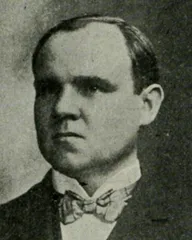
What of the Future?" By Elder James E. Talmage, of the Council of the Twelve
Throughout the three-day period now drawing to its close, two of the great auxiliary organizations within the Church the — Mutual Improvement and the Primary Associations have been — dealing with problems involving the present and the past, and — with plans for the immediate future for the few short months of the year upon which we are just entering, so close upon us as to be relatively part of the present. It is fitting that the framers of the program should have reserved the last few minutes for a thought of the future, for prospect rather than retrospect, in line and in tune with the noble resolution of devoted youth and maturity: "By the help of God I will do," instead of the old-age contentment, however well and deservedly earned, "By the grace of God I have done." The future is long, to us of mortal limitations infinitely longer than the past. The future is vibrant with life, hope, determination, work. The past is alive to us only as recollection serves and as its effects are potent in the composite present. To the individual, the past as he remembers it is known. We call it experience, sweet perhaps, or bitter, but usually both — bitter-sweet; darksome or bright, regretful or satisfying, but — generally again, both a variegated picture of joys and griefs, of smiles and tears, of successes and failures, of seeming victory and defeat. As to our individual future, we are prone to surmise, assuming that we can not know ; and yet, in a measure, we may know, by rigid deduction from the remembered past, and by careful and true analysis of the pulsing present, our calculations being corrected and confirmed by the unerring standard of revealed truth as to the will and purposes of the divine Father respecting us, his children. Let me call to our aid a figurative conception. We are weavers all. The loom of life is praying out its fabric of duty, steadily, without halt or hitch in the machinery of destiny. Our concern lies in the orderly weaving of the moments present, as the warp of life advances unceasingly, uninterruptedly, inch by inch, and the shuttles of duty dart to and fro with their weft of current deeds. What shall the woven picture be? In color
*Delivered at the Sunday evening meeting of the M. I. A. Conference, June 13, 1920.
—
934 IMPROVEMENT ERA
bright or somber? Shall it be white or stained with the awful crimson and black of sin? Shall it be a realization of the great Designer's plan, or but a blur upon a mass of tangled threads, the effect of the weaver having become a law unto himself? We may not know the whole design, only the part with which we are at present concerned. Once I was privileged to visit a school for the sightless. It was a well-ordered institution. There were work-shops, and among them a rug and carpet factory. Blind pupils sat at the looms. One particularly beautiful rug attracted much attention; and the blind boy who had made it, through work, work, work, covering many months, all in darkness, was highly complimented by the visitors. "Thank you," he said, "others have told me that my work is beautiful. They say there are flowers in the rug, roses and pansies." "Yes, and beautiful flowers they are," rejoined one of the visitors. "But tell us, how can you do such work when you are blind?" "I do as I am told," he said, "and the one who plans the pattern and who directs me in my work, knows, because he can see!" Concerning the present and the immediate future, it behooves us to be devotedly and devoutly attentive. As reminiscence, though in place and profitable at times, may be indulged until it becomes an idle habit, paralyzing to present service, so, too exclusive contemplation of what lies beyond and far may be equally wasteful of the time that is ours, here and now. One of the minor prophets, a poet inspired, has rightly admonished us, that:
"* * * Not to know at large of things remote From us, obscure and subtle, but to know That which before us lies in daily life Is the prime wisdom." Milton.
Look ye all to the duty of the hour; it is the parent of the on-coming future. Be mindful of the solemn and eternal fact that in the succession of divine events every ending is a beginning, every consummation a commencement. The ripening of a fertilized seed is the potential start of a new plant. Every human birth marks the termination of the antemortal stage of a spirit's existence, and the beginning of the short but surpassingly important epoch of mortality; and what we call death is a real ending of mortal experience and the beginning of the advanced stage of — disembodiment in paradise, or hades, according to what the spirit really is; and that period shall in time be terminated by
—
WHAT OF THE FUTURE? 935
the resurrection of the just and unjust, in due order; and thereby shall the never-ending state of reembodiment be initiated. The future is coming apace, faster than we are prepared for it, and we are in danger of being overwhelmed. Verily is the word of God undergoing fulfilment, literal and awful, that he would cut short his work in righteousness; and short indeed is our span. Another of the poets, lent to earth in divine mercy, has depicted the relation of present to future by the commonplace incident of a potter working at his wheel, molding the plastic clay, as his intelligence and skill impel; and as he works he sings: "Turn, turn, my wheel! All life is brief; What now is bud will soon be leaf; What now is leaf will soon decay. The wind blows east, the wind blows west; The blue eggs in the robin's nest Will soon have wings and beak and breast, And flutter and fly away.
"Turn, turn, my wheel! This earthen jar A touch can make, a touch can mar. And shall it to the Potter say 'What makest thou? Thou hast no hand.' As men who seek to understand A world by their Creator planned, Who wiser is than they. "Turn, turn, my wheel! What is begun At daybreak must at dark be done. Tomorrow will be another day. Tomorrow the hot furnace flame Will search the heart and try the frame, And stamp with honor, or with shame, These vessels made of clay!" Longfellow —"Keramos." To him who wills to be molded as the Master Potter would have him be, shall come the glory rightly belonging to a vessel of honor. To the weaver who works out the Designer's plan, shall come the gift of tapestries, priceless and eternal, to adorn the abode prepared for him in the mansions of the just. What of the future? A time of test and trial is upon us. Already the furnace flames are playing upon you and me. Can we stand the heat? Shall it prove us to be vessels of honor or of shame? What of the future? Improvement, improvement, and — again improvement! the improvement that is mutual and reciprocal. The kingdom of God is a great Mutual Improvement organization. The future shall teach us the true standard of improvement and progression. Today we too commonly gage one's advancement or retrogression by that of one's fellows. One is for the
936 IMPROVEMENT ERA moment prominent or obscure, great our otherwise, because he is a little ahead or behind others. But we yet shall learn to measure by an absolute standard; and if in our progression we can carry others with us, one or many, so much the greater shall be our glory and our joy. The problems of the near future are among the most intricate and important ever given for solution to men in this school of mortality. Satan's forces are marshaled for battle under conditions of preparation and equipment born of the experience of ages; and the intensification of the world-old conflict between good and evil affects every one of us. The outcome as to the individual is largely in his own hands; the issue as to the Church of Jesus Christ is assured. The possibilities of the future are sublimely summarized in the declaration of the Lord as to his own plan and purpose, worded in a Scripture re-revealed in this dispensation, a Scripture that has startled and inspired many a thoughtful mind. Thus said the Lord: "For behold this is my work and my glory, to bring to pass the immortality and eternal life of man."
May you and I and all of us be participants in the supreme blessing, I humbly pray, in the name of Jesus Christ. Amen.
Serve ye the Lord
Awake, arise, seek ye the Lord, Aye serve Him with your might, His work roll on with one accord, The cause of truth and right.
Brothers and sisters, let not sin Your hearts and minds defile; Go seek to save, and souls to win From every kind of guile.
Thrust in your sickle now and reap, Lay treasures up on high, Aye serve the Lord now while 'tis day, The night is drawing nigh.
Let not the sun go down upon A day that's spent in vain Be up and doing, serve the Lord, Eternal glory gain. Atascadero. Calif. Annie G. Lauritzen.