Our Duty to Tested Truths of the Past
Improvement Era, vol. 23, no. 10, August 1920, pp. 903 to 908
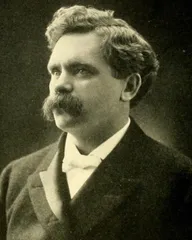
Our Duty to Tested Truths of the Past* Government by Class Consciousness Must be Resisted, and One Hundred Per Cent Americanism is Expected of All
By Hon. Brigham H. Roberts
Graduates of the University of Utah: I open my address to you with the following admonition: "Watch ye, stand fast in the faith, quit you like men, be strong." — 1 Cor. 16:13.
It is a disturbed world into which we bid you welcome today, my young friends, but it is a glorious world, nevertheless. We make no apology for its disturbed conditions, for the universal unrest which obtains. We, who have been some time in the midst of the world's activities, are not at all dismayed by the din of the confusion which exists on every hand. We have grown accustomed to more or less confusion in things, and our experience justifies us in the belief that there will come an adjustment of these our present troubles, just as there has come a settlement of past problems. We who have lived long and have watched somewhat closely the progress of events have been brought to realize that somewhere down deep in things there is a Power at work which may not be referred to man as its source, that is guiding the world to that "far off event" which, from the beginning, marked off the purpose for which the world was created. We have no doubt either but what that Power is benign, that he means well in his guidance of world movements and achievements. I may say "He", in reference to this Power, because, from observation and experience, those for whom I am now speaking believe him personal, and in some way wonderfully interested in men. This led one in olden times to say: "When I consider thy heavens, the work of thy fingers, the moon and the stars, which thou hast ordained; "Wlwt is man, that thou art mindful of him? and the son of man, that thou visitest him? For thou hast made him a little lower than the angels, and hast crowned him with glory and honor. Thou madest him to have dominion over the works of thy hands; thou hast put all things under his feet." (Ps. 8:3-6.)
The same thing holds in the relation of man to the creation. Surely, to man in a large way, and yet not absolutely,
*An address to the University of Utah graduates, delivered on Tuesday, June 8, 1920.
904 IMPROVEMENT ERA
has dominion over the created world been given, and this argues some special relationship between the creative Power and man. This Power, at work in the midst of things, I repeat, is benign; for as the years are multiplied into ages, and age succeeds age, matters improve; they grow better; and there can be no surer evidence of benignity in a Power directing things than in the progress of things from good to better, and ever better. Referring again to the disturbed conditions that obtain in the world: As you know, we have just passed through the world's greatest war. From August, 1914, to November 11, 1918, practically all the nations of the earth, including all the great powers, were locked in the awfullest war the human race has ever witnessed. Four full years we had of terrible conflict, with the most scientific equipment that man has ever used in the fell work of destruction; with the largest and best trained armies that ever debouched upon fields of battle. From first to last 59,000,000 of men were mobilized into the world's war service. This host was taken from the world's productive activities, and converted into the world's destructive agencies. Of this number, more than eight millions met death in the service of their respective countries; more than eighteen million were wounded, bequeathed as a pitiful legacy upon the charity of the world. Seven millions were numbered among the prisoners and missing, making the total casualties of the War, as casualties are usually computed, more than thirty-three millions, out of the fifty-nine millions of men mustered into the service. The property loss, on land, is given at $29,960,000,000 (one third of which falls upon France). The property loss, on sea, was $6,800,000,000, as given by the authority here followed: while from all sources, using round numbers, the direct cost is given at $186,000,000,000; the indirect cost at $151,000,000,-
000, making the stupendous total, which no man comprehends, of $337,000,000,000! "The figures presented in this summary," comments professor Bogert, "are both incomprehensible and appalling: yet even then do not take into account the effect of the war on life, human vitality, economic wellbeing, ethics, morality, or other phases of human relationships and activities which have been disorganized or injured" (Current History, Dec. 1919, p. 438). So that, awful as mere figures may represent the results of the war to have been, they are still worse than that, for the more evil part of war cannot be reflected in statistics. The United States may be represented in this war as having — mobilized 4,272,521 men. Of these I quote offcial report up
OUR DUTY TO TESTED TRUTH. 90$
to February, 1919—67,813 were lost by death; 192,483 were wounded; the missing and prisoners numbered 14,363; making a casualty list of 274,659; a light toll in comparison with other nations of the allied powers, notably France. The cost of the war to the United States, is represented by about thirty-two billions of dollars, near ten billions of which were loaned to our allies in the wa*r. The United States, anticipating a longer struggle than followed her entrance into the war, was preparing for much larger sacrifices than are represented in these figures, both in men and in treasure. She had listed for her service, in addition to those mobilized at the front and in training camps, nine other millions of men; she had men organized from the German western battle fronts to the west coast of France, and on the shores of England; thence all the way across the Atlantic to our eastern seaboard; thence through three thousand miles of territory to our Pacific coast. Our lines, from the battle fronts to the rear, were six thousand miles deep, and every mile effective and unbreakable. No wonder Germany's will to victory was broken. She could see the United States rising in her might to overwhelm her, and cried out for peace, and peace was granted upon American assurances of justice to the vanquished. It is a commonplace to say that this war was gigantic, unparalled in history, so immense in its results as to be incomprehensible. We exhaust our adjectives and yet we know that we have not described, and cannot describe it. It is only referred to here, however, in order to give some account of the cause of the world's disturbed condition upon your entrance into its active affairs; and to remove from your minds all cause — for astonishment at the world's unrest its broken harmonies, and its immense present-day problems. Is it to be marveled at that we find conditions so unsettled in the world, when we take into account what the world has passed through during the just-ended four years of world war, and two years of its aftermath, with its peace terms and program not yet completely settled, nor can be until the United States enters the forming league of nations for the enforcement of peace? These unsettled conditions in the world's affairs, however, and more especially in our own country, in which you will be more immediately concerned, should not be discouraging to you, I am holding. These very conditions may form the golden rounds in the ladder of your opportunity, by which you shall climb to the heights of your anticipated successes. Most earnestly, as your friend, I pray it may be so. Level plains and smooth seas are not always the most interesting to wayfarers, to travelers. The broken plains, the mountain heights, and even wind-fretted oceans, where the la-
906 IMPROVEMENT ERA
boring bark climbs bills of seas and then ducks again as low, give thrills and exalted moments never found on level plains and in smooth seas. So in life, broken harmonies, a disturbed state of industrial conditions, social unrest, political upheavals, religious revolutions, all these, usually but the birth pains of a new age to be, these are but challenges to your strength, to your wisdom, to your patience and endurance. The manner and spirit in which you will attack your life's problems under these conditions of unrest will proclaim to us, who will be spec- tators of, and associates in your efforts, your fellow Workmen, what kind of men you will be, what kind of comrades to us who are now bidding you welcome into our world. Being older than you, and therefore, more experienced, and somewhat more acquainted at least with our world, though not as well equipped as you are for ultimate successful achievements, this occasion affords me opportunity for preaching to you a bit, for giving you our ideas of the terms on which your success will depend, and this, I hope, without giving, with our preachment, any offense. Let me suggest that in the first flush of your enthusiasm and your assault upon the problems you will meet, do not attempt to break absolutely with the past. Let your mental attitude be evolutionary rather than revolutionary. The race, up until now, has not lived in vain. It has hived some wisdom out of its age-long experiences. It has a large body of valuable tradition which may be regarded, in the main, as tested truths. Respect for this, by the generation which preceded mine, was called "respect for the wisdom of our ancestors." I think the phrase a good one, and helpful if remembered. I commend it to your consideration. And yet I recommend no slavish adherence to the past. I know that breaking with the past is sometimes needful to progress; that the law of the universe, in 4ie main, is one of change. "All things," as an ancient philosopher said, "are in a state of flux." But, while things, in the main, are dynamic, and hence changing, it must not be forgotten that there are also static elements in the realm of things, things that are permanent, that make for stability. Men change, circumstances modify times, alter their fashions, but principles do not change. Allow me to put these ideas in more concrete form, and in relation to things with which you will have something to do very early in your life, in our world of action, as distinct from your world of theory. And first, as to the suggestion about breaking with the past, with something of caution. The founders of our government affirmed the right of revolution, the right to change or abolish a government which no longer assured the maintenance of the true ends of government,
OUR DUTY TO TESTED TRUTH. 907
but in affirming the right, they were careful to say, "Prudence, indeed, will dictate that governments long established should not be changed for light and transient causes; and accordingly all experience hath shown that mankind are more disposed to suffer, while evils are sufferable, than to right themselves by abolishing the forms to which they are accustomed. It is only when a long train of abuses and usurpations, pursuing invariably the same object, evincing a design to subject the people to despotism, or in other ways seriously menace their safety or their freedom, that revolution, the abrupt changing or abolishment of government, becomes justifiable." All of which means that sometimes, and often, it is better "to suffer the ills we bear, than to fly to those we know not of," and best wisdom, I tell you, lies in caution. As to permanent principles in government, let me remind you that these truths still endure and are still self-evident: That all men are created equal, that they are endowed by their Creator with certain inalienable rights that among these are the ;
right to live, the right to be free, the right to pursue happiness. That to secure these rights, governments are instituted among men and derive their just powers from the consent of the governed. Take note here of this great American doctrine that these rights are God-given endowments, that they are inalienable, they may neither be taken from people by others, nor abandoned by themselves, they are inalienable— indestructible. Note that in the foregoing all men are affirmed to be equal, meaning that they are equal before the law. So long as that principle remains true, and the truth of it is eternal, as well as self-evident so long as that principle remains true, it forbids ;
the creation of class distinction under our government, and rebukes the creation of class consciousness so earnestly advocated in these days of Bolshevik propaganda. All men are equal before the law; all men are endowed by their Creator with the inalienable right to live, with the right to be free, with the right to pursue happiness. None may be deprived of these rights by any innovating system recognizing them as belonging to one class, and as not belonging to another. They belong to all, and to all equally. They must be preserved to all without distinction, and this government that is to secure these rights to men, this government that derives its just powers by the consent of the governed, this is to be a government by the people, of the people, and in the interests of the people; and class distinction in government, or government by classes, or trade unions merely, or cults, religious or secular, festered by class consciousness, much-vaunted in certain quarters just now, means that free government would perish from among men, and must be resisted.
—
908 IMPROVEMENT ERA
Government must protect all the people; protect them as much from mob and class domination, as from the insolence and injustice of predatory wealth combinations and political boss domination. In all these matters, the times demand and your country expects one hundred per cent of Americanism from you. And now, to return somewhat to the point of starting, and referring to things enduring. Let me remind you that among these still stands God's ancient sacrifice, "an humble and a contrite heart." Stands, also, the truth that God prefers before all temples and all forms, "the upright heart and pure." Stands also the "Ten great words" the covenant of Israel, called by us the "Ten commandments," all in force, too, save only as, modified by the precepts and exposition of a Teacher greater than Moses. Stands, also, Christ's summing up of the law and the prophets into the "Great Commandment:" "Thou shalt love the Lord thy God with all thy heart, and with all thy soul, and with all thy mind; and thou shalt love thy neighbor as thyself." Stands, also, the sermon on the mount, without a line to be effaced. Stands, also, the British Magna Charta. Stands, also, the American Declaration of Independence and the Constitution of tli3 United States. These be the monuments of religion and civilization, imperishable documents, they; the maintenance of which, and the interweaving of their truths into the lives of the people, are essential to all progress, to the peace, liberty and happiness, of all the people, and to the perpetuation of civilization itself. It is in respect to all these that I now repeat the admonition with which I opened this preachment: "Watch ye, stand fast in the faith, quit you like men, be strong"
Loving Animals
"If teachers have the right spirit in humane work, it will not take a great deal of time or energy to do a really great work among the children. * * * It is the duty of every teacher, and everyone who has a part in a child's life is a teacher, to see that our boys and girls know something of their natural environment, and above all, that they have the right attitude to their little outdoor brothers. It is who does the child not know a horse, a dog, a who cat, a bird, a toad, a turtle, a caterpillar, will abuse any one of them. Educate him along these lines and give him an opportunity to lay the foundation for thoughtfulness, unselfishness, in a word, humanitarianism." Humane Education Press Bureau.