What Shall We Do on the Sabbath Day?
Improvement Era, vol. 19, no. 10, August 1916, pp. 859 to 865
: :
Improvement Era Vol. XIX AUGUST, 1916 No. 10
What Shall we Do on the Sabbath Day? 1
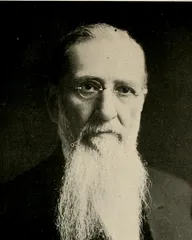
BY PRESIDENT JOSEPH F. SMITH
I came this morning, under the request of one or two of my
friends and brethren, to talk to you a little about what we should do on the Sabbath day. The great, difficult question seems to be, what shall we do on the Sabbath day? I am going to take the liberty to read a few words from the Bible. The scriptures give us this history
"Thus the heavens and the earth were finished, and all the host of them. And on the seventh day God ended his work which he had made; and he rested on the seventh day from all his work which he had made. And God blessed the seventh day, and sanctified it: be- cause that in it he had rested from all his work which God created — and made." Gen. 2:1-3.
We have repeated admonitions in the later revelations, through the Prophet Joseph Smith, that the Lord requires us to observe all the commandments that he has given unto his children, and he has made it a duty that all men shall keep the command- ments which he has given unto them, in order that they might be saved and he has declared, pointedly, time and time again, ;
through the prophets, that those who will not do this have no claim upon that salvation which brings exaltation and glory and eternal happiness and joy. What shall we do on the Sabbath day? I will read a little again
"And that thou mayest more fully keep thyself unspotted from the world, thou shalt go to the house of prayer and offer up thy sac- raments upon my holy day; for verily this is a day appointed unto
*An address delivered before the joint officers' meeting in the Salt Lake Tabernacle, at the M. I. A. annual conference, Sunday morning, June 11, 1916.
860 IMPROVEMENT ERA unto the Most vou to rest from your labors, and to pay thy devotions righteousness on High- nevertheless thy vows shall be offered up in all days and at all times; but remember that on this the Lords day, thou shalt offer thine oblations and thy sacraments unto the Most thy sins unto thy brethren, and before the Lord. High confessing And 'on this day thou shalt do none other thing, only let thy food be prepared with singleness of heart that thy fasting may be perfect, or, in other words, that thy joy may be full. Verily, this is fasting and prayer; or in other words, rejoicing and prayer. And inasmuch as ye do these things with thanksgiving, with cheerful hearts and coun- tenances; not with much laughter, for this is sin, but with a glad heart and a cheerful countenance; verily I say, that inasmuch as ye do this, the fulness of the earth is yours: the beasts of the field and the fowls of the air, and that which climbeth upon the trees and walketh upon the earth; yea, and the herb, and the good things which cometh of the earth, whether for food or for raiment, or for houses, or for barns, or for orchards, or for gardens, or for vineyards; yea, all things which come of the earth, in the season thereof, are made for the benefit and the use of man, both to please the eye and to gladden the heart; yea, for food and for raiment, for taste and for smell, to strengthen the body and to enliven the soul. And it pleaseth God that he hath given all these things unto man; for unto this end were they made to be used with judgment, not to excess, neither by extortion: and in nothing doth man offend God, or against none is his wrath kindled, save those who confess not his hand in all things, and obey not his command- ments. * * But learn that he who doeth the works of righteous- ness shall receive his reward, even peace in this world, and eternal life in the world to come. I, the Lord, have spoken it, and the spirit bear- — eth record." Doc. and Cov. 59:9-24.
I suppose at this period of our lives, this fast period, this period of haste and thoughtlessness, when the rush for amuse- ments and the pleasures of the world, is greater than it has ever been before, so far as I know, within my remembrance, at least, of more than seventy years, the Sabbath day is no hindrance. There is no obstruction to those who are inclined to do it, to drive their
automobiles fiercely on every Sabbath day, and especially is this the case in this city, and particularly on some of the streets which seem to have been given over for the express purposes of people who own, or who have borrowed, or who have hired, or who have bought on credit, automobiles. They rush back and forth hour after hour on the Sabbath, not only during the intermissions be- tween the hours of service in the house of God, but you will find them doing it to an excessive extent during the hours of worship, or when they should be somewhere, bowed in humility in remem- brance of the mercy and goodness and grace of God, and the kind providence that he has made for the well being of his children. I ask myself, Do you spend any part of your time riding on the Sabbath day? Are your children given to occupying the time between the services of the church to ride in automobiles? or to go fishing? or hunting? or pleasuring in the canyons on the Sabbath? If I thought they did, it would grieve me. I would
WHAT SHALL WE DO ON THE SABBATH DAY? 861
feel seriously hurt to the heart to know that my children were doing such things. We have six days in the week to work, six days to apply our minds to temporal things, six days in which there are many spare hours for us to amuse ourselves, six eve- nings in the week in which we may, if we so feel, excessively to — do that sort of thing go to the picture shows, if you please, which would be a very foolish thing for us to do six evenings in a week. It would be not only a waste of time, but a waste of means for us to do it. But you have the liberty, because there are these six days in which you may do it, if you will. But if you observe the wisdom that should characterize the conduct of Latter-day Saints, you will be very much more temper- ate in the expenditure of your precious time and means than to visit shows, and picture galleries, and theatres, every night in the week, not to say anything about the Sabbath. Some of us, I un- derstand, are not satisfied with going every day in the week, how- ever, but we want to spend the Sabbath evenings also in the show room. Having so much time, six times to one time, six days as against one day in the week, for the enjoyment of secular labors and duties, can we not afford to keep the one day in the week in observing the commandment that the Lord has given us in this revelation which I have repeated from the book? Can we not afford to give this one day to the Lord, or, rather, give it to our- selves, not so much to the Lord. It does not matter so much to him the question is, who is to derive the benefit of study that will ;
improve our minds, that will give us understanding and make us familiar with the doctrines of the Church? Who is benefited in this way ? Not especially the Lord. We derive, or would derive all the benefit if we would only devote every hour on the Sab- bath to some work, or some pursuit, or some study, that would improve our minds and make us more fully acquainted with our duties in the Church, with the law of the Church, with the com- mandments of God, and with the precepts of the gospel of Jesus Christ. And on the Sabbath days, as far as I am concerned, between the hours of service, I would love to have the privilege of sitting down in my home with my family, and conversing with them, and visiting with them, and becoming better acquainted with them. I would like to have the privilege of occupying as much time as I could conveniently on the Sabbath day for this purpose to get ;
acquainted with my children, keep in touch with them, and to keep them in touch with the scriptures, and to think of something besides fun and jokes and laughter and merriment, and such things as these. In my boyhood, I was not permitted to play a game of mar- bles on the Sabbath day. I was warned, and the hand of kindness was held permanently upon me, against playing ball on Sunday.
862 IMPROVEMENT ERA I was not permitted to wander from home, and go gossiping here
and there on the Sabbath day. Fortunately, w.e lived six or seven miles out of the city. Every Sabbath morning our team was hitched up to the spring wagon, with projections on the sides, in which every member of the family could ride up here to the city, to attend our meetings in the old bowery, on the southeast corner of this block, and later in the tabernacle in the southwest corner of the block; and we spent our Sabbath days attending meetings and, between times, taking our meals or visiting with friends our evenings, on returning home, being together in the ;
home circle under the influence of a blessed Christian mother, who was a Christian through and through, who taught us and set before us an example worthy of emulation. Where are our children on the Sabbath day? Sometimes I see groups of boys on the Sabbath, standing on the corners of the streets, on the sidewalks, gossiping, talking I know not what, but wasting precious time, doing themselves no good, learning nothing that would benefit them, wasting precious moments, per- haps learning vicious, foolish, things, and laying a foundation for worse things to come. Mv belief is that it is the duty of Latter-day Saints to honor the Sabbath day and keep it holy, just as the Lord has com- manded us to do. Go to the house of prayer. Listen to instruc- tions. Bear your testimony to the truth. Drink at the fountain of knowledge and of instruction, as it may be opened for us from these who are inspired to give us instruction. When we go home, get the family together. Let us sing a few songs. Let us read a chapter or two in the Bible, or in the Book of Mormon, or in the book of Doctrine and Covenants. Let us discuss the principles of the gospel which pertain to advancement in the school of divine knowledge, and in this way occupy one day in seven. I think it would be profitable for us to do this. "Well," says one, "isn't this too straight-laced? Isn't this bringing it down rather fine, drawing the lines rather tight on our young people?" Bless your soul, there is not, I suppose, an organization hav- ing for its purpose the education and instruction of the people, and especially of their young, who award to their children greater liberty and freedom for proper exercise, freedom of will, or free- dom to do that which is right, than this "Church does. But not freedom to do evil, to waste their precious moments, not freedom to learn evil deeds and to inculcate evil thoughts, and to build up pernicious and wicked character! No time should be allowed for that. Let us see to it that our children are so taught by their par- ents on the Sabbath day, that they will hold sacred everything that is intended for the public good. Let us teach them that that which
WHAT SHALL WE DO ON THE -SABBATH DAY? 863
belongs to another belongs to another, and not to them. Let us teach them that they must not do what I observed being done on one occasion. A gang of boys walking along past a widow's home, one of them with a cudgel in his hand. In a spiteful, contemptu- ous way, he walked up to the few pickets that remained on the fence, and ripped them off. He found some flowers where he could reach them from the fence, and pulled them down and marred the vines. They would steal into the orchard of their neighbors and rob it of its fruits. They considered it perfectly right to use their freedom to go into their neighbor's melon patch, and net only take what they could eat, but destroy as many more melons as they desired. These are things our children should not do. Another thing I wish to name that we cannot do We cannot:
raise our greenswards on our sidewalks without guarding them with iron bars to keep people from trespassing upon them, wear- ing them out purposely by walking upon them, perhaps when they are moistened with water, and when walking upon them de- stroys them. We should not so trespass. Shall we not teach our children on the Sabbath day that it is wicked to trespass upon others' rights, and rob others of their rightful enjoyments and possessions ? Isn't it proper for us to say to our children, honor the widow rather than tear down and destroy the fence around her home? Rather than treat the widow with disrespect and unkind- ness, that they should go and get a picket and nail it up where one is off? Try to build up. Try to benefit. Try to do good, and not harm. At the Arboretum, Nottingham, England, they have set up, on iron plates, all around the enclosure, these words "The public is :
expected to protect that- which is intended for the public good." I have seen people who have gone into our parks, places that have been preserved and beautified, and that have cost the taxpay- ers hundreds and thousands of dollars, to make them attractive and beautiful, comfortable and pleasant to the eye, and there com- mit nuisances, and do damage wherever they could. Why? "Oh, it belongs to the public !" It would become us very much to teach our children to be as honest with public property, with corporations, with companies, as they would be honest toward individuals. It is generally believed that it is a proper thing, and altogether justifiable, for the boy or anybody else to take all the advantage possible of a corporation, steal rides on the railroad, do anything that they can to take ad- vantage of a company. The Church employs many people. Some of those who are in the employ of the Church — and they are young men, too, some of them — have the idea, as we judge from the results of their actions, that the Church is rich. They seem
— 864 IMPROVEMENT ERA to say and think, "We'll get out of it everything that we can." We generally have to pay a little more to get men to work for the Church, and do it well, than do men who are in business for themselves, for they watch their employes carefully. It is a wrong spirit for any man to attempt to take advantage of the Church of Jesus Christ of Latter-day Saints in these small things, or in any greater things. I think it is a good thing for us to take our children under our wings, so to speak, at least one day in the week, and teach them honor and honesty, and reverence for that which is right and divine, and teach them to respect age and infirmity, and to be kind to the stranger who is within our gates, and to protect, as the little mottoes say, "That which is intended for the public good," for it is intended expressly for our own good and only for our good. We should teach them politeness. We should teach our boys to be gentlemen, and our girls to be ladies. And when I speak of a lady or a gentleman, I mean a boy or a girl, or a man or a woman, who observes genuine modesty, meekness, mildness, patience, love and kindness toward the children of men. I recall a little sentiment that I used to repeat in my child- hood, "true gentlemanliness is to do and say the kindest things in the kindliest way." No man who is a gentleman would be disrespectful to any woman, whether she were dressed in the richest style, or whether she were dres'sed immodestly, as we sometimes see people dressed in our day. Considering the customs they are patterning after, we may give to them our sympathy and pity for their lack of modesty. Pass them by, we do not want to insult them because of their condition, but we do feel a sympathy and pity for them, that they do not know better, and that they do not do better. Or, if they be dressed as ladies, in very deed, treat them kindly, treat them with respect, because our mothers are women, our sisters are women, our wives and our daughters are women, and we love them because they are women, and because they are dear to us, and they make up our sum of happiness and hope of eternal happiness in the world to come. We are not without them, neither can we accomplish the mission we have to perform without them. There are a great many things that we can do on the Sab- bath day that would entertain, interest, and instruct our children at home, between the hours of service. Then, on Monday, if they want to go and turn summersaults, and jump, and have a frolic, exercise themselves, or if they want to go fishing, let them go, provided there is time to do it, and if there is nothing better for them to do. To me there is nothing so foolish, so idle, as to go to a dead stream with a fish hook and a worm, and sit on the bank for hours and hours trying to induce one of the finny tribe to take a barbed hook on which they have placed a dainty allurement. I
— WHAT SHALL WE DO ON THE SABBATH DAY? 865
never had time to do it never in my boyhood. I was always ;
busy at something, and had so much else to engage my time that I could not go fishing in a dead stream, or pond, or lake. If a boy wants to take a fly-hook and go to a rapid stream, and if a trout is foolish enough to catch it and get it, all right, let the boy take him and eat him. But there is exercise in that, and there is skill, which there is not in putting a hook out on the seashore
and going out and standing for hours and hours, day in and day out, to end perhaps in catching a sprat an inch and a half long during the day ! Let the boys have their exercise. Let them have amusements at the proper time, but let them be taught better things on the Sabbath day. These are my sentiments, very crudely expressed, and I am pleased to say to you, my brethren and sisters, who are assem- bled here, I feel I stand today in the presence of those who are the very salt of the earth, and whose salt has not lost its savor. I feel that I am in the presence of those who have lighted their candle, and they have not put it under a bushel, but they are put- ting it forward where it can be seen, that others may see their good works and, by their example, learn to glorify God our Eter- nal Father. God grant this, is my prayer, in the name of Jesus. Amen.
Pathfinders of 1847
From far oft climes they halting came, That motley multitude, O'er valley, hill and parched plain To mountain solitude. Nor chart nor compass guide they had, For Joseph, Brigham led. Great lengths of weary miles they trod Marked with the graves of dead.
A stretch of barren land they found, A refuge from their foes; But soon by industry and toil, The land bloomed like a rose. Not e'en their poets' wildest dream, Exceeds the scene today. So, to these "builders of our state" AIL love and rev'rence pay! Hazel S. Washburn. BLANDING, UTAH