A Great Responsibility
Improvement Era, vol. 19, no. 10, August 1916, pp. 895 to 910
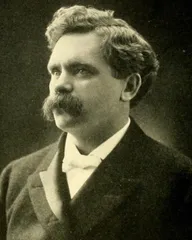
A Great Responsibility- "But ye are a Chosen Generation, a Royal Priesthood, an Holy Nation, a Peculiar People"
BY ELDER BRIGHAM H. ROBERTS
Elder Grant announced that B. H. Roberts would now ad- dress the conference on the subject, "Ye are a Chosen People, a Royal Priesthood." For the purpose of a ground plan of exposition of the text read by Elder Heber J. Grant, I shall read also a few words of the context. The text iself is found in the first letter of St. Peter : "Ye are a chosen generation, a royal priesthood, an holy nation, a peculiar people, that ye should show forth the praises [or, as it written in the margin, the excellencies] of him who is hath called you out of darkness into his marvelous light," [and the next verse], "which in time past were not a people, but are now the people of God which had not obtained mercy, but now ;
have obtained mercy." This text is not of my choosing it was chosen for me. The ;
first I heard of it was the announcement made by the committee having in charge the program of this conference, and they read off this text at one of our Board meetings and announced that I would be asked to speak upon it. I doubted then of my ability to treat this text to the satisfaction of those who had chosen it for me, and I still doubt my ability to do that. Indeed, I do not know just what idea prompted the selection of the text.
I have not conferred with those who selected it with a view of
finding out what it was they expected me to develop from it. I did, to one or two, express the doubt of my own heart in relation to my meeting their expectation. While the text is not of my choosing, my treatment of it necessarily must be mine, but whether I shall fulfil the expecta- tions of those who selected it or not, I cannot say. I know this,
that I have no other desire in my heart than to develop the exact truth in relation to the text and the things for which it stands, and the hopes it may inspire and to this end I do most ;
earnestly join in the prayer of this evening, that opened these services, that the Lord would be good to us, and especially to me, that if there is in the words of this text of the apostle any
*A discourse delivered at the Annual Mutual Improvement Asso- :iations Conference, Sunday evening, June 11, 1916.
:
896 IMPROVEMENT ERA message that the young people of the Church of Jesus Christ of Latter-day Saints assembled in conference should hear, that I may be able to deliver it unto them, and then whether it shall bring censure or praise of men, I shall be grateful to my Father in heaven. Incidentally I may say to you that I do not remem- ber the time when I felt the burden of a task more than I have felt this one, or greater need of help from the Lord — that he would inspire the thought and the expression of it on this occa- sion. If you turn to the opening verse of this chapter of will First Peter, you will find the people to whom he addresses the letter to be located "in Pontus, Galatia, Cappadocia, Asia and Bithynia," regions of country visited by the Apostle Paul more especially, and this letter is regarded as a general epistle to the church in those provinces, a general epistle by the then earthly head of the church, and is called the First General Epistle of Saint Peter. He is addressing, not only "the dispersion," meaning by that the Hebrews scattered through those countries, who had received the gospel, but the Gentiles also, which you may gather from one of the verses that I read, wherein it is said "which [referring to the people in those provinces] in time past were not a people, but are now the people of God, which had not obtained mercy [that is, in the past] but now hath obtained mercy." You must carry in your thought the idea that in ancient times the Hebrew race constituted the peculiar people of the Lord. He selected them to bear his name, and put such weight of responsibility upon them that, whether in obedience or dis- obedience, they should be a sign unto the inhabitants of the earth. If obedient in the keeping of the commandments of God, such blessings were to be theirs that they would be exalted above all other people and if disobedient, then such calamity ;
and suffering should overtake them that they would still be a witness for God in that they were the people who had betrayed a trust committed unto them, and by reason of their calamity they would become a sign unto the world because of the fulfil- ment of the terrible curse put upon them in the event of their dis- obedience. And so, whether in good or evil fortune it has been the lot of the Hebrew race to be known as the people of God. But now behold, a change had come. A new dispensation of the gospel was introduced. The old law had been fulfilled in the mission of the Christ, and was set aside. Now it was the pur- pose of God to call together another Israel, not constituted of one race or nation, or people, but a people that should be made up out of every nation. And so you find here at the time of the writing of this epistle the creation of a new Israel under the gospel of the Lord Jesus Christ, an Israel in which there should be neither bond nor free, Greek nor Roman, Hebrew nor Samar-
"YE ARE A CHOSEN GENERATION" 897
itan, but all one in Christ Jesus, the Lord, the formation of a new Israel under the grace and the law of the gospel of Jesus Christ, and the gospel was unto all that would receive it. Holding these thoughts in mind, I will now say I am in- clined to think that those who chose this text for me had the conception that in these modern days, also, we were living under yet another dispensation of the gospel, "the dispensation of the fulness of times," it is called, the dispensation in which God has promised that he would "gather together in one all things, whether in heaven or in earth, even in him," Jesus Christ, our Lord; and that there is now forming a new and larger Israel than ever before. First of all, there is a call unto Israel to gather, especially unto the house of Joseph, that holds the right of heirship, being gathered unto his promised lands, here to receive keys of author- ity and power, through which to bless latter-day gathering Israel. — — Here in this land of Zion America unto which Israel is called, where Ephraim, holding the right of the first born, stands to receive the other tribes of Israel and minister to them in the holy temples and minister to them the sacred mysteries and holy ;
ordinances of God's house, in which the municipalities of the great modern and larger Zion shall receive their equipment and endowment, and receive such spiritual power as will thoroughly equip them for the accomplishment of the mighty purposes of God in "the dispensation of the fulness of times." In this dispensation the gospel is to be preached, not to a restricted area or to special races, but to be preached — for such are the- terms under which it has been restored from heaven by the message of an angel (Revelation 14:6, 7) —"unto every nation, and kindred, and tongue and people," and the proclamation is to be made with a loud voice, "fear God and give glory to him, for the hour of his judgment is come, and worship him that made the heaven and the earth, and the seas and the fountains of water," a plain implication that the inhabitants of the earth in the hour of God's judgment would not be worshiping "the Creator of heaven and earth and the seas and the fountains of water ;" and therefore, an angel must needs come with the everlasting gospel to the earth with this call to the worship of the true God. The world was without the gospel of Jesus the Christ, and hence there must needs be this restoration of it, and this creation of a new, and a modern Israel, or chosen people of God, who should bear the responsibil- ity of showing forth God's "excellencies," or "virtues," through their lives, through their ministrations, and the performance of this great mission laid upon them in the interests of all the inhab- itants of the earth. Now it rather an exalted station that this line of thought is
leads to in your behalf, youth of Zion. AmI to proclaim you
— 898 IMPROVEMENT ERA as this modern Israel, this chosen generation, this royal priest- hood, this holy nation, a peculiar people, that shall set forth the virtues of God to the inhabitants of the earth ? Who, seeing the development of divine things among you, shall be constrained to accept this message that you proclaim, and worship the God that you proclaim, and the Redeemer that you set forth as the Savior of the world? If that is the purpose of those who gave me this text, then heartily do I join with them, and thus proclaim you, and set you on high, a holy nation, a people consecrated to God, a royal priesthood! And now, having done so, what is to be the effects of such a proclamation? Are you made proud by it? Are you lifted up ? Or, are you humbled in your spirits, by reason of the great responsibility that rests upon you under such a recognition of you? I do not know how you feel about responsibility, but for myself, when any responsibility has come to me —I have felt not exalted but saddened not made hilarious, but sober-minded not ; ;
proud, but humble, lest I come short of that which has been ex- pected. That is the effect upon me. I believe it is the effect upon any serious-minded people, because with these honors, with these special privileges, come corresponding great responsibilities. Right here I apprehend the motto of my native land, the motto of England's aristocracy "Noblesse oblige," meaning, "rank has its obligations"— station its responsibilities. And so with the people who are to be selected out from the nations of the earth to represent God in the world, and have conferred upon them a divine authority, and a mission to evangelize the world what a responsibility rests upon such a people ! And then, what if they fail? What advantage does this position give to them if they fail? No advantage at all, but condemnation,— greater censure, a profounder punishment than can fall upon. the inhab- itants of the earth who are given no such position of honor and are under no such obligations. It is with fear and trembling, then, that, for one, I contemplate the responsibilities that accom- pany these high privileges and blessings that come to you, youth of Israel. And let me, before leaving this division of the theme, impress upon you, if I can, the fact" that these privileges, these opportunities that have come to you, mean just one thing, oppor- tunity for service with God, if you so elect and all of your oppor- ;
tunities are vain and of no worth to you unless you avail your- selves of this opportunity of service with and for God. I judge that to be the fact in this present case, for the reason that it was so in ancient times. Take it, for instance, in the days of John the Baptist, when that great prophet was delivering -his message, and he saw the Pharisees and the Sadducees coming to him for baptism; and he said to them: "Ye generation of vipers, who
"YE ARE A CHOSEN GENERATION" 899
hath warned you to flee from the wrath to come? Bring forth, therefore, fruits meet for repentance, and think not to say within yourselves, we have Abraham to our father for I say unto you ;
that God is able of these stones to raise up children unto Abra- ham/' In other words, their inherited privileges amounted to nothing, except condemnation, unless there went with these in- herited opportunities, real, genuine acceptance of the law of God and repentance of the evil of which they were convicted. Again, a Roman Centurion came to Jesus, pleading that the Master would heal a beloved servant. The Savior consented to go to the nobleman's house, but the Centurian, believing himself unworthy, said "Nay, but speak the word, and my servant will be healed." The Christ marveled at that. "Why," said he, "I have not seen so great faith, no not in Israel; and I say unto you," said he to those about him, "many shall come from the east and from the west, and shall sit down with Abraham, Isaac, and Jacob in the kingdom of heaven, but the children of the kingdom shall be cast out into outer darkness where there is weeping and gnashing of teeth." This is another instance where inherited privileges are shown to mean nothing unless there is harmony between such inherited — advantages and conduct obedience in keeping the command- ments of God. Another thing that leads me to depreciate no, I will not— say depreciate, special inherited privileges, but another thing that leads me to regard them as not of the very first importance and — that is, the way the people who have them so often treat them. I want to illustrate that a little to you who are here assembled, and who are teachers of the youth of the Latter-day Saints. When T think upon the gathering of Israel in these modern days, at the time when the long journey from European shores had to be made in sailing vessels, not always first class, and think of the storms they encountered throughout the weeks and weeks that they were out on the ocean, all the way from five to six and seven weeks, in making the journey; and then remember also the inconvenience of the railroad and steamboat journey to the frontiers of the Missouri; and thence the journey of a thousand miles across the plains with ox teams, and in some cases, less fortunate, with hand carts, for that long distance, enduring hard- ships one would think too much for the strength of man, to say — nothing of aged men and women and children when I recall, as sometimes I do, all this, I ask myself the question what prompted them to engage in such an undertaking? What was the mo- tive, the impelling force behind it all? I can remember how in my own mother's case, and in the case of many with whom I have conversed, and the snatches of conversation that I remem- ber to have heard on the sea journey and on the plains, the thing
900 IMPROVEMENT ERA that was in the heart of that mighty emigrant throng was the desire to be established in the settlements of Zion, among the Saints, where they could rear their children in the fear and ad- monition of the Lord, where the house of the Lord was being builded, and where the sacred rites of the temple could be ad- ministered, and where they and their children could be taught in the ways of the Lord, and where they could walk in his paths. That was the incentive that prompted the sacrifices and the toils of our fathers and of our mothers in gathering to Zion. Well, they obtained their hearts' desire. They are where the "Moun- tain of the Lord's house" is erected, unto which many people have come here they have been and are taught in the ways of ;
the Lord, they may walk in his paths they are within the shadows ;
of the temple of God, they have received the blessings of the house of the Lord their children are reared in Zion, they dwell :
among the temples of God and have birthright to all the priv- ;
ileges of the Lord's house— inherited privileges. But in the midst of all these inherited opportunities what fact confronts us with reference to the children of Zion taking advantage of the bless- ings of the house of the Lord? About one-half of the marriages performed in Israel are civil rather than temple marriages ! And that is the way some children of the Kingdom in this new and modern Israel are treating their inherited privileges, which to bestow upon them their fathers and mothers sacrificed and suf- fered so much. Of what avail are your honored positions and high privileges if you thus neglect them? Again, one of the burdens of this conference that we have had emphasized, one reproof administered to the youth of Zion, one complaint charged against them, is their transgression of the Sabbath day, the desecration of the Lord's day, the day consecrated unto sacred and holy worship of the Lord and right remembrance of him. What avails your honored station and high privileges as "a chosen generation, a royal priesthood, an holy people," if, knowing the word of God in respect of this matter, you are found delinquent and may be numbered, — at least — many may be numbered- among those who are "lovers of pleasure more than lovers of God?" Another burden of this conference has been the immodesty of dress among the daughters of this people, who are "a holy nation, a royal priesthood." Yet it must needs be that we be sharply censured for this tendency towards immorality. Of what avail, I ask you, are your inherited privileges in Zion if you indulge in the fashions and in the spirit of Babylon — that spirit that would destroy Zion and uproot the hopes of the fathers and de- stroy their anticipations in respect of their children ? And again, we find it necessary, according to the action of this conference, among this same "peculiar people," who hold "a
"YE ARE A CHOSEN GENERATION" 901
royal priesthood," and are separated unto the Lord — we find it necessary to favor the enforcement of temperance by the civil law by the employment of what is known among men as "effi- ;
cient government," a government resting upon force for its effec- tiveness instead of upon persuasion and the right teaching of doctrine and this among a people that are a "royal priesthood," ;
"an holy nation," separated unto the Lord to be in these last days a beacon light unto the world, and with a message of salva- tion unto the inhabitants of the earth !Is it not rather humiliat- ing to have to admit that we find it necessary to pass from moral suasion to effective force in order to insure temperance ? To pass from moral government to efficient government, and in this re- spect become as the world? Now it is not my purpose to depreciate the blessings and opportunities that come from inherited privileges. I am not doing that. I only desire to awaken your attention to these con- ditions and I am holding this in mind, too, that while we may ;
be rightly charged with the evils here pointed out, that there are some against whom these indictments may be drawn, yet I believe that the great host of Israel are sound of heart, and that notwithstanding these defects with some portion of the mem- — bership of the Church and we must make these confessions of — the truth as to conditions prevailing, yet there are a very much larger number who are exemplifying in their lives the law of God and they sanctify the people, and make the Church of God ;
acceptable unto him. It is only for the purpose of correction, it is only for the purpose of sounding the note of warning, it is
only for the purpose of building up, that I for one call attention to these delinquencies, and that, of course, is the purpose in the hearts of all the brethren who have called your attention to the evils that exist in Zion. Now another division of the theme, and of course this di- vision is closely connected with what has gone before, for it has to do with an attempt to secure inherited privileges. We are living in the age of eugenics, a science, so called, that aims to secure betterment of mankind by providing good birth, good parentage for the generations coming into the world now, and those generations that shall follow. This philosophy is carried up to the point, with some people, of advocating, in various ways, the elimination of the degenerate, the unfit. The thought is that by giving men good birth, giving them a right start in life, you are going to correct the evils of the world, and establish right- eousness directly upon this basis of good birth and favorable environment. I have not a word to say against any honest effort that is put forth to accomplish these two things, for indeed good parentage is desirable, and good environment for childhood and youth — and, for matter of that, for manhood and old age — is also
902 IMPROVEMENT ERA desirable. A very great deal is expected of this movement. Many of those who are advocating this system for human bet- terment are giving a great deal of patient and earnest investiga- tion of "the law's of heredity ;" but there are also those, as says Prof. Louis Trenchard More, professor of physics in the Uni- versity of Cincinnati, in an article published in the Hibbert — Journal of January, 1915 there are others, quite as "profes- sional as eugenists, whose motives are not so trustworthy." These so-called "laws" of heredity are sometimes based on in- sufficient evidence, he claims. And, by the way, this leads to a matter that tends to upset the theories of men who hope to re- form humanity my eugenics alone who base all their efforts upon ;
this one line of endeavor. These so-called laws of heredity are based on insufficient evidence, says the professor. Apparently the only two genealogies which have been worked out in America are the Jukes and the Edwards families, one a celebrated family of criminals, the other a rather celebrated family of divines and professors, and men successful in various honorable lines of activity in America. The first named, the Jukes family, has shown itself to be an undesirable and the other a desirable strain, yet, curiously enough, "the first ancestress of each of these large families in America," says Professor More, "was an immoral woman," a fact that is rather startling to those who put their trust in eugenics for the salvation of the race. One would expect, if one half of what is claimed for the so-called science of eugenics were true, that good or evil parentage would determine the char- acter of men and the destiny of the race that in the first case, ;
good parentage would produce a race of angels and the other, ;
evil parentage, would produce a race of demons. But that is not the case for any great length of time. Somehow or other things get crossed. Tendecies are broken up. Both good and evil lines are jumbled; the looked for effects are thrown into utter confusion as matters now stand and, to say the least of it, ;
such happenings and irregularities can be cited in the spheres of both good and evil parentage that makes it rather discourag- ing, I should think, for those who lay an over amount of em- phasis upon what the so-called science of eugenics will do for the race. As the author of Loma Doone puts it, "The robbery of one age is the chivalry of the next." And again "There is :
scarce a man worth a cross of butter, but what you may find a hole in his shield within four generations. * * * * What noble family but springs from a captain of robbers?" The Jukes and Edwards families are not the only Amer- ican familieswhose history gives light and instruction upon this subject of eugenics. One of the most instructive families in American history is that of Lehi and his wife Sariah. Thev were righteous and holy people, chosen of God for a great mis-
;
"YE ARE A CHOSEN GENERATION" 903
sion. Both father and mother were good. But what do you find in their family? Two distinct classes of children, good and bad, yet the same parentage and the same environment. Laman and Lemuel, representing the unrighteous branch; Sam and Nephi, the upright and righteous branch. So, too, the two sons that were born to Lehi in the wilderness, Jacob and Joseph, they, also were righteous men, and, associated with Nephi and Sam, became the ancestors of a righteous people. And yet, what do you behold in this family ? True, Laman and Lemuel became the ancestors of the unrighteous branch, and yet in the third generation of this American family, the righteous branch of it goes widely astray in the prime matter of sex purity and a ;
man of the second generation in that race, upbraids the Nephites for gross immorality, while he acclaims the purity of the Laman- ites and says that they do not try the hearts of their wives with their abominations as the Nephites did in their forbidden polyga- mous relations, in the which they brought deep sorrow to the hearts of their wives. "Behold," says Jacob to the Nephites, "ye have done greater iniquities than the Lamanites, our brethren. Ye have broken the hearts of your tender wives, and lost the confidence of your children, because of your bad examples before them and the sobbings of their hearts ascend up to God against ;
you. And because of the strictness of the word of God, which ******* cometh down against you, many hearts died, pierced with deep wounds. Behold, their [the Lamanite] husbands love their wives, and their wives love their husbands and their husbands and their wives love their children and their ;
unbelief and their hatred towards you, is because of the iniquity of their fathers wherefore, how much better are you than they, ;
in the sight of your great Creator?" And thus the lines cross, in the third generation between the Lamanites and Nephites. And down the' line of this Amer- ican Book of Mormon family history you will find that occasion- ally the generally unrighteous Lamanite branch becomes more righteous, in certain periods, than those who were the descend- ants of the righteous branch, the Nephites. If there is such an over-powering and dominating force in this matter of eugenics to produce a superior race of men, or of special individuals, to become a sort of super-men, then you would think that there would be special care taken, a well defined law given to preserve the line of ancestry of such a race, or of such individuals, without blemish. But no such provision is made in the law of God, unless it be in the one case where sex relations or marriage with one race of men is forbidden to the white race. But apart from that provision I know of no such law of God as contemplates keeping lines of ancestry without blemish. It never has been done in this world no, not even in the one case where ;
: ;
904 IMPROVEMENT ERA above all others you would look for it to be done, namely in the earthly ancestry of the Christ. In his earthly ancestry, as given by Matthew, there are two Gentile women, viz., Rahab and Ruth while in three cases immoral blots attach to the names of three of the women ancestors, vis., Tamar, "Rahab, the harlot," and Bathsheba, who became the wife of David. In passing also it might be said that in this earthly line of the Savior's ancestry neither David nor Solomon could be regarded as without moral blemish. Ihope you have followed me with patience in this reference to eugenics, because it leads to the consideration of a very great
truth, one that is sometimes overlooked and that is, parentage ;
aside, environment aside, and inherited privileges aside God— holds each individual of every race and family responsible, in- dividually, for the keeping of this law. And we must not forget, either, the operation of the great truth that "the Lord is no re- specter of persons." I have here a chapter of scripture I want to consider. I wish I might take the time to read it all, but in the interest of brevity I have eliminated, or will eliminate, in my reading, some of the
repetitions but I wish that you teachers in Israel ; — and I feel that I am addressing a normal teachers' gathering that is, we are here ;
not only for the reception of such truths as, absorbed and prac- ticed, will be of benefit to us personally, but also to become so masterfully in possession of the truths being developed in this conference that we can go hence and become teachers of these things in our own respective localities. I will advise you, there- fore, as teachers, to read this whole chapter. It is the eighteenth chapter of Ezekiel
INTRODUCTION "The word of the Lord came unto me again saying, what mean ye that ye use this proverb concerning the land of Israel, saying, the fathers have eaten sour grapes and the children's teeth are set on edge? As I live, saith the Lord God, we shall not have occasion any more to use this proverb in Israel. Behold, all souls are mine, as the soul of the father, so also the soul of the son is mine; the soul that sinneth, it shall die."
THE CASE OF THE JUST MAN "But if a man be just, and do that which is lawful and right, and hath not eaten upon the mountains, neither hath lifted up his eyes 1
to the idols of the house of Israel, neither hath defiled his neighbor's wife, and hath not oppressed any, but hath restored to the debtor his pledge, hath spoiled none by violence, hath given his bread to the hungry, and hath covered the naked with a garment, that hath with- drawn his hand from iniquity, hath executed true judgment between man and man, hath walked in my statutes, and hath kept my judg- ments, to deal truly; he is just, he shall surely live, saith the Lord God."
"YE ARE A CHOSEN GENERATION" 905
THE CASE OF THE WICKED SON OF THE RIGHTEOUS FATHER "If he beget a son that is a robber, a shedder of blood, and that doeth the like to any one of these things, and that doeth not any of those duties, but even hath eaten upon the mountains and defiled his neighbor's wife, and hath done all these abominations, shall he then live? He shall not live. He hath done all these abominations, he shall surely die; his blood shall be upon him."
THE CASE OF THE RIGHTEOUS SON BEGOTTEN OF THE WICKED FATHER "Now, lo, if he beget a son that seeth all his father's sins which he hath done, and considereth, and doeth not such like, * * * * he shall not die for the iniquity of his father, he shall surely live. As for the father, because he cruelly oppressed, spoiled his brother by violence, and did that which is not good among his people, lo, even he shall die in his iniquity. Yet say ye: Why, doth not the son bear the iniquity of the father? When the son hath done that which is lawful and right, and hath kept all my statutes, and hath done them, he shall surely live. The soul that sinneth it shall die. The son shall not bear the iniquity of the father, neither shall the father bear the iniquity of the son."
THE FORCE OF REPENTANCE — THE WICKED MAN WHO REPENTS "The righteousness of the righteous shall be upon him, and the wickedness of the wicked shall be upon him, but if the wicked will turn from all his sins that he hath committed, and keep all my statutes, and do that which is lawful and right, he shall surely live, he shall not die, and all his transgressions that he hath committed, they shall not be mentioned unto him; in the righteousness that he hath done he shall live. Have I any pleasure at all that the wicked should die? saith the Lord God, and not that he should return from his ways and live?" THE CASE OF THE RIGHTEOUS MAN WHO TURNS TO WICKEDNESS "But when the righteous [man] turneth away from his righteous- ness, and committeth iniquity, and doeth according to all the abom- inations that the wicked man doeth, shall he live? All his righteous- ness that he hath done shall not be mentioned; in his trespass that he hath trespassed, and in his sin that he hath sinned, in them shall he die. Yet ye say, the way of the Lord is not equal. Hear now, O house of Israel: is not my way equal? are not your own ways un- equal? When a righteous man turneth away from his righteousness, and committeth iniquity, and dieth in them, for his iniquity that he hath done shall he die. Again, when the wicked man turneth away from his wickedness that he hath committed, and doeth that which is lawful and right, he shall save his soul alive. Because he consid- ereth, and turneth away from all his transgressions that he hath com- mitted, he shall surely live, he shall not die. Therefore I will judge you, O house of Israel, [and this is the conclusion of the whole matter], every one according to his ways, saith the Lord God. Re- pent, and turn yourselves from all your transgressions, so iniquity shall not be your ruin. Cast away from you all your transgressions, whereby ye have transgressed, and make ye a new heart and a new spirit, for why will ye die, O house of Israel? For I have no pleasure in the death of him that dieth, saith th*» Lord God: wherefore turn yourselves, and live ye."
906 IMPROVEMENT ERA The Lord it seems would impress upon ancient Israel that each soul bears the weight of his own responsibility. "The soul that sinneth, it shall die." But if the wicked will return from all his sins, then he shall not die. All this takes no account of inherited privileges, of environ- ment, of eugenics. The Prophet seems to proceed upon the lines that every soul has the power within him to respond favorably to the law of God — the power to will and to do the thing needful and right. Now in view of these truths, developed so far, what shall we say of this New Dispensation of the gospel that has come to us, and of which we are partakers and representatives? What have we here in this New Dispensation? Have we merely a code of morals ? Or have we a religion ? Have we merely a set of outward rules for conduct, or have we in this New Dis- What say you? To begin pensation an inward, spiritual life? with,what code of morals would answer God's ends in the re- demption of the world? There were very many moral codes already in existence when this New Dispensation of the gospel was sent to the earth. Under their great teacher, Confucius, the Chinese had an excellent code of moral laws. So, too, had the Jews. It would be rather difficult, as a great moral code, to beat the ten commandments. And so with the worshipers of the sun, the Parsees. They had a very good moral code. So, too, Mohammed taught a very good system of ethics. But humanity needed something more than a moral code. If moral codes, if living by some rule of conduct recognized as good would have answered the purpose in bringing to pass man's salvation, the Christ might have remained in the courts of heaven, without com- ing to endure the humiliation through which he passed to take upon him the sins of the world and by the atonement which he made become the Redeemer of mankind. Something more was necessary than mere formal morality in order to bring about the salvation of man and the world needs that something more than ;
a code of morals now. What say you to the Christian doctrine of re-birth ? Christ, when Nicodemus came to him inquiring of his doctrine, said to him : "Except a man be born again, he cannot see the kingdom of heaven." Nicodemus, somewhat mystified by the saying, asked if a man could enter a second time into the womb and be born again, and then the Christ gave a further exposition of the matter. Said he, "Except a man be born of the water and of the spirit he cannot enter into the Kingdom of God." It is not enough that men merelv be moral. In some way or another thev need a re-birth, a spiritual life imparted. And let me remark here, in passing, about inherited priveleges, about eugenics and all the rest of it— I want to tell you that it is the spirit of man more than
"YE ARE A CHOSEN GENERATION" 907
the flesh of man that we should be concerned about. It is mind more than blood that counts. It is with the spirit of man that you have to deal primarily in all that concerns character and the ;
spirits of men have their origin from God. That settles much of eugenics. The spirit in its pre-existent state has already its good parentage. "We have had fathers of our flesh which cor- rected us and we gave them reverence shall we not much rather :
be subject to the Father of spirits and live." God, in some way is the Father of the spirits of men, and imparts to those spirits some- — thing of his own divine nature hence I say the spirit of man has had its good parentage. We read of Jesus, the Christ, appear- ing unto Moriancumer upon the mount and when by faith ;
Moriancumer saw the finger of that spirit he pleaded that he might have a full vision of the divine personage of the Christ. The veil parted and the Christ, his pre-existent spirit, stood before the prophet, and said to him : "Behold, this body, which ye now behold, is the body of my spirit * ; * * * and even as I appear unto thee to be in the spirit will I appear unto my people in the flesh." From this we gather the fact that it is the expression of the spirit that shines through the tabernacle; that if spirit and body could be separated and placed side by side, we
would see then that the inner man had fashioned after his own likeness the outward man. When the Lord was teaching Abra- ham some of the great truths of existence and life, he looked upon those that were spirits, and he saw that some of them were "noble," that they were "great," and "good," and he said to Abraham, after enumerating those very qualities in relation to spirits, "These I will make my rulers, and Abraham, thou art one of them." So that character, the nobility of it, the greatness and goodness of it in any individual case depends upon what the pre-existent spirit was — that is, what the spirit was before it tabernacled in the flesh. It is to the spirits of men, then, that you want to look for the determining factor of character rather than to earthly parent- 'age — rather than to heredity. Excellent for purity, and standing in my admiration above all earthly women, is the mother of the Christ; yet pure and beautiful as I think her to have been she did not make the Christ. She did not communicate to him the attributes of his spirit. He was already the Son of God in the spirit world. He was, under the direction of the Father, the creator of this world, and doubtless of many world systems. He was the one so pure and righteous— so "noble," "great," and "good," to use Abraham's formula, that he was acceptable as an offering to vindicate the law, and bring into the economy of God, with reference to man in his earth life, the great principle of mercy through the operation of which God could pardon man of his sins. As the character of the Christ was primarily fixed by
I
908 IMPROVEMENT ERA what his spirit was before his earth life began, so, too, the char- acter of other men depends primarily upon the nature of their spirits in that pre-earth life where they lived in spirit existence. So, I repeat, it is with the spirits of men that we have to deal rather than with heredity. To the spirits of men we must make our appeal. To them we must say, you can respond to the law of God, you are able. You are or can be stronger than your in- herited tendencies, if such you have. You cannot justify your- self in wickedness, nor gratifv yourself in self-indulgencies of a sinful nature by saying the fathers ate sour grapes and the children's teeth are put on edge — I am a victim. The Prophet whose words we have considered forbids us doing that. We must say to the spirits of men, you are stronger than your en- vironment. You can overcome for the power is in you. God calls you to repentance, and you can respond to that call and overcome every obstacle. That brings us back to the question, What about this new dispensation of the gospel? What is it? What is the gospel? Paul describes it most excellently. He says "I am not ashamed :
of the gospel of Christ, for it is the power of God unto salva- tion.'' Let us read that a little better, and so placing the em- phasis upon its parts as to bring out, as I hope, the fulness of its truth. "The gospel is the power of God. I gather from that reading that the gospel is a certain power, in and of itself a power! Again— "the gospel is the power of God." Now' know it is an efficient power, for it is the power of God, not of man. It will be equal to its purpose since it is of God. Yet an- other reading, "The gospel is the power of God .unto salvation." Here we reach the culmination of the passage and the fulness of the doctrine. Now I read it altogether, to get the full force of it "The gospel is the power of God unto salvation." I know now that it will succeed for it is power it is the power ; of God it is ;
the power of God unto salvation—the end of it is proclaimed— its victory is announced. It even calls to a new birth in order that it may succeed. That being true, it is more than a code of morals, it is a birth into a new spiritual life. And what do you mean by birth into the gospel? We mean that joined in union to the spirit of man, the Spirit of God— the presence and companionship in man's life of the Holy Ghost, according to the scriptures. There is the plant- ing of a divine, spiritual germ in the soul of man, an influence that enters into the life of man, that comes through obedience to the gospel. It comes through birth of the water and of the spirit bv which man becomes a new creature or else the philosophy of 'the gospel is vain and meaningless. There has been planted in one re- ceiving the gospel the germ of a new life that will develop accord- ing to its type, and that type is the living Christ.
—
"YE ARE A CHOSEN GENERATION" 909
Granting then that the gospel is the power of God unto sal- vation, what are the possibilities of its power? Will it reach only those who are well born? Can it save only those who are fortunate enough to have been born under eugenic conditions, and who "grow up without sin unto salvation?" such, if any such there be, would need no salvation, for they would be saved already. Such, if any such there be, would not need the Christ, — for he came to save that which was lost to save sinners it is — the sick who need the physician. But granting that the gospel is the power of God unto salvation, to those who have sinned, to
what extent is it so? Is it the power of God unto salvation to those who have only sinned a little? Who are guilty say of a sort of pink-tea kind of sins? If so, it is of little service in this world ; most men have sinned, and have sinned deeply, for grossly. But is theere something virile in this "power of God" the gospel ? that meets the scriptural saying— "though your sins be as scarlet, they shall be as white as snow; though they be red like crimson, they shall be white as wool?" If that is its #
"power," and such is my understanding of it— the exceptions to the general application -of the principle are so limited that they need not detain us— let us preach it in that spirit and with that understanding, and in confidence that it will attain its end the — salvation of man. Salvation then will not be a question of eugenics, or of special inherited privileges, but of hearing and obeying the gospel; of receiving the new birth the birth into— the spirit union with God through the Holy Ghost; and that — connection being formed the work of God in the human soul — having begun let us have confidence that "God will finish what he has begun." A divine germ having been planted in man through the gospel, that germ will bring forth after its kind it ;
will develop according to type, and the type, I say again, is the Christ type. So let us preach this gospel of the New Dispensa- tion to the youth of Zion. Let us make our appeal not so much to inherited privileges, as to the spirit of man and the powerof — regeneration through the gospel to the new birth of the right- Spirit
which shall give true vision and new determination as to of If we so proceed in our eousness and the correction evil.
mission both in the stakes of Zion and in the world— for our
mission is to the world as well as to the stakes of Zion—then gospel result in the indeed will this New Dispensation of the royal priesthood establishment of "a chosen generation;" "a people" who "shall show forth the "an holy nation," "a peculiar of him who hath called them out of darkness into his mar- virtues of God, and all this velous light"— for thev will have been born that I have said will be possible unto them for that reason. in the success of Gods great I have supreme confidence me the worl- of God s planting. And Latter-day work. It is to
910 IMPROVEMENT ERA will he plant, and water, and cultivate, and then not bring to the harvest and gather it? Such a conclusion is unthinkable. It is for us to labor in hope and confidence that God will give the increase. God grant that it may be so, in the name of Jesus Amen.
PIONEER STAKE BOY SCOUTS On the Capitol steps, after their return from a hike in City Creek Canyon on Decoration Day, 1916.