The Parable of the Grateful Cat
Improvement Era, vol. 19, no. 10, August 1916, pp. 875 to 876
The Parable of the Grateful Cat
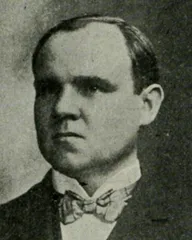
TOLD BY JAMES E. TALMAGE
A certain English student of Natural History, as I have heard, once upon a time had the experience described below. Mr. Romanes, in the course of his customary daily walk, came to a mill-pond. At the edge of the water he saw two boys with a basket. They were obviously engaged in a diverting oc- cupation. As he came up to them Mr. Romanes observed that the youths were well dressed and evidently somewhat refined and cultured. Inquiry elicited the fact that they were upper servants in a family of wealth and social quality. In the basket were three whining kittens two others were drowning in the pond and the ; ;
mother cat was running about on the bank, rampant in her dis- tress. To the naturalist's inquiry the boys responded with a straight- forward statement, respectfully addressed. They said their mis- tress had instructed them to drown the kittens, as she wanted no other cat than the old one about the house. The mother cat, as the boys explained, was the lady's particular pet. Mr. Romanes assured the boys that he was a personal friend of their employer, and that he would be responsible for any apparent dereliction in their obedience to the orders of their mistress. He gave the boys a shilling apiece, and took the three living kittens in charge. The two in the pond had already sunk to their doom. The mother cat evinced more than the measure of intelli- gence usually attributed to the animal world. She recognized the man as the deliverer of her three children, who but for him would have been drowned. As he carried the kittens she trotted — along sometimes following, sometimes alongside, occasionally rubbing against him with grateful yet mournful purrs. At his home Mr. Romanes provided the kittens with comfortable quar- ters,and left the mother cat in joyful content. She seemed to have forgotten the death of the two in her joy over the rescue of the three. Next day, the gentleman was seated in his parlor on the ground floor, in the midst of a notable company. Many people had gathered to do honor to the distinguished naturalist. The cat came in. In her mouth she carried a large, fat mouse, not dead, but still feebly struggling under the pains of torturous cap- ture. She laid her panting and well-nigh expiring prey at the feet of the man who had saved her kittens.
—
876 IMPROVEMENT ERA What think you of the offering, and of the purpose that prompted the act ? A live mouse, fleshy and fat Within the !
cat's power of possible estimation and judgment it was a super- lative gift. To her limited understanding no rational creature could feel otherwise than pleased over the present of a meaty mouse. Every sensible cat would be ravenously joyful with such an offering. Beings unable to appreciate a mouse for a meal were unknown to the cat. Are not our offerings to the Lord —our tithes and our other free-will gifts — as thoroughly unnecessary to His needs as was the mouse to the scientist? But remember that the grateful and sacrificing nature of the cat was enlarged, and in a measure sanctified, by her offering. Thanks be to God that He gages the offerings and sacrifices of His children by the standard of their physical ability and honest intent rather than by the gradation of His exalted station. Ver- ily He is God with us and He both understands and accepts our ;
motives and righteous desires. Our need to serve God is incal- culably greater than His need for our service.
Unguarded Gates
"Wide open and ungarded stand our gates, And through them press a wild, a motley throng Men from the Volga and the Tartar steppes, Featureless figures of the Hoang-Ho, Malayan, Scythian, Teuton, Kelt, and Slav, Flying the Old World's poverty and scorn; These bringing with them unknown gods and rites, Those tiger passions, here to stretch their claws. In street and alley what strange tongues are these, Accents of menace alien to our air, Voices that once the tower of Babel knew! O, Liberty, white goddess, is it well To leave the gate unguarded? On thy breast Fold sorrow's children, soothe the hurts of fate, Lift the downtrodden, but with the hand of steel Stay those who to thy sacred portals come To waste the gift of freedom. Have a care Lest from thy brow the clustered stars be torn And trampled in the dust. For so of old The thronging Goth and Vandal trampled Rome, And where the temples of the Caesars stood The lean wolf unmolested made her lair." Thomas Baily Aldrich