Seventy’s Council Table
Improvement Era, vol. 11, no. 9, July 1908, pp. 721 to 724
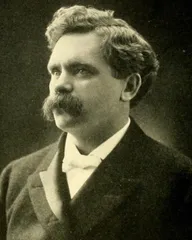
SEVENTY'S COUNCIL TABLE. BY B. H. ROBERTS, MEMBER OF THE FIRST COUNCIL. Sustaining the Presidents of the Respective Quorums Annually. — It has been frequently asked why it is that the presidents forming the councils of the respective quorums of Seventy are not sustained at the quarterly conferences of the Stakes of Zion, or at any other of the meetings of the wards and stakes of the Church. The only reasonable answer that occurs to the First Council with reference to the matter is, that these quorums of priesthood are not stake quo- rums but general quorums of the Church, and no part of a stake organization. It was the custom with the First Council for many years, when visiting the quorums, to submit the names of the presidents before the quorum meeting for their ap- proval. A custom, by the way, which of late has fallen more or less into disuse; and often when it was followed there was no regularity in the matter, some quo- rums having the opportunity to vote upon their presidents once or twice a year and other quorums not oftener than once in two or three or four years, according as they were visited or not visited by members of the First Council. After duly taking into account all these irregularities, it has occurred to the First Council that it would be a good plan to establish some regularity in this matter for all the quorums of the Seventy. And inasmuch as the first Sunday in November has be- come something of a noted day in the Seventy's work, that being the time at which our new working conditions went into operation last year, and will doubt- less be the Sunday on which from year to year the quorums will commence their — Year Book work it has been decided by the First Council that it would be well to make the first Sunday in November the occasion for a special quorum meeting at which there shall be a thorough consideration of all quorum matters, a general winding up of the past year's work and the inauguration of the coming year's plans; and among the items of business that shall regularly be attended to shall be the formal presentation of the names of the presidents, secretary, treasurer, class teachers, and other members of the quorums appointed to special duties in the respective quorums, for acceptance and approval by vote of the quorum. By settling upon this first Sunday in November, for such a meeting and the trans- attend to, it will action of such quorum business as it may be found necessary to secretaries of the quorums in making their annual reports, which are enable the the 31st of December, to expected to be in the hands of the general secretary by state the facts of the presidents being unanimously sustained or otherwise, in said report. The councils of the respective quorums, therefore, will take notice of this arrangement and set apart the first Sunday in November for the work designated in the foregoing instructions. The 1907-8 Year Book.— We call the attention of the presidents of quorums 1907-8. There are now on hand about one thou- once more to the Year Book for Book, and we again suggest to the presidents the im- sand copies of this Year
722 IMPROVEMENT ERA. portance of having a supply of these on hand, not only for their present membership but a few for those who will in the near future be coming into the quorum. The first part of this Year Book, dealing as it does with the history, organization and duties of the Seventy will always be of permanent value, and quorums should be anxious that their new members as well as the old, should have copies of this work. Also we suggest to the brethren now having copies, that they preserve them for the purpose of binding them up in a volume with the Year Books that will succeed this first one, as we are very sure that the Seventy's course in the- ology, as- it develops from year to year, will be of first rate importance to those who shall follow it. Save your Year Books, then, for binding, and let each quo- rum lay in store a few books for incaming members, and as new members join the quorums, the presidents should urge them to make themselves acquainted with the callings and duties of the Seventies as set forth in the first three lessons of the present Year Book. Endorsement of Bishop to Seventy's Recommendation of Men for Missions.— It seems difficult to get our presidents to rightly understand the mod us operandi of recommending the names of members of their quorums for prospective missionaries. Irregularities in this line are occurring more or less all the time. Whenever the First Council send for the names of Seventies who are worthy and probably in condition physically and financially to fill a mission, it is understood that when the presidents, to the best of their ability, make tbe selection for the required number, for two, or three, or four, they will present the names they have selected— together with the result of their inquiries in regard to age, knowledge of the gospel, physical condition, whether they have filled missions whether they speak one or more languages, if they are married, healthy, etc., etc., — to the bishop for his endorsement. Every blank returned to the general secretary with these names should have the endorsement of the bishop to each name so recommended and when the individual Seventy is corresponded with, his answer to the First Council's inquiry should also receive his bishop's endorsement. If the presidents of quorums and the brethren corresponded with would be more careful to follow these two items of instruction, much unpleasant- ness would be avoided, both for the local councils and for the First Council. In addition to sending names to the First Council on their request, it is to be under- - stood that the councils in the respective quorums may at any time suggest the names of members of their quorums for missions to the First Council. It might be that they know of worthy men in the quorum who would be prepared immedi- ately to go upon missions if they received a call, and we desire to have it under- stood that at any time the councils of our quorums know of men who are qualified and able to go on missions, they are at liberty to make their recommendations to the First Council at any time, and we shall be glad to receive these occasional recom- mendations as well as when we formally call upon them for the submission of names. Our presidents should be so familiar with their members that they would know their worthiness and preparedness at any time they are ready for this noble service in the interest of the cause of God. Be alert, brethren, and feel free to recommend to the First Council at any time the names of the members of your quorums who are prepared for this work of the holy ministry.
SEVENTY'S COUNCIL TABLE. 723 Avoid Doctrinal Discussions in the Present Year's Work.— From the nature of questions asked by correspondence from various quorums, as also from oral reports bearing on the same subject, we are led to believe that many of our quorums in their class work are allowing themselves to absorb altogether too much time in discussing technical doctrinal subjects; and are losing sight of the gen- eral purpose of this year's course of study. We have time and again explained it in this Table, as also in the Introduction of the Year Book itself, that our present purpose is not to consider doctrinal questions, especially technical, and sometimes unprofitable questions, but that it is our aim to make a rapid survey of the scrip- tures, to become acquainted with them as books; to learn something of the his- tory of the scriptures and something of the respective books as literature. If we accomplish this object in the present year's course of study, we will have plenty of cause for congratulating ourselves upon. our achievements; and also we will have all we can do to attain that end without halting to discuss now the hundred and one useless and often senseless, time-worn questions that make up the stock in trade of some inquisitive minds. Let this course be abandoned, and let our members concentrate their minds upon the achievements of the specific purpose we have in view in the present year's studies. Men will learn, in time, that there are some questions that we know nothing about, and that the Lord has not seen proper to reveal anything about; and until there is new knowl- edge, either by discovery of new light in old revelations, or else further revela- tion on the subject, we shall have to remain in ignorance about such matters. In the meantime, let our classes adhere strictly to the purpose we hope to accom- plish in the present year's work, and we will have plenty of opportunity for the con- sideration of doctrinal matters in future years when we get into that realm of study. The Era the Organ of the Seventy. — Very much to our astonishment, we have learned that one of our presidents in a local quorum of the Seventy has discouraged efforts to secure subscribers for the Improvement Era among the Seventies, on the ground that the Era is not the organ of our quorums, that it only contains a few paragraphs each month about Seventy's work, and that these paragraphs on Seventy's business do not constitute it an organ for this division of the priesthood. We were very much surprised to hear such a thing as this, and most of all astonished that such a narrow view was taken of the general contents of the Era. In addition to these few paragraphs each month under the regular title, "Council Table," there are the editorials of the magazine, very many of which are of first class importance to our Seventies, as they deal with matters of doctrine, Church history, and the like, with all of which our Seventies should de- sire to be in touch. Then there are special articles of doctrine by some of the first writers in the Church, and the general literature of the magazine is suitable for the reading of our Seventies. We sincerely trust that the one case to which our attention has been called— where a president of the Seventy discouraged sub- scriptions to the Era on the ground that it is not the Seventy's organ and only valuable to the Seventy because of the "Seventy's Council Table"— is the only case in existence, but lest it should not be so, we write this paragraph to correct any such notion, and desire our Seventy everywhere to understand that the Im-
. 724 IMPRO VEMENT ERA PRevEMENT Era is the Seventy's organ, and we expect them to sustain it loyally, not merely from a sense of duty that they should sustain an organ which bears their name, but for the reason that the current literature of it is ab- solutely necessary to the Seventy for his instruction in the developing doctrine and theology of the Church. Of all men, the Seventy should be attached to the Era, and we commend, it to their consideration. More on Seeing God. — At a recent Council Table (May number) we took up the matter of the manner in which the Prophet Joseph Smith saw God, and sought to harmonize it with certain passages in the Doctrine and Covenants, about no man without the Melchizedek Priesthood being able to see the face of God in the flesh and live, etc. Since the writing of the paragraph, Brother J. B. Rip- linger, of Rexburg, Idaho, writes us, and in substance suggests the following as a solution, which may be satisfying to the minds of some who inquire upon this sub- ject, and certainly suggests an additional idea to those already advanced at this Table. Brother Riplinger says: have been asked this question frequently when on my mission, and I think I by reading the statement of the Prophet himself at the end of his vision, he gives almost a straight answer to the question — (as to how he saw God). He says: "When I came to myself again, I found myself lying on my back looking up into heaven. When the light had departed I had no strength, but soon recovering, in some degree, I went home." {History of the Church, Vol. I, p. 6). Would not this say plainly that during the vision with the heavenly beings, the spirit of the Prophet had left his body temporarily, else why should his body fall back to the earth? Would it not have been while the spirit was absent from the body during the vision? This would harmonize the event with the scrip- ture which says, no man can see God in the flesh and live. I do not know whether these views on this point are correct and agree with yours, but for the sake of the better understanding, on the part of the brethren who are burdened with this question, it seeems to me that the Prophet has very nearly explained the matter himself." Pronunciation of Book of Mormon Names. — By the time this num- ber of the Era reaches the hands of the Seventies, their lessons will be in the American volume of scripture— the Book of Mormon, and doubtless it will be to their advantage to know the rules governing the pronunciation of Book of Mor- mon proper names. In 1903, a Book of Mormon convention was held at the Brig- ham Young University, Prove, and a committee was appointed to report to said convention the principles that should govern the pronunciation of Book of Mor- mon names. Following is the body of the committee's report: (1) Words of two syllables to be accented on the first syllable. (2) Words of three syllables to be accented on the second syllable, with these exceptions, which are to be accented on the first syllable, namely: Amlici (c soft) ; Amnion, Antipas, Antipus, Corihor, Cumeni, Curelom, Deseret, Gaze- lam, Eelaman, Joneam, Korihor, Tubaloth. (3) Words of four syllables to be accented on the third syllable, with the fol- lowing exceptions, which are to be accented on the second syllable, namely: Abinadi, Abinadom, Amalickiah, Aminadi, Aminadab. Ch is always to be pronunced as K. G at the beginning of a name to be always pronounced "hard." I final always to take the long sound of the vowel. The accepted pronunciation of Bible names to be followed.