Destiny and Fate
Improvement Era, vol. 11, no. 9, July 1908, pp. 649 to 654
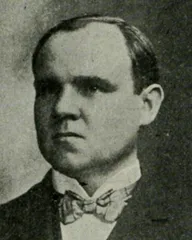
IMPROVEMENT ERA. Vol. XI. JULY, 1908. No. 9. DESTINY AND FATE. BY DR. JAMES E. TALMAGE, F. R. S. E. There are people who call themselves fatalists. They profess a belief in destiny, and so resign themselves to whatever happens as the inexorable decree of fate. They carry this belief to such an extreme as to declare that man is the mere puppet and tool of unseen influences: that he is utterly unable to control or change the conditions of his life ; that he will live his allotted days in spite of neglect of health or of rash exposure to danger; that he will die when his time comes, what- ever he may do to escape injury or to stay the ravages of disease. Like all other fads and foibles of human fancy, this ex- treme conception is unreasonable, unscriptural, and untrue. It has not even the element of novelty to excuse it; it is a survival or a revival of ideas current in the days of ancient mythology, when a deity, good or evil, was supposed to rule in every human act or undertaking. The oriental kismet typified the spirit of fate, from whose influence there was no escape, than whom there was no greater power. This conception of the operations of supernatural control in mortal life is so thoroughly foreign to the spirit of the gospel
IMPROVEMENT ERA. that it can scarcely be thought to find a place in the heart or mind of any Latter-day Saint. One of the greatest of the Father's gifts to his mortal children is the endowment of individual agency, and the right of choice. We may choose the path of danger, or that of safety; we may invite accident by recklessness; we may bring upon ourselves illness through disregard of the laws of health; we may shorten our lives, and indeed may invoke speedy death by dis- obedience to the Lord's requirements; to say nothing of the dread power displayed in the suicide's awful crime. The fact that many of the events of our lives are inexplicable is no proof that blind and remorseless fate controls. In spite of all precautions, may invade our lives; the accidents of violence most scrupulous care of which we are capable may not insure against attacks of disease; yet who can affirm that this proves the uselessness of care and prudence, or that the accident or illness may not have been averted? As we reject the belief of the fatalist, so do we deny the ele- ment of chance in human affairs. There is no effect without its natural cause. When disease assails us there is a rational explana- tion of the attack, whether we are able to discover it or not. With all may unwittingly expose ourselves to contagion our care we and become its victim. The wise man will watch well his ways, seeking the paths of safety; and should duty call him to face dan- ger or incur risk, he will take every proper precaution and employ every reasonable safeguard. And then if illness or other calamity befall, he knows that these conditions have come upon him in the path of his duty, and he can exercise his faith to the full, and with assurance can petition the throne of the Great Healer. There is a power supreme in the life of every man— the power of Divine Providence, adapting itself to the conditions of the individual life — far different from the arbitrary compelling of in- evitable fate, equally unlike the happenings of fickle chance. True it is that by divine direction we come into our probation in the flesh. It is in accordance with a pre-ordained plan that some have been born to mortality in one epoch of the world's his- tory, and others at other times. It is no mere chance that has determined the birth of some during ages of spiritual darkness, and that of others in the sunlight of the dispensation of the ful-
DESTINY AND FATE. 651 ness of times. Neither is it chance that one spirit is tabernacled in a negro body, another clothed in the redskin of a Lamanite, yet another under Mongolian yellow, and some in the white and de- lightsome covering of the Caucasian. Just how far the individual spirit has had a determining choice as to time of birth and the conditions of mortal existence, we may not know; enough has been revealed, however, to prove a direct relation between our present life and the life that preceded this — the conditions in what we call our primeval childhood. So, too, the life that follows will be the result of our achievements, be they good or ill, in this state of mortality. We recognize an average duration of individual life; we speak of the allotted age of man ; we regard death as a part of the divine plan, as natural and as inevitable as is birth. In a general way, Jiherefore, there is a time appointed unto man to die; that is to say, the duration of a life is limited; and inasmuch as there is a condition of age beyond which we do not live, we approach as old age we approach the grave. It is natural for man to live to old age, and then to die. This will be the rule under the blessed conditions of the millennium. We read concerning this period of promise: "There shall be no more thence an infant of days, nor an old man that hath not filled his days: for the child shall die an hundred years old" (Isaiah 65: 20; see also Doc. and Gov. 101: 30). At present, however, premature death is of everyday occur- rence. Children die before they have learned to prattle the lan- guage of earth; youths and maidens in their years of greatest promise; men and women in the days of their prime all are — gathered in by the grim reaper. Death appears to be no respecter of age. "Leaves have their times to fall, And flowers to wither at the north wind's breath; And stars to set — but all, Thou hast all seasons for thine own, Death!" We may not, indeed we cannot, fathom the purposes of Omnis- cience in thus permitting the onslaught of death in lives yet but partly spent. As to every premature death there must be a direct and determining cause, as in deaths from the decrepitude of age there is a general cause. Nevertheless, the question of individual
652 IMPROVEMENT ERA. guilt or of specific neglect as a cause may not be determinable by mortal minds. We may rest assured that in the justice of an Eternal God no soul will suffer deprivation in the hereafter from an earthly death due to causes over which that soul had no influ- ence or control. Should a life be cut short by accident or disease, met in the path of duty, or by the stroke of a murderer's hand, the soul thus hurried into eternity will lose nothing because it is the victim of neglect or design on the part of others. Are the days of one's life numbered, and is each appointed to die at a time prescribed? In a general way, yes; specifically, no. That is to say, it is the order of nature that every one shall die; and as physical powers weaken and expire with advancing age , it is unquestionably natural that the weakness of declining age is the precursor of natural dissolution or death. Many die in early years, and in each case death is the natural result of physical conditions operating as a natural cause. But beyond all this we must recognize the fact that in individ- ual cases special intervention of a power far above that of earth is possible. We read in the records of olden time that Hezekiah, king of Judah, was notified of his impending death. Isaiah, the son of Amoz, a prophet of the Lord, came to the king, saying, "Thus saith the Lord, Set thine house in order; for thou shalt die" (see II Kings, 20). We read that the king petitioned the Lord, and as a result the prophet came again into the royal presence with this message: "Thus saith the Lord, the God of David thy father, I have heard thy prayer, I have seen thy tears: behold, I will heal thee : on the third day thou shalt go up unto the house of the Lord. And I will add unto thy days fifteen years" (verses 5, 6) . Have we not here an instance of a life extended through prayer and faith, even after a specific determination of the time of death? This example is to be regarded as one of special inter- vention and divine direction, both as to the time of death as first appointed, and as to the extension of life. In view of the possibility of divine intent and special purpose in any individual life, we often hear the elders of the Church, in administering to the sick, pronounce the blessing of recovery and prolonged life, provided the afflicted one be not appointed unto death (see Doc. and Gov. 42: 48). This proviso assumes the pos-
DESTINY AND FATE. 653 sibility that forpurposes known to Omniscience, but unknown to man, soulsmay be appointed to die as to the body, and that in these as in all other matters, not our wish but the will of God may be realized. A particular passage of modern scripture demands considera- tion in this connection. In a revelation given in Jackson County, Missouri, August, 1831, the Lord said: "And in nothing doth man offend God, or against none is his wrath kindled, save those who confess not his hand in all things, and obey not his commandments" (Doc. and Gov. 59:21). It is an extreme interpretation of this scripture to claim there- from that whatever happens is a direct result of the Lord's will. It is both unreasonable and unscriptural to assert that all existing conditions of society are in accordance with the Divine will. Is it possible that the will, the wish, the purpose of God are respon- sible for the vice and crime that rule in certain sections of human abode? Think you it is God's will that man shall rob his brother? No! He has declared, "Thou shalt not steal." Is it the will of God that one shall slay his brother? No! The Lord has decreed, "Thou shalt not kill." Is it the Lord's will that men shall tempt and women entice to crime against the person and against society? Nay! Hath he not said, "Thou shalt not commit adultery?" To attribute existing conditions to the direct will of God is to make the Almighty responsible for dishonesty, lying, thievery, adultery, murder, and for every crime possible to man. The Lord is no party to sin; hath he not said that upon sin he can look with no degree of allowance? Mercy may be extended to the sinner, yet for sin there is no allowance. How then can we confess or acknowledge the hand of God in all things? By acknowledging the divine power to overrule all oc- currences or happenings to bring about eventual good! The Lord is supreme; he is the Omnipotent. In respect to the divinely be- stowed birthright of man, personal agency is not to be denied or annulled even by the Giver. If a man be determined to follow the course of vice and sin, it is the will of God that he be left to meet and suffer the consequences of his choice.
654 IMPROVEMENT ERA. In the dread disasters of accident, pestilence, fire and earth- quake, it is the will of God that under existing circumstances and conditions the sequence of natural cause and effect be not inter- fered with by any direct interposition. We acknowledge the power divine by recognizing the power of immediate and direct intervention, and likewise the right to leave all to the natural course of events. To attribute vice, sin, and crime to the Almighty as part of his will and pleasure is blasphemy. To acknowledge the power of God to overrule all things, so that they contribute to the general advancement of truth and godliness, is the part of every dutiful child of the Eternal Father. Salt Lake City, Utah. HAPPINESS. {For the Improvement Era.) Th e purest happiness the heart can know, Is felt by lessening another's woe. They who some dreary life hath made more bright, Hath gained a glimpse of heaven's glorious light. And, oh! so many souls there are that need The grasp of friendly hand, and kindly deed. Hearts hungry for a human word of love. To help them reach the heavenly courts above. Then let us live to bring mankind more joy; Our meed will be pure gold, not earth's alloy, That metal which the world's false lips call gold, That oft makes man grow small and cruel and cold. Grace Ingles Frost. Waterloo, Utah.