Patrick Henry’s Forum
Improvement Era, vol. 11, no. 9, July 1908, pp. 655 to 667
PATRICK HENRY'S FORUM. BY B. H. ROBERTS. Ever does natural beauty steal in like air and envelop great actions. So said Emerson, many years ago, in his essay on "Beauty;" and he gave many illustrations of the statement, among which was Leonidas and his three hundred Greek martyrs who consumed one day in dying; Arnold Winkelried, in the high Alps gathering in his side a sheath of Austrian spears to break the Austrian line for his comrades; Columbus, approaching the shores of America— the savages fleeing out of their — the sea behind, the purple huts mountains, the Indian Archipelago around — the New World cloth- St. John's Church. Patrick Henry's Forum, Richmond, Va.
656 IMPROVEMENT ERA. ing the bold navigator with "her palm groves and Sj^annahs as a fitting drapery.'' There can be no question but that these illus- trations sustain the statement of the great essayist; but also holds that even in "private places," among sordid objects, an act of trath or heroism seems at once to draw to itself the "sky as its temple, the sun as its candle." But here it should be remembered that it is the "act of truth or heroism" which lends charm, and interest to the scene, rather than that the "private places" or "sordid objects" contribute anything to the act. It is vain to think that every act of truth or heroism has its best possible set- ting either in natural or man-created environment. But such is Interior Patrick Henry's Forum. the sanctifying power of an "act of truth or heroism" that it im- parts even to private places and sordid objects in which it may occur, a calm or even grandeur which will not pass away; but in some sort makes of it sanctified and holy ground. Some such reflections as these were awakened on the occasion of a visit something over a year ago to the rather unpretentious St. John's Church in the city of Richmond, Virginia. This little church is one of America's temples of liberty, worthy to be remem- bered in connection with Faneuil Hall, Boston; Carpenter's Hall, Philadelphia; and also Independence Hall, Philadelphia; for here,
PATRICK HENRrS FORUM. 657 too, in the Revolutionary period of United States history were dis- played heroism and statesmanship in the cause of American— nay, human — liberty, which make this unpretentious church building a shrine. Ihave ventured to call it Patrick Henry's Forum, because its chief interest is connected with his name and his work. It stands upon one of the many hills on which Richmond, like another Rome, is situated, overlooking the St. James river, "Church Hill," in fact, and is rather apart from the immediate business Faneuil Hall, 1763. •centre of the city. The structure,even with the belfry tower and the wing on the west, added since it was used as the meeting place of the Virginia patriots of 1775, is unpretentious; how much more so when it consisted only of the plain, four-cornered frame structure of the east part, which now forms the back part of the church, and only about eighteen by thirty- six feet in its dimensions! Still, humble and plain as it is when thus reduced to its dimensions of 1775, I venture to offer it as a shrine of lib- erty to the readers of the Era. The royal governor of Virginia, Dunmore, on the 15th day of JVIay, 1774, dissolved, as will be remembered, the colonial assem-
658 IMPROVEMENJ ERA. bly of Virginia, for having the day previous set apart the first day of June of the year named, as a day of fasting, humiliation and prayer, for the purpose of devoutly imploring "the divine interposition for diverting the heavy calamity which threatened the destruction of the civil rights, and bringing on the evils of civil war in British America." All of which the House of Burgesses saw foreshadowed in the hostile invasion of the city of Boston by the royal soldiery. Holding up a paper before the assembled delegates, Lord Dunmore said: "I have in my hand a paper published by order of your House conceived in such terras as reflect highly upon His Majesty and the Parliament of Great Britain, which makes it necessary to dissolve you, and you are dissolved according- ly." The members of the House, as is well known, withdrew to the Raleigh Tav- ern in Williamsburg, and formed themselves into a committee to consider the most expedient and necessary measures against the en- croachments of arbitrary pow- er which threatened them. They adopted a spirited ad- dress, and appointed a com- mittee of correspondence to Carpenter's Hall, Where the First Congress met. confer with like committees in the several colonies of British America, to take up the question of the expediency of appointing deputies in the several colonies to meet in a General Congress annually, or as should be thought most conve- nient. This resulted ultimately in the creation of the old Conti- nental Congress which met on 4th of September, 1774, in Car- penter's Hall, in the city of Philadelphia, and of which Peyton Randolph of Virginia was chosen president, and of which Patrick Henry, Richard Henry Lee, George Washington, Richard Bland, Benjamin Harrison, and Henry Pendleton were deputies from Vir- ginia. The wisdom and moderation of this Continental Congress have passed into history. The most important action was the adop-
PATRICK HENRY'S FORUM. 659 tion of a "Bill of Rights," "A Petition to the King of Eng- * land," 'An Address to the People of Great Britain," written by John Jay, and another to the several Anglo-American colonies, written by William Livingston. It was of this body of patriots that the Earl of Chatham in the British House of Lords said: "I must declare and avow, that in all my reading and study of history (and it has been my favorite study — have read Thucydides, and I have studied and admired the master states of the world) that for solidity of reasoning, force of sagacity, and wisdom of conclusion, . under such a complication of circumstances, no nation or body of Independence Hall, 1776. men can stand in preference to the General Congress of Philadel- phia." Now to return to Virginia and Patrick Henry's Forum. It was on Monday, the 20th of March, 1775, that the convention of delegates from the several counties and corporations of Virginia met in St. John's Church described herein. In the main the con- vention was optimistic in sentiment as to reconciliation with Great Britain, and the maintenance of the rights of British American subjects. There had been given what was considered a gracious acceptance of the "Petition to the King;" and pro-American
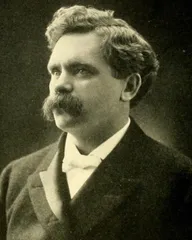
660 IMPROVEMENT ERA. sentiment seemed never stronger in Parliament than at that time. On both sides of the Atlantic there appeared to subsist a strong desire for a return of that friendly intercourse between Great Britain and her American colonies from which both coun- tries had derived so much of prosperity and happiness. After its organization in the little church, the convention proceeded to ex- press its approval of the course taken by the Continental Congress, and expressed the warmest thanks of all the inhabitants of the colony of Virginia to the worthy delegates who had so faithfully discharged the important duties and trust reposed in them. Mr. Henry, how- ever, was not a sharer of the optimistic views of the convention. His biogra- pher holds that he "saw things with a steadier eye and a deeper insight" than other delegates. ''His judgment was too solid to be duped by appearances," he goes on to say, "and his heart too firm and manly to be amused by false and flattering hopes. He had long since read the true character of the Patrick Henry. British court, and saw that no alternative remained for his country but abject submission or heroic resistance." Three days, therefore, after the convention met, he introduced the following resolutions for a well regulated militia for the colony of Virginia: Resolved that a well-regulated militia, composed of gentlemen and yeomen, is the natural strength and only security of a free government; that such a militia in this colony would forever render it unnecessary for the mother country to keep among us, for the purpose of defense, any standing army of mercenary soldiers, always subversive of the quiet, and dangerous to the liberties, of the people, and would obviate the pretext of taxing us for their support. That the establishment of such militia is, at this time, peculiarly necessary,
PATRICK HENRTS FORUM. 661 by the state of our laws, for the protection and defense of the country, some of which are already expired, and others will shortly be so: and that the known re- missness of government in calling us together in legislative capacity, renders it too insecure , in this time of danger and distress, to rely that opportunity will be given of renewing them, in general assembly, or making any provision to secure our inestimable rights and liberties from those further violations with which they are threatened. Resolved, therefore, that this colony be immediately put into a state of de- fense, and that there shall be a committee appointed to prepare a plan for embodying, arming and disciplining such a number of men, as may be sufficient for that purpose. The effect of these resolutions is described by Mr. Henry's biographer as follows: The shock was painful. It was almost general. The resolutions were op- posed as not only rash in policy, but as harsh and well nigh impious in point of feeling. Some of the warmest patriots of the convention opposed them. * * * They urged the late gracious reception of the Congressional Petition by the throne. They insisted that national comity, and much more filial respect, demanded the exercise of a more dignified patience; that the sympathies of the parent-country were now on our side; that the friends of American liberty in parliament were still with us, and had, as yet, had no cause to blush for our indiscretions; that the manufacturing interests of Great Britain, already smarting under the effects of our non-importation, co-operated powerfully toward our relief; that the sover- eign himself had relented, and showed that he looked upon our sufferings with an eye of pity. "Was this a moment, " they asked, "to disgust our friends, to ex- tinguish all the conspiring sympathies which were working in our favor, to turn their friendship into hatred, their pity into revenge?" ' 'And what was there," they asked, "in the situation of the colony, to tempt us to this?Were we a great mili- tary people? Were we ready for war? Where were our stores? Where were our arms? Where our soldiers? Where our generals? Where our mon- ey, the sinews of war? They were nowhere to 'be found. In truth, we were poor, we were naked, we were defenseless. And yet we talk of assuming the front of war! of assuming it, too, against a nation, one of the most formidable in the world! A nation ready and armed at all points! Her navies riding triumphant in every sea; her armies never marching, but to certain victory What was to be the issue of the struggle we were called upon to ! court? What could be the issue, in the comparative circumstances of the two countries, but to yield up this country an easy prey to Great Britain, and to con- vert the illegitimate right which the British parliament now claimed, into a firm and indubitable right, by conquest? The measure might be brave, but it was the bravery of madmen. So much is necessary to the understanding of the speech that follows. Surely the weight of prudent argument seemed to rest
662 IMPROVEMENT ERA. with those opposed to the resolutions of Mr. Henry; but he, who ten years before in the House of Burgesses was arrested in the very climax of a great speech when alluding to Caesar and Charles I, and George HI, the one who had his Brutus, the other his Crom- well, "and George the Third" — with his cry of treason, treas- on—yet blanched not, but with God-like calmness concluded: "may profit by their example. If this be treason, make the most of it." This man was not to be daunted by the weight of argument, or even the exalted character of the men who made it and surely — his opponents were among the first men in Virginia. By consider- ing what his opponents had to say against his series of resolutions, perhaps my readers will appreciate all the more one of the best sentences in American literature, namely, "It is natural to man to indulge in the illusions of hope : we are apt to shut our eyes against the painful truth, and listen to the song of that siren until she transforms us into beasts." It is not, however, with that sen- tence that Mr. Henry's speech began, though it is at that point that our school books usually begin it. If we may trust, as I think we may, his biographer, Mr. Wirt, he opened his reply in the following manner: He rose at this time with a majesty unusual to him in an exordium, and with all that self-possession by which he was invariably distinguished.No man thought more highly than he did of the patriotism, as well as abilities, of the very worthy gentlemen who had just addressed the House. But different men often saw the same subject in different lights; and therefore be hoped it would not be thought disrespectful to those gentlemen, if, entertaining as he did, opinions of a character very opposite to theirs, he should speak forth his sentiments freely and without reserve. This was no time for ceremony. Tne question before this house was one of awful moment to the country. For his own part, he considered it as nothing less than a question of freedom or slavery. And in proportion to the magnitude of the subject, ought to be the freedom of the debate. It was only in this way that they could hope to arrive at truth, and fulfil the great responsi- bility which they held to God and to their country. Should he keep back his opinions at such a time, through fear of giving offense, he should consider himself aa guilty of treason toward his country, and of an act of disloyalty toward the majesty of heaven, which he revered above all earthly kings. Then more directly: Mr. President, it is natural to man to indulge in the illusions of hope: we are apt to shut our eyes against the painful truth, and listen to the song of *.hat siren until she transforms U3 into beasts. Is this the part of wise men, en-
PATRICK HENRTS FORUM. 663 gaged in a great and arduous struggle for liberty? Are we disposed to be of the number of those, who, having eyes, see not, and having ears hear not, the things which so nearly concern our temporal salvation? For my part, what- ever anguish of spirit it may cost, I am willing to know the truth; to know the whole truth; to know the worst and to provide for it. I have but one lamp by which my feet are guided, and that is the lamp of experience. know of no way of judging of the future, but by the I past. And judging by the past, I wish to know what there has been in the eon- duct of the British ministry for the past ten years to justify those hopes with which gentlemen have been pleased to solace themselves and the house? Is it that insidious smile with which our petition has been lately received? Trust it not, sir; it will prove a snare to your feet. Suffer not yourselves to be betrayed with a kias. Ask yourselves how this gracious reception of our petition comports with those warlike preparations which cover our waters and darken our land Are . fleets and armies necessary to a work of love and reconciliation? Have we shown ourselves so unwilling to be reconciled, that force must be called in to win back our love? Let us not deceive ourselves, sir. These are the implements of war and subjugation —the last arguments to which kings resort. I ask, gentlemen, sir, what means this martial array, if its purpose is not to force us to submission? Has Great Britain an enemy in this quarter of the world, to call for all this accu- mulation of navies and armies? No, sir, she has none. They are meant for us: they can be meant for no other. They are sent over to bind and rivet upon us those chains which the British ministry have been so long forging. And what have we to oppose them? Shall we try argument? Sir, we have been trying that for the last ten years. Have we anything new to offer upon the subject? Noth- ing. We have held the subject up in every light of which it is capable ; but it has been all in vain. Shall we resort to entreaty and humble supplication? What terms shall we find which have not been already exhausted? Let us not, I beseech you, sir, deceive ourselves longer. Sir. we have done everything that could be done, to avert the storm which is now coming on. We have peti- tioned—we have remonstrated— we have supplicated wo have prostrated our- — selves before the throae, and have implored its interposition to arrest the tyran- nical hands of the ministry and parliament. Oar petitions have been slighted; our remonstrances have produced additional violence and insult, our supplications have been disregarded ; and we have been spurned with contempt from the foot of the throne. In vain after these things may we indulge the fond hope of peace and reconciliation. There is no longer any room for hope. If we wish to be free— if we wish to preserve inviolate those iaestimable privileges for which we have been so long contending — if we mean not basely to abandon the noble struggle in which we have been so long engaged, and which we have pledged ourselves never to abandon, until the glorious object of our contest shall b<) obtained — we must fight!— repeat I it, sir, we must fight! An appeal to arms and to the GoH of hosts, is all that is left us! They tell us, sir, that we are weak — unable to cope with so formidable an adversary. But when shall we be stronger? Will it be the next week or the next year? Will it be when we are
! 664 IMPRO VEMENT ERA . totally disarmed, and when a British guard shall be stationed in every house? Shall we gather strength by irresolution and inaction? Shall we acquire th means of effectual resistance by lying supinely on our backs and hugging the delusive phantom of hope, until our enemies shall have bound us hand and foot? Sir, we are not weak, if we make a proper U3e of those means which the God of nature hath placed in our power. Three million of people armed in the holy cause of liberty, and in such a country as that which we possess, are invincible by any force which our enemy can send against us. Besides, sir, we shall not fight our battles alone. There is a just God who presides over the destinies of nations, and who will raise up friends to fight our battles for us. The battle, sir, is net to the strong alone; it is to the vigilant, the active, the brave. Besides, sir, we havo no election. If we were base enough to desire it, it is now too late to retire from the contest. There is no retreat but in submission and slavery Our chains are forged. Their clanking may be heard on the plains of Boston! The war is inevitable — and let it come! I repeat it, sir, let it come! It is vain, sir, to extenuate the matter. Gentlemen may cry, peace, peace — but there is no peace. The war is actually begun! The next gale that sweeps from the north will bring to our ears the clash of resounding arms ! Our breth- ren are already in the field! Why stqnd we here idle? What is it that gentle- men wish? What would they have? Is life so dear, or peace so sweet, as to be purchased at the price of chains and slavery? Forbid it Almighty. God! I know not what course others may take; but as for me, give me liberty or giv* me death! No applause followed this speech. The feelings produced were too intense for that. It is an old story repeated again. When the Greeks listened to Demosthenes they never applauded; they said, let us go and fight Philip. The resolutions for arming the militia passed, and the committee provided for by them, to pre- pare a plan for arming and disciplining said militia, was appointed. All opposition was swept away, and armed resistance to Great Britain's encroachment upon American liberties must be met hence- forth with armed resistance, until an independent nation is born in the New World, a nation whose manifest mission it is to guide the destinies of these western continents. Was the natural scenery, in the midst of which these great truths were uttered, these heroisms displayed, fitting to their greatness and far-reaching importance— that little four-cornered frame church building, eighteen by thirty-six in its dimensions? Does the heroic action derive anything from its environment? Or is it the case here as it is often the case, that it is this speech which nerved America to the point of resistance, this act of
PATRICK HENRY'S FORUM. 665 heroism that gives something like sanctification and immortality to the environment in which they happened. The attendant at the little church points the spot where tra- dition says the great Virginian stood when- delivering this address; and will, if you desire it, repeat the speech for you, which he did in part for me; but half way through I stopped him, though he spoke with some judgment and had the good taste not to tear the passion into shreds. But I had my own opinion as to how that speech, perhaps, was delivered; and I did not care to have it marred by another. And then it is one of those things that cannot be successfully repeated to advantage. It was a message from God that completed its purpose when declared by the prophet who uttered it. Are these terms too strong, ''message from God," and ''Prophet?" I think not. All the prophets of God are not from the schools of prophets. Some come straight from God with the message, without going through the schools or even through the formalities of ordination, but they come with the inspiration of God upon them, nevertheless. I have scripture warrant for what I say. "It is not right," says one of our scriptures,, "that any man should be in bondage one to another. And for this purpose have I established the constitution of this land, by the hands of wise men whom I raised up unto this very purpose, and redeemed the land by the shedding of blood." (Doc. and Gov. Sec. 101.) And in that group of wise men whom God raised up to es- tablish the institutions and constitutions of this great nation, the guardian of the liberties of these western continents, none gave greater evidence of inspiration than this same man, Patrick Henry, who appeared in this little church forum of Virginia His biographer, . Mr. Wirt, relates an incident which occurred a few years previous to his great speech in Virginia's convention of delegates, and which is so completely prophetic that I venture to quote it; and let it be remembered that the conversation detailed, took place "before one drop of blood was shed in America's contest with Great Britain," or even one word had been said of independence. PATRICK henry's PROPHECY. "His views were not less steady than they were bold. His vision pierced deeply into futurity; and long before a whisper of independence had been heard in this
666 IMPROVEMENT ERA. land, he had looked through the whole of the approaching contest, and aaw, with the eye and the rapture of a prophet, his country seated aloft among the nations of the earth. A striking proof of this prescience is given in an anecdote com- municated to me by Mr. Pope. These are his words:— "I am informed by CjI. John Overton, that before one drop of blood was shed in our contest with Great Britain, he was at Col. Samuel Overton's in company with Mr.Henry, Col. Morris, John Hawkins, and Col. Samuel Overton, when the last- mentioned gentleman asked Mr. Henry, 'whether he supposed Great Britain would drive her colonies to ex- tremities?— And if she should, what he thought would be the issue of the war?' When Mr. Henry, after looking round to see who were present, expressed himself confidentially to the company in the following manner: " 'She will drive us to extremities — no accommodation will take place — hostili- ties will soon commence — and a desperate and bloody touch it will be.' 'But,' said Col. Samuel Overton, 'Do you think, Mr. Henry, that an infant nation as we are, without discipline, arms, ammunition, ships of war, or money to procure them — do you think it possible, thus circumstanced, to oppose successfully the fleets and armies of Great Britain?' 'I will be candid with you,' replied Mr.Henry. 'I doubt whether we shall be able, alone, to cope with so powerful a nation. But, continued he, (rising from his chair, with great animation,) 'where is France? Where is Spain? Where is Holland? the natural enemies of Great Britain.— Where will they be all this while? Do you suppose they will stand by, idle and indifferent spectators to the contest? Will Louis XVI be asleep all this time? Believe me, no! When Louis XVI shall be satisfied by our serious opposition, and our Declaration of Independence, that all prospect of a reconciliation is gone, then, and not till then, will he furnish us with arms, ammunition, and clothing; and not with these only, but he will send his fleets and armies to fight our battles for us; he will form with us a treaty offensive and defensive, against our unnatural mother. Spain and Holland will join the confederation Our independence will be estab- ! lished and we shall take our stand among the nations of the earth !' ! Here he ceased; and Col. John Overton says, he shall never forget the voice and prophetic manner with which these predictions were uttered, and which have been since so literally verified. Col. Overton says, at the word independence, the company ap- peared to be startled; for they had never heard any thing of the kind before even suggested." It is, Qf course, a matter of common knowledge that this prophecy was fulfiled in every particular, and still I cannot help to believe that the following passage, from one of the most thought- ful of American historians, (Marcus Wilson) will be of special in- terest, as it brings before the mind, not only the evidence of the fulfilment of Mr. Henry's prophecy, but also increases one's wonder that such unlikely instrumentalities should be used for the ac- complishment of the Almighty's purpose. Commenting upon the
. PATRICK HENRTS FORUM. 667 treaty of Great Britain, France, Spain, Holland and the United States, signed in 1783, he said: Thus closed the most important war in which England had ever been engaged, — a war which arose wholly out of her ungenerous treatment of her American colonies. The expense of blood and treasure which this war cost England was enormous; nor, indeed, did her European antagonists suffer much less severely The United States was the only country that could look to any beneficial results from the war, and these were obtained by a strange union of opposing motives and principles, uneqalled in the annals of history. France and Spain, the arbi- trary despots of the old world, had stood forth as the protectors of an infant re. public, and had combined, contrary to all the principles of their political faith, to establish the rising liberties of America. They seemed but as blind instruments in the hands of Providence, employed to aid in the founding of a nation which should cultivate those republican virtues that were destined yet to regenerate the world upon the principles of universal intelligence, and eventually to overthrow the time-worn system of tyrannical usurpation of the few over the many. St. John's Church at Richmond was subsequently used for a convention of delegates from Virginia to consider the adoption of the Constitution of the United States, by the commonwealth of Virginia; and here, after long deliberation, and after pleading for additional safeguards to the security of individual liberties, as finally embodied in the first ten amendments to the Constitution, the state of Virginia through her convention, made a very guarded adoption of the Constitution. During these discussions Mr. Henry was frequently heard in the debates, and it will go without saying that he was always found on the side which stood for procuring the largest possible liberty, both to the people of the nation and the citizens of the states, and the reserve rights of the states. But the climax both of his own career, and the incident which makes of this unpretentious church house a shrine of American liberty, was the speech delivered on that 23rd day of March, 1775, when this inspired man made strong the hearts of American pa- triots to resist intolerable British oppression. Salt Lake City, Utah.