Seventy’s Council Table
Improvement Era, vol. 11, no. 4, February 1908, pp. 306 to 308
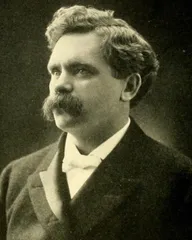
SEVENTY'S COUNCIL TABLE. BY B. H. ROBERTS, MEMBER OF THE FIRST COUNCIL. When did Baptizing Begin in the Meridian Dispensation? — The following question is asked by one of the quorums: "Will you kindly answer at the seventy's "Council Table" the following question: 'When did the apostles and seventies in the days of Christ commence to baptize, before or after His resurrection?' Some of the members of our quorum hold that the apostles and seventies did not baptize until after Christ was resurrected." Undoubtedly baptism under the direction of the Messiah was begun by both apostles and seventies previous to the resurrection of the Savior. In the gospel, according to St. John (chap 4: 1-3), the following statement is made: "When, therefore, the Lord knew how the Pharisees had heard that Jesus made and baptized more disciples than John, (though Jesus himself baptized not but his disciples) he left Judea, and departed again into Galilee." Again, in John 3: 22, it is written: "After these things came Jesus and his disciples into the land of Judea; and there he tarried with them and baptized." Yet, as the previously quoted passage puts it, "Though Jesus himself baptized not, but his disciples." From these passages it is very clear that baptism was administered by the disciples of Jesus previous to his crucifixion, and undoubtedly among the "disciples" who were thus baptizing with his sanction would be the apestles and the seventies. Unquestionably they had authority to baptize, and since Jesus authorized some of his disciples to perform this ordinance, why not the apostles and seventies with the rest? The commission which he gave to his apostles after his resurrection, which we suspect is the reason for the opinion that the apostles and seventies did not begin to baptize until after the Messiah's resurrection, was simply a renewal of a commission which he had previously given to them, or else an enlargement of it. For whereas previous to the crucifixion, as far as one may judge, his disciples were confined in their ministry to Palestine, the seventies especially being sent ''into every city and place where he himself would come," (Luke 10: 1) after the resurrection, he enlarged their field by saying: "Go ye therefore, and teach all nations, baptizing them in the name of the Father, and of the Son, and of the Holy Ghost: Teaching them to observe all things whatsoever I have commanded you: and, lo, I am with you alway, even unto the end of the world." (Matt. 28: 19-20).
SEVENTTS COUNCIL TABLE. 307 Ro Call. — Recently the inquiry was made as to whether there would be any objection to having names of the members of the quorwra arranged alphabetically, in order to facilitate the calling of the roll. One of the quorums had adopted this method, and it was met with very earnest objection by some who insisted that the members should be listed on the roll, not alphabetically but in the order in which they had been received into the quorum, either by ordination or transfer. Answering the question, we said: that so far as the quorum record proper is concerned, the genealogical record, the names of members should be recorded strictly according to the order in which they were received into the quorum, but if the arrangement of the names alphabetically would make easier the calling of the roll, at class and quorum meetings, we could see no objection to them being so arranged for that purpose. However, we suggest that if the names were placed ©n the roll call in the order in which they were received into the quorum, it would not be a diflBcult matter for each one to remember his number in the quorum, and the roll could be called by number, and the members respond thereto, making it possible to call the roll in very much less time than when it is called by names, either alphabetically or otherwise arranged. Whereabouts of the Quorums. — That means, of course, with reference to the lessons of the Seventies' Year Book. By the time this number of the Eka reaches the Seventies, three months will have elapsed since the inauguration of the new order of things in the Seventies' class work. Seventeen Sundays of the first year will have passed. Seventeen lessons should have been completed by that time, except, of course, in quorums that have been interrupted in one lesson by reason of a stake conference having been held in the stake where their quorum happens to be located. In that case such quorums will have finished sixteen lessons only. Therefore, by the time this Council Table is read by the Seventies, each quorum will have completed sixteen or seventeen lessons. Let each quorum inquire if it has mastered so many lessons ; is it keeping up with the rest of the quorums of the Church, or falling into arrears with the lessons? Remember, brethren, it is the design in our plan of work to complete the lessons of the present Year Book by the last Sunday in October, 1908, so that every quorum in the Church will be prepared to take up simultaneously the second Year Book, begin- ■ing with November 1st of this year. There is no time for dallying or "dawdling." The work must be done. What is your whereabouts with reference to the lessons? Let there be no failures. The motto for both individual members of (Hir quorums and the quorums themselves is, "mental activity, intellectual development, the attainment of spiritual power." This spells W-O-R-K. Quorum Questions. — Has your quorum made any start toward laying the foundation of a chelae reference library? (See Introduction present Year Book F- xi). Has every member in your quorum secured the present Year Book of the Seventies' course in Theology? Every member needs this text book. Remember it is the beginning of a series of such books. After three or four years you will
308 IMPRO VEMENT ERA . want to bind them for preservation. Your set cannot be complete without this first number. The edition will soon be exhausted. Future Year Books will be constantly referring, doubtless, to this present one, and it will have therefore a permanent value. Moreover, new members will be added to your quorum during the present year, would it not be well for each quorum to have a few extra copies on hand to supply the prospective new members? What think you, presidents of quorums? Have you started singing practice in your quorum yet? Have you organized your quorum quartette? Is singing taken up earnestly by the quorum members? (See Seventies' Year Book Introduction, p. viii). Has your quorum taken steps to secure as large a subscription as possible for the Era, the organ of the Seventies? Has your quorum made its annual statistical report for the year 1907, at the same time forwarding all monies that should be reported to the general secretary and treasurer of the Seventies, Elder J. G. Kimball? These are matters, brethren, presidents of the respective quorums, that should receive your attention. Scripture Reading Exercise,— At Lesson xiv in Part II of the Year Book, is the introduction of the Scripture reading exercise; and a sample Scripture reading is given on pages 67 and 68 of the Year Book. It is to be hoped that class teachers will use every exertion to make this exercise successful. It is one that is to continue throughout the course, and can be made the most interesting and beneficial to the quorum members. The reasons for introducing this exercise into our class work are set forth in the Introduction to our Year Book, page vi; and it is suggested that class leaders read that division of the Introduction to the members on the occasion of commencing the Scripture readings.