Seventy’s Council Table
Improvement Era, vol. 11, no. 3, January 1908, pp. 225 to 228
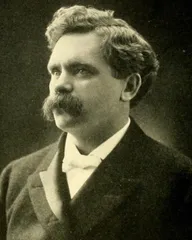
SEVENTY'S COUNCIL TABLE. BY B. H. ROBERTS, MEMBER OF THE FIRST COUNCIL. Bequests to Quorums. — By letter from the forty-eighth quorum located at Manti, Utah, the First Council is informed that David Olsen and Hyrum Brown of Manti endowed that quorum with the sum of $1,000 and $500 respectively, as ' 'a nucleus for a permanent Missionary fund." That is an item of good news; and the brethren making the bequest are to be congratulated upon the example they have set in Israel. It is the first bequest of the kind we believe, in the Church; but sincerely hope it will not be the last; nay, we have the hope ard belief that many will follow the very worthy example set by Brothers Olsen and Brown. What more worthy cause can appeal to the generously disposed possessor of means than this of extending a knowledge of the gospel of Jesus Christ? It often happens in the experience of the First Council that in seeking missionaries among our quorums that men are found who possess every qaility necessary to efficient ministers of the gospel, but are unavailable because they are not in financial circumstances to meet the expense of sustaining themselves and their families while engaged in the work of the foreign ministry. What an advantage it would be, how helpful, if under such circumstance the quorum to which such a brother belonged could come to his assistance by supplying so much as he lacked of means to .go upon a mission? Then what might come of it I How many souls might be brought to a knowledge of the truth and saved! No one knows, of course; there might be many, there might be but few; perhaps but one. Even if there were none visibly affected by the elder's ministry — though such a thing is well nigh inconceivable — still the Church would be aided in discharging her solemn obligation to the world in making proclamation of the truth deposited with her, and that is much, very much, and worthy of all acceptation when more may not be accomplished. But what if one soul should be brought to a knowledge of the truth, what joy those wouli have who had in any way contributed to that result! And then how much it means for even one soul to be converted! He may in turn convert others, who knows? Perhaps he will become the founder of a family in Israel, and beget a race of men to whom the gospel of Jesus Christ will be congenial and who will stand ftr righteousness and serve God. Then think of the possibilities that may grow out of such a conversion by reason of the work the one converted might do in the temples of God for the salvation of his ancestors. The effects of his conversion would be extended backward as well as projected forward, and there is no means by which the value of one conversion may be determined — it may mean that a
226 IMPROVEMENT ERA. nation was born unto the Lord on that day when a soul was converted to the truth ********* We are glad to note that it is the intention of the forty- eighth quorum to invest the bequests of Brothers Olsen and Brown and use only the interest of their "Missionary Fund." Also that they hope to increase the fund by other bequests and by other means. May all their anticipations of success be realized. And meantime, we call the attention of other quorums to this circumstance, and urge upon them the desirability of every quorum having some such permanent fund out of which to help their members perform missions. There is no better philanthropic cause than this; and the attention of well-to-do members of our quorums should be called to that fact, and they given an opportunity to found by their liberality a permanent quorum fund to aid in the noble work of saving souls. Just now many aged men will be leaving the quorums of the Seventy for the High Priests quorums; some of them perhaps have never done any missionary service at all, circumstances of various kinds having prevented them. Do they want to leave the quorums of the foreign ministry without having identified themselves in some substantial way with that ministry? Brethren, think of it. Would not such men as are able, upon leaving the quorum, desire to give into a permanant missionary fund a hundred, five hundred, a thousand or five thousand dollars? And if such a fund was once established, might not each member retiring from the quorum be glad to give one dollar, or five, or ten, or fifty, according to his circumstances? Brethren, the matter is before you. Read these paragraphs to your quorums — every one , give everybody an opportunity to help in this great work of the foreign ministry of the Church. God bless Brothers Olsen and Brown, and all others who shall follow their most worthy example. Inter-Quorum Visits.— We suggest for the purpose of developing the best methods of conducting class exercises, a system of inter- quorum visits by appointment. That is to say, taking the quorums within a convenient radius of a given quorum, members could be ofiicially appointed to visit such quorums for the purpose of observing the methods employed in conducting class exercises, and quo. rum executive business meetings. Where this suggestion is adopted the visiting Seventy or Seventies, should be given a letter of appointment by the council of his quorum to the quorum visited, that he may be courteously noticed and welcomed. The principal business of such visitors should be to note methods of work and of procedure for the benefit of his own quorum, though an opportunity might be granted to explain the methods of their quorum. But the main object of the visit should be for observation. The Sunday following, the visitors should be given opportunity to report what they had observed that would be of advantage to their own quorum to adopt. By this means there will gradually be developed the best methods of doing things. That is what Seventies are seeking. Remember, to be a Seventy means mental activity, intellectual development, the attainment of spiritual power; and that, not only as individuals but also in our quorum capacity. Presidents of Seventies not to be taken for Bishops' Counselors.—
SEVENTY'S COUNCIL TABLE. 2Z1 It should be understood that it is the policy in the Church not to take presidents of Seventies for Bishop's counselors, where it can possibly be avoided. Bishopmaterial, it is conceded, is extremely limited; and the First Council, recognizing that fact, have no objection to offer when a man among their presidents is found possessing the qualities necessary to a Bishop is wanted. We say that it is allright, and yield gracefully: but with Bishop's counselors it is different. Material suitable to that office is more abundant, and our councils should not be disrupted to supply it, where it can possibly be avoided; and never only with the consent of the First Council. Such is the decision of the First Presidency of the Church, and our presidents should take note of it. It is desirable that the councils of the quorums should be as little disturbed as possible. Question from One of the Quorums. — "Did Aaron hold the Melchizedek Priesthood?" The above question is answered in the affirmative; for the reason that all priesthood is, from the nature of it, (delegated authority from God to man) one, a unity; and hence Melchizedek. Aaron held a priesthood previous to the designation of what we now know as the "Aaronic Priesthood," so that priesthood previously held by him, must have been Melchizedek Priesthood. The Prophet Joseph said, "Although there are two priesthoods, yet the Melchizedek Priesthood comprehends the Aaronic and is the grand head. {History of the Church, Vol. IV, p. 207.) Again he said: "In viewing the Church as a whole, we may strictly denominate it (.i e. the priesthood) one priesthood." {History of the Church, Vol. II, p. 478). I would also answer the question in the affirmative for the following reason : No man, the revelations of God inform us, can see the face of God and live, without holding this higher, or Melchizedek Priesthood. (Doc. and Gov., 84: 19-22.) Aaron, before being assigned to the duties of the ' 'Aaronic Priesthood, " (Exodus xxiv; compare verses 1 and 11) saw God, and all this happened, as I say, before the ' 'Aaronic Priesthood" was given, an account of the giving of which priesthood is to be found in Exodus, chap. 28: 1, 2, et seq. The late President John Taylor gives the following treatise upon this subject with a collection of very valuable references cited to support every step of the investigation he makes : "We further find that Aaron was permitted to go up to Mount Sinai." "And the Lord said unto him (Moses), Away,geu thee down, and thou shalt come up, thou and Aaron with thee: but let not the priests and the people break through to come up unto the Lord, lest he break forth upon ttiem." (Ex. xix: 24.) It may be here asked. Who were these priests? for the Aaronic Priesthood, as we know it, was not then introduced. But Moses was his leader, and it was he who obtained the word of the Lord, and it was he with whom the Lord conversed. For we find, "And Moses went up unto God, and the Lord called unto him out of the mountain, saying, Thus shalt thou say to the house of Jacob, and tell the children of Israel. * * * And the Lord came down upon Mount Sinai, on the top of the mount: and the Lord called Moses up to the top of the mount; and Moses went up. And the Lord said unto Moses, Go down, charge the people, lest they break through unto the Lord to gaze, and many of them perish." (Ex. xix: 3, 20, 21.) Moses always took the lead; "And he said unto Moses, Come up unto the Lord, thou, and Aaron, Nadab and Abihu, and seventy of the elders of Israel; and worship ye afar off. And Moses alone shall come near the Lord ; but they shall not come nigh; neither shall the people go up with him." (Ex. xxiv: 1, 2.)
228 IMPROVEMENT ERA. They saw God and did eat and drink: "And upon the nobles of the children of Israel he laid not his halid: also they saw God, and did eat and drink." (Verse 11.) And afterwards Moses was with the Lord forty days. "And Moses went into the midst of the cloud, and gat him up into the mount: and Moses was in the Mount forty days and forty nights." (Verse 18). By what power did Aaron see God? May we not suppose it was by the power of the Melchizedek priesthood? For without that no man can see the face of God and live. It, the Melchizedek, holds the keys of the mystery of the kingdom, even the key of the knowledge of God. (Doc. and Gov. sec. 84, p. 290). Moses had these keys; but Aaron also saw God, as well as the seventy elders of Israel ; and the people saw his glory and heard his voice. (Ex. XX : 22: Deut. iv. 36. ) It would seem that Aaron and the seventy elders of Israel then had the Melchizedekr piesthood, and the Aaronic was about being combined with it, as we have them now. Moses held the keys of the Melchizedek priesthood, and presided over the whole. Aaron was then in possession of the Melchizedek priesthood; but another or lesser priesthood was about to be conferred upon him, which was done soon after. We quote, "And take thou unto thee Aaron, thy brother, and his sons with him, from among the children of Israel, that he may minister unto me in the priest's office, even Aaron, Nadab, and Abihu, Eleazar and Ithamar, Aaron's sons. And thou shalt make holy garments for Aaron, thy brother, for glory and for beauty." (Ex. xxviii: 1, 2.) Does it not seem probable that Aaron, when he received this lesser priesthood, was in the same position (as to priesthood) that our presiding bishop is, holding Melchizedek and lesser priesthood.^, but presiding over the latter, and Moses presiding over all the Melchizedek as well as the Aaronic or Levitical, the latter being an appendage to the former?" — Items on Priesthood, pp. 4, 5. I think some confusion exists among us in relation to the priesthood by reason of the unfortunate terminology used. We generally say there are two Priesthoods, Melchizedek and Aaronic, or else say that it is divided under two heads, Melchizedek and Aaronic, all of which is somewhat incompatible with the idea of unity of the priesthood, its oneness. The happier and more exact terminology would be to say that the priesthood is one, but its powers are grouped under two heads, spiritual and temporal. Not that the spiritual is wholely absent from the Aaronic Priesthood, or that the Melchizedek Priesthood has no authority in temporal affairs, but because in the one the temporal predominates, and in the other the spiritual predominates. It would be well to inculcate in the mind the idea that the power God gives to man, the Priesthood, is one, is a unit, but for convenience its powers are grouped as above described. All the offices are appendages to the priesthood, and range in graduation, one above the other for effectiveness of administration. Temporary Rolls.— The attention of the First Council is called to the fact that in some cases members of Seventies quorums are in attendance upon Church Academies and Universities; and some are temporarily absent from their quorum districts at work. In all such cases we suggest that quorums within reach of such members open a temporary roll for them, invite their attendance and give them every advantage in class exercises, granted to regular members. We also suggest that members so situated, seek entrance to quorums most convenient to their temporary location, and thus avail themselves of such advantages as our suggestion would give. The attendance of such temporary members could be reported to the quorum to which said member belonged, and accounted to the average attendance of members of that quorum.