Editor’s Table: Loyalty to Home Manufacture
Improvement Era, vol. 11, no. 3, January 1908, pp. 218 to 220
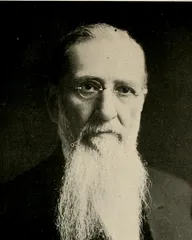
EDITOR'S TABLE. LOYALTY TO HOME MANUFACTURE. The eaders of the Church have from the first favored and encouraged home manufacture. They do so today. As early as 1852, Elder John Taylor, afterwards President of the Church, brought from England, the machinery for a beet sugar plant, which was manufactured in Liverpool at a cost of $12,500. Elder A. 0. Smoot was about that time made bishop of the Sugar ward, so named for the sugar works established there, and he raised beets for the manufacture of sugar on the Church farm, afterwards President Young's Forest farm. Subsequently, when he was called to Provo, he and others built the Provo Woolen Mills, which for many years achieved a splendid success. There was the Wasatch Woolen Mills on Parley's Creek, built by A. 0. Smoot, James Sharp and R. T. Burton, which for years manufactured cloth, and which was established in early days. Randall, Pugsley and Neal built and operated the Ogden Woolen Mills, and conducted it for several years. A nail factory was built in Salt Lake, and later moved to Sugar ward. Many other early enterprises might be named whose establishment proved that by their works the pioneers were strong advocates of home industry. It has always been a difficult task, however, to convert the people to the need of enthusiastically patronizing the products manufactured at home through the energy and thrift of public spirited men who were thus willing to invest their money. E^ven with Provo woolen goods made superior to imported cloth, the mills were compelled to seek their main patronage in the east and west. Only few Utah people were willing to wear home made clothing.
EDITOR'S TABLE. 219 The sugar factory first built in Lehi, had a hard struggle to become established; and there were many people who preferred, and perhaps are to this day who prefer, sugar made in Hawaii or Cuba, and apparently for no other reason than that they are disloyal to anything made at home. Then think of the struggle it has been to establish dairies, canning factories, and other industries, just because of the lack of enthusiasm in their support by the main body of the citizens. With the millions of dollars annually spent among the people by various manufacturing establishments in our midst, there is even now among some people dissatisfaction cropping to the surface, now and then, in the shape of complaints, and refusals of help under reasonable terms. This certainly is mostly, if not entirely, unjustified, and if persisted in may in the end prove financially suicidal, not only to those who adhere to such a course, but to the whole community. The moral is, purchase home-made goods, and encourage home institutions. The Ogden and Wasatch woolen mills live only in memory. The Provo mills are silent, while we are today spending hundreds of thousands of dollars for having our own wool made into cloth and returned to us, with much inferior material mixed into it, to clothe ourselves and our families. And this while we have a first class factory lying idle at our doors. Is this a wise policy? The community may answer for itself. If the people were willing today to support a home institution and wear home-made goods, these thousands might be saved to build up our own people and state. Capital is ready to start the mills we have, and with proper encouragement to build additional ones. With the assurance of loyal support from the public the work could begin at once. It would give employment to many laborers, and would be one more aid toward making the people of the inter-mountain west self-supporting and independent. There is no reason in the objection which doubtless some would make as they have done to all new enterprises: It will not pay. Capital is at our command ; all that is asked of us is to do our part — purchase the clothing and wear it. It has been demonstrated that the home goods are just as good as any we may import from other quarters. When the sugar and canning factories were estab-
220 IMPROVEMENT ERA. Used, the people were asked to grow beets and tomatoes. After much persuasion, they have learned to do so, and few would be willing to have this immense source of revenue withdrawn by the closing of the factories. If the people could be persuaded to be as loyal to home manufactured clothing, by wearing it, the same results would speedily follow, in that line. The capital is ready; are the people? Joseph F. Smith.