Greeting from the First Presidency
Improvement Era, vol. 8, no. 3, January 1905, pp. 193 to 194
Joseph F. Smith; Winder, John R.; Lund, Anthon H.
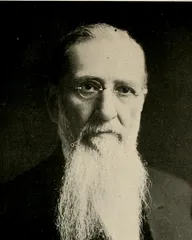
GREETING FROM THE FIRST PRESIDENCY. (From the Christmas "Deseret News") We extend a hearty greeting to the Latter-day Saints throughout the world at this season of general festivity and rejoicing. . We celebrate the anniversary of the birth of the world's Redeemer, and who, we believe, will be its Lord and King. His entrance into the world was the signal for the songs of angels and the rejoicings of the heavenly host. He descended below all things that he might rise above all things, and in that experience comprehend and obtain power over all things. As members of his Church—the body of Christ—we recognize him as the head, and not only as the great teacher but as the veritable Son of God. We look to him for guidance, we desire to render obedience to him, and we aim to carry out his purposes and designs for the salvation of the human race and the establishment of divine government in the world. For this we are his servants and the servants of his people, who are united in the bonds of the everlasting covenant, having been^baptized into him and having received his spirit. We congratulate the Church on the progress that has been made since its organization on April 6, 1830. Notwithstanding the opposition that has always been raised against it, the work of the Lord has moved forward#with wonderful strength and rapidity, and is still extending its influence throughout the world. Ever since the gospel was revealed through the Prophet Joseph Smith, whose birthday occurred on December 23,1805, and may therefore be properly celebrated also at this season of the year, the Church has moved steadily forward in the accomplishment of the purposes held in view from its inception. The principles revealed by our Savior, in this great and last dispensation, have been promulgated
194 IMPR 0 VEMENT ERA. among all the leading nations of the earth. They have been carried into heathen lands. Many thousands of honest people have yielded obedience to them, and hosts of others, not courageous enough to face the anger of a frowning world, have received these truths in their hearts, and the effects are marked in changes for the better that have taken place among the creeds of modern Christendom. Thus the leaven introduced by the Savior in the nineteenth century is working its way and will eventually "leaven the whole lump." We have abundant cause for rejoicing in contemplating the prosperity of a material character which has attended the Latterday Saints during the year nearing its end. Throughout these mountain vales the blessings of heaven have rested upon the earth. Crops of all kinds have been prolific, and a rich harvest has rewarded the labors of the husbandman. Thus food has been plentifully provided for the inhabitants of these regions, and a good surplus has been exported to distant places. In addition to the cereals that have been raised, and the increase that has attended the flocks and herds that have roamed upon the hills or fattened upon the rich products of the lowlands, the great crops of sugar beets that have been gathered have been a source of wealth to the community. The establishment of sugar factories in Utah and Idaho has been made possible because of this abundant product. With advanced experience in the cultivation of the beet, and in the manufacture therefrom of first-class sugar, we have promise of a full supply of the saccharine article for home consumption, and to supply our neighbors in surrounding states and territories. All this will greatly promote development of the resources and augment the wealth of this intermountain region. The action taken by the government towards developing and ■controlling the streams and waters that can be used for the irrigation of our agricultural lands, gives hope and courage to the farmers, and these are made stronger by the experiments of the Agricultural college of the state of Utah, which give evidence that by scientific farming abundant cropscan be raised here with the use of much less water than has been customary. With these double advantages—first the promise of more water, then the evidence that what we already have will accomplish much more than was