The Shadow and the Substance
Improvement Era, vol. 23, no. 4, February 1920, pp. 327 to 329
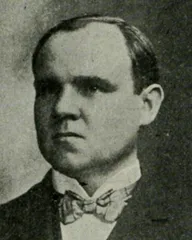
The Shadow and the Substance Dead Works Cannot Save
By Dr. James E. Talmage, of the Council of the Twelve
Ritual and creed, rites and ceremonies, are common to religious bodies whether called churches or otherwise. Prescribed formalism is not infrequently found to be the distinguishing characteristic of particular sects and cults. While in some of their many and varied applications the terms "ceremony" and "ordinance" are used interchangeably, they have definite and distinctive meanings in the finer and more accurate usage which our rich English tongue facilitates. — A ceremony may be such and nothing more a visible performance involving physical operation of significance in secular — procedure or it may be the outward expression of an ordinance established by authority and of far-reaching import. We do well to observe this distinction: Ceremonies are performed, ordinances are administered. In spiritual matters, particularly with respect to the requirements divinely specified as essential to salvation, certain ordinances have been established, for the effective administration of which the authority given of God is indispensable. Lacking the investiture of Divine commission, a man may baptize another so far as the physical immersion of the person is concerned: but though the performance be made ever so impressive it is but an empty ceremony. If the baptizer falsely professes Divine authority for his act, the ceremony becomes sacrilege, and he who officiates incurs the guilt of blasphemous assumption. — Baptism for the remission of sins the ordinance given of God with the promise that the eligible recipient shall thereby attain salvation— is to be administered in the name of the Holy Trinity; and authorization to officiate in those sacred names must not be self-assumed. To the Apostles, who had been invested with the Holy Priesthood through the Lord's personal ordination, the Resurrected Christ gave specific commandment: "Go ye therefore, and teach all nations, baptizing them in the name of the Father, and of the Son, and of the Holy Ghost." (Matt. 28:19). To the Nephite Twelve and to certain others who were
328 IMPROVEMENT ERA
ordained by the Lord on the Western Continent, like commandment was given as to the authority by which alone baptism could be administered, and the very words to be used were prescribed, thus: "Having authority given me of Jesus Christ, I baptize you in the name of the Father, and of the Son, and of the Holy Ghost. Amen" (Book of Mormon, 3 Nephi 11:25). With equal exactitude the mode of administering baptism in the Church of Jesus Christ of Latter-day Saints has been set forth through revelation from the heavens in the current dispensation; and the requisite empowerment has been divinely given. (See Doctrine and Covenants 20). Rites and ceremonies, ostensibly performed as having effects beyond the grave, are but fleeting shadows if the power of the Holy Priesthood be lacking. Ordinances established by Divine command and administered by men authoritatively ordained embody the very substance and certainty of salvation, provided only that the baptized believer forfeits not his glorious title through sin. It stands an incontrovertible fact that during the long centuries of spiritual darkness incident to the universal apostasy following the apostolic dispensation, men professed authority they nowise possessed, and essayed to perform ceremonies of their own devising in lieu of the ordinances they could not administer. The Lord thus voiced the portentous fact: "For they have strayed from mine ordinances, and have broken mine everlasting covenant." (Doctrine and Covenants 1:15; compare Isaiah 24:5). The Apostles of old found it necessary to solemnly proclaim against the all too prevalent reliance on the formalism of the Mosaic Law, to which through tradition and hierarchical domination the Jews were verily wedded. That Law, at best but a code of disciplinary preparation for the Gospel, which had then been established by the earthly ministry of the Christ, had been fulfilled by the Lord's death and resurrection. Against the wrongly-alleged efficacy of those dead works, then superseded and thenceforth of no effect, the people were repeatedly warned; and with equal fervency were they adjured to living works of obedience to the laws and ordinances of the Gospel, expressive of an abiding faith in the Savior whose disciples vthey professed to be. Touching the utter inefficiency of the ceremony of baptism performed without the authority of the Priesthood, the Lord thus spake in 1830: "Behold, I say unto you, that all old covenants have I caused to be done away in this thing, and this is a new and an
THE SHOW AND THE SUBSTANCE 329
everlasting covenant, even that which was from the beginning. Wherefore, although a man should be baptized an hundred times it availeth him nothing, for you cannot enter in at the straight gate by the law of Moses, neither by your dead works. For it is because of your dead works that I have caused this last covenant and this church to be built up unto me, even as in days of old." (Doctrine and Covenants 22).
For my Grandson, Douglas
If daddy will make us a jaunting car, Baby mine; We'll fasten it high to a little star,
With silver twine.
We will choose the one that follows the moon, Little son.
If daddy will hurry and make it soon, Won't we have fun?
We will chase the black clouds out of the sky, My sweet boy; And toss some little stars ever so high, Just for our joy.
I will wrap you up m a cloud snow white, Memories love; And the moon will smile at our great delight, Of this world above.
When the morning comes in his golden car, Baby dear. We'll slide down a ray from our little star, And have no fear.
So we'll safely come to our own dear land, Sweet boy blue, For God, who holds the stars in His hand,
Hobart, Tasmania Will hold us, too.
^^^ ^ ^^