A League of Nations to Enforce Peace
Improvement Era, vol. 22, no. 6, April 1919, pp. 474 to 481
— —
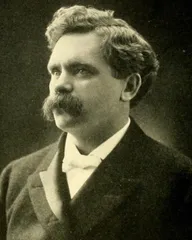
A League of Nations to Enforce Peace* By Hon. B: H. Roberts
"And he [Jehovah] shall judge among the nations, and shall rebuke many people: and they shall beat their swords into plowshares, and their spears into pruning hooks: nation shall not lift up sword against nation, neither shall they learn war any more."
Such the vision of the Hebrew prophets, Isaiah and Micah, more than two thousand six hundred years ago. A New Testament prophet in his vision of things yet to — come, heard great voices in heaven saying "The kingdoms of this world are become the kingdoms of our Lord and of his Christ and he shall reign for ever and ever." ;
A modern poet, which is only another name for a prophet, eighty years ago, sang of a time to come when the war drums would throb no longer, and the battle flags would be furled "In the Parliament of Man, the Federation of the world. There the common sense of most shall hold a restless realm in awe, And the kindly earth shall slumber, lapt in universal law." — This predicted age of universal peace this golden age of humanity, when every man shall sit "under his vine and under his fig tree," and none shall make him afraid — "for the mouth of — the Lord of hosts hath spoken it" has been the dream of the poets and prophets and statesmen through the ages. Is it to be realized? Is it possible? Has the time come for the organiza- tion of those forces that shall make these dreams realities in human experience? Is the practical inauguration and main- tenance of this world's hope to be the high privilege of the men of our generation? Or is it never to be realized? Relative to the first inquiries, are these dreams of a golden
*A Mountain Congress for a League of Nations to promote the cause of a League of Nations was held in Salt Lake City, Feb. 21-22, 1919. It com- prised the states of Utah, Wyoming and Southern Idaho. The Congress was held under the auspices of the National League to Enforce Peace, of which former President William Howard Taft is the President. The National Congress was held in nine sections in different parts of the United States from Feb. 5 to March 1. At the Mountain Congress a number of prominent speakers local and national delivered addresses; among them, Hon. Henry Van Dyke, formerly Minister to the Netherlands, and Hon. William Howard Taft, former president of the United States. Both delivered addresses to large congregations in the great Tabernacle. Among the prominent local men who spoke on Washington's birthday, was Hon. B. H. Roberts who de- livered this forceful and striking address at one of the meetings. Editors.
A LEAGUE OF NATIONS TO ENFORCE PEACE 475
age of peace to be realized, and is such a thing possible? I an- swer for myself, yes! Most emphatically, yes! And first and chiefly, because God has decreed that it shall come to pass, and who can disannul his word or stay his hand? And secondly, I answer, for myself, yes, as to its possibility, because it has be- come recognized as a world's need by enlightened minds in all nations; and that recognition gives assurance of its achievement. As to the second inquiries, is the time now, and is it to be the high privilege of the men of this generation to inaugurate the means which shall establish and maintain through its infancy — this universal peace age?- I answer, again for myself, yes, most emphatically, yes! God's hour has struck! Man's opportunity has come. The next step in the world's progress is to organize a League of Nations for the maintenance of the world's peace; for on this depends the world's progress. There can be no world- progress without the peace of the world being assured. War can only be regarded as a means of progress in so far as by contrast it makes apparent the world's need of assured peace ;as it clears the way for peace. No war was ever justifiable only as it aimed at the establishment of justice, whence would come peace. War in itself is destructive of progress. War's other name is Waste. It destroys the accumulated treasures massed by progress, of which we have ample proof in the present World's War. Peace is the Mother of abundance, the Nurse of science and of arts, and furnishes the necessary plane for progress. Well has the proph- et written of wisdom that "all her paths are paths of peace." I speak confidently of seeing founded in our day the means by which a universal and lasting peace shall be secured, not- withstanding the world has so frequently been disappointed in the projected measures for founding it. And never was the world more bitterly disappointed than in the peace efforts through the century preceding the outbreak of the present World War. These worthy efforts to secure a settlement of interna- tional disputes by other means than war, ranged from such efforts as followed the American-British War of 1812-14, which led to the forming of the New York Peace Society of 1815, to the founding of the permanent Court of Arbitration, at the Hague, in 1899, and the opening of that court at the "Palace of Peace," in 1913; yet all these efforts, which at times promised so much, were followed by the outbreak of the most stupendous and de- structive war of all time — the present World War. Men, how- ever, will refuse to be discouraged by these failures. And were they failures? Were they not rather stepping stones, these pre- World-War efforts, leading to that euccess in organizing the pro- posed international machinery for the maintenance of the world's peace, towards which the world now seems to be moving? The World War which has raged now through more than four
476 IMPROVEMENT ERA # troubled years, has taught the world, as it never before was taught, the need of some means of settling international disputes other than by the gauge of battle; and the need of some other security for human freedom than the dreadful arbitrament of war with its attendant uncertainties. The darkest hour is just before the dawn. When things, are at their worst they some- times, and generally do, mend. The felt need of God by man, is the first step towards man's finding Him. The consciousness of faults must precede reformation. And since this World War has taught us our national and international weaknesses and de- linquencies and the inadequacy of all other means of attaining desired world peace and security of justice, it brings within the range of practicability the adoption of a League of Nations for the Enforcement of Peace. The signs in the sky of events, are propitious for the launch- ing of this new world force dedicated to justice and freedom: First there is the world consciousness of the necessity for it; second, there is the agreement of all the allied nations now at the international council table at Paris, pledged to the adoption and maintenance of it; and five of them, the United States of America, Great Britain, France, Italy and Japan are of such preponderating military and naval power, and all material and moral resources, that, united, they can maintain such a league against the world. Another hopeful sign for the success of the League of Na- tions to Enforce Peace is that those who have in hand the draughting of its provisions are not deceiving themselves with the notion that they can settle every detail of the whole plan of it at the present session of the World's Peace Council. Profiting by the experience of many nations, in the matter of constitution- making, they are laying down in broad outline the general prin- ciples by which the league shall be guided, and providing the simplest machinery for making those principles effective in ap- plication. President Wilson, who has said so many apt and con- vincing things respecting the League of Nations, recently said, at the International Peace Table, that the conference might not "be able to set up a permanent decision," but that it could "set up permanent processes." This in effect disclaims the idea that the conference will attempt to evolve from its deliberations some cast-iron constitution that like the laws of the Medes and Per- sians shall admit of no subtraction or addition to its terms. Wisest statesmen have long since recognized the truism that constitutions are not made, but that they grow. The recognition of this principle by those now formulating a League of Nations to Enforce Peace, is one of the most hopeful signs of success for the evolving plan. By reason of adopting this attitude, some- thing is left to be developed by practical experience in the
a
A LEAGUE OF NATIONS TO ENFORCE PEACE 477
working out of the scheme. President Wilson's idea that the purpose of the League will be to establish permanent processes rather than to set up a permanent decision, gives us "a judicial, accessible, and permanent court of appeal," in the matter of in- ternational disputes, with opportunity, both as to the structure of the league and its processes, for such modifications of them as shall conform it to the constantly changing needs of the na- tions and peoples who will come under its jurisdiction. The adoption of this principle assures us that while it may be true that the leading statesmen, now assembled in Paris working out the first draught of this-to-be World Constitution, are largely idealists, they are at the same time practical idealists, engaged in an effort to establish such a plan of international world gov- ernment as shall "lift," to quote President Wilson again, "a great part of the load of anxiety from the hearts of men every- where." / like the title under which this Congress is convened — congress that is considering the founding of a "League of Nations to Enforce Peace." You notice I emphasize the phrase "to En- force Peace." I do so for the reason that "force" will be a nec- essary element in the new scheme for establishing peace. "Laws are mere nullities without the necessary force to make them respected," said Napoleon. World experience proves it true, and "force" means armies and navies, and armies and navies mean coercion in the last analysis of things. In this new international constitution, now in process of development, some means of coercing parties to" the world federation into compliance with its decisions must be established; and perhaps this will be the most difficult part of the machinery to devise, as it will also be the most difficult part of the scheme to administer, since it will call for the surrender of some part of that sovereignty which nations hold so dear, and is considered so essential to their dignity and freedom of action as self-determining political entities, and of national existence the very essence. Let there be no shirking in respect of facing the facts here, however. This surrender of some portion of the sovereign power of the respective nations entering the League will be essential to the successful working of the new world power. It will not do to repeat the blunders of past ages in founding federations of states, viz., grant to what in effect will — be the federal state of the world the proposed League of Na- — tions power to make decrees, to formulate decisions, but with- hold from it the machinery, and the force necessary to make its decrees and decisions effective. The defect of federated states previous to the establishment of the United States of America under the constitution of 1789, consisted in just that. Those federations left to the good faith of the respective states of the federation, the execution of the laws and decrees enacted by the
478 IMPROVEMENT ERA i
central power. And inasmuch as the good faith of the re- spective states of the federation was not equal, the federal laws were not uniformly executed, nor the burdens of the central government equally borne, nor was it respected. This was particularly the case of the American Government under the Articles of Federation, 1777 to 1789. These articles — gave no real power to the Federal Congress the Central Gov- ernment. It could neither levy taxes nor demand soldiers. "It could only ask the states for men and money," says one au- thority on the subject, "and wait until they were ready to give them. It could make treaties, but could not enforce them; could borrow money, but could not repay it could make war, but could ;
not enlist a soldier. In short, it could recommend, but had to depend upon the states to act." It was these defects that tended, in the minds of some thoughtful men of the period, to bring the federative principle into disrepute, and write down government by the federation of free states as an experiment that would fail. That, however, was not the view of the American people. They felt, though perhaps they but dimly understood, the cause of the threatened breakdown of their federal system. A convention was called and authorized to amend the articles of confederation but no sooner ;
did the convention meet than it discovered the utter imprac- ticability of amending the old Articles of Confederation, and proceeded to draw up a new constitution having for its purpose the forming of a more perfect union, the establishment of jus- tice, insuring of domestic trancruility, providing for the common defense, promoting the general welfare, and securing the bless- ings of liberty to themselves and to their posterity. The outcome of their labors was the present Constitution of the United States, of which William E. Gladstone, the noted British statesman, once said, that it was "the most wonderful work ever struck off at a given time by the brain and purpose of man." Under it the United States has lived and prospered now for one hundred and twenty years. The number of states has in- creased from thirteen to forty-eight the population has increased ;
from less than four millions to more than one hundred and ten millions; and though the country has thus greatly extended its area, and multiplied its population, the government founded under the Constitution has been adequate to all the changing conditions that have arisen, and it has stood the test of both foreign and domestic wars; until now the nation that was met with derision a little more than a century ago, and regarded as "a precarious experiment in government," is today the most stable government on earth, and conceded to be the foremost nation of the world. The changes in the American Government wrought by the
—
A LEAGUE OF NATIONS TO ENFORCE PEACE 479
adoption of the Constitution of 1789, which made all the progress and prosperity just noted possible, consisted mainly in creat- ing an executive and a judicial branch in the federal govern- ment, as well as a legislative branch, and granting to the Federal Government the right to execute by its own powers and ma- — — chinery within the limits prescribed by the Constitution, the laws it enacted and this by acting directly upon the individuals within the states or upon the states themselves. This was the national element in the new scheme. This is the unique prin- ciple praised by the French philosopher De Tocqueville, as "a great discovery in modern political science," adding that the "new word which ought to express this novel thing does not yet exist." We may not hope to see the League of Nations take on the character of our American Government and become a perfect federated union of states. But the statesmen now gathered at Paris formulating the World's League of Nations to Enforce Peace, may see in our federal system the principles essential to the sucess of the League they would found, and see in our ex- perience the vindication of the wisdom of that system. Of one thing I am confident, and that is that if success shall attend upon this new venture of the nations of the earth to escape the re- curring horrors of international war, it will be by the adoption of so much at least of the American principle of federation as will confer upon the League the necessary power and give to it the executive machinery, and make available to it the necessary force to execute its own decrees. And if, as I believe will be the case, the proposed League shall effectively guarantee the peace of the world, and lift the dread and the burden of war from the hearts of men, and at the same time secure justice in the polity — of nations in their international relationships will not those achievements more than compensate for the surrender of so much of national sovereignty as may be necessary to secure this boon to the world? My own faith waxes stronger in confidence as I contemplate this theme and its possibilities for good. Within the time period that has witnessed the founding and the vindication of our own system of government, there has been such a wonderful acqui- — escence in republican principles such a triumphant march of democracy through the world, that I cannot doubt but there will be an adoption of those democratic principles and an application of them under machinery that will make them effective, in the affairs of the world, through the proposed League of Nations. At the birth of our own nation, 1776, the only other republics ex- — isting and these not comparable with the American Republic were the Netherlands and Switzerland; and the two cities, Venice and Genoa. All the rest of the world could be colored black
—
480 IMPROVEMENT ERA
to represent the autocratic forms of government then existing; but today, if the world were colored to represent democracies ver- sus autocratic forms of government, about the only part remain- ing solidly black would be the territory of Germany and her allies in the recent war, while the rest of the world would be colored wholly white for democracies, or lightly shaded as rep- resenting constitutional monarchies into which largely enters democratic principles and administration so rapidly are the — principles of democracy becoming recognized as the only true principles of human government. The prayer of Washington—Washington Let us pause !
here to remember that this day, 22 d February, 1919, is the 187th anniversary of his birth which we celebrate today! Let us re- call the words of Lighthorse Harry Lee in which he character- ized Washington as, 'First in peace, first in war, and first in the hearts of his countrymen!" And also, let us ask in the words of Byron: "Where may the wearied eye repose When gazing on the great; Where neither guilty glory glows Nor despicable state? Yes —one—the first, the last, the best, The Cincinnatus of the West, Whom envy dares not hate Bequeath the name of Washington To make men blush, there was but one!" And now to resume—the prayer of Washington, in his Farewell Address to the American people, is being realized in this so universal adoption of those principles on which our gov- ernment is founded. That first of great American statesmen prayed that the Union and brotherly affection of the American people might be perpetual; that the free Constitution, which was the work of their hands, might be sacredly maintained: "That its administration, in every department may be stamped with wisdom and virtue; that in fine, the happiness of the people of these states, under the auspices of liberty, may be made complete by so careful a pres- ervation and so prudent a use of this blessing as will acquire to them the glory of recommending it to the applause, the affection, and the adoption of every nation which is yet a stranger to it."
Thus Washington contemplated and prayed for the universal triumph of democratic government in the world, not by conquest of arms, but the peaceful force of successful example the — demonstrated success of the system. What a complete triumph of his hope a League of Nations for the Enforcement of Peace would be, dedicated as the League would be to the maintenance of the freedom of all nations, on the basis of justice, and the principle that all men have an inalienable right to be free, and that all governments derive their just powers from the consent
A LEAGUE OF NATIONS TO ENFORCE PEACE 481
of the governed! Grant, Almighty God, that it may become a realized experience among men! Gentlemen, of the Congress, and you especially who have come to represent to us this League of Nations for the Enforce- ment of Peace, and ask us to support the President of the Re- public in his efforts to found it: I can speak to you in no official capacity for the people of the State of Utah, I am called from the ranks of the common people to say the few words I have submitted here; but, gentlemen, I think I can assure you in all confidence that the State of Utah can be relied upon to stand for this League of Nations. It is the final thing needful for the complete triumph of democracy in this world. It is the keystone to the arch of justice which humanity has been so laboriously building through the ages. It is the only way to make effective for the good of the world the great allied victory just achieved. It is to be the guarantee that free governments shall not perish from the earth. It is necessary to the security of civilization itself. It is the monument to which all who have paid the full measure of sacrifice in this most terrible of wars have contributed their lives. If we fail to found this League, we shall not be true to those who have fallen "on Flanders fields," and elsewhere. If we fail to erect it, we shall not be true to the mission of our own country in entering this world upheaval of war; for nothing was clearer set forth upon our entering the war than that we drew the sword against war itself; our men fought, and our women suffered, and our nation sacrificed its treasure, that suc- ceeding generations might be free from the dread and fear of war. To make all this good, the League of Nations is indispensa- — — ble indispensable to "clinch" the great Allied victory to sat- isfy the longings and aspirations of humanity for assured justice, peace, and liberty! In such an issue, I can think of Utah as sending forth but one message to her sister states of the American Union, and to all people; and that message is this: Utah stands strong for the League of Nations for the Enforcement of Peace, and may be relied upon to sustain the President of the Republic and all who labor with him to found the League and secure humanity in its inalienable right to live, to be free, to enjoy justice, to pursue happiness!