Judiciary System of the Church of Jesus Christ of Latter-day Saints
Improvement Era, vol. 22, no. 6, April 1919, pp. 498 to 499
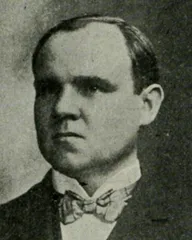
Judiciary System of the Church of Jesus Christ of Latter-day Saints By Elder James E. Talmage, of the Council of the Twelve
The essential purpose of the Gospel of Jesus Christ is to save mankind from sin, and to enable the sinner to retrieve his character through contrite repentance and by further compliance with the laws and ordinances based on the Atonement wrought by the Savior of the race. The Church of Jesus Christ, which as a corporate entity is the organized body of which the Gospel is the vital spirit, must of necessity provide a system of order and discipline for the guidance and government of its members. In accordance with the revealed law of the Church, a com- plete judiciary organization is maintained in the Church of Jesus Christ of Latter-day Saints; and its operation has been strikingly effective from the beginning. On the basis of territorial classification, the smallest fully organized unit is the Ward, which is presided over by a Bishop, with whom are associated two other High Priests as Counselors, the three constituting the Ward Bishopric. As assistants to the Bishopric, there are deacons, teachers and priests. Wards are aggregated in broader territorial units, known as Stakes, each Stake comprising such Wards as are conven- iently situated, without numerical limitation except as the re- quirements of efficiency make necessary. The presiding body within a Stake is the Stake Presidency, consisting of the Presi- dent and two Counselors, each of the three being a High Priest. Assisting the Stake Presidency is a High Council, composed of twelve High Priests. The General Authorities have jurisdiction over the entire Church, according to their respective callings. At the head stands the President with two other High Priests as Counselors, the three constituting the First Presidency of the Church. Next in authority is a body of twelve High Priests, specially ordained as Apostles, and these form the Council of the Twelve Apostles. The usual order of reformatory and disciplinary ministry is in general as follows. Should knowledge of any case of wrongdoing, or lack of harmony between or among members, come to the attention of the Bishopric of a Ward, it is their duty to delegate two or more priests or teachers to visit the parties concerned, and to try by brotherly mediation to bring about a reconciliation, or if there be evidence of actual sin, to report the facts to the Bishopric and make formal accusation. If the case so warrants, the Bishopric sit as a court, before whom the accused person appears after due notice and summons. If
JUDICIARY SYSTEM OF THE CHURCH 499
he denies the allegations of misconduct, he is given trial, in which his rights are scrupulously protected. Should he be found guilty, the Bishop's court requires the offender to effect restitu- tion if such he practicable, or to make amends so far as the nature of the case allows; or, in cases of grave offense, formally withdraws fellowship from the guilty one, or excommunicates him. The penalties never involve fines, deprivation of liberty, or levies on property; and the extreme judgment that can be rendered is that of excommunication from the Church, or, for lesser offenses, disfellowshipment. An appeal may be taken from the Bishop's court to the Stake Presidency and High Council, which tribunal possesses both appellate and original jurisdiction. Appeals from the action of a High Council may be made to the First Presidency only, whose decision is final. The Council of the Twelve Apostles is designated as the Traveling Presiding High Coun- cil of the Church, and they may officiate as a trial court any- where within the Church; though this they do only in cases of very serious concern, or wherein Church members of different local units are involved, or as the First Presidency directs them to assume jurisdiction. The purpose and basal plan of operation of the ecclesias- tical courts was thus set forth by Joseph Smith, and the affirma- tion is authoritative through formal acceptance by the Church: "We believe that all religious societies have a right to deal with their members for disorderly conduct according to the rules and regulations of such societies, provided that such deal- ings be for fellowship and good standing; but we do not be- lieve that any religious society has authority to try men on the right of property or life, to take from them this worldts goods, or to put them in jeopardy of either life or limb, neither td inflict any physical punishment upon them; they can only ex- communicate them from their society, and withdraw from them their fellowship." (Doctrine and Covenants 134:10). That the courts of the Church in no sense assume to op- pose or supersede the secular law is shown in a revelation given as early as 1831, wherein it is expressly required that if members of the Church commit crime, if they kill, or rob, or lie, they "shall be delivered up unto the law of the land." See Doctrine and Covenants 42. We hold that in matters of difference between brethren, in which no specific infraction of the secular law is involved, and in offenses called "civil" as distinguished from "criminal", it isas truly unworthy of members of the Church today as it was in Paul's time that "brother goeth to law with brother"; and that it stands to our shame if righteous judgment cannot be rendered among ourselves. See 1 Cor. 6:5-7.