Editors’ Table: The Unpardonable Sin
Improvement Era, vol. 21, no. 8, June 1918, pp. 732 to 741
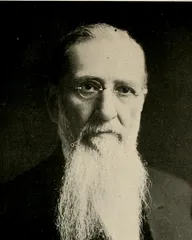
—
The Unpardonable Sin
By President Joseph F. Smith
[The sermon referred to in the following letters was delivered in Jan., 1895, and shortly thereafter printed. It treats of spiritual death and the unpardonable sin and what these are. A very careful and intelligent discussion of the sermon, with much of it quoted, was given by President A. Wm. Hyde, Pocatello stake, in the Era, for March, 1916. A further discussion by President Joseph F. Smith on the subject, is found in this letter, answering the criticism of his friend. These letters are now published for the first time. Editor.]
A Word of Criticism President Joseph F. Smith, City. — My Dear Brother: By your verbal request I have read carefully your sermon delivered Jan. 20, 1895, in Franklin, Idaho. I consider it one of the choicest doctrinal discourses I have listened to. Parts of it, that are not in accord with my ideas, are where you say, "I do not believe that he (Peter) had ever received the gift of the Holy Ghost," meaning during the life of the Savior. I believe that Peter had received the gift of the Holy Ghost prior to his denial of the Savior. Then you say, speaking of Judas, "And I am not sure but he atoned for his sin before he passed into the other world. I do not know that he did not; I do not know that he did. At any rate I believe that he lamented his sin although he was a devil." I believe Judas to be a son of perdition without hope, who will die the second death. Trusting you will not be offended with a junior brother for entertaining views different from yours quoted above, With unbounded love for you, I remain, Your Brother and Colaborer. Salt Lake City, March 1, 1895.
President Smith's Reply
— My Dear Brother: You further say: "I believe Judas to be a son of perdition without hope, who will die the second death." This is a clear-cut statement and, of course, you should have, and perhaps have, undoubted evidence to reach such a conclusion. I have no such belief, because I have never seen nor heard evidence sufficient in favor of your view to produce such a conviction in my mind. On this point, however, I wish to repeat, that I do not say that he did, nor that he did not commit the
EDITORS' TABLE 733
unpardonable sin, for I do not know. But the following word of God I do believe and know, by the promptings of the Holy Spirit, to be true:
Thus saith .the Lord, concerning all those who know my power, and have been made partakers thereof, and suffered themselves, through the power of the devil, to be overcome, and to deny the truth and defy my — power they are they who are the sons of perdition; * * * * Having denied the Holy Spirit after having received it, and having denied the — Only Begotten Son of the Father having crucified him unto themselves, and put him to an open shame. These are they who shall go away into the lake of fire and brimstone with the devil and his angels, and the only ones on whom the second death shall have any power; yea, verily, the only ones who shall not be redeemed in the due time of the Lord, after the sufferings of his wrath; for all the rest shall be brought forth by the resurrection of the dead, through the triumph and glory of the Lamb.
Now, if Judas really had known God's power, and had partaken thereof, and did actually "deny the truth" and "defy" that power, "having denied the Holy Spirit after he had received it," and also "denied the Only Begotten" after God had "revealed Hint" unto him, then there can be no doubt that he "will die the second death." That Judas did partake of all this knowledge that these — — great truths had been revealed to him that he had received the Holy Spirit by the gift of God, and was therefore qualified to commit the unpardonable sin, is not at all clear to me. In view of the facts recorded in the scriptures, setting forth the mental or spiritual condition of the apostles at the time of, and immediately subsequent to the crucifixion, it would strongly appeal to my mind that not one of them was qualified or prepared at that time either for life or death, nor for their ministry, and much less for eternal life nor the second death. After the women had been to the sepulchre and found it open, and saw "two men there in shining garments," who asked them "why they sought the living among the dead," and declared, "he is not here but is risen; remember how he spake unto you when he was yet in Galilee, saying the Son of Man must be delivered into the hands of sinful men, and be crucified, and the third day rise again," they, the women, declared these things to the apostles of whom, notwithstanding all they had seen and heard, it is said, "And their words seemed to them as idle tales and they believed them not." Then Peter and John went to the sepulchre and proved for themselves the truth of what the women had told them, "and departed, wondering in themselves at that which was come to pass." The same day "two of them," Cleopas or Simon (and doubtless John) went to Emmaus, and Jesus accompanied them and
734 IMPROVEMENT ERA
listened to their aimless chatter about "the things which are come to pass in Jerusalem in these days," until he felt, I might say, sick and disgusted with them, and exclaimed, "0 fools, and slow of heart to believe all that the prophets have written," etc., etc. For three years Jesus had been teaching them that Christ came to suffer all these things, that he might enter into his glory; for three years he had expounded to them the Scriptures relating to these great events, from Moses to the prophets, and notwithstanding all this they did not comprehend him, but said to him on this occasion, after his resurrection: "But we trusted that it had been he which should have redeemed Israel." At Emmaus the Lord opened their eyes that they knew him, and disappeared, and straightway they returned to Jerusalem and related to the other disciples all that had occurred on their way to Emmaus, and while doing so, Jesus stood in the midst of them, and "they were terrified and affrighted;" but he calmed their fears, and then and there, and at no previous time, so far as the scriptures reveal it, did Jesus open their eyes, or inspire their minds, "that they might understand the scriptures," concerning the great plan of redemption. "Thus it is written, and thus it behooved Christ to suffer, and to rise
from the dead the third day, and that repentance and remission of sins should be preached in his name among all the nations, beginning at Jerusalem." "And," said he to them, "behold, I send the promise of my Father upon you; but tarry ye in the city of Jerusalem, until ye be endowed with the power from on high" (Luke 24:49). The apostle John (20:9), referring to this matter, says: "For as yet they knew not the scripture, that he must rise again from the dead." Now, if these and many other scriptures can be relied upon, of which I have no doubt, relating to the unenlightened condition of all the apostles, even after the resurrection of Christ, concerning his great mission on earth, namely: the redemption of the world not only from sin but from the grave, then how much more knowledge or wisdom did Judas Iscariot possess before the crucifixion, than all the rest? To my mind it strongly appears that not one of the disciples possessed sufficient light, knowledge, or wisdom, at the time of the crucifixion, for either exaltation or condemnation; for it was afterward that their minds were opened to understand the scriptures, and that they were endowed with power from on high; without which they were only children in knowledge, in comparison to what they afterwards became under the influence of the Spirit. But I heard you say, in Franklin, that a son of perdition "could not repent" that he was past that chance. Be this as it may, I will not discuss it here; indeed, I firmly believe that a
EDITORS' TABLE 735
real son of perdition will have no chance for repentance, having sinned away the day of grace. Of poor Judas Iscariot it is thus recorded (Matt. 27:3-6): "Then Judas, which had betrayed him, when he saw that he was condemned, repented himself, and brought again the thirty pieces of silver to the chief priests and elders, saying, / have sinned in that I have betrayed the innocent blood. * * * And he cast down the pieces of silver in the temple and departed, and went and hanged himself." This was not only confession of sin, but repentance of sin and atonement, too, so far as lay in his power. Saul, of Tarsus, possessing extraordinary intelligence and learning, brought up at the feet of Gamaliel, taught according to the perfect manner of the law, persecuted the Saints "unto the death, binding and delivering into prisons both men and women;" and when the blood of the Martyr Stephen was shed, Saul stood by keeping the raiment of those who slew him, and consented unto his death. And "he made havoc in the Church, entering into every house, and hailing men and women, committed them to prison." "And when they were put to death, he gave his voice against them," and he "punished them oft in every synagogue, and compelled them to blaspheme, and being exceedingly mad against them, he persecuted them even unto strange cities," and yet this man committed no unpardonable sin, because he knew not the Holy Ghost.
While, for the crime of adultery with Bathsheba, and for ordering Uriah to be put in the front of battle in a time of war, where he was slain by the enemy, the priesthood, and the kingdom were taken from David, the man after God's own heart, and his soul was thrust into hell. Why? Because "the Holy — Ghost spake by the mouth of David" or, in other words, David possessed the gift of the Holy Ghost, and had power to speak by the light thereof. But even David, though guilty of adultery and the murder of Uriah, obtained the promise that his soul should not be left in hell. Which means, as I understand it, that even he shall escape the second death. While suspended upon the cross, in the agonies of death, as he was about to yield up his spirit, our gracious, glorious Savior breathed this memorable and merciful prayer: "Father, forgive them; for they know not what they do" (Luke 23:34). Again: Peter, speaking to those who had crucified the Lord, said: "But ye denied the Holy One and the Just, and desired a murderer to be granted unto you; and killed the Prince of life, whom God hath raised from the dead; whereof we are witnesses, * * * And now, brethren, I wot that through ignorance ye did it, as did also your rulers. * * * Repent ye therefore, and be converted, that your sins may be
736 IMPROVEMENT ERA
blotted out, when the time of refreshing shall come from the presence of the Lord; and he shall send Jesus Christ, which before was preached unto you." He did not say to them, "Repent, and be baptized, and ye shall receive the gift of the Holy Ghost," but, "repent, and be converted, that your sins may be blotted out, when the time of refreshing shall come from the presence of the Lord; and he shall send Jesus Christ, which before was preached unto you." Here is Godlike mercy and forgiveness invoked and breathed out upon the wicked murderers of the Lord, from the cross, from the loving soul of the Prince of life himself, and the corroboration of this gracious spirit, by the Apostle Peter (Acts 3:14-20). This is the true gospel spirit, and true gospel charity and forgiveness. Now, do you mean to say and maintain that this poor, weak, sinful creature, Judas Iscariot, knew more about the consequences of his acts than the chief priests and rulers did, or any other of the disciples, when he betrayed the Lord? And that he was more guilty of the shedding of the innocent blood than they, who cried, "let his blood be upon us, and upon our children," and felt no repentance on seeing his blood shed? There is hope even for these. I will grant that he was even more wicked or guilty than they, for he was chosen to be one of the Twelve. But he did not cry, "Let his blood be upon me." Crucify him, crucify him;" but when he saw that Jesus was condemned, he repented himself, and confessed, "I have sinned in that I have betrayed the innocent blood." The others shed it, Judas only betrayed the Lord, but did not consent to the
shedding of his blood. Is there no virtue, no saving element in this humble penitence, confession and atonement? Let us remember that "all manner of sin and blasphemy shall be forgiven unto men: but the blasphemy against the Holy Ghost shall not be forgiven unto men. And whosoever speaketh a word against the Son of man, it shall be forgiven him but who- :
soever speaketh against the Holy Ghost, it shall not be forgiven him, neither in this world, neither in the world to come" (Matt. 12:3-32). I take it for granted, you do not doubt that no man can sin against light until he has it; nor against the Holy Ghost, until after he has received it by the gift of God through the appointed channel or way. To sin against the Holy Ghost, the Spirit of Truth, the Comforter, the Witness of the Father and the Son, wilfully denying him and defying him, after having received him, constitutes this sin. Did Judas possess this light, this witness, this Comforter, this baptism of fire and the Holy Ghost, this endowment from on high? If he did, he received it before the betrayal, and therefore before the other eleven apos-
EDITORS' TABLE 737
ties. And if this be so, well may you say, "he is a son of perdition without hope." But if he was destitute of this glorious gift, and outpouring of the Spirit, by which the witness came to the eleven, and their minds were opened to see and know the truth, and they were able to testify of him, then what constituted the unpardonable sin of this poor, erring creature, who rose no higher in the scale of intelligence, honor or ambition than to betray the Lord of glory for thirty pieces of silver? God forbid that I should condone a crime which he cannot forgive. But not knowing that Judas did commit the unpardonable sin;nor that he was a "son of perdition without hope, who will die the second death," nor what knowledge he possessed by which he was able to commit so great a sin, I prefer, until I know better, to take the merciful view that he may be numbered among those for whom the blessed Master prayed,"Father, forgive them; for they know not what they do." Very respectfully, your brother, Jos. F. Smith. P. S. I am aware that Jesus says: "Those that thou gavest me, I have kept, and none of them is lost but the son of perdition, that the scripture might be fulfilled." But I do not understand by this that this lost one is absolutely "without hope, and will die the second death." For he repented and confessed his sin. It is only he who will not repent, that will remain in his fallen state. He that persists in his own carnal nature, being an enemy to God, as the devil is an enemy to God, without repentance, who will be wholly subject to the power of Satan, and remain as if there had been no redemption wrought (See Mosiah 16:5). J. F. S.
Profanity
appears that some twelve or fourteen years ago, an Anti- It profanity Society of the World was organized in San Francisco, California, of which W. R. Lett is the national secretary, 1304 Franklin St., San Francisco, California. The slogan of the society is the commandment, "Thou shalt not take the name of the Lord thy God in vain; for the Lord will not hold him guiltless that taketh his name in vain." Profanity is one of the great American sins, if not the sin of America. The organization is a&king the people of the Nation as far as they can to join them in efforts to make a wholesome suppression of the prevalent cus-
738 IMPROVEMENT ERA
torn of blaspheming the sacred name of the Lord in our land. The organization certainly has a worthy cause to battle for.
Among the Latter-day Saitns, we dare say that profaning the name of God is quite uncommon; however, there are thoughtless people even throughout our community who do this very thing! Profanity, wherever it is found, should have the attention of the priesthood organizations of the Church, with a view to convincing people that breaking the third commandment is a grave sin and is not tolerated among the Latter-day Saints. It is a good idea now and then to preach a sermon upon the subject of profanity. The habit is injurious to the swearer himself. It breaks down his character. It leads him to extremes of evil, and it is not too much to say, as suggested in the circular, that "a man who uses profane language drops one hundred per cent in the estimation of all law-abiding citizens within hearing." In California the state law is said to provide: "Any person using profane or indecent language in any public place within the hearing of women or children, in a loud and boisterous manner, is guilty of a misdemeanor, and may be fined not exceeding $200 or be sentenced to ninety days' imprisonment, or both." San Francisco, it is understood, has a city ordinance placing a fine of $500 or six months' imprisonment for using profane language in the hearing of the public. This subject is of such importance that it well merits the attention of all of our organizations, and agitation on the subject would doubtless be of great value and benefit to all concerned.
Messages from the Missions
Baptisms in the Transvaal
Leonard A. Robins, writing from Johannesburg, South Africa, January 3 : "Four elders labor in the Transvaal conference, all of whom at present are in Johannesburg, the gold city of South Africa. People here are very indifferent to religion; but by ardent work the elders have made many friends and have found a number who are investigating the gospel. The Saints here are endeavoring to follow the greatest law, "Love the Lord thy God, and thy neighbor as thyself." When they meet together, they forget that they are of different nationalities, and feel that they belong to the kingdom of God. We have been holding our meetings at the homes of members in the past, but have now just opened a hall for that purpose. On Sunday, December 23, 1917, we celebrated the one hundred and twelfth anniversary of the prophet's birth by holding a baptismal service at which six persons were added to the fold. We hired a trolley car, and thirty-three friends, saints, and elders rode to the farm of Brother J. Brummer, where we performed the ordinance in a pond especially
EDITORS' TABLE 739
built for that purpose. About ninety people gathered to witness the ceremony. We held a service at the font, and explained to the people the necessity of baptism to those who would come unto Christ. The newly baptized members were confirmed the same day. After luncheon had been served we went back to our homes feeling that the day had
been well spent. Nothing occurred to mar the day's pleasure. We felt that the Spirit of God was upon us. Some two years ago, when Brother J. P. Brummer was investigating, he felt that he was so far from a suitable place where he could be baptized that he would convert a spring on his farm into a baptismal font; this he did and lined it with brick. He and his family were baptized in it, and since then we have used the font on two other occasions, making a total of fifteen people who have there received baptism. The photo shows the people at the trolley ready to leave for home. The elders of the Transvaal conference are A. Bailey Dunford, Logan; Harvey M. Hanson, Elwood, Utah; A. Lester Stoddard, La Grande, Oregon; Leonard A. Robins, conference president, Layton, Utah.
The Era in the Hamilton Library A. B. Campbell, Hamilton, New Zealand, writes: "While our work in these parts looks encouraging, we still cannot observe the feeling towards the truth that we would like to see, and that we expected. It seems to me that it would take a long time for the war to bring some people to a knowledge of the truth. Hamilton is a city with a population of ten thousand, and a surrounding population of about fifty thousand. The privilege which the librarian of the Hamilton library has given us to distribute pamphlets, and to place the Era on the reading table, will help us present the truth before the public, as many will read the publications that are placed before them in the library, quicker than they will in their own homes."
Maori Agricultural College Team Again Champions Writing from Hastings, New Zealand, Elder Rudolph Church reports: "Readers of the Era may be interested in knowing that this team have
740 IMPROVEMENT ERA
been successful in winning the Hawk's Bay Union Foot-ball Cup again this year. Last year the boys went through the season undefeated. During the early season, this year, they were beaten on one occasion. Taking into consideration the fact that they played thirteen games, we can say that they have again completed a very successful season. 'T find these boys to be real foot-ballers. They have a good amount of pep and courage, which are very essential qualities of a good foot-ball player. "The M. A. C. team have done considerable in putting before the people
ol this locality one great principle of our gospel; they are strict observers of the word of wisdom. "From left to right, back row: A. Tawa, S. Edwards, W. Paewai (capt.), R. Pouri, G. Watene. "Sitting: J. Shortland, M. Pera, Mafe Pera, R. Church (coach), T. Royal, J. Anderson. "Front, Sitting: H. Tamorehu, C. Herewini, H. Kingi, J. Watene."
Lost in the Woods Elder A. Leonard Ellidge writes from Naikohe, New Zealand, March 7: "The local brethren and the elders shown in this picture are teaching the gospel in this part which lies directly north of Auckland, New Zealand. So completely has the gospel been preached by those who came before us, that very few Maoris in this conference can say they haven't had the privilege of hearing it. We labor among the Maoris almost exclusively. We have an opportunity occasionally to talk and preach to the Europeans; however, in the past there have been elders laboring especially among the Europeans. Notwithstanding the fact that the gospel has been preached extensively here, we find more work than twice our number could do satisfactorily, both among Saints and those who do not belong to the Church. Our dress is often shabby because we have to go prepared for the mud and dense forests for which the district is known. But we are filled with the same determination and the same spirit that have established Zion and maintained it in the face of all her adversaries. My companion, Elder Cook, and I were
lost for twenty-three hours in one of this district's large and dense forests. Just before dark, after wandering around for several hours, we discovered a vacant forest house, and as there was good feed for horses and some sweet potatoes there, we were glad to put up. The next morning, after experiencing some difficulty on trails with landslides, we found our way out. Owing to the fact that so many Maoris are able to speak English, it is a difficult task nowadays for a person to learn the Maori language; and within the next forty years, in my opinion, the Maori language will become completely extinct. The Era is very much appreciated here. The elders are, from left to right: standing, R. J. Crook, Smoot, Wyo.; A. L. Ellidge, Franklin, Ariz.; sitting: J. R. Russon, Lehi, Utah; J. D. Lauritzen, Vista, Idaho; and L. W. Harris, Beaver, Utah.
Elders of Denver, Colorado
Sitting, left to, right: Geo. Boam, Elvin H. Maw, Percy L. Hoare; standing, David B. Ballantyne. These elders represent the male quartet of the Denver branch and have been preaching the gospel with their songs. Of late they have been asked by different undertakers of this city to sing in their parlors, and they have sung before a great variety of audiences and always seem to leave a good impression with their songs. The elders feel that our good "Mormon" hymns preach wonderful sermons in themselves.