Eternal Progression
Improvement Era, vol. 21, no. 7, May 1918, pp. 623 to 626
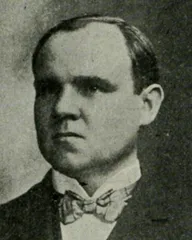
Eternal Progression By James E. Talmage of the Council of the Twelve
I — Infinite Possibilities of Man's Estate We have seen that the spirit of man is in the image of God, whose child it is, and that every human body conforms, in the measure determined by its perfection or physical defects, to the spirit that tenants it. Furthermore, we know that the spirit existed in the antemortal state, that after death it lives as a disembodied individual, and that later it shall be reunited with the body of flesh and bones in an everlasting union, through the resurrection inaugurated by our Lord Jesus Christ. •
If man be the spirit offspring of God, and if the possibilities of individual progression be endless, to both of which sublime truths the Scriptures bear definite testimony, then we have to admit that man may eventually attain to Divine estate. However far away it be in the eternities future, what eons may elapse before any one now mortal may reach the sanctity and glory of godhood,man nevertheless has inherited from his Divine — Father the possibilities of such attainment even as the crawling caterpillar or the corpse-like chrysalis holds the latent possibility, nay, barring destruction, the certainty, indeed, of the winged imago in all the glory of maturity. Progression in mortality, that is true progression, advancement of the soul in developing the attributes of godliness, achievement in righteousness that shall endure beyond death and resurrection, is conditioned upon compliance with spiritual law, just as bodily health is dependent upon the observance of what we call natural law. Between the two there may be difference of degree, but not essentially of kind. Physical exercise is indispensable to the development of body, and quite as certainly is spiritual activity requisite to the healthful and normal development of the soul. Through valiant service, by unreserved obedience to the requirements embodied in the Gospel of Jesus Christ, neverending advancement is made possible to man. Thus, within the soul are the potentialities of godhood. Such high attainment is specifically the exaltation of the soul as distinguished from salvation. Not all who are saved in the hereafter shall be exalted. One may refrain in large measure from committing particular sins or sin in general, and so gain title to a degree of salvation far above the lot of the gross offender, nevertheless
624 IMPROVEMENT ERA
his goodness may be merely passive and thus distinctly apart from the godliness of him who is active, aggressive, positive valiant in righteous service. The incident of the rich young Jew who came in quest of instruction as to his duty is in point. (See Matt. 19:16-26). "Good Master," said he, ""what good thing shall I do that I mayhave eternal life?" The Lord answered "// thou wilt enter into life, keep the commandments", and in response to further inquiry cited the standard requirements of the Mosaic Law. In simplicity, and seemingly devoid of all sense of self-righteousness, the young man rejoined: "All these things have I kept from my youth up: what lack I yet?" Then Jesus replied "// thou wilt be perfect, go and sell that thou hast, and give to the poor, and thou shalt have treasure in heaven: and come and follow me." The young ruler, for as such he is designated, yearned to know what he should do beyond ordinary observance of "Thou shalt" and "Thou shalt not" of the decalog. He went away sorrowful in contemplation of the sacrifice required of him for the attainment of perfection. Love of worldly things was this man's besetting ailment. The Great Physician diagnosed his case and prescribed a suitable remedy. Through the latter-day prophet, Joseph Smith, the Lord has specified the conditions of exaltation in the eternal worlds, by describing those who thus attain: "They are they who received the testimony of Jesus, and believed on His name and were baptized after the manner of His burial, being buried in the water in His name, and this according to the commandment which He has given. That by keeping the commandments they might be washed and cleansed from all their sins, and receive the Holy Soirit by the laying on of the hands of him who is ordained and sealed unto this power. * * * * They are they who are Priests and Kings, who have received of His fulness, and of His glory, and are Priests of the Most High, after the order of Melchizedek, which was after the order of Enoch, which was after the order of the Only Begotten Son. Wherefore, as it is written, they are Gods even the sons of God." (Doctrine & Covenants 76:51-58).
And further, of the supremely blessed we read: h T they be r" .u Sha11 from y. be Gods ' because they have no end; therefore shall ^e everlasting to everlasting, because they continue; then shall they be above all, because all things are subject unto them. Then shall they be Gods, because they have all power, and the angels are subject unto them.
to^^O&W).™ CXCePt ^ 3bide ^ kW ^ Cann ° aUain ° ' l l
But all shall be subject to the Eternal Father and His Son Jesus Christ, as thus attested:
"Wherefore all things are theirs, whether life or death, or things ores- C° me a " are theirs a " d GodV> *$&& ' " -" Christ's Ld Christ i
ETERNAL PROGRESSION 625
// Deity as Exalted Humanity
We read of our Lord's presence at a winter festival in Jerusalem, the Feast of Dedication. As He stood in Solomon's Porch He was assailed with questions from some of the more prominent Jews; and His answers so stirred their priestly wrath that they essayed to stone Him to death. (Read John 10:22-42). The chief cause of their anger lay in Christ's affirmation of His actual relationship to the Father as the veritable Son of God. To the assault of the infuriated and sin-blinded Jews Jesus responded with these words: "Many good works have I showed you from my Father; for which of those works do ye stone me?" And the answering howl of the mob was "For a good work we stone thee :
not; but for blasphemy; and because that thou, being a man, makest thyself God." Blasphemy was the blackest crime in the Mosaic category; and the prescribed penalty was death by stoning. The essence of this capital offense lay in falsely claiming for one's self or attributing to man the authority belonging to God, or in ascribing to Deity unworthy attributes. Jesus had proclaimed to the angry Jews His inherent power to grant eternal life unto all who would believe on Him and do the things He taught. Hence the frightful charge of blasphemy hurled at the Son of God, who spake only as the Father gave commandment. Our Lord reminded them that even human judges of their own, being empowered by Divine authority and therefore acting in the administration of justice as representatives of Deity, were called gods (see Psalm 82:1, 6) and then, with sublime per- ;
tinence aeked : Say ye of him, whom the Father hath sanctified, and sent into the world, Thou blasphemest; because I said, I am the Son of God?" The actuality of the relationship between Jesus the Son and God the Father as set forth in the Scriptures cited is in accord with Scripture in its entirety; and that humankind are veritably children of that same Father, Jesus Christ being the Firstborn of the spirits, and therefore our Elder Brother, is attested by the same high and unquestionable authority. The Jews denied and blasphemously decried the Godship of Christ, because He was to them a man, the reputed son of a carpenter, and His mother, brothers and sisters were known to them as familiar townsfolk. Christ emphatically affirmed that He was following His Father's footsteps, as witness His words on another occasion, when the Jews tried to kill Him because He had said "that God was his Father, making himself equal with God. Then answered Jesus and said unto them, Verily, verily, I say unto you, The Son can do nothing for himself, but
626 IMPROVEMENT ERA
what he seeth the Father do: for what things soever he doeth, these also doeth the Son likewise." (Read John 5:17-23). In the verse following, Jesus declared that unto Him the Father showed all things that He, the Father, did. In connection with the same ocurrence He declared "My Father worketh hitherto, and I work" It is plain that Jesus Christ recognized the literal relation- ship of Sonship which He bore to the Father; and moreover, that He was pursuing a course leading to His own exaltation, a state then future, which course was essentially that which His Father had trodden aforetime. To the Father's supremacy He repeatedly testified, and expressly stated "My Father is greater than I." (John 14:28). Jesus Christ lived and died a mortal Being, though distinguished in certain essential attributes from all other mortals because of His status as the Only Begotten of God His Father in the flesh. Yet Jesus Christ has attained the supreme exaltation of Godship, and has won His place at the right hand of the Eternal Father. Ponder the significance of His words: "For as the Father hath life in himself; so hath he given to the Son to have life in himself." (John 5:26). The teachings of the Church of Jesus Christ of Latter-day Saints on this affirmation by the Lord Jesus were set forth by Joseph Smith the prophet in this wise: "As the Father hath power in Himself, so hath the Son power in Himself, to lay down His life and take it again, so He has a body of His own. The Son doeth what He hath seen the Father do: then the Father hath some day laid down His life and taken it again; so He has a body of His own. " And further: "God Himself was once as we are now, and is an exalted Man, and sits enthroned in yonder heavens. That is the great secret. If the veil was rent today, and the Great God who holds this world in its orbit, and who upholds all worlds and all things by His power, was to make Himself visible —I say, if you were to see Him today, you would see Him like a man in form— like yourselves in all the person, image, and very form as a man; for Adam was created in the very fashion, image, and likeness of God, and received instruction from, and walked, talked and conversed with Him, as one man talks and communes with another." We read further: "The Father has a body. of flesh and bones as tangible as man's; the Son also." (Doctrine nants 130:22). & Cove-
Our belief as to the relationship of humanity to Deity is thus expressed: "As man is, God once was; As God is, man may be."