Editors’ Table: Thrift and Economy
Improvement Era, vol. 21, no. 7, May 1918, pp. 631 to 641
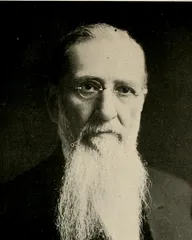
Thrift and Economy*
By President Joseph F. Smith
I feel very thankful, beyond my words for expression, to have the privilege that I have of meeting with you this morning, and I am delighted to see the number who are assembled here at the opening session of this Eighty-eighth Annual Conference of the Church of Jesus Christ of Latter-day Saints. I feel to thank you for your presence here this morning, for to me it is an evidence of your interest in the great cause in which we are engaged. I feel that the spirit of the gospel, which is the Spirit of the Lord, will accompany us through the sessions of this conference as an evidence of the faith, good desire and faithfulness of those who have assembled this morning and who will continue to meet with us through the sessions.
Physically Ailing, but Spiritually Steadfast It is an unusual thing for me to attempt to make any apology for myself, but I am in a condition of health just at this time which may prevent me from taking so active a part at this session of our conference as I have usually taken. I hope there is nothing very serious the matter with me, more especially regarding my faith in the work of the Lord and my love for God's truth. I may have physical ailments, but it appears to me that my spiritual status not only remains steadfast as in times past, but is developing, growing, becoming more thoroughly established in the faith of the gospel, in the love of truth, and in a desire to devote all the energy, time, wisdom and ability the Lord may give to me to advance his cause in the earth and to help all I can to build up Zion in these latter days. Home Industry I have many things on my mind that I would like to refer to, but I feel that it would be wisdom for me to leave the heft of the speaking to my brethren, this morning. However, I wish to mention some things which I think should be brought to the attention of our people throughout the length and breadth of the land; and I will simply refer to a few things for a moment
*Opening remarks at the first meeting of the eighty-eighth annual conference of the Church, April 5, 1918.
632 IMPROVEMENT ERA
or two in order that they may serve as a text, perhaps, for some others who may succeed me in speaking to you. In the good old days of President Young, the doctrine of self -sustenance, of home manufactories, of local providence in all things necessary to sustain the people of God and the inhabitants of this intermountain region, were subjects that were dwelt upon very much, and although a little old are still new and deserving the attention of the Latter-day Saints especially, and not only Latter-day Saints but all the people of this intermountain country. In early days we sought to be content and to be happy by using those things which we could as far as possible produce at home. The conditions of those days. made it necessary for us to be economical and for us to make an effort on our part to provide everything as far as possible by our own energy and skill, that we needed. But we have advanced in wealth; money has become easier to get and more plentiful; transportation across the deserts and from distant parts of our country has become easy, and it has become so simple and so easy to buy the shoddy which is a few cents less per yard, or piece, which is manufactured in great manufactories in the East or in Europe, by labor which is compensated for at the least possible wages, and shipped easily to this country, that we prefer to patronize the laborers that are afar off to patronizing those who are in our own midst and who would be depending upon the patronage of the people of this intermountain region to support them in their labors. We have sought to manufacture clothing in our Provo Woolen Mills and in other of our manufactories that have been from time to time established in the early days, but the goods that have been manufactured in Provo, which surpassed very far in real value the imported articles of a similar kind, because they were made of whole wool, had to seek a market in New York and in San Francisco, and in Europe, because the people at home would not patronize home made goods. Why? Because they could not be made quite as cheap as imported shoddy! These are facts, for I have been associated with this factory somewhat in years past, and I know whereof I speak. It is an easy matter now to get a great many things from the East, and from the West, and pay our money out for them, which we ought to produce at home; and there are a great many things brought into our country that we purchase with our money that we do not need at all, and which ought never to be imported for the use of Latter-day Saints.
Some Surprising Facts No Latter-day Saint has any use for tobacco in any form, and yet many thousands of dollars are paid out annually for this
EDITORS' TABLE 633
noxious weed which is grown in the south, manufactured in the south and shipped here, of course, for the money it takes away, and otherwise merely to do you harm, and absolutely no good. It was surprising to me to learn that we actually ship eggs by the ton from various distant states, into Utah. It appears to me that it is really a shame and a disgrace to our credit and good name, that the people of this intermountain region, the farmers, the ranchers, the home-makers, and home-dwellers, cannot raise poultry enough to supply themselves and the market at home with eggs and chickens, instead of having to import them from abroad. Why cannot we make our own butter and our own cheese, at home? Why would not these industries pay our own people as well as they would pay or profit others? Surely they would, if our people would be as loyal in supporting them in their labors and in their manufactories as we are loyal to those that are far away. The matter has been called to our attention of late that we are importing a great deal more into Utah and into the principal cities of Utah than we are exporting abroad. We are allowing our fruit year after year to rot on the ground by the ton, if not by the hundreds of tons, when a few years ago we were sufficiently interested in home preservation and home production that we would dry some of our peaches and some of our apples that are now going to waste, for winter use and for transportation abroad. We have quit it. Scarcely any one will dry a peach now! I have been trying, year after year, to get a few dried peaches to help eke out my provender during the winter season for my family; and there is nowhere that I can get good dried peaches in Utah, and yet they are thousands of wasting by the hundreds of tons, by the tens of properly. This dollars worth, because they are not taken care of We should adopt the rule to live within our own i? wrong. of the means, and attempt, at least, again to save the products and of our flocks, import as soil, the products of our herds, possible, and supply as much as we possibly can for our little as own support, and for transportation. A Strange Kind of Economy thrust down We have been having the doctrine of economyextent that we such an our throats for all it is worth recently, to scarcely know sometimes where we are at. A poor man will go pounds of flour, and the to the store to get twenty-five or fifty least twenty-five or htty storekeepers will compel him to buy at material that he doesn t want or need or pounds of some other is compelled to buy know what to do with, if he had it, and he it or .o without the flour. That is a strange kind of economy
634 IMPROVEMENT ERA
for the poor people. A poor man goes to the store and he says, "I want twenty-five pounds of flour." "All right, you have got to buy twenty-five pounds of bran or of something else" which he does not need, and pay a good deal more for it, before he can get his flour. What? The poor man under the necessity, when he — must have a little flour for bread (and he can't afford to go to the bakers to get it, because they have raised so high on their prices that he can't afford to go there to buy bread,) and he must get the flour and let his wife bake it, but he is told that he can't have flour unless he will buy at least one and one-fourth more material of one kind or another of greater cost to him than the flour will be. The Remedy It would be a mighty good thing if every farmer, gardener, owner of an orchard or a hennery, or a flock of sheep, or any other means of subsistence in the land, would provide for themselves everything that they need at home, and not go to the stores at all unless the store keepers would treat them fairly. I have no fault to find with stores nor with the keepers of them. They are necessary in their spheres of business. But I would not go to a store to get what I did not need, nor what I could produce for myself; there are many things people can do without with profit to themselves. Who am I finding fault with? I don't want to find fault with anybody, nor with anybody's methods of economy. I am not doing this in the spirit of fault-finding. I am saying what I am, in the spirit that we should provide for ourselves so that we will not be dependent upon imported goods, more especially dependent for flour imported from abroad instead of producing flour at home and to transport abroad. Utah, by its irrigation system, can almost beat the world in raising more bushels of wheat to the acre than can be raised anywhere else. Now, I wanted at least to say this much to you, that we ought not to spend our means in importing into our country things we can raise at home; and surely not those things that are injurious, nauseating and hurtful to life. We ought to let them alone. I don't believe that it is really necessary for the Latterday Saints to import tea and coffee into Utah. I believe they could makeshift with something more simple, something less injurious, perhaps, than these things that are more or less stimulating and not nourishing, the effects of which are more injurious than beneficial. Loyal to the Government I wish to say this, there isn't a feeling in my soul nor in any fibre of my being that is disloyal to the Government of the
EDITORS' TABLE 635
United States or to the desire that we have in our souls to maintain the principles of individual and National liberty, justice and freedom that have been established in the Constitution of our country. I believe in the Constitution of the United States. T believe in the principles which that instrument promulgates the freedom of mankind to do right, to worship God according to the dictates of their own conscience, freedom to pursue their way in peace and to observe and maintain their rights, their freedom, their liberties, and justly recognize and equally preserve and defend the rights, freedom and liberty of their neigh- — bors and of their fellow beings and of all of God's creatures. I believe that the Constitution of the United States was and still is an inspired instrument. The Lord God Almighty inspired the minds that framed it, and I believe it ought to be most sacredly preserved. It is worthy of the defense and should be upheld by all the people of our land. I cannot say that I indorse always some of the acts of leading men. Now, the Lord bless you. Financial, Social and Statistical Facts
I had prepared a few items that I wanted to name. I am going to depart from my intended rule this morning, and finish while I am on my feet. It may be a source of information to the Latter-day Saints, at least, and will be gratifying to them to know in some measure what has become of their tithes and of their offerings which have been handled by the bishops of the Church, and which have come into the office of the Presiding Bishopric, where the strictest possible accounts have been kept of them. I have had the Bishop's office jot down for me a few items that I will take the liberty, since I am on my feet, and am stronger than I thought I would be, to read to you: There have been expended in the stakes and wards for local purposes, of the tithes, in 1917, divided among all the local organizations of the Church.. ..$751,978.00 Expended for the maintenance and up-keep of tem- ples, including repairs on the St. George and the Logan temples, which latter suffered some con- siderable loss by fire during the same year. 111,036.00 Expended on the construction of the Cardston and Hawaiian temples, during 1917... 126,745.00 Expended for the maintenance and operation of the Church schools, 1917 ....--. 368,028.00 Expended for charitable purposes, including hos- pitals - 320,963.00 Expended for mission purposes, including the erec- tion of mission houses and chapels 335,861.00
636 IMPROVEMENT ERA
Expended for the completion of the new Church Office Building, 1917 154,878.00
Tithe payers that we have on record number 87,663 People who paid fast offerings during 1917 number 47,820 Wards and independent branches number 839 Number of stakes 75 Number of missions 22
The birth rate among the Latter-day Saints is 37 to each 1,000 Church members. The marriage rate is 17 to each 1,000 Church members. The death rate is 8.1 to each 1,000 Church members. There are 33 widows to each 1,000 Church members, and there are 7 widowers to each 1,000 Church members. If they are not too old they ought to get married again. The divorced after Temple marriage are 50 persons. The divorced after Civil marriage, 101 persons. That will prove to you, I judge, that a Church marriage is very much stronger and more binding than a civil marriage. Families among the Latter-day Saints who own their own homes, 80 per cent. I suppose that is not confined altogether to Utah. That is for the Church. Since our last conference, the following changes have taken place among the Presidents of Stakes, Presidents of Missions, etc.: Bear River stake, Peter M. Hansen, appointed to succeed Milton H. Welling. Montpelier stake, formerly a part of Bear Lake stake, Edward C. Rich appointed president. Bear Lake stake, William L. Rich, appointed to succeed Joseph R. Shepherd. Nebo stake, Joseph Reece succeeded the late Jonathan S. Page, Jr., who recently passed away. Samoan Mission, Ernest Wright has been released and Willard A. Keith appointed to succeed him as president. The following bishops have passed away: Lars P. Nielson of the Ovid ward, Bear Lake stake. Charles L. M. Milne, Union ward, Jordan stake, and Robert McQuarrie of the Ogden Second ward, Weber stake. The following brethren laboring in the mission field have passed away: Arnold Joseph Kunzler, Rosetta, Utah, died in the Central States Mission, at Springfield, Mo., October 8, 1917, of typhoid fever. Joseph F. Seeley, Mount Pleasant, Utah, died in the Central States Mission, March 29, 1918, of heart failure. Now, I shall most happily turn over the remaining part of
EDITORS' TABLE 637
the services of this meeting, perhaps through the conference, to my brethren.
The Organization of the Church At this place in a house which stood under this tree, the Church of Jesus Christ of Latter-day Saints was organized in Fayette, Seneca county, New York, on the 6th day of April, 1830. The following named brethren who had been baptized were present in the house: Joseph Smith, Oliver Cowdery, Hyrum Smith, Peter Whitmer, Jr., Samuel H. Smith and David Whitmer. Joseph Smith, the Prophet, writes of the occasion: "Having opened the meeting by solemn prayer to our heavenly Father, we proceeded, according to previous commandment, to call on our brethren
Photo by Geo. E. Anderson, Springville, Utah. Site of Peter Whitmer's House
638 IMPROVEMENT ERA to know whether they accepted us as their teachers in the things of the kingdom of God, and whether they were satisfied that we should proceed and be organized as a Church according to said commandment which we had received. To these they consented by an unanimous vote. I then laid my hands upon Oliver Cowdery and ordained him an Elder of the Church of Jesus Christ of Latter-day Saints; after which he ordained me also to the office of an Elder of said Church. We then took bread, blessed it, and brake it with them; also wine, blessed it, and drank it with them. We then laid our hands on each individual member of the Church present, that they might receive the gift of the Holy Ghost, and be confirmed members of the Church of Christ. The Holy Ghost was poured out upon us to a — very great degree some prophesied, whilst we all praised the Lord."
Scene on Temple Block, April 6, 1918 On the 6th of April, 1918, 88 years later, this picture showing the Presidency of the Church, and the Twelve Apostles,, was taken on the tabernacle grounds in Salt Lake City. Representative leaders of the Church from all parts of the United States were present at all the sessions of the great annual conference. The original six had grown to hundreds of thousands. Contrasting the scenes, and the religious, social and financial conditions, of those days and these, the Latter-day Saints in all humility should thank God for the growth of the intervening period and determine to live closely and in righteousness to His commandments that the coming years may show a like development.
EDITORS' TABLE 639
Ail Authoritative Declaration*
By President Joseph F. Smith
The Church of Jesus Christ of Latter-day Saints is no partisan Church.It is not a sect. It is The Church of Jesus Christ
of Latter-day Saints. It is the only one today existing in the world that can and does legitimately bear the name of Jesus Christ and his divine authority. I make this declaration in all simplicity and honesty before you and before all the world, bitter as the truth may seem to those who are opposed and who have no reason for that opposition. It is nevertheless true and will remain true until He who has a right to rule among the nations of the earth and among the individual children of God throughout the world shall come and take the reins of government and receive the bride that shall be prepared for the coming of the Bridegroom. Many of our great writers have recently been querying and wondering where the divine authority exists today to command in the name of the Father and of the Son and of the Holy Ghost, so that it will be in effect and acceptable at the throne of the Eternal Father. I will announce here and now, presumptuous as it may seem to be to those who know not the truth, that the divine authority of Almighty God, to" speak in the name of the Father and of the Son, is here in the midst of these everlasting hills, in the midst of this intermountain region, and it will abide and will continue, for God is its source, and God is the power by which it has been maintained against all opposition in the world up to the present, and by which it will continue to progress and grow and increase on the earth until it shall cover the earth from sea to sea. This is my testimony to you, my brethren and sisters, and I have a fulness of joy and of satisfaction in being able to declare this without regard to, or fear of, all the adver- saries of the truth.
Lincoln's Prayer and the Battle of Gettysburg
The week after the battle of Gettysburg (July 1-3, 1863), General Sickles, who had been in the great battle, between the Union and Confederate forces, and in which the former were
This declaration was made at the morning service of the annual con- ference on the 88th anniversary of the organization of the Church of Jesus Christ of Latter-day Saints, April 6, 1918.
640 IMPROVEMENT ERA
victorious, asked President Abraham Lincoln if he had not been anxious during the Gettysburg campaign. Mr. Lincoln replied, as related by Wilbur F. Gordy: "I had no fear." "How could that be?" asked the General. "In the pinch of your campaign up there," replied Lincoln, "when everybody seemed panic-stricken and nobody could tell what was going to happen, I went into my room one day and locked the door, and got down on my knees before Almighty God and prayed to him mightily for a victory at Gettysburg. I told God that if we were to win the battle he must do it, for I had done all I could. I told him this was his war, and our cause was his cause, but that we could not stand another Fredericksburg (Dec. 13, 1862) or Chancellorville (May 2, 3, 4, 1863). And then and there I made a solemn vow to Almighty God that if he would stand by our boys at Gettysburg, I would stand by him. And he did, and I will. And after that, I don't know how it was, and I can't explain, but soon a sweet comfort crept into my soul that things would go all right at Gettysburg. That is why I had no fears about you."
Patriotism
The following telegram, sent by Dr. Geo. H. Brimhall, of the Brigham Young University, Provo, to his faculty, and dated February 28, 1918, at Atlantic City, -New Jersey, is not only selfexplanatory, but is a splendid lesson on broadmindedness, and patriotism, a subject that a number of people in our country need to study. It contains a splendid suggestion on how to play the war game and what patriotism means. The telegram which Dr. Brimhall sent reads as follows "Dr. A. E. Winship, editor of the Journal of Education, of Boston, in an address to the National Education Association, today, said that patriotism demands that we play the war game with all of our allies. We must put a muffler on the causes of the Revolutionary War, and on the causes of the Civil War; and when the students of the Brigham Young University, the leading Church school of Utah, raises $2,300 for the War Fund of the Young Men's Christian Association, no one is patriotic who, for commercial gain or political advantage, seeks to arouse prejudices against the people of Utah." Geo. H. Brimhall. We advise our readers to look that over once more, and hand it to some friend who needs the advice. Here are the exact words of Dr. Winship copied from his speech:
EDITORS' TABLE 641
Let all teachers in the North put the soft pedal on Gettysburg and Appomattox, and all teachers of the South couple the names of Grant and Lee a little more sympathetically. When the "Mormon" University students at Provo, Utah, contribute $2,300 to the Y. M. C. A. work in France, we can but feel disgusted at any attempt to commercialize prejudices against Utahns. Whoever does so is disloyal to every patriotic requirement of the hour. Patriotism is all-Americanism and all disloyalty is traitorous.
The Man of Tomorrow' In the Journal of Education, published at Boston, March 28, 1918, and edited by the genial and well known educator, Dr. A. E. Winship, we find the following notice of The Man of Tomorrow, in the "Book Table:" The Man of Tomorrow, By Claude Richards. Salt Lake City: Young Men's Mutual Improvement Association. Cloth; 296 pp. This is as complete and compelling a book of information for aspiring young men as we have seen. The facts are adequate, the style is clear as crystal and the spirit is tonic. There are eighteen leading American vocations carefully presented with a full page picture characteristic of each. In addition to the special chapters on vocations there are inspiring chapters on The Need of Vocational Guidance, The Importance of Specializing, The Need of a Broad Foundation, Choosing a Vocation, Avocations, and General Conditions of Vocational Success. It is a book to be enthusiastically read by boys from fourteen to
twenty, and it will be to the advantage of every boy to read.
Mr. Winship is one of the best known educators in the United States and has frequently been a visitor to Salt Lake City and Utah. The teachers throughout the entire west count him a great favorite among the educational forces of our country. The Journal of Education, the leading educational publication in the United States, is now in its 87th year. Have you read The Man of Tomorrow?
Stories
The winners in the story contest for April will be announced in the June number. There is another contest for May 5.
Books
Life of David P. Kimball and Other Sketches, is the title of a new book of some one hundred and twenty pages, giving an account of the eventful life of David P. Kimball, the son of President Heber C. Kimball, one of the early pioneers of Utah. The book is richly illustrated from beginning to end, and is particularly attractive to people who have regard