Religion of Daily Life
Improvement Era, vol. 21, no. 3, January 1918, pp. 256 to 258
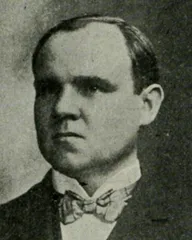
Religion of Daily Life
A Practical Test
By Dr. James E. Talmage, of the Council of the Twelve
We believe in being honest, true, chaste, benevolent, vir-
tuous, and in doing good to all men; indeed, we may say that we
follow the admonition of Paul — we believe all things, we hope
all things, we have endured many things, and hope to be able to
endure all things. If there is anything virtuous, lovely, or of
good report or praiseworthy, we seek after these things. — Arti-
cles of Faith, No. 13.
In this brief statement the Latter-day Saints proclaim the
practical character of their religion — a religion that embraces
not alone definite conceptions of spiritual matters, and belief as
to conditions in the hereafter, doctrines of original sin and the
actuality of heaven and hell, but also and more particularly of
present, current, every-day duties, in which self-respect, love for
fellow-men, and devotion to God are the guiding principles.
Religion without personal morality, professions of godliness
without charity, church membership without consistent conduct
in the common affairs of life are but as sounding brass and
tinkling cymbals — noise without music, the words of prayers
without the spirit.
"// any man among you seem to be religious, and bridleth
not his tongue, but deceiveth his own heart, this man's religion
is vain. Pure religion and undefiled before God and the Father
is this: To visit the fatherless and widows in their affliction, and
to keep himself unspotted from the world?' (James 1:26, 27).
Religion Put to the Test
A good test of a man's religion is its utility. Religious pro-
fession used as a cloak — and that too often reserved for Sunday
wear, hiding in part the shabby rags of sin — is but sacrilege. In
any attempt to analyze a religious system or creed it is pertinent
to examine the results of its operation in the lives of its adher-
ents. This is as simple and fair as to judge a tree by the quality
of its substance and fruit. Altruism is an essential ingredient of
a religion that is worth while.
"// a man say, I love God, and hateth his brother, he is a
liar: for he that loveth not his brother ivhom he hath seen, how
can he love God whom he hath not seen? And this command-
RELIGION OF DAILY LIFE 257
ment have we from him, That he who loveth God love his
brother also" (I John 4:20, 21).
Missionary Service
The Church of Jesus Christ of Latter-day Saints invites at-
tention to its work of unselfish, practical, unremitting benev-
olence. In missionary service the Church has been active since
the date of its organization ; and this systematic labor, because of
its extent and unique methods, has attracted attention and stim-
ulated comment in practically all nations of the earth. Actuated
by a genuine love for humanity and the desire to obey the Divine
command respecting such, the Church sends out every year hun-
dreds of missionaries to proclaim its message to the world. These
devoted servants comprise men and women called from all voca-
tions, who serve without salary or any other form of material
remuneration. Furthermore, they pay their own way in travel-
ing to their appointed fields of labor and while serving therein,
except so far as they may receive assistance from those who be-
come interested in their work.
A desire common to young Latter-day Saints is to so live
that they shall be found worthy to be called into service to spend
a period of years, generally from two to four, as traveling min-
isters of the gospel of Christ. They offer their message without
money or price, carrying it to the doors in city and country, dis-
tributing literature, inviting conversation, but never forcing
themselves upon unwilling hearers. Who can consistently affirm
that such faithful servants as these are insincere or devoid of that
love for fellow-men without which genuine love of God is im-
possible?
The Relief Society
The benevolence that manifests itself in material giving is
impressed as a duty upon members of the Church, and while
every one is taught to assist the needy by individual effort, a
system of orderly contribution and distribution is maintained.
In each ward and branch of the Church an organization of
women known as the Relief Society is operative. Its particular
function is that of caring for the needy and the afflicted, without
exclusive distinction as to whether the subjects of their minis-
tration are members of the Church or not. The Relief Society
receives contributions of money, clothing, food and other com-
modities and distributes these as occasion requires, beside main-
taining a system of visitation to the needy, giving aid in nursing,
comfort in bereavement, and relief from distress in every way
possible.
Fasting and Prayer
The Church teaches the efficacy of prudent fasting, moderate
abstinence from food at stated times, as an accessory to prayer;
and the first Sunday of each month is observed as a fast-day. On
that day the people are invited to meet for special devotional
service, and by common consent and custom they contribute at
least the equivalent of the meals omitted through the fasting of
the family. These offerings are received by the local officers,
and are distributed under their direction to the worthy poor.
If there be a surplus in any ward it is applied to the needs of
other wards in which the proportion of dependent poor is
greater.
By these and other methods, including the tithing system to
be considered later, are the Latter-day Saints taught to give of
their substance for worthy purposes, and in such a way as to
avoid indiscriminate charity whereby perchance unworthy de-
pendency would be fostered. We believe that the harmony of
our prayers will become a discord if the cry of the deserving
poor accompany our supplications to the throne of Grace.
Missionaries of the New Haven Conference
Left to right, top row: Clarence B. Stewart, Mary I. Ingles, Amund
Levorsen, John Lamborn, La Verde Evans, Cecil Baker, Willard 0. An-
drus, C. E. McCombs, Eva Felsted.
Second row: Geo. B. Wynn, Frank J. Gilbert, Emily Caldwell, H.
I). Maughan, retiring conference president, Millie Tuller, L. W. Jeffery,
incoming conference president, W. Russell Tanner.
Front row: L. G. Alvord, Verland Beck.