Editors’ Table: Masquerade Balls
Improvement Era, vol. 18, no. 9, July 1915, pp. 829 to 830
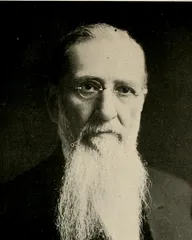
Editors' Table
Masquerade Balls
A correspondent, in one of the cities in southern Utah, wishes to know what attitude our people should take in regard to masque balls. On the date he wrote it was the second Sunday that notice of a masque ball had been given in their public meetings. The ball was to be held in the local schoolhouse under the direction of the principal of the public schools. The people of the sur- rounding wards were also invited to come and participate. He further writes "Hideous masks and costumes are on sale, at a :
local store. The principal of the school stated, upon my objecting to masque balls as not being sanctioned by our Church nor ap- proved by the Latter-day Saints, that there is no harm in them. He gives as a reason for this opinion that those who were masked would be required to give their names and unmask on entering the hall. He also stated that such balls were quite instructive." Our correspondent then asks as to the advisability of patron- izing such affairs, and whether or not our correspondent is wrong in his statement that the Latter-day Saints are opposed to masque balls. In answer we may say, in a general way, that he is correct that the Latter-day Saints are opposed to masque balls. quoteWe from an editorial in the Era (Volume 13, page 564), by President Joseph F. Smith, from which the reader may gather in what light the authorities of the Church view the subject: "The advice and counsel of the First Presidency, from the beginning to the present time, has always been against masquerade balls and masquerade gatherings of any kind. We trust that this counsel is generally understood and adhered to throughout the Church. "There are so many safer and more respectful amusements that it doesn't seem reasonable that anyone should wish to en- danger the morals of the young people by even suggesting a masquerade. This particular kind of amusement, history tells us, had its origin in the courts of kings, where moral degeneracy was not uncommon. The mask enabled the vicious princes to hide their corruption, while it gave license to evil men and women to commit such as even the most wicked and vile licentiousness of among them were ashamed to engage in without the protection the mask. .
prevalent in "This class of amusement became especially
public entertainments in Italy, about the close of the middle ages. It was introduced in England by Henry VIII, whose tyranny, natural violence and evil practices are universally detested, but which were fit consorts of the mask. Masquerades have con- tinued, with more or less popularity, unto the present, and are now common accompaniments to the carnival, where indulgence of the sensual appetites is generally given full sway. The nearest approach, however, to this species of entertainment which English law and taste permit in this day, is fancy costumes, without the facial mask. Undoubtedly, the reason for this is that from their nature masked amusements, so-called, are peculiarly liable to abuse. "The mask is found in dens of infamy and vice it has its ;
home there. It is a means used by the harlot and procurer to cover shame and to practice evil. Its use has no redeeming feature. It is repulsive in every way. There is nothing clean nor attractive about it. "For these and other reasons, the masque ball has no place among the amusements of the Latter-day Saints, where every action must be open and above board, and where virtue, purity and fidelity are prevailing characteristics." Joseph F. Smith.