The Spirit of Worship
Improvement Era, vol. 17, no. 8, June 1914, pp. 734 to 737
—
The Spirit of Worship
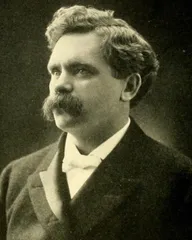
BY B. II. ROBERTS, OF THE FIRST COUNCIL OF SEVENTY
"The hour cometh, and now is, when the true worshipers shall
worship the Father in spirit and in truth for the Father seeketh such to
:
—
worship him." John 4:23.)
—
Men enter deep-shaded, solemn groves God's first temples,
and feel a sense of awe and worship. Why?
Men ascend to mountain tops, sometimes finding them wrapt
in ice and snow and clouds, and sometimes bathed in sunshine
and feel a sense of awe and worship. Why?
Men stand upon the sea-shore and behold the ocean, some-
times in calm, sometimes in storm they venture out upon its vast
;
surface and watch its ever-changing light upon what, for the
moment, seems its illimitable expanse, and feel a sense of awe and
worship. Why ?
Men enter a cathedral, or a temple, and under its mighty
arches, sustained by majestic pillars, and in the presence of its
shrines and altars, feel once more the sense of awe and worship.
Why?
Because in solemn grove, on mountain top, beside the ocean,
on the bosom of the deep, or in cathedral or temple fane, men find
themselves withdrawn from common things and contemplate si-
lence, or greatness, or immensity, or imaged eternity, or holiness
they feel the presence of the Infinite, something larger, and greater,
and holier than themselves, and instinctively give to the Infinite,
—
back of all these, their manifestations, reverence what men call
worship.
The felt presence, then, of the Infinite is essential. I hold, to
the spirit of worship and the more deeply the felt presence of the
;
Infinite is, the profounder and truer will be the worship.
But how shall this be conjured up, this felt presence of the
Infinite? For access to solemn groves, to mountain tops, to
ocean's shores, to the sea's expanse, to cathedral or to temple's
fane, as places of worship, is possible only to the comparatively
few. Lame and impotent indeed must be the furnishings of that
church which fails in its provisions for such accessories of worship
— unworthy the name of "church."
But turning now from the general to the specific, from
churches in general to the Church of the Latter-dav Saints, and
yet not their Church alone, but the Church of Jesus Christ as well,
as indicated in its official title— the Church of Jesus Christ of
CACHE STAKE TABERNACLE
Located in Logan, Utah. This was erected during
structure
1873-77, and is built of stone. The height
is about 135 feet to the
top of the tower, and the measurements outside are 65 by 150 feet.
The upper floor consists of one main room and a vestry; there are
eight rooms in the basement. Located upon a full block containing
about eight acres of ground practically in the center of Logan city.
The east half of the block is planted in grass and trees and is used
for playgrounds, etc. The west half contains a well kept lawn with
hedge, and the surroundings are dotted with trees and flower beds.
One man is constantly employed to take care of the grounds and
building, and extra help during the summer is employed. The house
was erected by donation, in the style of co-operative work so largely
in vogue during the early settlement of Utah. It is therefore dif-
ficult to tell what the cost of the building has really been. This way
of building houses has now gone out of vogue, largely because it is
impossible to obtain certain necessary technical work by union
workmen, when non-union, workmen do the work that they can do.
—
Latter-day Saints what means does this Church supply for mak-
ing the presence of the Infinite felt, thereby invoking the spirit of
worship ?
First, music vocal and instrumental, both separate and in
:
unison, a combination that gives music its highest possibility of ex-
pression, sacred words, solemn thoughts, united with divine har-
—
monies, and intervening melodies making music, indeed, the
Divine Art. The song and anthem service is a form of prayer,
for is it not written, "The song of the righteous is a prayer
tmto God. and it shall be answered with a blessing upon their
736 IMPROVEMENT ERA
head" ? And again, "The soul of God deHghts in the songs of the
heart"?
Second, in addition to song-prayer, in our prescribed- pubHc
worship, is verbal-prayer, direct communion with God, by word
of mouth expressions of praise and reverence and gratitude a
; ;
making known of needs, of hopes, of the trials of struggling faith,
of longings for wider knowledge of truth, the hungering and
thirsting after righteousness, the desire to be filled — the heartfelt
aspiration for union with God. For what is prayer, the only
prayer worth while, but the Infinite in man struggling out-
ward to find God's Infinite, and stand united with that?
—
What is prayer but the truth in man, man's truth-seeking, abso-
lute truth— God's truth? What is prayer, but the relative and
very limited righteousness of man seeking the righteousness of
God? What is prayer but the little strength in man seeking to
—
'supplement that strength which but reveals man's weakness, by —
union with God's strength, that man may be adequate for his duty ?
Such is prayer. Its effort and its mission is to invoke the felt need
and felt presence of the Infinite, leading to realized acceptance
—
with God the crowning glory and the end of worship.
Third, our preachments the discourse, by which the public
;
—
teacher mark, not "preacher" —
seeks to lead his people, by expo-
sition of truth, by contemplation of God, and man's relationship
to him, and man's duty man's need, and God's love all this, and
; ;
much more, is but a means of directing man's thought to the need
of the felt presence of the Infinite.
Fourth, and perhaps greatest of all, the use of the symbols of
the gospel as a means of making felt the presence of, and man's
real union with, the Infinite. To this end is used the holy Sacra-
ment, Eucharist, or Lord's Supper expressive of fellowship with
;
God, and hence union with the Infinite. That Eucharist is symbol
of God's love for man. It is to remind us that God so loved
the world that he gave his only begotten Son as a sacrifice, that
whosoever believeth on him should not perish, but have ever-
lasting life. Infinite love, compassion, mercy in this. That
Eucharist is symbol of an infinite atonement, in that it is com-
plete and perfect under the accepted conditions of its application,
— obedience to the gospel. I know of nothing else that so
invokes the felt presence of the Infinite that so acknowledges the
;
need of that presence in man's life and thinking; or that so per-
fectly witnesses that man seeks and accepts that union with God,
which is the completion and perfection of all worship.
Thus are abundant means provided in our public worship, in
the Church of Jesus Christ, for invoking the felt presence of
God in order that the spirit of worship may find free course
and be made available to the masses of the people. While solemn
groves, the mountain's grandeur, the ocean's vastness, the cathe-
THE ELEVENTH WARD CHAPEL, ENSIGN STAKE
The Eleventh ward chapel is located at No. 131 10th East St.,
Salt Lake City, and was completed February 1, 1912, Ashton Broth-
ers, architects. It was dedicated March 18, 1914. It is built of brick
and concrete and cost $38,305. The seating capacity is six hundred.
There are fifteen rooms, and three extra rooms for the janitor. An
amusement hall is connected and built in the rear of the chapel.
The land mesaures five by ten rods, and the building occupies all the
ground, except a front lawn and a driveway round the building. In
connection with the amusement hall is a spacious stage, properly
equipped with electric lights.
dral and temple fanes and altars, suggest the presence of the In-
finite, and awaken the impulse to worship, they do not stand alone
in that. God has provided seemingly humbler, but yet more
direct, and, may I say it? more powerful means of inspiring con-
sciousness of the same thing, in the prescribed worship of his
Church, though conducted in the humblest chapel, than in these
seemingly more imposing means that speak to the spirit in man.
It is for the worshiper to look beyond the means to the end to be
achieved remembering that in worship, as in all things else, the
;
letter alone killeth, but the spirit, united with the letter, giveth
life. "The hour cometh," said Jesus to the woman at the well of
Samaria, "when ye shall neither in this mountain nor yet at Jeru-
salem worship the Father. But the hour cometh, and now is,
when the true worshipers shall worship the Father in spirit and
in truth for the Father seeketh such to worship him."
;