Editors' Table: New Year's Greeting; Work for Returned Missionaries
Improvement Era, vol. 17, no. 3, January 1914, pp. 263 to 266
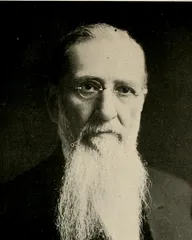
Editors' Table New Year's Greeting The New Year is before us with its wonderful possibilities. Every person, quorum, association, and school, must be up and onward, with a clear conception of the plan for the work ahead. "The glory of God is intelligence ;" "It is impossible for a man to be saved in ignorance;" "Prepare ye, prepare, for that which is to come ;" are sermons to be kept in mind. These thoughts before us will stimulate effort and help our work along. God grant us the vision to see what is to be done, and the courage to up and at it. The Era and its editors and management join in wishing all a blessed, busy, happy and prosperous New Year! Work for Returned Missionaries After having spent two or three years preaching the gospel in the world, the missionary encounters great difficulties upon his return home, in two ways : First, in obtaining employment to replenish his rlppleted finances ; and, secondly, something to do in the line of Church work that will continue to keep him in touch with the spirit of the gospel. Everybody seems to be busy, and often little attention is paid to a brother who returns from the mission field. He is called to speak once or twice in the ward, but the speakers awaiting opportunities are so numerous that any one person's opportunities to speak in public in a ward are very limited. It is true that in the auxiliary organizations, and in ward teaching, as well as in the Priesthood quorums, there is always room for effort ; but very frequently the missionary, who must keep a sharp lookout for his financial affairs, gradually becomes more interested in them than in an effort to obtain Church employment that will keep him spiritually awake, especially since, in the latter, he modestly refrains from pushing himself forward. Hence, it happens too frequently that in the course of a few months the missionary changes his spiritual condition almost completely. He becomes interested in material things, and sometimes in the ways of the world, and in the world's way. The hurlyburly of business alters his attitude, and frequently his feelings. The general result is that the people are not receiving as much benefit from the talents, the spirit, and the ability of the returned missionary as they should, and the missionary neglects as well
264 IMPROVEMENT ERA his spiritual progress. While the returned elder should be the greatest force among the people in giving impetus to spiritual growth and development, and in benefiting the Church, the contrary is too often the case. There are two ways in which this fault can be remedied. As in all good things, the first impulse for change and improvement must come from the missionary himself, who should determine in his heart that he will stand firm, keep himself unspotted from the world, and continue busy in Church work, so that the spirit obtained in the mission field will never depart from him. In the second place there should be help from the people to open up his way for employment so that he may help himself ; every encouragement in spiritual matters that can possibly be given by the local Church authorities should also be extended. In this way unfavorable changes in the life of the returned missionaries, will not be so marked as at present, nor will as many, as do now, lose their desire for activity in the Church. One of the methods suggested by the Presiding Bishopric of the Church that could be adopted with advantage by bishops of wards for the retention of the missionary's spiritual influence that was awakened in the mission field, is this : Every ward has a number of luke-warm and indifferent families. Some, perhaps, who are .on the way to apostasy; also mixed families, some believing one religion and some another. There are perhaps non- "Mormons" upon whom the ordinary teacher of the ward can make no impression. Why not let the bishop in each ward call a couple of returned missionaries, immediately after their return, and assign them the duty of awakening an interest among these luke-warm Saints and others? The missionaries could attend the regular teachers' meetings, and there learn from the regular teachers what families and persons should be visited. In this way they would become in fact a great aid to the bi:;hop and could report their labors regularly to him in the monthly ward priesthood meetings. There are hundreds of non-"Mormons" in the various wards and settlements of our Church, many of whom have never heard the gospel, and some who are even waiting the opportunity to have the gospel preached to J. em. These could be visited by the young returned missionaries, who have gone thousands of miles, perhaps, to obtain like opportunity, and to make at most two or three converts in as many years. They would be more benefited spiritually, and exert a greater influence in the community, by thus being called by the bishops of the various wards in the Church to preach the gospel and to labor among the population, than was the case in the mission field. Presidents of stakes and high councils throughout the Church will find it to their advantage to take a special interest in the returned missionaries. No other persons are more easily converted
EDITORS' TABLE 265 to Church work, and kept in the line of duty. Many of 'the stakes are appointing the ciders immediately upon their return to home missionary duty, but it has been discovered that often the appointments have been very indifferently filled, and the missionary gradually relinquishes his work and is not heard from. Those who have charge of the missionary department of the stakes need to be energetic and zealous in checking up the missionaries, and in providing Church activities for them, either in their respective wards or in the stakes. Where any neglect is discovered, it should be followed up early and persistently, so that the elders may be kept in the line of their duty. In this way much spiritual good will result, and the returned elders will create an awakening among the people which is impossible where their missionary spirit is permitted to die from lack of exercise, or from inattention on the part of the presiding officers of the stakes and wards °f Zion. Joseph F. Smith. President Smith's Visit to Arizona President Joseph F. Smith, with President Anthon H. Lund, Elders George Albert Smith, Joseph F. Smith, Jr., Patriarch Ffyrurn G.Smith, Presiding Bishop Charles W.Niblev.and others, recently visited three of the Arizona stakes of Zion. On their way south they stopped first at Snowflake, Arizona, where the new stake academy was dedicated on Thanksgiving Day, November 27. They then went on to Mesa, where they dedicated the First and Second ward chapels, December 4. At Phcenix, Governor Hunt, Captain Massie and the mayor of Phcenix, called for the party at the railway station, and took them for a tour of Phcenix in which they were shown the beautiful buildings and parks of that city on the plain. The company visited the state capitol at Phcenix. President Smith says : "This structure nowhere can be duplicated for the amount of money expended upon it. It is magnificent. The grounds are elegantly laid out with beautiful date palms, floral designs, etc., and the most magnificent roses I ever saw were in bloom. Governor Hunt himeslf presented us with a beautiful wreath of the flowers." They were taken to Mesa in automobiles where they attended, with President Smith and his party, the dedicatory services of the meetinghouses. These new chapels have been erected at a cost of about $12,500 each, about half of which was donated by the Church, and the balance subscribed by the members of the wards or obtained from the sale of other ward property.' The buildings were started in February, 1913, and have been used since August. The Mesa ward was organized in 1882, and was divided at the quarterly Maricopa stake conference held September, 1912, when
266 IMPROVEMENT ERA Isaac Dana was chosen bishop of the First ward, and John L. Riggs of the Second ward. Soon after the organization of the wards, arrangements were made for the erection of the new twin buildings, which have now been dedicated by President Smith. President Francis M. Lyman and Elder George F. Richards, and President Joseph E. Robinson, of the California mission, joined the party and attended the dedication. At the dedicatory services, Governor Hunt made an address in which he declared* that the "Mormon" people are among the best citizens in Arizona. "They are people who fill the schools," said the Governor, "and not the jails." President Smith relates that two days after the services, he took occasion to thank the governor for what he had said about the Latter-day Saints. The governor replied that he had verified with figures his statement of two days before. "According to the population of this state," said the governor, "the 'Mormons' are entitled to eighteen inmates in the penitentiary, but as a matter of fact there is only one." President Smith replied that this one could not be much of a 'Mormon,' unless he was there under misapprehension. One of the pretty incidents of the dedication and the visit is reported as follows in the Arizona Republican,, a prominent daily paper of Phoenix : "One of the features of the program at the dedication of the new 'Mormon' chapels in Mesa, on Thursday afternoon, which deserves special mention, is the song rendered at the exercises of the Second ward chapel, entitled, 'Children's Praise,' which was rndered by a chorus of seventy-five Sunday School children of the Second ward. The subject of this song is, 'Suffer little children to come unto me ;' and the children rendered it in a manner that was exceedingly touching. At the close of the song, Amy Riggs, the little daughter of Bishop John L. Riggs, of the Second ward, stepped from the group of girls, and, walking up to President Smith, who was on the platform, looked up into his face and recited, 'We Pray for Thee, Dear Prophet,' in a manner that brought tears to the eyes of more than one person in the audience. Following this, the little girls formed in a line and marched before President Smith, each one handing him a beautiful rose, until he had been presented with a flower for each year of his life." During the visit, the party, including the local authorities, visited the Roosevelt dam of the immense nine million dollar Salt River reclamation project. On Sunday, the 7th, the quarterly conference was held when a number of the brethren addressed the Saints who had gathered in great numbers. From the Salt River Valley the party proceeded to the St. Joseph stake, and held largely-attended meetings at Thatcher.