Sphere of Y. M. M. I. A. Activity
Improvement Era, vol. 16, no. 3, January 1913, pp. 185 to 203
Improvement Era Vol. XVI JANUARY, 1913 No. 3
Sphere of Y. M. M. I. A. Activities
An Appeal to the Parents and Priesthood of the Church
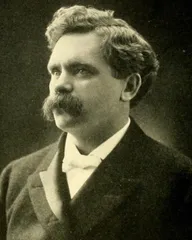
BY BRIGHAM H. ROBERTS, OF THE FIRST COUNCIL OF SEVENTY AND THE GENERAL SUPERINTENDENCY OF Y. M. M. I. A.
In order that the strangers present today may be put in proper mental attitude towards the things to be considered here, I pause in the development of my thought to say to them that in addition to the regular Church organization, the Church of Jesus Christ of Latter-day Saints has certain helps in government to take care of department work. We have a very efficient and a very splendid Sunday School establishment in the Church, to teach the youth of Zion on the Sabbath day, throughout all our wards and settlements, the principles of the gospel, and the moral law, the ethics of the gospel of Jesus Christ, and we are very proud of the success of that work. We also have Primary organizations, under the direction of our sisters, that look after the children at least part of one day of the secular days of the week. We have another organization known as the Religion Classes, this also to teach and guide the young in the first simple lessons of the gospel of Christ. And then we have our Young Men's Mutual Improvement Associations, and our Young Ladies' Mutual Improvement Associations, which have for their purpose —to describe their work briefly —the intellectual, and the moral, and the physical and
spiritual development of our youth.
*An address delivered at the Salt Lake Tabernacle Sunday, Oct. 29, 1912, reported by F.W. Otterstrom.
186 IMPROVEMENT ERA
Jt is in relation to the organization of the young men about which I wish to speak awhile this afternoon; to develop or to assist in the development of interest in that work, to appeal to the parents of our community, to invite their co-operation in this work. I know not how to proceed to awaken this interest, and to have you join with us in what I regard as one of the greatest works undertaken by the auxiliary organizations of the Church I know — not how to awaken your interest in that work, only by telling you what the purpose and object of that work is, to give you an idea of what we are driving at, what we hope to achieve, and then to ask you to pass judgment upon that work, as to its worthiness, and after thus presenting it, to have you make up your minds whether or not you can afford to withhold your influence in helping us to accomplish the things we have in mind. I not only wish
to appeal to the fathers and mothers who are present about that work, but I also make the appeal to the priesthood of the Church, to all of the priesthood, not alone to high councils and to bishops and their counselors, but to the quorums of the priesthood as well, to the high priests, to the seventies, to the elders, that we may be brought together in sympathetic relationship to the purposes which the Improvement Associations have in mind, that there may be established a united determination that the purposes of this organization, in whose interest I speak, shall have the support of all Israel. Fu ndamental Prin cip les
It is written in most of the state constitutions of our great re-
public that a frequent recurrence to fundamental principles is essential to the maintenance of free institutions ; and I believe that the principle is of wider application than the political sphere. I believe
it is a good thing for merchants to take stock, and to know precisely the status of their business ; and so with the manufacturer, so with the farmer, for the farmer should apply business principles to his pursuits. I believe it is a good thing for a church to occasionally review the ground it occupies, the sphere of its activities, to bring before its vision occasionally the high duties to be performed, the high purposes to be achieved. And so with this institution of which I am speaking, it is a good thing to go back to the beginning and find out what was aimed at in that beginning.
:
SPHERE OF Y. M. M. I. A. ACTIVITIES 187
Fortunately that is beautifully stated for us by a man whose counselsbrought the organization into existence. In 1875, when this movement among our young men began, President Young, in giving instructions to those who were to undertake the work of organization, said
"We want you to organize yourselves into associations for mutual improvement. Let the keynote of your work be the establishment of individual testimony of the truth and magnitude of the great latter-day work, and the development of the gifts within them that have been bestowed upon them by the laying on of hands of the servants of God. Cultivate a knowledge and an application of the eternal principles of the great science of life. * * * Let the consideration of these truths and principles be the ground work and leading idea of every such association, and on this foundation of faith in God's great latterday work let their members build all useful knowledge, by which they may be useful in the establishment of his kingdom. Each member will find that happiness in this world mainly depends on the work he does and the way in which he does it." [I wish you to particularly note this sentence] "Each member will find that happiness in this world mainly depends upon the work he does and the way [that is, the spirit] in which he does it."
Wide Sphere of M. I. A. Activity Such was the key note of this movement, and the associations have followed the lines here indicated in their efforts reasonably well. Indeed, I may say that they made their work for many years almost exclusively of a religious character. They occupied the field of formal theology in the Church. Meanwhile the institutions to which the work of formal theology more properly belongs, the quorums of the priesthood, were not sufficiently active or successful. It is true that those quorums were doing something
along that line, but I presume imperceptibly to all of us these Young Men's Mutual Improvement Associations occupied their field. In that work these associations developed a very splendid line of text books upon historical and doctrinal subjects, treatises of the gospel and of ecclesiastical history. Meanwhile, however, I believe the Spirit of the Lord moved upon the authorities of the
Church to give encouragement to the development of the work in the quorums of the priesthood, until finally we were confronted at lastwith a demand by this priesthood for its own field of labor. The priesthood had been awakened and took possession of its
188 IMPROVEMENT ERA
proper field of activity. The Improvement Associations, stripped of that work, halted in their progress for a moment, and some began to feel that their occupation was gone that they had served ;
their purpose, and there was no longer the crying need for their existence that there had been in the years that are past; and the Mutual Improvement Associations have doubtless received some check, some hindrance to their effectiveness by reason of the prevalence in some quarters, of this thought, that they are to be accounted among the things that were good in their day, but now they are no longer needed. They have filled their mission, and are now ready to pass away. It is against that thought that I wish to level the remarks I
make, and with all the strength that I can summon to the effort, I want to correct what I believe is a misapprehension upon the subject. Grant you that the field of formal theology is more properly occupied by the quorums of the priesthood, and I freely grant that, as one interested in many quorums of priesthood, in fact in all the quorums of priesthood. They should have that sphere of activity which belongs to them, and I glory in the knowledge of the fact that the said quorums are coming to their own in the Church organization. But after you grant that, what remains to these auxiliary organizations, the Young Men's Mutual Improvement Associations? Why, a world of activity, a sphere which instead of being too small is likely to develop into being too large for one organization to occupy. After the field of formal theology is closed to the Young Men's Associations, there still remains the field of general literature, of music, of art, of social culture, including polite deportment. The value of this field of labor and activity is admittedly large and important. In the field of general literature is to be included sacred literature, the Bible, the Book of Mormon, Doctrine and Covenants and the Pearl of Great Price. Because we have abandoned the field of formal theology to those who will more properly occupy it, we do not for one moment concede that we have abandoned the field of religion, the cultivation of religious sentiment and feeling, right feeling towards God, and right feeling towards, and the performance of right duties to, our fellow men. It is still within the sphere of
mutual improvement to appeal to and satisfy the religious longings of the heart, and to give opportunity for the expression of
;
SPHERE OF Y. M. M. I. A. ACTIVITIES 189
faith in God, and faith in his great latter day work. But we are not to devote ourselves exclusively to that line of work, as perhaps we have too exclusively devoted ourselves in the past. We are not called upon to narrow our field, but to broaden it
not omitting the cultivation or practice of religious feeling. The association may still teach how beautiful it is for men to live in conscious harmony with God, without which there can be no true culture, either of intellect or soul of man. The associations still occupy that field within which they may accomplish the things pointed out by President Brigham Young as desirable, when sounding the key note of this work and, in addition, as I;
have said, we have music, art in all its branches, social culture and physical culture. The last a feature of our work no less important than the spiritual activities expected of the association. The Latter-day Saints believe, thank the Lord —and that because of the light and the knowledge that he has given in modern revelations —the Latter-day Saints believe in the sacredness of the human body, as well as in the sacredness of the human spirit.
Union of the Body and Spirit Brings Fulness of Joy
"Mormon" doctrine "man is spirit;" that is, in the last In analysis of him, when you get to the real man, the being that thinks, that loves the being who wills, who aspires the being ; ;
who feels the longing for divine association, the being who loves progress, and delights to feel the drawing influence of the great power in the world that makes for righteousness these are the — longings of the spirit, the longings of the real man. Man, then, is spirit in this view of him, and that spirit is immortal. But our revelations teach also that the elements are eternal, and that "spirit and element, inseparably connected receive a fulness of joy; and when separated man cannot receive a fulness of joy." Hence there has been provided for man this earth life, where the spirit, the real man, as I have been describing him to you, that intelligent entity, in order to attain unto complete happiness, complete development, is dependent upon a union with the elements that form the human body, through which the spirit may act ; and that spirit is ultimately to take possession of that body, and form with it an eternal and indissoluble union — a union between the spirit of man and this world's elements, represented in his body. And this
190 IMPROVEMENT ERA
world's elements, this thing we call body, the house that the spirit inhabits, that, too, is to become immortal, sanctified, and glorified, a part of the indestructible, resurrected, immortal man. Hence Latter-day Saints believe in the sacredness of the human body. They believe in preserving it in purity, and where it has become fallen to purify it by the processes prescribed in the gospel of
Jesus Christ, until it shall become as holy and sanctified as is the spirit of redeemed man. Consequently this matter of physical culture, this matter of developing the human body to its highest possible perfection, giving these elements of which it is composed the training and the experience that shall make them responsive to the spirit of man, until the man shall be an all round man, capable of doing all that can be done by immortal intelligences united with eternal elements through which they manifest themselves in such glorious fashion as is hinted at in the attainments of some few men in this mortal state who arise from the condition of helpless infancy to a position where, developed to the majesty of a splendid manhood, they control kingdoms, empires, and give direction to the course of history — such men as a Bismarck, a Gladstone, a Disraeli, a Washington, a Jefferson, a Lincoln, an Edison, a Franklin and the whole golden line of men who have risen to ;
splendid achievements — all these are but a prophecy of what man
may attain unto with ages countless before him in which to work out his problems and carry on the grand development begun in this life. Latter-day Saints, then, believe in the sacredness of the human body ; in caring for it, and developing it ; in keeping it free from weakness, physical weakness and deterioration from dis- ;
ease, and from the awful effects of intemperance, narcotics, and unchastity; they believe in making it a splendid temple, wherein a divine spirit shall live in harmony with the Spirit of the living God, the Holy Ghost, so that the strength of God may become man's strength, and man God's servant and friend and companion. The Deseret Gymnasium
We believe in the sacredness of the whole man, and consequently we take this field of physical culture for our Young Men's Mutual Improvement activities. And let me say here —and I do
SPHERE OF Y. M. M. I. A. ACTIVITIES 191
not wish to appear over-bold and certainly not sacrilegious, in any respect —butdo venture this assertion, that after this six-spired I
building here, on this square, and the other temples of God builded by Latter-day Saints, which for us are the holy of holies, the temples of God, but after the temples of God, I say there is no holier building erected by our hands than this other temple within shouting distance of us, which is devoted to the physical training and development of our youth, the gymnasium that the Church has established under the guiding wisdom and by the aid of the presidency of the Church. I am very proud of that structure, the best of its kind, I understand, this side of the Mississippi river, and I really do not know where you could go to improve upon it anywhere except, perhaps, that you may find larger structures, or perhaps here and there more costly architecture; but taking into account the purposes for which it was erected, as a means to an end, I know of none that surpass this splendid gymnasium of ours, devoted to the physical culture of the youth and manhood in our midst, And it proclaims, in a way, this great belief of ours, our belief in the
sacredness of the human body. In adition to physical culture we have outdoor exercises and games and sports. The Mutual Improvement Associations are taking charge of these activities among our youth. We are directing the sports of our boys, and there is no field of activity in which the youth more need direction than in their play wise — direction, sympathetic direction. There is a hymn, I think it is called a gospel hymn, and while I do not have a very great admiration for many of the so-called gospel hymns, I have an admiration for a certain truth that one of them voices, namely — runs it like
this:
"Come near me, O my Savior, I need thee in my joys, No less than when the direst ills my happiness destroys; For when the sun shines o'er me, and flowers strew my way, Without thy wise and guiding hand, more easily I stray."
We Need God in Our Pleasures Men need God as much, aye, and more in their pleasures
than in their labors, in their joys than in their sorrows; because it is in the pursuit of pleasures that men are more apt to step aside
192 IMPROVEMENT ERA
from the path of direct righteousness than in the pursuit of duties, or of labors, in the enduring of sorrows — "I need thee in my joys !" So our youth need wise direction in their sports, and in their games not only that they may be safeguarded from moving ;
along lines that go in wrong directions, but also that there may be those near by of minds more matured who, as they seek Jack at play, will discover Jack. That is one of the objects that we have in Mutual Improvement activities in their relation to outdoor sports and games. We want to discover Jack. Of course, for Jack the whole object of all our outdoor sports is the fun that he gets out of the game, the joy that he feels in the contest, the glory he feels in the victory — in the baseball game, in football, or in basketball, or in whatever contest he engages.
Study of Character on the Playground
The pleasure of the thing and the joy of the victory —these things ma) be his whole purpose, but those who are watching and giving dire itions to these activities are trying, if they are doing their duty, o discover just what Jack is good for; what his aptitudes are, A-hat his inclinations what his powers are, what he ;
could best engage in when it comes to the consideration of life's more serious pursuits. The directors of our field sports meanwhile are observing the development, the signs that tell of inward, yet undeveloped powers, so that these indications may be seized upon and made useful in determining the course that Jack shall be counseled to follow in relation to his vocation in life — his business, his trade, his profession.
Work and Play And right at this point I perhaps would do well to call your attention to a new department that is being developed in our Mutual Improvement field of endeavor, the department of vocations and industries. Some of our fathers and mothers have been inclined to criticize the Associations in that they seemed anxious only to provide play for Jack. Of course we remember the old adage — "All work and no play makes Jack a dull boy ;" but now ithas been said, "It seems to us that you Mutual Improvement workers are providing all play, and are making no effort to pre-
SPHERE OF Y. M. M. I, A. ACTIVITIES 193
pare Jack for the serious work of life." Before taking up that question, permit me to add one other thing in relation to these activities called outdoor sports and games. There is another purpose besides finding Jack, his characteristics, his aptitudes for special lines of work and the like.There is another purpose, and that is to create inhim the pride of strength. There is a beautiful sentence in one of the old prophets, "Let the young man
rejoice in his strength !" I have always loved it. I am glad my ears were saluted in my boyhood days with the splendid sentence, because it served, I am sure, oftentimes as a shield to me — the pride of strength ! If there is one thing that a real man has pride in more than another — a real true man, or a real, manly boy — if
there is any one thing above another that he prizes most, it is the consciousness of manly strength and power; the goal to which most ambitious boys and men would move. Pride in manly strength leads the boy to despise and turn away from the things which in his adolescent age would undermine his strength, bow his head and compel him, shame-faced and eyes cast down to the ground to move among his fellows a conscious weakling and a coward ! Through outdoor sports, through inviting to contests of strength and of skill, we hope to infuse into the youth of Zion this pride in manly strength, physical strength, which shall feel courage and enable a man to face the duties and the responsibilities — of life with his forces unimpaired, including pardon me for say- — ing it no, you need not pardon me, I ask no pardon, it is proper to say it — including his duty, not only as citizen, but his duties and responsibilities husband and father; the most solemn as duties that a man can face. Well, we want to infuse that pride of strength into the youth of Zion, so that we shall have men who, while their feet may be planted on this earth, their hands may yet stretch upward into the stars of God's universe and who may ;
face all the races of men, and look all the problems of life squarely in the face, nothing daunted, because within them is the God-given strength that belongs to their divine nature.
Question of Vocations
Now we will take up this question of vocations. I assure you we are not confining our efforts to afford play for Jack. We
:
194 IMPROVEMENT ERA
have more serious business for him than that. That is only im- portant as it and gives those who creates this pride of strength, are watching Jack an opportunity to touch the key notes of his character, and learn his abilities, in order to give direction to his efforts — later in life — intelligent direction. So we come to this field of vocations for our youth, and I call attention to a very great neglect that we are guilty of as a community, yet I do not know that we are more guilty than other communities either, but we are neglectful, or have been neglectful of it, and that is in the matter of guiding our youth to those vocations in life for which they are best adapted. Men have tumbled into their vocation by accident, as a rule. We let circumstances crowd our youth into the vocations they follow, rather than intelligent direction based on a knowledge of their tastes and capacity.
Mind Creations Come Before Material Realizations This matter of selecting vocations is more important than we have dreamed of. It is an old doctrine, older than the advent of the Christ even, that the occupations of men influence their characters. One of the old Greeks, referring to this matter, left on record, and it has reached our day, this very wise and noble statement
"It can never be, me thinks, that your spirit is generous and noble while you are engaged in petty, mean employments no more than you can ;
be abject and mean spirited, while your actions are honorable and glorious. Whatever be the pursuits of men, their sentiments must necessarily be similar."
I think that would be classed among the self-evident truths. The conclusion is warranted by the experience of the world. Whatever be the pursuits of men, their characters conform to those pursuits in the matter of being noble or ignoble. So long as men are dealing with small and petty things, you may be sure that imperceptibly to themselves their souls shrink to the size and character of the things with which they deal. So that it becomes indeed important that in selecting vocations for our youth, we shall encourage them to select those vocations which are of the highest order of nobility and honor to which their abilities will warrant them to aspire. I know this doctrine will suggest to your minds
SPHERE OF Y. M. M. I. A. ACTIVITIES 195
some difficulties, but we will deal with these difficulties. You need not doubt but that for the bane that you can see in the principle suggested we shall find, before we get through, an antidote.
Two Examples Let me illustrate my thought, to show you, as nearly as I may, what I have in mind. Eastward here of this block is a white palace, the Hotel Utah. It is the admiration, not only of our state, but of our whole country, so far as it is known, and it is very widely known. Now, before it was realized in steel structure and in glazed blocks ; before the hand of the artist had decorated its interior, before it had been separated into its courts and corridors, and into its many commodious apartments and noble halls — before it took on the grandeur and beauty in which we now behold it, from foundation to the capstone of it, it lived in the mind of its architect. He had that splendid vision in his mind before the ground upon which the building stands was broken, in a way teaching us that things must be created spiritually before they are created temporally. A homely illustration from pioneer life in Ohio will help us a little. A pioneer farmer of the Ohio valley had just felled an enormous yellow poplar, and had cut it off at the requisite length to make a canoe. Meantime an Indian had come from the woods and stood by, watching the worker but not, apparently, interested in what the white man was doing. Finally he said to him: "What white man do?", "Well," said the pioneer, "I am making a canoe;" and then there was silence. Finally the Indian said: "Can the white man see canoe?" The pioneer, who was a rough character, turned on him and said "Why, no, you :
fool, I don't expect to see it until I get it made." "Well," says the Indian, "then white man no make canoe." Even the untutored Indian understood that men have got to see things, to have visions ;
that they must have spiritual creations before they can have mate- rial realization of things.
Influence of Occupations
And so this Utah Hotel architect carried the splendid vision of the Hotel Utah with him. He had it in mind before the ground was broken ; and then when the ground was broken and the
196 IMPROVEMENT ERA
foundation pillars were constructed, and the steel beams were articulated,and began to take on something like form, then the glazed blocks, one after another were put in place, and the interior walls were builded. All that time this architect moved to and fro among us with the vision that I doubt not was uplifting to his soul. There were thrills of inspiration and satisfaction as he looked upon the curious crowd halting to see his vision growing into realization. A man following a pursuit like that cannot help but be exalted in his mind, and conscious of nobility in achievement. It is indeed a grand.thing to be able to do such work as that. But how about the poor fellow, who being only a common bricklayer is told by one of the contractors to build so many feet of dead wall.
He strips and goes to work with trowel and hammer, and proceeds to build his piece of dead wall, and in most cases all
such workmen have in mind is this dead wall. All such workmen are interested in is in getting the tale of bricks put into the wall, and for the bell to strike that will tell them that the day's work is ended. What a difference between such bricklayers and the architect, and how different must be the influence of occupation in those two cases Ah, now you are getting into the !
midst of your difficulties, you say. Some of you will be saying to me, that if this principle I have read from the old Greek philosopher be true, then the great mass of humanity is condemned to narrowness of mind, to meanness of spirit, since from the force of circumstances they are condemned to follow petty, mean employments, and your doctrine says that their souls will shrink to the nature of their pursuits. Only now and then one among many follows an ocupation uplifting and glorious in its nature. The masses are condemned to drudgery, and mean and sometimes humiliating employments. Do you not see to what a wretched pass you have brought us? Precious little encouragement you give us as a religious teacher to call our attention to such conditions as these, and make us despise ourselves because of our petty and mean employments. If you analyze even the great majority of employments, is there not drudgery in them, and is there not pettiness and meanness in nearly all of it? In the business man's pursuits, as well as in the bricklayer's trade ? In the professor's calling, as well as in the car driver's work ? And so on, all down the line— pettiness, meanness, the only aim being from the sweat of
SPHERE OF Y. M. M. I. A. ACTIVITIES 197
the brow to earn the substance on which to live, that is what humanity's vocations condemn them to, for the most part. That is the picture on the dark side of it. Now let us look at another side of it. In the first place I declare the honorableness and the nobility of all labor, from the labor that produces brain sweat, to the labor that produces physical weariness in the midst of dust and grime from the professions to the personal service pursuits, where ;
one man becomes the servant, the body servant of another, his lackey. I say all labor is honorable that is honest labor, and that has for its purpose the fulfilment of the divine commandment, "In the sweat of thy face, thou shalt earn thy bread." That is my belief upon that subject. Now let me say to you, that we want to teach our youth that in the vocations of life, by which they earn their bread in the sweat of their face, they must not narrow down their lives to pursuits that only have for their object keeping them alive. There is something more important than keeping alive. There is living, and living is something more than physical existence. There is living to be considered, I say, as well as merely keeping alive and therefore we want a broader life than can be ;
realized in a vocation by which we merely earn our bread. Allow me to say also that it is possible for men to so articulate their individual work, humble though their part may be, to the whole, as to work and live in the consciousness of being a necessary factor in the prosecution to a successful issue of any enterprise with which they may be connected. For example, our builder of the dead brick wall, in the Hotel Utah, if he will, can have an interest in thewhole work of constructing the magnificent building, which I have used here as an illustration of some part of my thought. Humble as his contribution to the whole may be, it must be made and without him, and such as he, architectural designs, ;
however magnificent, would be but "air-drawn castles." And so with every worker, however humble his task, he does stand in an important relationship to the whole, and may justly assert that relationship, and by holding it in consciousness he will dignify his own position and the labor he performs. The whole industrial scheme may be likened unto the body of a man, even as the Apostle of the Gentiles likened the Church of Christ to the same figure.
The body, we are assured, does not consist of the head alone, nor of the eye, nor of the ear but of head and trunk and limbs and of ; ;
198 IMPROVEMENT ERA
the organs of sight, and hearing and smelling and tasting and feeling. And because one organ or limb is not another, it does not follow that it is not of the body; and a necessary part, too. It
holds good of the industrial world as of the Church, that the head may not say to the feet, I have no need of thee nor the eye to the ;
hand, I have no need of thee "nay, much more, those members of ;
the body, which seem to be more feeble, are necessary." And all, if they will, may regard themselves as necessary factors in the industrial life of the world, and as contributing to the achievements of their communities, of their nation, their age, their civilization —as contributing to the accomplishment of the general purposes of God. And men working in such spirit as this need not regard their humble vocations as petty and mean employments.
Avocations Broaden Life
But notwithstanding what has just been said, I repeat that we want a broader life than can be realized in a vocation by which we merely earn our daily bread. Happily in this great country of ours we are fortunately situated in relation to that thing. There are ways and means by which we can broaden our life ; being free, being free men, and free women ; being the sovereigns in the nation in which we live, factors in determining the character of the republic —being sovereigns, we have a right to take part in the civic life of our county, or district, or in the hamlet, or the town, or the city in which we live. We have the right to take part in the county, as a unit in the government the right to participate in the affairs of the state in ; ;
the affairs of the nation. These are inalienable rights that we possess under the laws of our great republic. So that in addition to following our vocation, however humble it may be, we can take part in the civic life of our neighborhood, state, and even of the nation and it is our duty to take part in these activities, to qualify ;
for them by developing character, manhood, and an understanding of the questions and principles that are involved. It is a solemn duty of free men not to neglect those pursuits that qualify them for citizenship in the great republic, and we want to teach our youth who follow professions, who follow the trades, who follow common labor —we want to teach them to broaden their lives by forming connection with these activities of civic life.
—;
SPHERE OF Y. M. M. I. A. ACTIVITIES 199
Then in the Church, the Church of the living God, what opportunities for broadening our lives from the mere pin-point of those activities by which we earn our daily bread ! Let me a little show it: Our youth, in the Mutual Improvement Associations, societiesfounded for the benefit and blessing of all the youth for mutual improvement —you help me, and I'll help you together ;
we will join hands until the whole youth of the neighborhood shall come within the circle, and we will stand for the highest physical culture, for the highest social culture ; for intellectual pursuits in general literature, in music, in art ; we will stand for development of man to his highest possible attainments in this life. We will not be content to be mere bricklayers, nor carriers of hods, nor drivers of teams, nor slavish servants of a profession. We will have a community life as well as a personal, industrial life and in ;
this connection we will link our earth service with God's power
we will touch his spiritual life, and we will have his life touch ours ; we will throw ourselves on his side, on the side of the builders, not of the destroyers. We will stand for doing things, not for undoing them, unless perchance in clearing away the wreckage that it becomes necessary to remove in order to build anew; then the apparent destroyers become builders, by making preparations for building.
Cecil Rhodes an Example
I wonder if I may venture to illustrate what I mean by a biographical illustration. There is a character in recent English history who ought to be, and I believe will be, as he becomes known, peculiarly attractive to our western people. I have in mind the great South African statesman, Cecil Rhodes, who was a man co-temporary with us. He was born in 1853, and died at 49, comparatively a young man. In his youth he was sent to Oxford, but so delicate was his physical constitution that he had to abandon college. The curriculum was too severe for his health, and so he left college and went to South Africa, where he engaged in mining, especially in diamond mining. The rough, outdoor life, the simple life led there restored him to health. When restored to health he went back to Oxford to complete the course of study he had entered upon ; and by the way, he had been urged by his friends to follow the calling of a minister of the gospel. When
;
200 IMPROVEMENT ERA
he returned to Oxford, however, he found that the discussion of the Darwinian theory had upset pretty much the theology of the old institution. The philosophy of evolution was particularly attractive to Mr. Rhodes, but it made it impossible for him to
accept the Bible theory of creation, as it was expounded at least in the theology of the schools. He therefore abandoned the career proposed for him by his friends ; but fortunately, I think, while he accepted the doctrine of evolution, he believed that the evolutionary power, the power that was causing the evolution, was both intelligent and purposeful; that the whole evolutionary process could not be without some purpose since it was undoubtedly attaining noble ends, as he viewed it. In biology, for instance, he reasoned out the truth, or rather what he accepted as the truth, viz., evolution had produced man, and that was no small achievement in sociology had produced the Anglo-Saxon race and in the it ;
field of civil government it had produced the British empire and, ;
apparently, as he viewed things, this power in the world producing evolution, was using the British empire for the achievement of its highest attainments — the building up and maintaining of civilization. So when Cecil Rhodes came to look for service in life, his logic led him to conclude that whatever the British empire and the Anglo-Saxon race and civilization were seeking to accomplish, that would be the thing that he ought to try to help, and consequently he looked out over the frontier of this great British empire, he took into account her conflicts, and asked the question, "Where can I serve?" This was the cry of his soul. He found this British empire seeking to extend its borders down in Africa, and to Africa he went to aid in the great evolutionary processes that were going on in that land through the activities of the British government. He dreamed of an "all red Africa." By that he meant this: the British geographers, whenever they indicate the possessions of England, do it in red, and he was ambitious to see the old empire supreme, and hold absolute and universal sway in Africa. So one of his slogans in his work was, "An all red map for Africa." He established Rhodesia, a province in the southeast part of Africa, his hope being that the British colonies would so extend their borders that the whole continent would be under the control of the British empire. He dreamed also of a
SPHERE OF Y. M. M. I. A. ACTIVITIES 201
transcontinental railroad lengthwise of Africa — upward of 5,000 miles in extent, and called it "The Cape to Cairo railroad," a dream that the next ten years, I doubt not, will see realized for ;
from both ends of the continent it is being pushed, and out on the table land of Tanganyika the ends are approaching, and some of us will doubtless live to see the Cape to Cairo railroad established. Well, these were some of the dreams of Cecil Rhodes. He wanted to throw the weight of his character, all the force of it, all the intelligence that he possessed, to help the one power in this world that was working, at least as he viewed it, for higher things and when the shadows of death were falling ;
upon him, he determined that the great fortune he had accumulated, in the meantime — equal to thirty millions of American dollars— should be consecrated to the same end and purpose. He therefore, as one of the measures to that end, laid the foundation of the Rhodes scholarship in the Oxford university, providing for 190 scholarships every three years, that is, for a course of three years. He designed the scholarships for the service of the British empire ; aim was to constitute a school that would produce his statesmen, for the development of men of enterprise, of courage, of determination men who would have a grasp of large enter- ;
prises. It is intersting to note on this head, that for literature and
scholastic attainments the examinations for the scholarships allow only thirty points, out of a possible hundred, while the other seventy points are distributed on these other qualifications : manliness, love of outdoor sports, courage, kindness, generosity, high moral character, and especially ambition to serve and lead in large public enterprises. He wanted to create for this ^evolutionary power that he served, he wanted to create agents who would go on with the mission to which he was devoted he evidently wanted ;
to establish scholarships for statesmen, whose ambition should be to do great things.
The Application to Our Cause
Now for the connection of this biographical illustration with the theme in hand. What we want to do for your youth, parents in Zion, is this : we want to lead them to a consecration of their lives to great ends, not to Cecil Rhodes' evolutionary power, to
;
202 IMPROVEMENT ERA
which he consecrated his life, his services, and his wealth but the ;
Church of the living God is prepared to teach your youth faith in God to teach what his purposes are, what his aims are, and then ;
link their lives with his life, and give their lives to his service and ;
if thus they are united with God, and what he is seeking to per-
form on the earth becomes their aim also, it will ennoble their vocation, whatever it may be, lift them out of its drudgery, and give
to them a cause to live for, a cause so soul-inspiring that it will lead them into noble pursuits, and give them service for God and fellow man which shall consecrate their lives, and make those lives noble and honorable and glorious.
The Appeal for Help The creation of men is the mission of the Church of Christ men of intellect, men of developed and maintained physical powers; men of moral and spiritual life; men of faith and of courage. Let the Church of Christ, let the Mutual Improvement Associations of the Church of Christ, busy themselves with the making of such men, and you can leave the men to create pretty much everything else that is needful to human life. I address myself to the Priesthood of the Church, will you join hands with us in the achievement of these ends ? I appeal to the parents of our youth, with whom our improvement associations are working, will you not join hands with us in an aim so glorious, as is our aim, especially since it is to bless the fruit of your loins, bone of your bone, flesh of your flesh, blood of your blood? We want to be one with you in helping them. Wewant to help you. Can you afford to be indifferent in such a cause as this ? Is it not the call of God that you should give your aid and support in this great — work of the mutual improvement of the youth to encourage supervision of their play, that shall culminate in physical development, in social culture, in manliness, in the pride of manly strength ;
intellectual development, spiritual growth, high aims and purposes in life? We ask you to help us, in the name of Jesus Christ. Amen.
The Hero of Linister BY SOLOMON F. KIMBALL
Andrew Smith, the subject of this sketch, was born February 28, 1837, at the quaint little town of Linister, a romantic spot situated among the beautiful glens of Ayershire, Scotland. It
was in the adjoining county, east of there, that he spent the greater
THE OLD SMITH HOME, RENFREWSHIRE, SCOTLAND Where Andrew Smith Spent His Boyhood Days
portion of his boyhood herding cows, mining coal, and working in the cotton mills. He joined the "Mormon" faith, in 1851, and five years later emigrated to America company with several hundred other in Latter-day Saints, all bound for Zion. On June 24, 1856, they arrived at Iowa City, Iowa, where three weeks were spent in pre-