Department of Vocation and Industry
Improvement Era, vol. 16, no. 3, January 1913, pp. 254 to 255
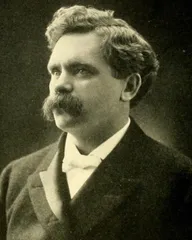
Department of Vocation and Industry BY B. H. ROBERTS
As a beginning in the doing of practical things in this department of M. I. A. Activities, it is suggested that a local, informal employment agency could be established in the larger towns and settlements where two or more associations are organized, or in a stake where the stake is compact. For the purpose of illustrating our suggestion, take a stake like Ensign, in Salt Lake City, comprising six wards. The six committeemen from these wards, together with the stake committeeman, could constitute a stake committee on employment. The local association committeeman, in each case, supposing, of course, that he had followed instructions given in this department, would be familiar with the lads and young men of his association, with their oarentage, home life, habits, aptitudes, what they can do, character, etc. And now, on the other hand, if these committeemen are alert always, and interested in their work, it would not be difficult for them, especially if to constant individual alertness they should hold occasional consulta- committeeman it would not tions with each other and with- the stake — be difficult, I make themselves acquainted with and list local say, to cases of employment to be had, and to make recommendations of persons for such employment. If this were undertaken and followed up, it would not be long after the announcement that such a plan, to direct
employment, was made, until those wanting to secure reliable and efficient help in offi'ees or work shops, or other employments, would be securing such help through the simple agency here proposed, and our organization would be doing a mutual service for those who are seeking employment and want to make a start in industrial life, and for those who are seeking efficient young men and boys in their industries and business. What is here said in relation to these first steps in the way of appointing employment agencies in compact stakes, can be made to work equally well in any of the larger settlements divided into two or more wards, where, of course, there would be an equal number of associations; and the employment could extend to rural occupations on farms and gardens, and stock ranches, as well as to work shops, counting houses and general business. What say the chairmen of the associations and of the stakes? Shall we try it? Remember, if we do not start, there will be no arriving. [Those interested in this department should read the discourse published in this number on "Achievements of the Y. M. M. I. A.," by Elder Roberts. Editors.]
Editor's Table
The Slaying of Gunnison— An Ancient Slander as to the Cause Revived in an Otherwise Excellent Book
From the book publishing house of G. P. Putnam's Sons there has just come a volume that is meant to be truthfully written and is intended to throw strong, new light upon the explorations conducted coincident with the opening of the era of settlement in the Far West. The book is a biography of Edward Fitzgerald Beale, published apparently at the instigation of his son, and written by Stephen Bonsai. In the spirit which prompted this late effort to honor Beale, allUtahns will heartily join. He is not entirely unknown in this region, where tales of his once-famous camel corps, which was disbanded in the wilds of New Mexico, are still to be heard. Beak's dream of solving the problem of transcontinental transportation by camel caravans was coincident with dreams of ? relay-route for balloons, and dreams of all-water routes up the Missouri and down the Colorado and the Columbia, the nature of whose headwaters were then but slightly understood. But unlike the other dreams that of Beale went at least so far as the achievement of at least one trip from coast to coast with camels, and gave our own intermountain country a substantial basis for its oft repeated legend of droves of wild camels that travelers allege they have sighted in the wild country beyond the Grand Canyon. As a trail-blazer, a fighter for the conquest of the Far West from the desert, Beale of course deserves much greater honor than has ever yet come to him, and will in the end have the story of his fight for his camel corps recorded alongside of Brigham Young's plan for relay-settlements to Los Angeles, and the Mormon Battalion's struggle to build a wagon road to the southwest coast. But in spite of a hearty concurrence with the main purpose and the general accuracy of this new volume concerning General Beale, there is one statement in the book against which it is neces-