Present Need of Temples
Improvement Era, vol. 16, no. 1, November 1912, pp. 3 to 22
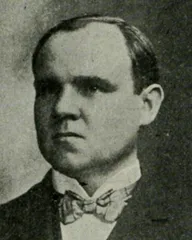
Improvement Era Vol. XVI NOVEMBER, 1912 No. 1 Present Need of Temples BY DR. JAMES E. TALMAGE, OF THE COUNCIL OF THE TWELVE APOSTLES [The article presented herewith appears as Chapter III of the recently published work, "The House of the Lord ; A Study of Holy Sanctuaries, Ancient and Modern; Including forty-six plates illustrative of Modern Temples — by James E. Talmage, One of the Twelve Apostles of the Church of Jesus Christ of Latter-day Saints." This book, which is briefly reviewed elsewhere in this issue, is copyrighted by Joseph F. Smith, Trustee-in-Trust; and it is by special permission that the Era reproduces the article here. The treatment is concise and forceful, and furnishes a sufficient answer to the question so often raised, Why do the Latter-day Saints build and maintain Temples? — The Editors.] Among the numerous sects and churches professing Christianity, the Church of Jesus Christ of Latter-day Saints stands alone in the teaching and practice of temple ministration. The devotion of this people to the sacred labor of building temples and administering therein the saving ordinances of the Gospel has attracted the attention and aroused the wonder of both philosopher and layman. It is not enough to attempt an explanation of this singular and stupendous sacrifice by ascribing it to assumed and unproved fanaticism ; the earnest investigator, the careful observer, and even the cursory reader, indeed, if he be honest, admits that beneath this devotion is a deeply-seated and an abiding faith. It cannot be affirmed that the Latter-day Saints build temples as monuments of communal wealth nor in the pride of human aggrandizement; for we find them thus arduously engaged even
4 IMPROVEMENT ERA I while bread was scarce and clothing scant among them ; and throughout their history the people have looked upon their temples as edifices belonging to the Lord, and upon themselves as stewards entrusted with the custody of the consecrated properties. Nor can it be said that this Church builds temples as other sects erect chapels, churches, cathedrals, and synagogues : for the Church has the equivalent of these, and indeed the meeting-houses and places of public worship maintained by the Latter-day Saints are proportionately greater in number than are those of other denominations. Moreover, as already stated, these temples are not used as places of common assembly, nor as houses of general and congregational service. Why, then, does the Church of Jesus Christ of Latter-day Saints build and maintain temples? In answer let the following pertinent facts be carefully considered. Necessity of Obedience to the Laws and Ordinances of the Gospel As part of its declaration of faith, the Church proclaims : "We believe that through the atonement of Christ, all mankind may be saved, by obedience to the laws and ordinances of the Gospel."0 While professing belief in the possibility of a universal salvation, the Church affirms that salvation is assured only on condition of individual compliance with the requirements established by the Redeemer, without whose atoning sacrifice none could be saved. The atonement wrought by the Christ on Calvary was a vicarious offering, in the beneficent results of which all mankind are made partakers. As to redemption from the thrall of mortality incident to the transgression in Eden, the sacrificial death of Christ met in full the exactions incident to the broken law ; and none but Adam shall be held accountable for Adam's disobedience, nor for any results thereof. In the just judgment to which every mortal shall come, all conditions of inherited weakness, temptation due to environment, the capacity to choose and to act, the measure of knowledge to which the subject has attained, the meed of truth he has accepted or rejected, the opportunities he has used aright or wrongly spurned, the fidelity with which he walked in the light o See the author's "The Articles of Faith," Lecture IV; and references therein given.
PRESENT NEED OF TEMPLES 5 or the depravity through which he wandered in the forbidden paths of darkness, — these and every other fact and circumstance entering into the individual life will be duly weighed and considered. At the bar of God the distinguishing feature of Divine mercy will be, as in the affairs of mortal life it now is, not an arbitrary forgiveness of sin or unearned annulment of the debts of guilt, but the providing of a way whereby the sinner may be enabled to meet the requirements of the Gospel, and so in due course pass from the prison house of sin to the glorious freedom of a righteous life. There is but one price set on forgiveness for individual transgression, and this is alike to all, — to poor and rich, to bond and free, to illiterate and learned ; it knows no fluctuations, it changes not with time ; it was the same yesterday as today it is, and even so shall be forever, — and that price, at which may be bought the pearl beyond all price, is obedience to the laws and ordinances of the Gospel. Hear this further declaration of faith taught by the restored Church : "We believe that the first principles and ordinances of the Gospel are: — (i) Faith in the Lord Jesus Christ; (2) Repentance ; (3) Baptism by immersion for the remission of sins; (4) Laying-on of hands for the Gift of the Holy Ghost. "b Faith in the Lord Jesus Christ is the fundamental principle of the Gospel, the first letter in the alphabet of salvation with which are spelled the words of life eternal. Yet who can have faith in aught of which he knows nothing? Knowledge is essential to faith, and faith impels its possessor to seek further knowledge, and to make of that knowledge, wisdom, which is but knowledge applied and put to use. To preach Christ and him crucifiedc is the one and only way by which faith in him may be taught through the medium of either precept or example. While knowledge and faith are thus closely associated, the two are not identical, nor is the one an assured outgrowth of the other. A man may have learned the truth, and yet may ignore it. His knowledge, far from developing within his soul the faith that b See the author's "The Articles of Faith," Lectures V — VIII with references therein given. c\ Cor. 1:23; 2:2.
6 l.M PROVEMENT ERA leads to right action, may but add to his condemnation, for he sins without even the mitigation of ignorance. Evil spirits have testified of their knowledge that Jesus is the Christ, nevertheless they remain the fallen followers of Satan.rf As living faith develops within the soul of man it leads its possessor to seek a means whereby he may rise from the thraldom of sin; and the very thought of such emancipation inspires a loathing for the evil contamination of the past. The natural fruitage of that glorious growth is repentance. Repentance, as a requirement made of all men, constitutes the second principle of the Gospel of Christ. It comprises a sincere sorrow for the sins of the past, and a resolute turning away therefrom with the solemn determination to endeavor by Divine assistance to return thereto no more. Repentance comes as a gift from God to him who has treasured and nurtured the earlier gift of faith. It is not to be had for the careless asking ; it may not be found upon the highway ; it is not of earth, but a treasure of heaven, and is given with care, yet with boundless liberality unto those who have brought forth works that warrant its bestowal. That is to say, all who prepare themselves for repentance will, by the humbling and softening influence of the Holy Spirit, be brought to the actual possession of this great gift. When Peter was charged by his fellow-worshipers with a breach of law in that he had associated with Gentiles, he told his hearers of the Divine manifestations he had so recently received ; they believed and declared "Then hath God also to the Gentiles granted repentance unto life." Paul also, in writing to the Romans, teaches that repentance comes through the goodness of God/ Wilful persistency in sin may lead to the loss and forfeiture of the ability to repent ; and for man to procrastinate the day of repentance is to invite and eventually to insure such forfeiture. The Divine word through the mouth of a modern prophet is thus explicit : "For I the Lord cannot look upon sin with the least degree of allowance; "Nevertheless, he that repents and does the commandments of the Lord shall be forgiven; <*See Mark 1:24; 3:11; 5:1-18; and Matt. 8:28-34. * Acts 11:18; Rom. 2:4; see also the author's "The Articles of Faith," Lecture V:19-30 and references therein given.
PRESENT NEED OF TEMPLES 7 "And he that repents not, from him shall be taken even the light which he has received, for my Spirit shall not always strive with man, saith the Lord of Hosts."/ The Latter-day Saints believe and teach that repentance will be possible, and indeed required of the yet unrepentant, even after death ; and they affirm that this doctrine is supported by scripture both ancient and modern. We read that while the body of our Lord lay in the tomb, between the evening of the day of crucifixion and the glorious resurrection morn, he was engaged in ministerial labor in the world of disembodied spirits. Peter specifically declares that our Lord "went and preached unto the spirits in prison ; which sometime were disobedient, when once the longsuffering of God waited in the days of Noah."£ The context with which appear these words of the inspired apostle, shows that the event referred to occurred prior to the Savior's resurrection. Furthermore, it will be remembered that one of the condemned malefactors, whose cross of death stood alongside that of Jesus, manifested faith and even some degree of repentance, and received from the suffering Christ the benediction and assurance "Today shalt thou be with me in Paradise. "h It cannot be maintained that this promise implied the passing of the repentant sinner directly from the cross into Heaven — the abode of the redeemed in the presence of God; for surely there had been no opportunity for the suffering penitent to put his repentance into effect by complying with the established laws and ordinances of the Gospel, and without such compliance, even as to the single requirement of water-baptism alone, the man could neither enter nor see the Kingdom of God, or the word of Christ would have been proven false.' Moreover, as conclusive proof of the fact that between the time of Christ's death and resurrection, neither he nor the contrite sinner had gone to the abode of God, we have the words of the Risen Lord to the sorrowing Magdalene : "I am not yet ascended to my Father."/ In view of scriptural affirmation that the disembodied Christ did visit and minister among the spirits who had been disobedient, /Doctrine and Covenants 1 :31-33. si Peter 3:19-20; compare 4:6. *See Luke 23:39-43. * Consider our Lord's declaration to Nicodemus, John 3:1-5. /John 20:17.
8 IMPROVEMENT ERA and who, because of unpardoned sin were still held in duress, it is pertinent to inquire as to the scope and object of our Savior's ministry among them. His preaching must have been purposeful and positive ; moreover, it is not to be assumed that his message was other than one of relief and mercy. Those to whom he went were already in prison, and had been there long. To them came the Redeemer, to preach, not to further condemn, to open the way that led to light, not to intensify the darkness of despair in which they languished. Had not that visit of deliverance been long predicted? Centuries before that fateful time Isaiah had prophesied of proud and wicked spirits : "And they shall be gathered together, as prisoners are gathered in the pit, and shall be shut up in the prison, and after many days shall they be visited."* And again, referring to the appointed ministry of the Christ, the same inspired voice of prophecy declared part of that work to be "to open the blind eyes, to bring out the prisoners from the prison, and them that sit in darkness out of the prison house."' David, filled with the emotions of contrition and hope, sang in measures of mingled sadness and joy: "Therefore my heart is glad, and my glory rejoiceth : my flesh also shall rest in hope. For thou wilt not leave my soul in hell."m From these and other scriptures we learn that the ministry of Christ was not confined to the few who lived in mortality during the short period of his earthly life, nor to them and the generations then future ; but to all, dead, living, and yet unborn. It cannot be denied that myriads had lived and died before the meridian of time, and of these multitudes, as of the many since born, unnumbered hosts have died without a knowledge of the Gospel and its prescribed plan of salvation. What is their condition, as indeed what shall be the state of the present inhabitants of earth, and of the multitudes yet future, who shall die in ignorance and without the faith that saves ? Let us ask again, how can those who know not Christ have faith in him, and how, while lacking both knowledge and faith can they avail themselves of the provision made for their salvation? The Church of Jesus Christ of Latter-day Saints affirms that * Isaiah 24:22. 'Isaiah 42:6,7. "'Psalms 16:9-10.
PRESENT NEED OF TEMPLES , 9 the plan of salvation is not bounded by the grave ; but that the Gospel is deathless and everlasting, reaching back into the ages that have gone, and forward into the eternities of the future. The ministry of the Savior among the dead doubtless included the revelation of his own atoning death, the inculcation of faith in himself and in the divinely-appointed plan he represented, and the necessity of a repentance acceptable unto God. It is reasonable to believe that the other essential requirements comprised within the laivs and ordinances of the Gospel were made known. To the less thoughtful reader it may appear that to teach the possibility of repentance beyond the grave may tend to weaken belief in the absolute necessity of repentance and reformation in this life. A careful consideration of the matter, however, will show that this doctrine affords no reason for such objection. To reject or ignore in any degree a gift of God is to forfeit to the corresponding extent one's claim upon that gift. To the soul that has wilfully neglected the opportunities for repentance here offered, repentance in the hereafter may be, and indeed it is reasonable to believe will be, so difficult as to be long unattainable. This conception is justified by scripture, as witness the words of Amulek, a Nephite prophet, who thus admonished the Church on the western continent four score years before the birth of Christ: "For behold, this life is the time for men to prepare to meet God; * * * therefore, I beseech of you, that ye do not procrastinate the day of your repentance until the end; * * * Ye cannot say, when ye are brought to that awful crisis, that I will repent, that I will return to my God. Nay, ye cannot say this; for that same spirit which doth possess your bodies at the time that ye go out of this life, that same spirit will have power to possess your body in that eternal world. For behold, if ye have procrastinated the day of your repentance, even until death, behold, ye have become subjected to the spirit of the devil, and he doth seal you his."" Baptism by water is taught by the Church in this dispensation as an essential ordinance of the Gospel. Baptism is the gateway leading into the fold of Christ, the portal to the Church, the established rite of. naturalization in the Kingdom of God. The candidate for admission into the Church, having obtained and professed faith in the Lord Jesus Christ, and having sincerely repented of "Book of Mormon, Alma 34:32-35.
10 IMPROVEMENT ERA his sins, is properly required to give evidence of this spiritual sanctification by some outward ordinance, prescribed by authority as the sign or symbol of the new profession. The initiatory ordinance is baptism by water, to be followed by the higher baptism of the Holy Spirit ; and, as a result of this act of obedience, remission of sins is granted.0 That baptism is essential to salvation is attested by many specific scriptures ; yet even without such its essentiality appears in view of the unconditional requirement of repentance, and the evident fact that to be of value and effect repentance must imply obedience to the Divine requirements, which include baptism by water. P>e it remembered that Jesus, the Christ, though untouched by the taint of sin, submitted in person to this ordinance, which was administered by the Baptist in the waters of Jordan. The burden of John's teaching was "Repent ye ; for the kingdom of heaven is at hand," and to such as came to him professing repentance he administered baptism by water immersion. Then came Jesus unto John, to be baptized of him ; and the Baptist, regarding him as one without sin, demurred, saying: "I have need to be baptized of thee, and comest thou to me? "And Jesus answering said unto him, Suffer it to be so now: for thus it hecometh us to fulfil all righteousness. Then he suffered him. "And Jesus, when he was baptized, went up straightway out of the water: and, lo, the heavens were opened unto him, and he saw the Spirit of God descending like a dove, and lighting upon him: "And lo a voice from heaven, saying, This is my beloved Son, in whom I am well pleased."/' It is evident from the foregoing that the baptism of Jesus was acceptable unto the Father, and was by him characterized as an act of humility and obedience on the part of the Son, with which he was well pleased. Some time after his own baptism Jesus affirmed, in words at once forceful and unequivocal, that baptism is required of all men as a condition of entrance into the kingdom of God. To Nicodemus, a ruler among the Jews, who came by night professing some measure of faith, Jesus said: "Verily, verily, I say unto thee, Except a man be born of water and of the ""The Articles of Faith," Lecture VI :1. For a general treatment of Baptism see Lectures VI and VII. *Matt. 3:13-17.
PRESENT NEED OF TEMPLES 11 Spirit, he cannot enter into the kingdom of God."? When in the resurrected state he manifested himself to the apostles, he instructed them by way of final and special commission : "Go ye therefore, and teach all nations, baptizing them in the name of the Father, and of the Son, and of the Holy Ghost. "r The necessity and purpose of the ordinance appear in his further words on the same solemn occasion: "He that believeth and is baptized shall be saved ; but he that believeth not shall be damned."'1 The Apostles, inspired by that Divine commission, ceased not to teach the necessity of baptism, even as long as their ministry endured among mortals/ The elders of the Church in the present dispensation have been directed and empowered by the same authority, and almost in the same words : "Go ye into all the world, preach the Gospel to every creature, acting in the authority which I have given you, baptizing in the name of the Father, and of the Son, and of the Holy Ghost; and he that believeth and is baptized shall be saved, and he that believeth not shall be damned."" On another occasion the Lord added, in a revelation through the modern prophet, Joseph Smith : "Therefore, as I said unto mine aspostles I say unto you again, that every soul who believeth on your words, and is baptized by water for the remission of sins, shall receive the Holy Ghost." And further, "Verily, verily, I say unto you they who believe not on your words, and are not baptized in water, in my name, for the remission of their sins, that they may receive the Holy Ghost, shall be damned, and shall not come into my Father's kingdom, where my Father and I am."1' The Gift of the Holy Ghost follows baptism by water, and its authoritative bestowal constitutes the next essential ordinance of the Gospel.*" In both ancient and modern times this endowment has been regarded as a higher baptism, lacking which the baptism of water is incomplete. John, distinctively known as the Baptist, so taught on the very eve of our Savior's personal ministry. Coni See John 3:1-7. r Matt. 28:19. ^ Mark 16:16. 'See Acts 2:38; 9:1-18; 10:30-48; 22:1-16; I Peter 3:21. "Doctrine and Covenants 68:8,9. » Doctrine and Covenants 84:64,74; see also 112:28,29. w See "The Articles of Faith," Lecture VIII.
12 IMPROVEMENT ERA sider well his words: "I indeed baptize you with water unto repentance: but he that cometh after me is mightier than I, whose shoes I am not worthy to bear : he shall baptize you with the Holy Ghost, and with fire."* John testifies further that the one who should thus inaugurate the higher baptism was Jesus, himself. Not until after he had administered the ordinance of water baptism to Jesus, did John recognize him as the Christ; but immediately after that recognition, the Baptist fearlessly proclaimed his testimony : "Behold the Lamb of God * * * This is he of whom I said, After me cometh a man which is preferred before me * * * And I knew him not: but he that sent me to baptize with water, the same said unto me, Upon whom thou shalt see the Spirit descending, and remaining on him, the same is he which baptizeth with the Holv Ghost."? Jesus repeatedly promised the apostles that the "Comforter" or the "Spirit of Truth"* should be given unto them ; and this assurance was made specific and final immediately prior to the ascension. He "commanded them that they should not depart from Jerusalem, but wait for the promise of the Father, which, saith he, ye have heard of me. For John truly baptized with water; but ye shall be baptized with the Holy Ghost not many days hence. * * * Ye shall receive power, after that the Holy Ghost is come upon you : and ye shall be witnesses unto me."° The promise was fulfilled at the succeeding Pentecost when the apostles received power never before known to them, the endowment being marked by an outward manifestation of fiery tongues.^ The apostles thereafter promised the Holy Ghost to those who sought salvation. Peter's exhortation to the multitude, on that same memorable day of Pentecost, is particularly explicit and forceful. In answer to the inquiry, "Men and brethren, what shall we do?" the chief of the apostles replied: "Repent, and be baptized every one of you in the name of Jesus Christ for the remission of sins, and ye shall receive the gift of the Holy Ghost."c *Matt. 3:11; compare Mark 1:7,8; Luke 3:16. rvjohn 1:29-33. *John 14:16,17,26; 15:26; 16:7,13. a Acts 1:4,5,8. b Acts 2:1-4. c Acts 2:37,38.
PRESENT NEED OF TEMPLES 13 A similar assurance as to the higher endowment of the Holy Ghost following the ordinance of water-baptism was made by Nephite prophets,** and by the resurrected Christ in his visit to the people of the western continent/ And later still this has been repeated through the Church in the current dispensation, that of the fulness of times: "I say unto you again," said the Lord in a revelation to certain elders of the Church, "that every soul who believeth on your words, and is baptized by water for the remission of sins, shall receive the Holy Ghost. "f By way of summary let it be repeated : The Church of Jesus Christ of Latter-day Saints holds as a fundamental doctrine, attested and proved by scripture both ancient and modern, that compliance with the lazvs and ordinances of the Gospel is an absolute and irrevocable requirement for admission into the Kingdom of God, or in other words, for the securing of individual salvation to the souls of men, and that this requirement is universal, applying alike to every soul that has attained to age and powers of accountability in the flesh, in whatever period or dispensation that soul has lived in mortality. It follows as a necessary consequence that if any soul has failed, either through ignorance or neglect, to render obedience to these requirements, the obligation is not removed by death. Vicarious Service of the Living for the Dead A question now arises as to how it is possible for the dead to comply with the terms of the Gospel and do in the spirit what they had failed to do in the flesh. The exercise of faith and the manifestation of repentance by disembodied spirits may offer no great difficulty to human understanding; but that the dead shall obey the ordinances of the Gospel requiring water-baptism and the baptism of the Spirit by the authorized laying-on of hands, appears to many as truly impossible as seemed the new birth to Nicodemus. He listened in amazement to the Savior's words : "Except a man be born again he cannot see the kingdom of God ;" and asked : "How can a man be born when he is old ? Can he enter the second time into his mother's womb, and be born?" At last he learned that <*For an instance, see Book of Mormon, II Nephi 31 :8, 12-14, 17. 'Ill Nephi 11:35; 12:2. /Doctrine and Covenants 84:64.
14 IMPROVEMENT ERA the new birth referred to was baptism by water and the baptism of the Spirit. With equal pertinency it may now be asked : How can a man be baptized when he is dead ? Can he enter the second time into his body of flesh and be immersed in water by human agency? The answer is that the necessary ordinances may be performed for the dead by their living representatives, the mortal subject acting as proxy for the departed one. Thus, even as a man may be baptized in his own person for himself, he may be baptized as proxy for and in behalf of the dead. The validity of vicarious service, in which one person acts in behalf of another, is generally recognized as an element of human institutions ; and that such service may be acceptable unto God is attested by the written word. Ancient and modern scripture, the record of history other than sacred, the traditions of tribes and nations, the rites of bloody sacrifice, and even the sacrificial abominations of pagan idolatry, involve the essential conception of vicarious propitiation and of service rendered by proxy. The scape-goat^ and the altar victim'1 in the Mosaic dispensation, when offered by constituted authority and with due accompaniment of acknowledgment and repentance, were accepted by the Lord as sacrifices in mitigation of the sins of his people. The most significant sacrifice of all, the greatest work ever wrought amongst mankind, the pivotal event in human history, the supreme achievement which was at once the most glorious consummation and the most blessed beginning, is the Atonement of Christ; and this was pre-eminently a vicarious offering. No one who believes that Jesus died for man can doubt the validity and efficacy of vicarious ministration. He gave his life as a fore-ordained sacrifice, voluntarily offered and duly accepted as a propitiation for broken law, and the means by which salvation was made possible unto man. That his death was literally an accepted offering in behalf of human kind is thus set forth in the words of the resurrected Christ, given through modern revelation : "For behold, I, God, have suffered these things for all, that they might not suffer if they would repent, but if they would not repent, they must suffer even as I, which suffering caused myself, even God, *Lev. 16:20-22. h Lev. chap. 4.
PRESENT NEED OF TEMPLES 15 the greatest of all, to tremble because of pain, and to bleed at every pore, and to suffer both body and spirit: and would that I might not drink the bitter cup and shrink — nevertheless, glory be to the Father, and I partook and finished my preparations unto the children of men."* The vicarious effect of the atonement of Christ is twofold ; it has wrought a universal redemption of all men from the mortal death incident to the transgression of Adam ; and it has provided a means of propitiation for individual sin whereby the sinner may attain salvation through obedience. It is by his mortal life and sacrificial death in behalf of others, — and those others, all who have lived or shall live, — that Jesus the Christ earned his title, Savior and Reedemer of mankind. And as he by effort, sacrifice, and suffering, did for men what they never could accomplish for themselves, and so became in very truth the one and only Savior and Redeemer of the race, so may each of us by opening the way to our departed dead whereby they may be brought within the saving law of the Gospel, become in a small measure saviors unto those who would otherwise be left in darkness.-' In every instance of vicarious ministration, it is an indispensable requisite that the proxy be worthy and acceptable ; and of necessity he must himself have obeyed the laws and ordinances of the Gospel before he can officiate in behalf of others. Further, the ministrations of the living representative must be in accordance with Divine appointment, and in no wise a merely human assumption. The acceptable sacrifices of ancient Israel were such as had been definitely specified and minutely prescribed ; and the sacrificial rites could be solemnized only by authorized priests. The supreme sacrifice involved in the atoning death of Christ was as truly appointed and fore-ordained. Prophets, through the long centuries antedating the Christian era, predicted the birth, life and death of our Lord as already provided for ;k and these prophecies were confirmed by Jesus himself/ Consider also the testimony of the apostles to the same effect. Peter specifically designates Christ as "a Lamb without blemish and without spot : who verily * Doctrine and Covenants 19:16-19. /See Obadiah 21; I Timothy 4:16; Tames 5:20. *Deut. 18:15,17-19; Job 19:25-27; Psalms 2:1-12; Zech. 9:9; 12:10; 13:6; Isa. 7:14; 9:6,7; Micah 5:2. i See Luke 24:27, 45, 46.
16 IMPROVEMENT ERA was fore-ordained before the foundation of the world.""1 The designation "Lamb" is indicative of a sacrificial victim. Paul in writing to the Romans characterizes our Lord as the one "Whom God hath set forth to be a propitiation through faith in his blood, to declare his righteousness for the remission of sins that are past."M The Latter-day Saints affirm that their vicarious work in behalf of the dead is required of them by the call of the Lord through direct revelation ; and that it becomes the duty and privilege of every individual who accepts the Gospel and enters the Church to labor for the salvation of his dead. He is expected and required by the obligations and responsibility he has assumed as a member of the Church of Jesus Christ, so to live as to be a worthy representative of his departed ancestors, in holy ordinance, and to be of clean life, that he may not forfeit his right to enter the sacred confines of the Lord's House, where alone he may officiate in that privileged capacity. Let it not be assumed that this doctrine of vicarious labor for the dead implies even remotely, that the administration of ordinances in behalf of departed spirits operates in any manner to interfere with the right of choice and the exercise of free agency on their part. They are at liberty to accept or reject the ministrations in their behalf; and so they will accept or reject, in accordance with their converted or unregenerate state, even as is the case with mortals to whom the Gospel message may come. Though baptism be duly administered to a living man in behalf of a dead ancestor, that spirit will derive no immediate advancement nor any benefit therefrom if he has not yet attained faith in the Lord Jesus Christ or if he be still unrepentant. Even as Christ offered salvation to all, though few there be who accept in the flesh, so temple ordinances may be administered for many in the realm of the departed who are not yet prepared to profit thereby. It is evident, therefore, that labor in behalf of the dead is twofold ; that performed on earth would remain incomplete and futile but for its supplement and counterpart beyond the veil. Missionary work is in progress there — work, compared with which »I Peter 1:19,20. "Rom. 3:25. See further Rom. 16:25,26; Eph. 3:9-11; Col. 24-26; II Tim. 1:8-10; Titus 1:2,3; Rev. 13:8.
PRESENT NEED OF TEMPLES 17 the evangelistic labor of earth is but a small undertaking. There are preachers and teachers, ministers invested with the Holy Priesthood,, all engaged in declaring the glad tidings of the Gospel to spirits who have not yet found the light. As has been shown, this great labor amongst the dead was inaugurated by Jesus the Christ, during the brief period of his disembodiment." The saving ministry so begun was left to be continued by others duly authorized and commissioned ; even as the work of preaching the Gospel and administering therein amongst the living was committed to the apostles in the Church of old. Authority to Labor in Behalf of the Dead In the closing chapter of the compilation of scriptures known to us as the Old Testament, the prophet Malachi thus describes a condition incident to the last days, immediately preceding the second coming of Christ: "For, behold, the day cometh, that shall burn as an oven; and all the proud, yea, and all that do wickedly, shall be stubble: and the day that cometh shall burn them up, saith the Lord of hosts, that it shall leave them neither root nor branch. "But unto you that fear my name shall the Sun of righteousness arise with healing in his wings." The fateful prophecy concludes with the following blessed and far-reaching promise : "Behold, I will send you Elijah the prophet before the coming of the great and dreadful day of the Lord: "And he shall turn the heart of the fathers to the children, and the heart of the children to their fathers, lest I come and smite the earth with a curse."/' It has been held by theologians and Bible commentators that this prediction had reference to the birth and ministry of John the Baptist,'? upon whom rested the spirit and power of Elias.r However, we have no record of Elijah having ministered unto the Baptist, and furthermore, the latter's ministry, glorious though it °See pages 7, 8, 9. PSee Malachi 4:1.2,5,6. <? Compare Matt. 11:14; 17:11; Mark 9:11; Luke 1:17. 'Luke 1:17.
18 IMPROVEMENT ERA was, justifies no conclusion that in him did the prophecy find its full realization. In addition, it should be remembered, that the Lord's declaration through Malachi, relative to the day of burning in which the wicked would be destroyed as stubble, yet awaits fulfillment. It is evident, therefore, that the commonly accepted interpretation is at fault, and that we must look to a later date than the time of John for the fulfillment of Malachi's prediction. The later occasion has come; it belongs to the present dispensation, and marks the inauguration of a work specially reserved for the Church in these latter days. In the course of a glorious manifestation to Joseph Smith and Oliver Cowdery, in the Temple at Kirtland, Ohio, April 3rd, 1836, there appeared unto them Elijah, the prophet of old, who had been taken from earth while still in the body. He declared unto them : "Behold, the time has fully come, which was spoken of by the mouth of Malachi, testifying that he (Elijah) should be sent before the great and dreadful day of the Lord come, to turn the hearts of the fathers to the children, and the children to the fathers, lest the whole earth be smitten with a curse. Therefore the keys of this dispensation are committed into your hands, and by this ye may know that the great and dreadful day of the Lord is near, even at the doors. "* One of the fundamental principles underlying the doctrine of salvation for the dead, is that of the mutual dependence of the fathers and the children. Family lineage and the sequence of generations in each particular line of descent are facts, and cannot be changed by death ; on the other hand it is evident from the olden scriptures already cited, and attested by the equally sure word of modern revelation, that the family relationships of earth are recognized in the spirit world. Neither the children nor the fathers, neither progenitors nor descendants, can alone attain perfection ; and the requisite co-operation is effected through baptism and related ordinances, administered to the living in behalf of the dead. In this way and through this work are the hearts of the fathers and those of the children turned toward each other. As the living children learn that without their ancestors they cannot attain a perfect status in the eternal world, their own faith will be strengthened and they will be willing to labor for the redemp3 Doctrine and Covenants 110:13-16.
PRESENT NEED OF TEMPLES 19 tion and salvation of their dead. And the dead, learning through the preaching of the Gospel in their world, that they are dependent upon their descendants as vicarious saviors, will turn with loving faith and prayerful effort toward their children yet living. This uniting of the interests of fathers and children is a part of the necessary preparation for the yet future advent of the Christ as ruling King and Lord of earth. Joseph Smith thus taught : "The earth will be smitten with a curse, unless there is a welding link of some kind or other, between the fathers and the children, upon some subject or other, and behold what is that subject? It is the baptism for the dead. For we without them cannot be made perfect; neither can they without us be made perfect."' The Church today cites as authority for its administration of ordinances in behalf of the dead, the special bestowal of this power and office through the ministry of Elijah; and furthermore, the Church holds that the giving of that power marked the fulfillment of Malachi's portentous prediction. There appears an element of particular fitness in the fact that the minister through whom this great work has been inaugurated in the present dispensation, is none other than Elijah, — who, not having passed the portals of death, held a peculiar and special relation to both the dead and the living. As to the fidelity with which the Church has served under this special commission, the temples it has reared with such sacrifice and self-denial on the part of its devoted adherents., and the ordinance work already performed therein, are sufficient proof. The importance with which the Latter-day Saints regard their temple work in behalf of the dead naturally produces among this people a vital interest in the genealogical records of their respective families. Ordinance work in the temples, in behalf of any departed person, can be done only as that person may be described on the record, as to name, relationship, time and place of birth and death, etc., by which data lie may be fully and certainly isolated and identified." It is a matter of common knowledge that interest in genealogical research has greatly increased in the United States and in Europe during the last seven or eight decades. Genealogical societies have been formed, and individual investigators have 'Doctrine and Covenants 128:18. "See Doctrine and Covenants 128:5-8.
20 IMPROVEMENT ERA devoted great treasures of time and money to the compilation of records showing numerous lines of family descent and the many ramifications of complicated relationship. In all this work the Latter-day Saints profess to see the operation of an over-ruling power, by which their service for the dead is facilitated. Temples Required for Vicarious Service While the ordinances of baptism, imposition of hands for the bestowal of the Holy Ghost, and others, such as ordination to the Priesthood, may be performed upon the living in any suitable and proper place, the corresponding ordinances for and in behalf of the dead are acceptable unto the Lord, and therefore valid, only when administered in places specially provided, set apart, and dedicated for these and kindred purposes ; that is to say, such ordinances belong exclusively to the House of the Lord. For a very brief period only, and that the earliest in modern Church history, before the people had opportunity to erect temples, did the Lord graciously accept a temporary sanctuary, even as he accepted the Tabernacle of old as a temporary temple during the period of Israel's wanderings. In a revelation given to Joseph Smith, the prophet, at Nauvoo, Illinois, January 19th, 1841, the Lord called upon his people to build a house to his name "for the Most High to dwell therein," and added by way of explanation and instruction : "For there is not a place found on earth that he may come and restore again that which was lost unto you, or which he hath taken away, even the fulness of the Priesthood; "For a baptismal font there is not upon the earth, that they, my saints, may be baptized for those who are dead; "For this ordinance belongeth to my house, and cannot be acceptable to me, only in the days of your poverty, wherein ye are not able to build a house unto me. "But I command you, all ye my saints, to build a house unto me; and I grant unto you a sufficient time to build a house unto me, and during this time your' baptisms shall be acceptable unto me. "But behold, at the end of this appointment, your baptisms for your dead shall not be acceptable unto me; and if you do not these things at the end of the appointment, ye shall be rejected as a church, with your dead, saith the Lord your God.
PRESENT NEED OF TEMPLES 21 "For verily I say unto you, that after you have had sufficient time to build a house to me, wherein the ordinance of baptizing for the dead belongeth, and for which the same was instituted from before the foundation of the world, your baptisms for your dead cannot be acceptable unto me, "For therein are the keys of the holy Priesthood, ordained that you may receive honor and glory. "And after this time, your baptisms for the dead, by those who are scattered abroad, are not acceptable unto me, saith the Lord; "For it is ordained that in Zion, and in her Stakes, and in Jerusalem, those places which I have appointed for refuge, shall be the places for your baptisms for your dead. "And again, verily I say unto you, How shall your washings be acceptable unto me, except ye perform them in a house which you have built to my name? "For, for this cause I commanded Moses that he should build a tabernacle, that they should bear it with them in the wilderness, and to build a house in the land of promise, that those ordinances might be revealed which had been hid from before the world was; "Therefore, verily I say unto you, that your anointings, and your washings, and your baptisms for the dead, and your solemn assemblies, and your memorials for your sacrifices, by the sons of Levi, and for your oracles in your most holy places, wherein you receive conversations, and your statutes and judgments, for the beginning of the revelations and foundation of Zion, and for the glory, honor, and endowment of all her municipals, are ordained by the ordinance of my holy house which my people are always commanded to build unto my holy name. "And verily I say unto you, Let this house be built unto my name, that I may reveal mine ordinances therein, unto my people; "For I deign to reveal unto my church, things which have been kept hid from before the foundation of the world, things that pertain to the dispensation of the fulness of times."^ This then is sufficient answer to the question as to why the Latter-day Saints build and maintain temples. They have been instructed and required so to do by the Lord of Hosts. They have learned that many essential ordinances of the Church are acceptable only when performed in temples specially erected and reserved for the purpose. They know that within these precincts of sanctity the Lord has revealed many great and important things pertaining to the Kingdom of God ; and that he has promised to reveal yet *> Doctrine and Covenants 124:28-41. Read the entire section.
22 IMPROVEMENT ERA more to man in houses sacred to his name. They have learned that a great part of the mission and ministry of the restored Church is the administration of vicarious ordinances in behalf of the unnumbered dead who never heard the tidings of the Gospel, and that for such sacred and saving service Temples are a necessity. President Andrew Jenson of the Scandinavian mission, left Copenhagen, Wednesday, May 14, 1912, going via Russia, Japan and Hawaii on his homeward journey. He presided over the Scandinavian mission, from February, 1909, to May, 1912, and has written the following report to President Rudger Clawson of the European mission, which appeared in the "Millennial Star," and which, as stated, is a record of which any man might well be proud. "Being about to take my departure from the shores of Europe to return to my home in the Rocky Mountains, I take pleasure in reporting to you as the president of the European mission, that since I took charge of the Scandinavian mission, in February, 1909, I have labored to the best of my ability to promulgate the principles of the everlasting gospel in Denmark and Norway, and have been ably and effectually assisted by faithful elders from Zion. I arrived in the mission February 11, 1909, took charge of the same as successor to Elder Soren Rasmussen four days later, and tomorrow I expect to say goodbye to old Scandinavia and return home by way of Russia, Japan and Hawaii. During my presidency the elders in their capacity of missionaries have visited 1,442,421 houses of strangers, and distributed 2,933,700 books and tracts. The number of additions to the Church has been nearly 1,300 during these three years and three months that I have had charge of the affairs of the mission. Since I left home in Utah I have traveled about 64,000 miles, and delivered nearly 1,000 public addresses, including a number of illustrated lectures on Church history and affairs in Utah. We have labored in the midst of the most bitter opposition; never since the Scandinavian mission was opened in 1850 have the adversaries of the true gospel of Jesus Christ carried on such a crusade against our people and the elders as they have during the past year or two. Special lectures have been delivered by bitter anti-'Mormons.' Living picture shows have-been concocted, manufactured and exhibited, misrepresenting and vilifying us in the most scandalous manner. The Lutheran clergy and the press have gone hand in hand to create a bitter prejudice in the hearts of the people against us, and the columns of the newspapers have teemed with articles, partly original and partly deducted from old and stale articles, which have circulated and been refuted in other countries many years ago. These things have advertised us freely, and our meetings have in many places been much better attended and more converts been made than would have been the case if we had been left alone. "During my presidency here, 189 new elders have arrived in the field and 218 have gone home, leaving 133 in the mission at the present time. During my presidency we have printed 10,000 copies of the Book of Mormon, 10,000 copies of the Pearl of Great Price, 52,000 copies of "A Friend From the West," 50,000 cards containing the Articles of Faith, and about 1,450,000 copies of 'Rays of Living Light.' "