Department of Vocation and Industry. III
Improvement Era, vol. 16, no. 1, November 1912, pp. 65 to 68
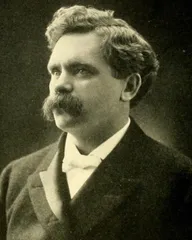
Department of Vocation and Industry BY B. II . ROBERTS i77 — Vocations and Avocations The words vocation and avocation are quite often confounded, as meaning one and the same thing. There is, however, an important distinction. Vocation as related to industrial thought is the trade, business or profession that one ordinarily follows, and by which he earns his living. Avocation is what one engages in as a sort of side issue to his vocation, usually prompted by a natural taste for it or an inclination to follow it; it is one's industrial diversion or pleasure. As, for example, one may be a carpenter in daily vocation, but in a limited way, he may cultivate flowers, either to beautify his home, or for the pleasure he finds the study of plant life ; or, favorable circumstances granted, such as possessing a small plot of ground, he may raise flowers for the market and thus gratify his natural tastes, and at the same time add to his earnings. In like manner the school teacher, while following his profession as his vocation, in his outdoor hours may engage in raising poultry either for the pleasure or the profit he finds in it. It often happens that by coupling an avocation with a vocation the avocation so develops that it becomes the vocation. A notable example of this is found in the experience of Salt Lake City's present sexton. His vocation for very many years was that of a barber, in one of the busy sections of the city ; he was also one of the proprietors of the establishment in which he followed his vocation. Having a natural taste for floral culture he followed it quite assiduously, surrounded his cottage home with flowers, entered into competition for the most beautiful door yards, back or front, competition encouraged by an association of the city by the giving of a numbeu of graded prizes to the successful competitor. I do not know if he was successful or not in these competitions, but his success and his taste in floral culture and arrangement of flower-beds- — amounting to landscape gardening on a small scale — attracted attention, and finally resulted in his appointment to the position of city sexton, charged with the duty of the care and beautifying of the grounds where sleep the dead of our city. Thus his avocation was converted into a vocation, both to his profit and pleasure and enlarged usefulness. • This case is not singular, it is
66 IMPROVEMENT ERA something that happens quite frequently in the fields of vocation and avocation. The suggestion to be made here is that men, especially young men, should not be content with merely following a vocation. A man should really be something more than a brick mason, a carpenter, a civil engineer, or a lawyer. While ours is an age of specialization, and such the stress of competition in the industrial sphere, and such the demand for high skill in every department of industrial activity, that one may hope to succeed supremely only in some one vocation, yet life for any man would be too intolerably narrow if all his activities in life were confined to the interests of his trade, business, profession — his one vocation, in fact. We urge young men to couple with their vocations avocations. It may be that force of circumstances, environment, has been the determining factor in pushing one into his vocation, and deliberate, free choice, according to one's tastes or aptness for the calling he makes his vocation, may have had little or nothing to do with it ; yet he must needs go on with it, for usually he finds it difficult, if not impossible, to change his trade or profession midway in his career. But while circumstance and environment may take a large part in fixing one's vocation, that is not the case with his avocation. Here his tastes, natural inclination, aptness or ability to do things may have full sway and he may do things, or at least work at things he likes to do. He may be a barber; but in the early morning hours and in the evening he may be with the flowers or the poultry. One may be a bookkeeper and give the allotted hours to his accounts, but when the day's work is ended, the hours that remain may be employed in the musical studies he makes his avocation, acquiring some skill in an art he loves. The farmer plods home his weary way at the close of his day's uncongenial toil, but the prospect brightens as he remembers that he may soon be engaged in the pursuit of the studies he has made his avocation. Life is too large and is too full of interest for any one to allow it to narrow down to merely keeping alive on the product of his daily labor. There is something more in life than merely life, there is living ; and in this matter of living, the people of our country are peculiarly blessed with opportunity. Under the blessing of living in a free country, it is possible for every citizen to participate in the community life of his neighborhood, his village, town, city, county, state, and the nation. He may take an interest in the civic affairs of the immediate community where he resides, whether that community be a county precinct, a -hamlet, or a town. He may stand for the betterment of conditions ; for the reform of abuses ; for the maintenance of civic righteousness. In all these things he freely unites with his fellow citizens, and exerts an influence in proportion to his intelligence, and the strength and up-
DEPARTMENT OF VOCATION AND INDUSTRY 67 Tightness of his character ; and in this sphere of public service many men may find their avocations. The Church, and here I am addressing myself to Latter-day Saints, and have in mind the Church of the Latter-day Saints, — the Church, I say, affords an equally attractive field for avocations. With a priesthood that practically admits to its membership in one or other of its many quorums, every male member of the Church, of good, moral character, from the age of twelve upward, it appoints service unto men in the community life at once the most important and uplifting, both for him who ministers and those to whom he ministers. His appointments in this priesthood commits him at once to all righteousness, to moral living, to the acquirement of spiritual powers, on his own part, and to helpfulness towards others. During the day he may be a plumber or a blacksmith, but on Monday night he may meet with his priesthood quorums considering the sublimest themes that concern man in his relationship to God and his duty towards man. During the day he may have been a sower of grain upon the waiting soil, or a salesman in a department store, annoyed by a thousand petty details, but in the evening, with a companion from some widely different vocation, he may be a visitor at the homes of people, a teacher of the gospel of Jesus Christ, making plain some great truth by analysis of it, by exposition and application of that truth to human conduct. By wise counsels, and persuasive admonitions, he may be throwing restraining influences about one inclined to worldliness, perhaps to sin ; or by loving patience and the teaching of truth he may be, all unconsciously to the object of his ministrations, leading one who has fallen, to a reconsideration of his course in life, to a readjustment of his attitude — in a word, to repentance. Such service as this may become one's avocation in life in the Church of the Latter-day Saints, than which, it will go without saying, there is none more noble, or praiseworthy, or of better report. These matters may only be indicated here, they can neither be fully stated nor discussed at length, neither, perhaps, is that here necessary. But the point to be remembered is this — having in mind, however, what has been said in articles numbers I and II of this series, as well as this one : Let our youth, up to the very limits of possibility, be encouraged to choose vocations for which they have natural aptness, ability, taste, inclination and strength. Then let them be encouraged to couple with that vocation an avocation that shall broaden their lives, and increase their service capacity. Especially should they be encouraged to that community service, both civic and religious life, that will identify them with the "building" forces of the state and of the Church ; with the forces that make for the betterment of earthly conditions th.-ough civic institutions, and
US IMPROVEMENT ERA that make for both personal and community righteousness, through the institution God has ordained to that end — the Church. By the adoption of this course, no life need be spent wholly in mean and petty employments that pull down character to their level. However humble one's vocation may be, by which he earns his daily bread, by coupling therewith some avocation that is uplifting in its nature ;that unites the common life with both a larger and a higher life, with the community life, the life of the neighborhood, or of the town, or city, or state, or nation ; and that especially unites the common life of man through service with the achievement of God's purposes — the salvation of man — that is sufficient to ennoble the humblest life, and no man can be "abject and meanspirited" while his community services employ him in pursuits so honorable and glorious. On February 9, 1907, the first elders landed in West Australia — • Charles M. Shaw and Clarence M. Baker. They encountered much opposition, but today we have a nicely organized branch with twenty-eight members. Four local brethren hold the Priesthood. We hold Sunday School and M. I. A. meetings, two street meetings and two hall meetings, each week. The Saints are good workers, and we have many friends and investigators among rich and poor. Prejudice is broken down and investigation is taking its place. Elders Oscar C. Yorgensen and John W. Fullmer have just returned from a country trip in which they traveled 650 miles by bicycle, visiting all the towns and villages between Perth and Albany. They held eleven street meetings, distributed fifteen Books of Mormon, 526 copies of "Durant," and other books, left 4,837 tracts with the people, and visited 1,796 homes. Many friends were made who urged the elders to call again. The elders in the picture are: John W. Fullmer, Abraham, Utah; Oscar C. Yorgensen, Shelley, Idaho; George A. Wilson, Salt Lake City; in front: John E. Gleave, conference president, Annabella, Utah. It is 3,000 miles from Perth to Sydney, and about 13,000 miles from Salt Lake City. — John E. Gleave.