The Improvement Era: Trust Funds
Improvement Era, vol. 15, no. 12, October 1912, pp. 1134 to 1136
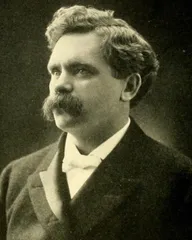
1134 IMPROVEMENT ERA such an idea lo gain currency among our boys and to encourage it in the least degree, is to train them in penuriousness and littleness, to train them down instead of up. I hope the day will never come when we shall abolish the M. I. A. Fund, for that would remove from our organization one of its most valuable educational factors. The Improvement Era — Trust Funds BY BRIGHAM H. ROBERTS A question handed in for answer relates to the Era canvass, asking that it be made by regularly employed agents, thus freeing the hands of the M. I. A. officers to insure better collection of the fund. In referring to this subject of canvassing for the Era, I wish to call your attention to the fact that it is a dangerous thing to change the method of procedure,, so dangerous that, in my judgment, it involves the question of the success of the magazine. It has entered on its fifteenth volume. It began in 1897, without a dollar of capital. The only capital that we had in view at all was the loyalty of the young men of Israel to the cause of Mutual Improvement; and we capitalized, so to speak, that enthusiasm, that spirit of loyalty, and we went out in various directions, representatives of the General Board, and put the question squarely to the young men of Israel. We had been without an organ for some length of time; no means of communicatin between the head of the organization and the different associations in the Church, and there was, at this time, truly a seriously felt need of a means of constant communication, that the spirit and life of the General Board might be infused into all the associations. So we went before these young men, called their attention to this condition, and told them that we had no capital or means of instituting such an organ, unless they should come to our assistance and take capital stock in this movement to the extent of paying two dollars in advance for the magazine, and they responded handsomely, with the result that the Improvement Era was started upon the capital of the. loyalty of the youth of Israel, and we have depended upon that loyalty from that day to this. Part of that loyalt is expressed in the work of canvassing for our magazine, being done voluntarily on the part of the members of the Mutual Improvement Association. *Remarks at the officers' meeting, Saturday, June 8, General Annual Conference.
MUTUAL WORK 1135 And by reason of the magazine being relieved from the expense of employing special canvassers for the Improvement Era, T attribute the fact that we have been able to do a great missionary work, in that we have, from the commencement of our magazine until now, through fifteen years, supplied our missionaries, ranging all the way from 1,500 to 2,000 copies every year, thus giving them the means of using our literature in their fields of labor, but more especially for their own instruction and generating within them the spirit of instruction. It has been one of the great missionary factors in the Church, and I believe that the young men who have filled missions abroad would say, amen, to that, if they could give expression to their convictions about it. So, that when we appeal to the associations to continue in this work, to relieve the magazine from the responsibility and expense of employing special agents, I would like them to carry in mind, as they proceed with this work, that they are doing missionary work, because it is only by reason of relieving the magazine of that responsibility that we are able to continue the sending of this magazine to our missionaries free of charge. You are not engaged in any sort of drudgery, when canvassing for the Era, but you are representing the Church of Jesus Christ of Latter-day Saints in its missionary work abroad. Moreover, we ought to keep in mind, and we ought to instil it into the minds of all the members of the associations, that every man owes the community something, some service that he will give gratuitously in order to perform his part in the community work, and we want to get away from the sordid spirit that demands remuneration in cash for services rendered. I have admired, beyond expression almost, the spirit that comes with the service that has been rendered through so many centuries in the British Parliament, where the great representatives of the Commons of England have given their services free to that country, and have felt honored in doing so. Now, varying in degree, that should simmer down to us, and we should perform very much of service in our community, and community life, that does not involve the matter of dollars and cents. We do it as our contribution to community activities, and this ought to be instilled into the minds of those who are canvassing for the Era. Now then there is great danger if we should change our system of canvass from voluntary, generoushearted missionary work involved in this canvass, as at present conducted. The result will be that there will be a great falling off in our subscription list, for I do not believe that the paid service of expert agents will be equal to the voluntary service by the members of our association. We would be deprived of training in another direction, and that is in the handling of trust funds, and I am reminded here, this morning, by one of the brethren, that that is an item that ought not to be overlooked. I would not like to say that there is any dishon-
1136 IMPROVEMENT ERA esty involved on the part of those who are entrusted with this work; but I am informed that we would be astonished at the amount of delinquency in the turning over of funds that come into the hands of agents and fail to reach the office of the Era. There is no lesson so much needed in American life today as that which would teach the sacredness of trust funds. All along the line of American experience, you can find the great need of impressing men with the idea that funds entrusted to them are more sacred than other funds, and ought to be accountedf or promptly, because there is nothing that so much measures the moral training of men in lines of honesty as the manner in which they meet their obligations incurred in handling trust funds; and you presidents of associations want to have an eye to that. It is an item that is educational in a way. You want to have an opportunity of saying a word in due season to some young man in this work who may be neglectful and careless in relation to it. You may have the opportunity of speaking the word that shall be the corrective to a manly life, and watchfulness in regard to it is one of the things needed. Well now, brethren, let us not disturb the present arrangements for canvassing for the Era. There was a long list of our activities spoken of yesterday which represent decline, decline, decline! In many of our activities we appear to be losing ground. Now I can account for part of it in the fact that these associations are in a transitional stage, and much of our class work, our theological work, has been turned over to the priesthood quorums, which is all right and proper; and we feel as if we were deprived of occupation because of that great amount of interest and of work that has been taken out of our society by reason of that change, and we have not yet readjusted ourselves to these new conditions. But, brethren, this report that represents a losing out in some of our activities, should be a stimulus to us not to abandon more, as we would have to do, by giving up our present method of conducting the canvass for the Era. Let us rather close up the ranks and stand more and more for our great cause of Mutual Improvement. Give up whatever else you will in the auxiliary work of the Church, but let it be again confirmed by action of this conference, and of every officer in attendance upon it, that Mutual Improvement is to give up nothing, and is not to be moved out of its place. There is at no point in the work of the Church so much need of perseverance and revival as in our Mutual Improvement work. The Sunday schools, the primaries and the religion classes deal with the youth of our people at a time when they are anxious to go to those places, when they will cry if denied the privilege of getting to the Sabbath school on time, or to the primary. We catch them at an age when they are running away from Sunday school, playing "hooky" from religion class, and when they will avoid primary work if they can do it. We catch them right between manhood and boyhood, when they need us most, and I tell you that Mutual Improvement must