Department of Vocation and Industry. II
Improvement Era, vol. 15, no. 12, October 1912, pp. 1083 to 1084
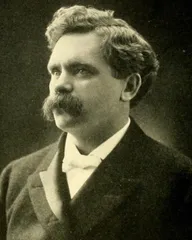
Department of Vocation and Industry BY B. H. ROBERTS II. The keynote in this department of M. I. A. activities will be found in the fact that occupation influences character. One of the old Greeks said: "It can never be, me thinks, that your spirit is generous and noble while you are engaged in petty mean employments ; no more than you can be abject and mean spirited, while your actions are honorable and glorious. Whatever be the pursuits of men, their sentiments must necessarily be similar." If the principle here announced be accepted as true, and I do not know on what ground it could be rejected, then it follows that it is important that the very highest and noblest occupation shall be secured which one's abilities and opportunities justify him in seeking. In a word, every one should be encouraged to undertake that vocation in life which, while it yields the necessary material results for his support and the support of those dependent upon him, will at the same time be up-lifting and ennobling in its effect upon his own character. It may be objected to this that the result of such encouragement would be to stampede our youth in the direction of the arts and learned professions to the neglect of the trades, the varied forms of business pursuits, and agriculture. Such, however, will not be the effect, since those suitable for vocation in the arts and professions are necessarily limited by temperamental and other specific qualifications. And again, it will not have this supposed effect, because it is the intention in this department to give such consideration to vocations and industries as will place true values upon vocations other than those that fall into the category of arts and professions. We shall take the ground that no vocation of honest industry need be ignoble or debasing in its effects, but by properly correlating it with the general welfare of human life can be in effect both honorable and glorious. And this is true of manual employments as well as those in which intellect predom-
1084 IMPROVEMENT ERA inates. We may not within the limited space available for the discussion of these questions be able to make this apparent at once, but as we proceed with the unfolding of this department of M. I. A. work, we feel confident that the truth of it can be established. Just now our chief aim is to get the questions entering into this subject considered by our organization, and to this end invite questions and correspondence upon the subject by the Stake Board Committees and Ward Committees appointed at our current conventions of this fall to take charge of the work in the respective Stakes and Associations of the organization. Also to make such suggestions as may occur to them to be of interest on the subject, and necessary to our progress. All communications for the present can be addressed to the Improvement Era, Department of Vocations and Industries; and our correspondents may be assured that their suggestions and questions will receive respectful and also careful consideration, for in this work every one and every one's ideas are accounted necessary, and especially should an effort be made to interest the parents of families and the teachers in our public common schools, high schools, and church academies in this subject, so that by much thinking and active co-operation we shall be able to establish systematic effort that will result beneficially for the present generation and those following after it in our community. Thoughtless Youth? In general I have no patience with people who talk about "the thoughtlessness of youth" indulgently ; I had infinitely rather hear of thoughtless old age, and the indulgence due to that. When a man has done his work, and nothing can any way be materially altered in his fate, let him forget his toil, and jest with his fate, if he will; but what excuse can you find for wilfulness of thought at the very time when every crisis of fortune hangs on your decisions? A youth thoughtless, when all the happiness of his home forever depends on the chances of the passions of an hour! A youth thoughtless, when the career of all his days depends on the opportunity of a moment! A youth thoughtless, when his every action is a foundation-stone of future conduct, and every imagination a fountain of life or death ! Be thoughtless in any after years, rather than now, — though, indeed, there is only one place where a man may be nobly thoughtless, his deathbed. Nothing should ever be left to be done there. — Ruskin. T