Editor’s Table: Commercialism
Improvement Era, vol. 15, no. 6, April 1912, pp. 555 to 557
Editor's Table Commercialism You have probably heard it said that "commercialism" is rampant in the Church in fact, that the whole trend of Church ;
affairs toward that end. Falsely uttered and industriously is circulated by writers for eastern magazines, the idea has grown so that there are people here and there who actually are suspicious that the Church is guilty of "commercialism" — trade and barter — to such an extent that it has lost its spiritual force and mission. Nothing could be farther from the truth. Any person's common sense will tell him so, if he shall stop a moment to analyze the meaning of the matter for himself. The words commercial and mercantile are interchangeable terms, even as the employments are to some extent intermingled but either or both may mean the purchase, sale and interchange of commodities. Hence, commercialism may be defined as the business of buying and selling goods, generally at a margin or profit. When one engages in the commercial or mercantile business, he adopts the commercial spirit or method, entering fully into trade, traffic, and business intercourse, exchanging, buying, selling, bartering and dealing in goods and products. The Church is engaged in no such actions, does not buy and sell goods for profit, and is therefore not in the commercial business, and hence not commercialized. "But," says one, "how about the co-operative store, the sugar companies, the banks and other like enterprises? Does not the Church own them, and so carry on the commerce incident to these business establishments?" The answer is, "No; it does not." It has always been the policy of the Church to help establish home industries and to aid in setting certain business enterprises on their feet, the purpose being to benefit the people by giving them employment, to start enterprises, and to develop the material resources of the country, that the people and the hnd may prosper. When these purposes have been in a measure accomplished,
— 556 Improvement era through these avenues, the Church has generally withdrawn, holding in most cases only a very little financial interest in the enterprises. Attention has then been turned to new industries and business ventures thought to be beneficial to the community, and these in turn have been helped on their way. Let us see if this is true. There is, for example, Z. C. M. I. Its stock is held largely by the people, and that, too, by people who are not Latter-day Saints. As with other business concerns, its stock is on the open market, and can be purchased by any one who wishes to pay the price. The holdings of the Church itself are comparatively small. The institution is a regularly organized corporation. Through it the Church can not rightfully be said to buy and sell. Then there are the sugar factories. By hard struggle and the investment of means, the Church helped to establish the Lehi Sugar Factory. In the beginning the enterprise would have been a dismal failure without the help of the Church. With it the factory was put upon a paying basis. It clearly demonstrated, manufacture of sugar could be made successful further, that the inUtah and the country round about; thus benefiting the whole community by bringing millions of dollars to farmers and laborers, directly and indirectly. Other industries and inventions, too, followed because of it. Thousands were given profitable employment, and the value of land was enhanced by many fold. But the Church now owns but a comparatively small interest in it; the stock is owned by the people. Through the sugar industry — a great blessing to the community which it thus helped to establish, the Church is neither buying nor selling, and therefore through that source are surely not engaged in "commercialism." What has been said of the store and the factories, applies with equal truth to the banks. They are corporations whose stock is bartered upon the open market. Boards of directors, as with the other enterprises, govern them, and these, while having Church members in their personnel, are in no way under the control of •
the Church, which owns only a small interest in them. Hence the Church does not carry on a banking business, and therefore cannot be said to be commercialized by them. And so with other industries and enterprises which the Church authorities have helped to establish, or are now aiding according to the means at their disposal for such purposes. Assistance to worthy
EDITOR'S TABLE 567
causes has always been rendered, according to the ability and best judgment of the leaders, and been given where it would most benefit the community and their homes, and develop the latent material resources of the land. — This is not commercialism barter — and trade for profit it is common sense help, which it has been the policy from the beginning, and is now, as far as means will permit, to extend directly and indirectly to the members of the Church for their temporal as well as spiritual welfare and advancement. There are those who object to the authorities of the Church being directors in these institutions. They would exclude them from connection with all manner of business, if they could, because they are "Mormons." But, I can see no wrong in having them serve in this capacity when the stockholders have confidence in their ability and integrity as officers. The establishments seem to prosper under their direction and management, and when business and business institutions prosper, it is a sure indication that material advantages accrue to and are shared by the people also and to bring about this condition, in addition to the spiritual ;
uplift of the people, is the dual mission of the Church. Spiritual salvation alone is not all that people need in this life. Spiritual and temporal salvation should go together in this world. And because the Church so aids, as far as it can, in bringing about these temporal blessings to the community, is no reason why it should be said to lose its spiritual force and power. Nor has it lost this potency but it is more influential than ever in all ;
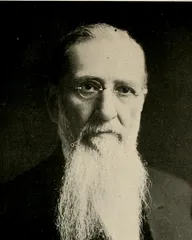
things that tend to spiritual growth and efficiency. This is proved by the existing spiritual condition of the people and their obedience to the commandments of the Lord. Joseph F. Smith.