Some Facts and Fancies of “Mormonism”
Improvement Era, vol. 8, no. 11, September 1905, pp. 849 to 861
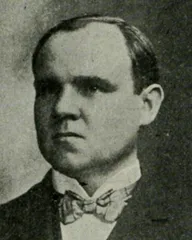
SOME FACTS AND FANCIES OF "MORMONISM." BY DR. JAMES E. TALMAGE.
[This lecture was delivered by invitation, under the auspices of the Venice Assembly, at Venice, California, August 6, 1905. Venice is a recreation resort near Los Angeles. The Venice Assembly is a non- commercial society formed for the purpose of giving intellectual and educational entertainment to those who may visit the place. Its pres- ident is Rev. Benjamin Fay Mills, and Governor George C. Pardee, of California, is one of the six distinguished vice-presidents. The subject was chosen by the Program Committee of the Assembly, and formed one of a series of topics on which lectures were given by representative men from many parts of our own country, and from abroad. It was not
without reluctance that the author gave his assent to its publication,
owing to the fact that the subject-matter is far from new, and the field has been already covered, in part, by former contributions to our pages. (See "The Philosophy of 'Mormonism,' " and "The Story of 'Mormonism,' in Volume IV Nos. 6-12, inclusive). We are convinced, however, that the truth will bear repetition, and the subject is treated from a point of view different from that of the earlier lectures referred to above. Editors.]
What is called "Mormonism" is no mere issue of the dead past, no simple incident of ancient record, already closed, but a topic of the times and an important one; a factor in the problems of the present; a living power in the making of the history of histories —that of the age in which we live. It has to be reckoned
with by the student of sociology and economics, by the statesman as well as by the theologian. Tne history of "Mormonism" is brief indeed as measured in
850 IMPROVEMENT ERA.
years; but every chapter of that history, every paragraph of the chapter, every line of the paragraph, is of import, for the story is that of a living organism, not the tale of a thing made by hands. There is a fundamental, literally a vital, distinction, between the organic and the inorganic in nature. With the advancement of science and discovery, many old lines of demarcation have been erased in matters both of fact and fancy; the Chinese Wall is not the only artificial barrier that has crumbled under the heel of ad- vancing truth; things once regarded as essentially distinct are now seen to be closely related, —perchance the same things in different
stages or aspects. But though each passing year fails not to bring its inevitable list of lines effaced, of walls shattered, of castles demolished, yet the procession of the centuries doth but make more plain the line, more impregnable the wall, that divides the organic from the inorganic, — the living from the dead. An inorganic body, a dead thing, may grow, as does the snow- ball rolling down the white-carpeted slope, as does the crystal cube in the saturated brine. This is growth alone —increase of size by accretion of substance.The living germ not alone grows, it develops, acquiring new powers and discharging life functions
not even suggested by inorganic enlargement. A man is not merely a boy grown big (though figuratively I admit exceptions). The more mature organism acquires strength and functional activity as it develops; while the inorganic at best but grows big. How many of the errors in history, — mistakes of men, mis- takes of nations, —are traceable to failure in discriminating between growth and development? How long is the list of the world's big men today, compared with the roll of the truly great? Three quarters of a century ago the so-called "Mormon" Church was organized. To which of the two great orders does it belong, as its history tells? Has it merely grown from the six
individuals, comprising its total membership at the beginning, to the many hundreds of thousands who now rejoice over their stand- ing therein,— or have those years demonstrated the attributes of life in this new Church— have they shown increasing effectiveness, stronger vitality? Is it alive?
By its enemies it was once regarded as a stone to be crushed; now it is a recognized fact that, to stop its activities, the crime of
SOME FACTS AND FANCIES OF "MORMONISM." 851
murder must be perpetrated,— not the killing of men, but the slaughter of principles,— for lo! it is alive! One of the current fancies, if by fancy you mean unfounded assumption and error, is that the Church of which I speak is rightly called the "Mormon" Church. The term "Mormon" so used was applied in derisioD,— doubtless suggested by the title of a certain book published by the Church in the days of its infancy and weakness, — the Book of Mormon. In this connection there comes to mind the record of one dread scene in the persecutions of olden times, when at Antioch the epithet Christian was hurled with envenomed hatred at those who were known or suspected to be believers in the divinity of the Christ. And I am forcibly impressed by the change wrought through the lapse of years;— in that today, the honor of bearing the name "Christian" is surpassed only by that of being a Christian in fact.
In the first quarter of the nineteenth century, there were, as yet there are, many sects of many names, and these names of varied origin. There are Catholics, Protestants, Presbyterians, Methodists, Congregationalists, and others — named with reference to some characteristic of their creed or organization; there are — Wesleyans, Calvinists, Lutherans, etc. named in honor of their great men — founders of the sects, perchance, or men who sacrificed and suffered, perhaps even to the giving of their lives for the truths embodied in their doctrines. But can you find for me in the history of seventy-five years ago a single sect or church called or known by the name of The Christ? There were cathedrals and church buildings and chapels, with splendid domes, embattled towers, and lofty spires; within were worshiping multitudes assembled under the name of St. Peter and St. Paul, St James and St. John; but where was the edifice or the congregation known by the name of Jesus Christ? In the year 1830 a new standard was raised among the ban- ners of the churches; and this was the inscription it bore — "The Church of Jesus Christ of Latter-day Saints." The assumption of such a name was a cause of wonder, if not of consternation, for, if authoritative, it marked the ushering in of a new dispensation, the restoration of the Holy Priesthood with
852 IMPROVEMENT ERA.
powers and blessings; if assumed without authority, the act all its
was one of deepest blasphemy, and called for universal condem- nation. There was no uncertain tone in the declaration of this church of six men. Theirs was not the church of the ancient scribe Mor- mon; nor that of Peter nor of Paul, nor of Moses nor of Elias; neither has it become the church of Joseph Smith, nor of Brigham Young, nor that of any of their successors; its first claim was,the same claim ever since has been and yet is, that it is the Church of its Master, Jesus Christ. This, then, is the official designation,— not the "Mormon" church, people, creed, or doctrine, —The Church of Jesus Christ
of Latter-day Saints. The name is an epitome of its beliefs, pro- fessions, doctrines and practices. In that name is expressed the philosophy and justification of so-called, "Mormonism." With a name so distinctive, a profession so bold, it was natural to infer that its creed would be new and strange. But hear and read for yourselves the outline or summary of its doctrines, authorita- tively proclaimed:
ARTICLES OF FAITH OF THE CHURCH OF JESUS CHRIST OF LATTER-DAY SAINTS.
- We believe in God, the Eternal Father, and in His Son, Jesus Christ, and
in the Holy Ghost.
- We believe that men will be punished for their own sins, and not for Adam's transgression.
- We believe that, through the atonement of Christ, all mankind may be saved, by obedience to the laws and ordinances of the Gospel. 4. We believe that the first principles and ordinances of the Gospel are:
First, Faith in the Lord Jesus Christ; second, Repentance; third, Baptism by im- mersion for the remission of sins fourth, Laying on of Hands for the Gift of the ;
Holy Ghost. 5. We believe that a man must be called of God, by prophecy, and by
the laying on of hands, by those who are in authority, to preach the gospe and administer in the ordinances thereof. 6. We believe in the same organization that existed in the primitive Church, namely, apostles, prophets, pastors, teachers, evangelists, etc. 7. We believe in the gift of tongues, prophecy, revelation, visions, heal-
ing, interpretation of tongues, etc. 8. We believe the Bible to be the word of God, as far as it is translated correctly; we also believe the Book of Mormon to be the word of God. 9. We believe all that God has revealed, all that he does now reveal, and
we believe that he will yet reveal many great and important things pertaining to the kingdom of God. 10. We believe in the literal gathering of Israel, and in the restoration of
SOME FACTS AND FANCIES OF "MORMONISM." 853
the Ten Tribes; that Zion will be built upon this [the American] continent; that Christ will reign personally upon the earth, and that the earth will be renewed and receive its paradisaical glory. 11. We claim the privilege of worshiping Almighty God according to the dictates of our conscience, and allow all men the same privilege, let them wor- ship how, where, or what they may. 12. We believe in being subject to kings, presidents, rulers, and magis. trates, in obeying, honoring and sustaining the law. 13. We believe in being honest, true, chaste, benevolent, virtuous, and in doing good to all men; indeed we may say that we follow the admonition of Paul: We believe all things, we hope all things, we have endured many things, and hope to be able to endure all things. If there is anything virtuous, lovely, or of good report or praiseworthy, we seek after these things. Joseph Smith.
Do not the sects of Christendom in general accept most of the principles herein set forth? In respect to these matters of common belief, the Latter-day Saints are mainly distinguished by their more literal acceptation and application of the principles — the acceptance of holy scripture embodied, in all sanctified its
without private or simplicity, special interpretation. Another fact with phantom fancy — its may present the or, if I
fancy — first that the bold claims made by the Church ren- is this:
der the people intolerant to those not of their faith; that they affirm heaven to be for them alone, and hell for all the rest. The fact is,toleration and recognition of absolute freedom of conscience in religious belief and practice are prominent features of their faith. They picture no single contrast making one heaven and one hell in the commonly accepted usage of these terms; but they believe that in the hereafter every soul shall find its place, —be it
a place of honor or one of shame, — in the graded conditions of
eternity; that each shall have a home for which he is fit in the
house of order, — the mansions of God. in
The man who ha3 striven to live by the law of right, as far as known to him, he who has walked by the best light obtainable, be he Jew or Gentile, heathen or civilized, shall be a partaker in the salvation of progress, with added and endless facilities for ad- vancement, thus leading from salvation to exaltation as the eter- nities roll by. The Latter-day Saints claim a natural relation of cause and effect between the present or mortal probation of man, and his condition in the world to come, and by logical analogy they regard
854 IMPROVEMENT ERA.
this life as a sequence of a pre-existent state,— an intelligent and individual existence of the spirit before it took tabernacle in the flesh. They reject as a heresy the dogma of predestination, whereby man is supposed to be fore-doomed to a state of happiness or misery, irrespective of merit. They hold individual free agency as a
divine birthright of which even the Eternal One will not deprive his children. Yet, they draw a distinction between negative good- ness—mere abstinence from sin, and the positive achievements resulting from valiant effort in the cause of righteousness. This Church professes and gives the fullest measure of toler- ation to others than its own, and demands free agency and religi- ous liberty for all men as inalienable rights rather than as privi- leges granted by human authority; and yet it boldly declares itself to be The Church, and the only church possessing the eternal Priesthood — the power to speak in the name and by the authority of God. The Church distinguishes between toleration and accept- ance, and holds as sacred man's individual freedom and its inevit- able personal responsibility. The buzz of a flitting fancy has sometimes reached my ears to the effect that the Latter-day Saints are intolerant among them- selves, that the masses of the people must speak only as they are allowed to speak, must think as they are told to think. The sol- emn fact is, there could not exist, in any organization, a greater measure of individual liberty than is provided for by the tenets, and enforced by the practices, of this people. They are not creed- bound, nor priest-bound; they are only Christ-bound. Their bond- age is the pleasing service of the Lord their God. The plan of church organization provides, and that on the basis of accepted revelation from the heavens, that the highest judicial and executive authority in The Church is The Church itself superior to that of any one or of any body of its officials. No book, theological, didactic, or otherwise, is binding upon the people, as a law of faith or practice, until, in solemn conference assembled, they —the people, The Church—have so adopted and proclaimed the same. Of books so designated, there are but four, and of these the Holy Bible is first, the Book of Mormon next, and two others embodying modern revelations and translations of ancient records. These are openly published, and on public sale, and are distrib-
SOME FACTS AND FANCIES OF "MORMONISM." 855
uted with a vigor that speaks well for an earnest desire to spread abroad the truth concerning an unpopular creed, not less than for the enterprising activity of the "Mormon" printing establish- ments. Yet another of the fancies afloat is that of a "Mormon" Bible. This imaginary volume is known to me only by occasional mention in newspaper columns devoted to sensationalism, or in the expressions of the uninformed. I have never been able to secure a copy. The "Mormon" Bible is the Holy Bible itself — the version accepted and used by the Christian sects of the day. The Book of Mormon in no sense substitutes or supercedes the Jewish canon of sacred writ, but rests on its own claim as a separate and distinct volume of scripture. As to the book itself, it professes to be a record of the ancient inhabitants of this western continent, even as the Bible treats of the east. The ab- original peoples of the west are represented as descendants of small bands of colonists who came from Jerusalem, crossed the deep waters, and landed on these shores. The principal migration occurred about 600 B. C, and the record covers a period of about one thousand years from that time. Book of Mormon history closes with the destruction of the Nephite nation through an ex- terminating war. Were the account continued to date, it would comprise the history of one division of the early colonists — the Lamanites — who, having fallen from civilization to barbarism, are represented by the American Indians of today. The Book of Mormon is published as the inspired translation of ancient records engraved on plates of gold, found under divine direction by the translator, where they had been deposited by the last of the ancient writers. This declaration as to source of the subject-matter and origin of the modern version, has been re- jected without investigation, denied but not disproved; while theo- ries and fanciful stories have appeared from time to time in re- sponse to public demand. Of these, but one or two have been of sufficient strength to withstand even the simplest examination. The "Spaulding Story" represented the Book of Mormon as the altered and garbled version of a romance written by one Solomon Spaulding; it is still heard of occasionally, though its absurdity was demonstrated more than two decades ago. The original man-
856 IMPROVEMENT ERA.
uscript of Spaulding's romance is open to examination in the li-
brary of Oberlin College, Ohio, with certified proof as to its genu- ineness. Critical comparison of this manuscript with the Book of Mormon shows entire absence of resemblance between the two; and this is attested by signed statements from President James H. Fairchild and others. Moreover, the Spaulding romance has been published in full with such fidelity in following copy as to be painful reading to the user of good English. The world still repudiates the simple statement of the translator as to the origin of the Book of Mormon; yet no acceptable, or passably con- sistent, explanation has been offered in its place. As to the Spaulding story and all others yet propounded by those who deny the true account, we may apply the language of President Fairchild of Oberlin, — "Some other explanation of the Book of Mormon must be found, if any explanation is required." Were I asked to specify any one distinguishing feature of "Mormon" doctrine, constituting a marked, if not the most con- spicuous, difference between this and the creeds of other Christian sects, I would name the belief in a literal continuation of divine revelation. In view of its claim to the possession of the Holy Priesthood, The Church of necessity affirms the doctrine of mod- ern revelation. Christians and Christian sects in general admit direct and personal communication between the Almighty and his chosen ser- vants in days gone by, and in the addition of the gospel to the law through the life and ministry of Jesus Christ as a Man among men, and as the Risen Lord; they accept the doctrine promulgated by his ordained apostles— indeed, the creeds of Christendom are founded on such beliefs and professions. The Church of Jesus Christ of Latter-day Saints proclaims these same beliefs, these same professions. It accepts as true prophets those who spake
with God in the distant past, and who communicated the divine word and will to the people— Abraham and Moses, Samuel, Isaiah, Jeremiah, Ezekiel and the rest. It teaches as true the biblical account of the ministry of Christ, and of the apostles, in the me- ridian of time. The Church accepts with reverence and applies with profit the sacred writ of vanished centuries; but it holds that these ancient tomes are of themselves insufficient for all time.
SOME FACTS AND FANCIES OF "MORMONISM." 857
In short, the religious system called "Mormonism" proclaims itself as an up-to-date religion, adapted to continued progress by its inherent powers of never-ending development. New truths, or a more extended application of truths called old,(the one adjective really as unnecessary as the other) are announced as discovered, given out as received. It is a system that keeps pace with the transition from prairie schooner to vestibuled limited; from the pony-rider to the electric 'nerve that thrills with the message it transmits; from the canoe to the palatial ocean liner. If my name is to be enrolled in any association, society, club, coterie, or church, let that organization be one that is abreast of the times, and able to keep up with the eternal march; — one that gives due meed of praise to the achievements of stage-coach days, but decries not the parlor car drawn by the steed of fire; — one that prizes the old candlestick, with its half-burned tallow dip, while examining it and musing over it in the effulgence of the electric glow; let it be one that counts among the prophets of progress, Volta and Galvani, working with their strips of metal and their acid-soaked rags, yet fails not to honor as true successors in the priestly office of advancement, Morse, Edison, and Marconi. The club to which I seek admission must be one that rightly ranks in upper clubdom — with its daily news and its modern equip- ment. The church to which I give my support must be in direct communication with headquarters; and, as I join my fellows in
their assemblies of worship, the involuntary question as the preacher takes his place shall be, — what's the news today? Is it heresy, or is it consistency and in line with sound reason to affirm that the God who spake of old speaks today? Doth con- sistency or its opposite appear in the declaration that of a surety Jehovah did of old personally instruct and lead his people, yet to- day deigns them not a word? Has he told them all he would have them know or has he told all he can tell? Is it unwillingness or
inability that seals the lips of the Eternal One? Has his ear grown heavy, that it no longer hears, or is his arm shortened and his people beyond reach? Do you teach in college and university that all discoverable truth in science and in the arts is already of human record? The man of science lives in hope and expectation of revelations, new and yet newer, great and yet greater, day by
858 IMPROVEMENT ERA.
day. The chemist still toils in his laboratory, the geologist, in the field, the astronomer, in the observatory— eagerly awaiting, earn- estly seeking, additional truth. Is theology, or as applied, religion, the only field of human effort of search and research in which revelation of new truth may not be confidently expected? The Church of Jesus Christ of Latter-day Saints affirms the doctrine of eternal advancement, the principle of true evolution.
It declares that man the child of the living God, has inherited from
his divine Parent the capacity of unlimited development; that man, advancing through eternities, may even attain the rank of Godship. It teaches man to believe in and love his brother, who, like himself, is a child of God, and t? implicitly trust and obey their common Father, whose heirs they may become through com- pliance with the divine laws and requirements. Concerning the authority claimed by the Church —to preach the gospel of Christ and administer in the sacred ordinances there- of, the current fallacy — another of the popular fancies — that is
one Joseph Smith arrogated unto himself this honor, and pretended to delegate to others a power originating in human audacity and shrewdness; and that he proclaimed them, jointly with himself, as men divinely endowed. The declaration of the Church is as follows: Joseph Smith, a native of Sharon, Vermont, while yet a lad, became sorely perplexed concerning the confusion and antagonism manifested among the sects of his neighborhood. He was partic- ularly impressed by the adjuration contained in the epistle of James: "If any of you lack wisdom let him ask of God, that giveth to all men liberally, and abraideth not; and it shall be given him." He solemnly affirms that,having acted upon this counsel which seemed to be specially applicable to his own condition, he was visited by heavenly personages, one of whom,pointing to the other, said, " This is my beloved Son, hear him." Later, other immortal beings appeared to him, and of these one directed him to the rest- ing place of the engraved plates from which the Book of Mormon was afterward translated. Joseph Smith and his companion, Oliver Cowdery, solemnly declare that a personage who announced himself as the Baptist of old,now in a resurrected state,conferred on them the Lesser or Aaronic Priesthood, which comprises, amongst other
SOME FACTS AND FANCIES OF "MORMONISM." 859-
specific functions, the authority to administer the ordinance of bap- tism; and that, at a still later date, Peter, James, and John, who had been the earthly representatives of Christ as leaders of the Primi- tive Church, after the departure of the resurrected Redeemer, bes- towed upon them the Higher or Melchizedek order of Priesthood. Thus empowered, Joseph Smith proceeded to organize the Church in this last dispensation, and the Church of Jesus Christ of Latter- day Saints as it exists today is the result. "Mormonism" affirms that an actual restoration of the priest- hood, through a power higher than any of earth, was absolutely in- dispensable to the establishment of a Church professing to be of Christ, inasmuch as the priesthood was in fact taken from the earth with the apostles of old; and that the great apostasy was plainly foretold by ancient prophets,by Christ and by his apostles; and furthermore, that a consistent and rational interpretation of history proves the literal fulfilment of the dire prediction. Persecution assailed the youthful prophet, Joseph Smith, from the time of his first announcement of heavenly visitants, to the day of his martyrdom; misrepresentation, resulting in tribula- tion and suffering, has been the heritage of the Church from its inception. But so in truth was it with the Church of old, even when Christ abode in earthly body therewith. The first well established seat of the Church was in Kirtland, Ohio. There the people, in the strength of their faith, though few in numbers and weak through poverty, erected the first temple of modern times. The edifice yet stands, prominent even today for its stability and architectural beauty. The people who built it no longer possess it. They were driven fronr their homes by mobocratic force, and the Church began its westward march. Already a gathering focus had been established in Missouri, and thither now flowed the stream of enforced emigration from Ohio. The people bought lands and erected homes, but of these they were later dispossessed under the infamous order of extermination — expatriation or death issued by the governor of that State Lilburn W. Boggs. Compelled thus again to abandon their own, the people fled to Illinois.
A halt was made at the little town of Commerce, and there; under the potent magic of industry — trustful faith and hard labor
860 IMPROVEMENT ERA.
a city took the place of the hamlet, in situation, plan and con- struction, attractive to all who saw it, and called Nauvoo, the City Beautiful. Here was erected another temple, greater than the first; yet hardly was it completed ere it fell a prey to vandal flames. When, in 1844, Joseph Smith and his brother ' Hyrum were massacred at Carthage, Illinois, while under the pledged protection of the State's chief magistrate, the enemies of the people counted their work well done, and the dissolutionChurch was of the awaited as a natural and an inevitable sequence. Such would probably have been the result had the Church been that of Joseph Smith; but the Church of Jesus Christ still lived. After many vicissitudes and sufferings, the people, under the leadership of Brigham Young, resumed their pilgrimage to the west, — onward, past the frontiers of the country they called their own, beyond the domain of the flag they loved, onward into Mexican territory, finally halting in the valley of the Great Salt Lake, the first white men to brave the dangers of the Great American Desert, in an attempt to conquer the wilderness and make of it a home. They went to work with no uncertainty of purpose, no thought of temporary occupancy; they had found the place they had sought, and there they would abide. The story of their struggles with their cruel environments, of their sacrifices and heroism, of the birth of the system of irri-
gation, on the very day of their first encampment in the valley; of the scanty harvests, the enforced frugality, of the partial destruc- tion of their crops by hordes of crickets, and of the extermination of the pests by the providential arrival of the sea gulls all this has been told in part — in fragments of story and song. You have read how, on the 24th of July, 1857, the holiday marking the close of the first decade since the arrival of the pio- neer colonists, the people learned of the approach of the army des- patched to the west by President Buchanan — sent to suppress an alleged rebellion which indeed had never been conceived. . You know how this army was held in check for months— until assur- ances against plunder and other hostile action had been given; how the army found the people in poverty and left them in compara-
SOME FACTS AND FANCIES OF "MORMONISM." 861
tive wealth, when summoned in haste to the east there to take part in the fratricidal strife between the North and the South. The story of the battle with the desert, the victory over the wilderness, the rise of a mighty commonwealth in the once forbid- ing West, I must leave for one more able than I to tell. The hamlets, towns, and cities of Utah and adjoining states speak of the stability of the community, the vitality of the com- monwealth. Four great temples now stand in the one-time wil- derness, and within their sacred precincts the ordinances of the gospel of Christ are performed both for the living and for the dead. The Church still lives! — its food the words that proceed from the mouth of God; its mission, that of brotherhood and love; its destiny, the development of theKingdom of God, which shall be- come one with the Kingdom of Heaven. Therein, love shall be the law —and everyone shall serve the Lord his God, and shall love his neighbor as himself. Venice, California.