Originality of the Book of Mormon
Improvement Era, vol. 8, no. 11, September 1905, pp. 801 to 815
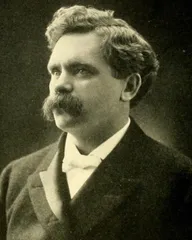
ORIGINALITY OF THE BOOK OF MORMON.
BY ELDER B. H. ROBERTS.
[It has been said often by critics that there is nothing original in
the Book of Mormon. Since the gospel is the same in principle forever, it matters little whether there is anything original in the Book of Mor- mon or not, so far as its value to mankind is concerned; but the state- ment is not true that there are no new and important truths in its pages, for "in the matter of Christian truths which it sets forth, and those it emphasizes, the Book of Mormon is original." This subject: "The Originality of the Book of Mormon an Evi- dence in Support of its Claims," is fully treated in the Manual for 1905- 6, in two pointed chapters, and in several subdivisions,of such general interest and importance that the special attention of teachers and members of the Y. M. M. I. A. is called thereto. Particular attention is called to subdivision seven "The Fall of Adam — The Purpose of Man's Existence," which will be published in the Era for October. We present herewith, subdivisions 8, 9, and 10 on another, yet similar, subject, showing that the Book of Mormon, besides being origi- nal, contains also ideas which may be regarded as far beyond the
802 IMPROVEMENT ERA.
thoughts or philosophy of Joseph the Prophet, and his associates ; and, indeed, beyond the ancient or modern philosophy of men. On these and other subjects, Elder B. H. Roberts has succeeded in pointing out a new and fascinating way for the study of the sacred record, which must prove intensely attractive to the student, and make class work in our associations irresistibly engaging. Editors.]
THE BOOK OF MORMON DEFINITION OF TRUTH.
For some time I was not quite sure whether the matters un- der this and the two following subdivisions should be classed as instances of originality in the Book of Mormon, or regarded only as ideas beyond the thoughts or philosophy of Joseph Smith or any of his associates who assisted in bringing into existence the Book of Mormon.- Finally, I decided upon the latter form of presentation, though still strongly of the opinion that they could be classed, in several respects, as original ideas. When Jesus stood bound before Pilate's judgment seat and he was born to bear witness of the truth, Pilate testified that
whether mockery or in earnest curiosity we may not know in asked the question: "What is truth?" Most commentators say that, without waiting for an answer, the Roman procurator de- parted from the judgment hall to speak to the Jews clamoring on the outside; and all regret the opportunity that was there lost of receiving a divine answer to the question. One set of commenta- tors referring to Pilate's question say to him: "Thou stirrest the question of questions, which the thoughtful of every age have asked, but never man yet answered."* A secular writer presents the same incident as follows: " What is truth?"' was the passionate demand of a Romam procu- rator, on one of the most momentous occasions in history. And the divine person who stood before him, to whom the interrogation was addressed, made no reply — unless, indeed, silence contained the reply. — Often and vainly had that demand been made before often and
*See Jamieson, Fausset and Brown's Commentary Critical and Explanatory of the Old and New Testament. The remark quoted in the text is upon John 18: 37, 38.
ORIGINALITY OF THE BOOK OF MORMON. 803
vainly has it been made since. No one has yet given a satisfactory answer.*
Then by way of historical illustration of this asseveration, he remarks the following:
When, at the dawn of science in Greece, the ancient religion was disappearing, like a mist at sunrise, the pious and thoughtful men of that country were thrown into a condition of intellectual despair. An- axagoras plaintively exclaims, "Nothing can be known, nothing can be learned, nothing can be certain, sense is limited, intellect is weak, life Xenophanes tells us that it is impossible for us to be is short."
certain even when we utter the truth. Parmenides declares that the very constitution of man prevents him from ascertaining absolute truth. Empedocles affirms that all philosophical and religious systems must be unreliable, because we have no criterion by which to test them. Democritus asserts that even things that are true cannot impart certainty to us; that the final result of human inquiry is the dis- covery that man is incapable of absolute knowledge; that, even if the truth be in his possession, he cannot be certain of it. Pyrrho bids us reflect on the necessity of suspending our judgment of things, since we have no criterion of truth; so deep a distrust did he impart to his followers that they were in the habit of saying, "We assert nothing: not even that we assert nothing." Epicurus taught his disciples that truth can never be determined by reason. Arcesilaus denying both intellectual and sensuous knowledge, publicly avowed that he knew nothing, not even his own ignorance? The general conclusion to which Greek philosophy came was this — that, in view of the con- tradiction of the evidence of the senses, we cannot distinguish the true from the false; and such is the imperfection of reason, that we cannot affirm the correctness of any philosophical deduction.!
I make these quotations to show that no satisfactory defini- tion of what truth is, either in ancient or modern times, either in religion or philosophy, has been found, and also to call attention to the fact that, if in the Book of Mormon there is a definition of truth that appeals with irresistible force to the understanding of
- Conflict Between Religion and Science, John William Draper, M. D., L. L. D., pp. 201, 202. t Conflict Between Religion and Science, Draper, p. 202.
804 IMPROVEMENT ERA.
men, it must be a strongly original utterance, and a revelation of the utmost importance. A thing of peculiar interest, in this defi- nition which I shall presently quote, is, that it is not presented in any formal manner, but is casually introduced in an admonition made by one of the Nephite prophets addressed to his people, and stands as follows:
My brethren, he that prophesieth, • let him prophesy to the un- derstanding of men; for the Spirit speaketh the truth, and lieth not. Wherefore, it speaketh of things as they really are, and of things as they really will be; wherefore, these things are manifested unto us plainly, for the salvation of our souls. *
From this it is evident that truth is the existence of things as they are, past or present, or as they will be. Or, more briefly
Iruth is that which is. This formula is not found expressly in the Book of Mormon. It is a deduction; but it is a necessary deduction, an inevitable one from the premises. Of course, I am prepared to hear that it is ot satinsfactory; that it is too indefinite. It will be said that it
represents "the sum of existence"f as the truth, and that this is
beyond the comprehension of the finite mind to grasp. I shall
concede the claim; but because man cannot comprehend the sum of existence, or the fulness of truth, it does not follow that the definition is at fault, or that it can be displaced by one meaning more or less. Reflection upon the one here deduced from the Book of Mormon passage will develop the fact that it is a self-evi- dent, self-explained, statement, whether finite minds can encom- pass what it presents or not. It is of the nature of such state-
ments as, "duration is eternal," without beginning, without end;
- Jacob iv: 13.
|The expression is substantially that of the late Elder John Jaques, late assistant historian of the Church, in his never-to-be-forgotten hymn: TRUTH. Though the heavens depart and the earth's fountains burst, Truth, the sum of existence, will weather the worst, Eternal, unchanged, evermore.
ORIGINALITY OF THE BOOK OF MORMON. 805
"space is boundless," it has no point at which it may be said to begin or end. It is vain to say the finite mind cannot grasp the facts presented by these statements. That is true; but the mind cannot conceive the opposite; that is to say, that space has limits; or that duration has a beginning and an ending;* and hence, the mind accepts these facts as necessary truths. In like manner this Book of Mormon definition of truth will be accepted, because the mind cannot conceive of anything being added to it; nor any- thing being omitted from it. When you have the "sum of exist- ence," you have all that is; if it were possible for anything to be omitted from the sum of existence, by so much would the truth be reduced. "Truth is that which is" — "Truth is the sum of ex- istence," is the statement of a necessary truth. It must be self-
evident that a finite mind cannot encompass the "sum of exist- ence," or truth, for that would be to comprehend the infinite.
"Truth as it appears to us," says S. Baring-Gould, "can only be relative, because we ourselves, being relative creatures, have only a relative perception and judgment. We appreciate that which is true to ourselves, not that which is universally true."f By which really is meant that so much of the sum of existence as the finite mind can encompass, is grasping so much of the truth. To each individual, knowledge of that which is, or knowledge of things as they are, and as they were, and as they are to be, will be to him the truth, and the fulness thereof, though not necessarily all the truth there is. Absolute truth, by which I mean the sum of ex- istence, is not dependent on human knowledge; much of it, the greater part of it, in fact, may exist independent of that knowl- edge. To illustrate: America existed, though all Europe was without knowledge of it for ages, until, in fact, it was discovered by Columbus. The power of steam always existed, but men did not know it, or, at least.did not know how to control it until mod- ern times. So the force we call electricity, it always existed, but not until recent years did man know it; and so as to many other
*For a fuller consideration of the subject see New Witnesses, vol. I, chapter xxix.
f Religious Beliefs, vol. 2, p. 41.
806 IMPROVEMENT ERA
forces and truths in God's universe, that are now existing, and have always existed, but man as yet has no knowledge of them. The storehouse of truth is not yet exhausted by man's discoveries. There are more truths in heaven and earth than are yet dreamed
of in philosophies. Still, in the last analysis of things, and in the
broader view of the subject, one mav sav that there is no truth where intelligences do not also exist to cognize it; and hence it may be said that "truth is knowledge of things as they are, and as they were, and as they are to be."* — Note the words "Things
* * * as they are to be;" or, as the Book of Mormon
phrases it — "Things * * * * as they really will be." This presents a view of truth seldom, if ever, met with. It gives to it the idea of movement. Truth is not a stagnant pool, but a living fountain; not a dead sea without tides or currents; on the con- trary, it is an ocean, immeasurably great, vast, co-extensive with the universe — bright-heaving, boundless, endless and sublime! moving in majestic currents, unlifted by tides in ceaseless ebb and flow; variant but orderly; taking on new forms from ever-changing combinations; new adjustments, new relations— muliplying itself in ten thousand times ten thousand ways; ever reflecting the in-
telligence of the infinite; and declaring, alike in its whispers and in its thunders, the hived wisdom of the ages — of God! THE DOCTRINE OF OPPOSITE EXISTENCES.
Of this same class of ideas is what I shall call the Book of Mormon doctrine of "opposite existences," what the scholastics would call "antinomies." Be not disheartened at this statement of the subject; the Book of Mormon presentation of it will be much simpler; that simplicity, in fact, is part of its originality, an evi- dence of its being inspired. The statement of the docr-rine in question occurs in a discourse of Lehi's on the subject of the atonement. The aged prophet represents happiness or misery as growing out of the acceptance or rejection of the atone- ment of the Christ, and adds that the misery consequent upon its rejection is in opposition to the happiness which is affixed to its
Doctrine and Covenants, Sec. 93: 24.
ORIGINALITY OF THE BOOK OF MORMON. 807
acceptance. "For it must needs be," he continues, "that there were] not so * * * * is an opposition in all things. If [it
righteousness could not be brought to pass; nor wickedness; neither holiness nor misery; neither good nor bad. Wherefore [that is, if this fact of opposites did not exist] all things must needs be a compound in one; wherefore if it [the sum of things] should be one body, it must needs remain as dead, having no life, neither death, nor corruption, nor incorruption, happiness nor misery, neither sense nor insensibility. Wherefore, it must needs have been created for a thing of naught; wherefore there would have been no purpose in the end of its creation Wherefore, this thing [i.e. the absence of opposite existences which Lehi is sup- posing] must needs destroy the wisdom of God, and his eternal pur- poses; and also the power, and the mercy, and the justice of God."*
- It is a pleasure to note that this process of reasoning, remarkable as it is, and startling as it is in its conclusions, is in harmony with mod- ern thought. Mr. Lester F. Ward, whose works I have already quoted in this chapter, by a closely analogous course of reasoning, reaches the same conclusion. This is the passage: "The pleasure of doing good is among the most delicious of which the human faculties are capable, and becomes the permanent stimulus to thousands of worthy lives. It is usually looked upon as the highest
of all motives, and by some,as the ultimate goal toward which all action should aspire. It should first be observed, that the very act of doing good presupposes evil, i. e. pain. Doing good is necessarily either in- creasing pleasure or diminishing pain. Now, if all devoted themselves to doing good, it is maintained that the suffering of the world would be chiefly abolished. Admitting that there are some evils that no human efforts could remove, and supposing that by united altruism all remov able evils were done away, there would be nothing )eft for altruists to do. By their own acts they would have deprived themselves of a call- ing. They must be miserable, since the only enjoyment they deemed worthy of experiencing would be no longer possible, and this suffering from ennui would be among those which lie beyond human power to alle- viate. An altruistic act would alone consist in inflicting pain on one's self for the sole purpose of affording others an opportunity to derive pleasure from the act of relieving it. I do not put the matter in this light for the purpose of discouraging altruism, but simply to show how short-sighted most ethical reasoning is."
808 IMPRO VEMENT ERA .
The inspired man even goes beyond this, and makes existences themselves depend upon this law of opposites:
And if ye shall say there is no law, ye shall also say there is no sin. And if ye shall say there is no sin, ye shall also say there is no righteousness. And if there be no righteousness, there be no happiness. And if there be no righteousness nor happiness, there be no punishment nor misery. And if these things are not, there is no God. And if there is no God, we are not, neither the earth; for there could have been no
creation of things, neither to act nor to be acted upon, wherefore, all things must have vanished away.*
This may be regarded as a very bold setting forth of the doctrine of antinomies; and yet, I think the logic of it, and the in- evitableness of the conclusion, unassailable. ''The world presents us with a picture of unity and distinction," says S. Baring-Gould, in his excellent work, Origin and Development of Religious Beliefs, —"unity without uniformity, and distinction without antagonism.
* * * Everywhere, around us and within us, we see that rad-
ical antinomy. The whole astronomic order resolves itself into at- traction and repulsion — a centripetal and a centrifugal force; the chemical order into the antinomy of positive and negative elec- tricity, decomposing substances and recomposing them. The whole visible universe presents the antinomy of light and darkness, movement and repose, force and matter, heat and cold, the one and the multiple. The order of life is resumed in the antinomy of the individual and the species, the particular and the general; the order of our sentiments, in that of happiness and sorrow, pleasure and pain; that of our conceptions, in the antinomy of the ideal
and the real; that of our will, in the conditions of activity and passivity."! The existence of evil in the world has ever been a vexed prob- lem for both theologians and philosophers, and has led to the wildest speculations imaginable. It will be sufficient here, how- ever, if I note the recognition by high authority of the difficulties involved in the problem. Of those who have felt and expressed
- II Nephi, 2.
t Origin and Development of Religious Belief, Vc . II, pp. 22, 23. 1
ORIGINALITY OF THE BOOK OF MORMON. 809
these difficulties, I know of no one who has done so in better terms than Henry L. Mansel, in his celebrated course of Bampton Lec- tures on The Limits of Religious Thought (1358), in the course of which he says:
The real riddle of existence— the problem which confounds all philosophy, aye, and all religion, too, so far as religion is a thing of man's reason, is the fact thai evil exists at all; not that it exists for a longer or a shorter duration. Is not God infinitely wise and holy and powerful now? and does not sin exist along with that infinite holiness
and wisdom and power? Is God to become more holy, more wise, more powerful hereafter; and must evil be annihilated to make room for his perfections to expand? Does the infinity of his eternal nature ebb and flow with every increase or diminution in the sum of human guilt and misery? Against this immovable barrier of the existence of evil, the waves of philosophy have dashed themselves unceasingly since the birth- day of human thought, and have retired broken and powerless, without displacing the minutest fragment of the stubborn rock, without soften- ing one feature of its dark and rugged surface.*
This truly great writer then proceeds, by plain implication, to make it clear that religion no more than philosophy has solved the problem of the existence of evil:
But this mystery [i.e. the existence of evil], vast and inscrutable as it is, is but one aspect of a more general problem; it is but the moral form of the ever-recurring secret of the Infinite. How the Infinite and Finite, in any form of antagonism or other relation, can exist to- gether, how infinite power can co-exist with finite activity; how infinite wisdom can co-exist with finite contingency; how infinite goodness can co-exist with finite evil; how the Infinite can exist in any manner without exhausting the universe of reality, — this is the riddle which Infinite Wisdom alone can solve, the problem whose very conception belongs only to that Universal Knowledge which fills and embraces the Universe of Being.f
In the presence of these reflections, it cannot be doubted, then, that the existence of moral evil is one of the world's serious difficulties; and any solution which the Book of Mormon may give
- Limits of Religious Thought, Mansel, p. 197. t Ibid, pp. 197-8.
810 IMPROVEMENT ERA.
of it, that is really helpful, will be a valuable contribution to the
world's enlightenment, a real revelation — a ray of light from the "inner fact of things." Let us consider if it does this. In view of the utterances of the Book of Mormon, already quoted, I am justified in saying that evil as well as good is among the eternal things. Its existence did not begin with its appearance on our earth. Evil existed even in heaven; for Lucifer, and many other spirits, sinned there; rebelled against heaven's matchless King, waged war, and were thrust out into the earth for their transgression.* Evil is not a created quality .f It has always existed as the background of good. It is as eternal as goodness; it is as eternal as law; it is as eternal as the agency of intelligence. Sin, which is
evil active, is transgression of law; J and so long as the agency of intelligence and law have existed, the possibility of the transgres- sion of law has existed; and, as the agency of intelligence and law have eternally existed, so, too, evil has existed eternally, either potentially or actively, and will always so exist.
- See Rev. 12: 7; Jude 6.
f Lest some text-proofer should retort upon me and cite the words of Isaiah — "I make peace and create evil" — the only text of scripture ascribing the creation of "eviFto God — I will anticipate so far as to say
that it is quite generally agreed that no reference is made in the words of Isaiah to "moral evil," but to such evils as may come as judgments upon people for their correction, such as famine, or tempest, or war; such an "evil" as would stand as the natural antithesis to "peaee," which word precedes, "I create evil," — in the text — "I make peace and create" —the opposite to peace— "the evil of afflictions and punishments, but not the evil of sin." (Catholic Comment on Isaiah 45: 7). Meantime, we have the clearest scriptural evidence that moral evil is not a pro- duct of God's: "Let no man say when he is tempted, I am tempted of God; for God cannot be tempted with evil, neither tempteth he any
man." That is to say, God has nothing to do with the creation of moral evil; "But every man is tempted when he is drawn away of his own lust, and enticed. Then when lust hath conceived, it bringeth forth sin; and sin, when it is finished, bringeth forth death." (James 1: 13-15). % I John 3: 4.
ORIGINALITY OF THE BOOK OF MORMON. 811
Evil may not be referred to God for its origin. He is not its creator. It is one of those independent existences that is un- create, and stands in the category of qualities of eternal things. While not prepared to accept the doctrine of some philosophers that "good and evil are two sides of one thing,"* I am prepared to believe that evil is a necessary antithesis to good, and essential to the realization of the harmony of the universe. "The good cannot exist without the antithesis of the evil — the foil on which it pro- duces itself and becomes known."f As remarked by Orlando J. * * * * Smith, "Evil exists in the balance of natural forces. It is also the background of good, and the trial of good, without which good could not be. As the virtue of courage could not ex- ist without the evil of danger, and as the virtue of sympathy could not exist without the evil of suffering, so no other virtue
could exist without its corresponding evil. In a world without evil — if such a world be really conceivable, all men would have perfect health, perfect intelligence, perfect morals. No one could gain or impart information, each one's cup of knowledge being full. The temperature would stand forever at seventy de- grees, both heat and cold being an evil. There could be no prog- ress, since progress is the overcoming of evil. A world without evilwould be as toil without exertion, as light without darkness, as a battle with no antagonist. It would be a world without
meaning."! Or, as Lehi puts it in still stronger terms after — describing what conditions would be without the existence of op- posites — "Wherefore, all things must needs be a compound in one; wherefore if it [i. e. the sum of things] should be one body, [i. e.
of one character— so-called good without evil] it must needs re- main as dead, having no life, neither death, nor corruption nor incorruption, happiness nor misery, neither sense nor insensibility. Wherefore it [the sum of things] must needs have been created for a thing of naught; wherefore, there would have been no purpose in the end of its creation. Wherefore, this thing [the absence of
- Eternalism, Orlando J. Smith, pp. 205-6.
t Scotus Erigena, quoted by Neander, Hist. Christian Religion anaT Church, Vol. Ill, p. 465. J Eternalism, pp. 30, 31.
812 IMPROVEMENT ERA.
opposites] must needs destroy the wisdom of God, and his eternal purposes; and also, the power, and the mercy, and the justice of God."* As there can be no good without the antinomy of evil, so there can be no evil without its antinomy, or antithesis — good. The existence of one implies the existence of the other; and, con- versely, the non-existence of the latter would imply the non- exist- ence of the former. It is from this basis that Lehi reached the conclusion that either his doctrine of antinomies, or the existence of opposites, is true, or else there are no existences. That is to say — to use his own words — "If ye shall say there is no law, ye shall also say there is no sin. If ye shall say there is no sin, ye shall also say there is no righteousness. And if there be no righteousness, there be no happiness. And if there be no righteous- ness, nor happiness, there be no punishment nor misery. And if these things are not, there is no God; and if there is no God, we are not, neither the earth; for there could have been no creation of things, neither to act nor to be acted upon: wherefore, all things must have vanished away."f But as things have not vanished away, as there are real ex- istences, the whole series of things for which he contends are ver- ities. "For there is a God," he declares, "and he hath created all things, both the heavens and the earth, and all things that in them is; both things to act and things to be acted upon."± After arriving at this conclusion, Lehi, proceeding from the general to the particular, deals with the introduction of this uni- versal antinomy into our world as follows:
To bring about his [God's] eternal purposes in the end of man, after he had created our first parents, * * * * it must needs be that there was an opposition; even the forbidden fruit in opposition to the tree of life; the one being sweet and the other bitter; wherefore the Lord God gave unto man that he should act for himself. Wherefore man could not act for himself, save it should be that he was enticed by
- II Nephi 2: 11.
f II Nephi 2: 13. % Ibid 2: 14.
ORIGINALITY OF THE BOOK OF MORMON. 813
the one or the other.* And I, Lehi, according to the things which I
have read, must needs suppose, that an angel of God, according to that which is written, had fallen from heaven; wherefore he became a devil, having sought that which was evil before God. And because he had fal- len from heaven, and had become miserable for ever, he said unto Eve, yea, even that old serpent, who is the devil, who is the father of all
lies; wherefore he Partake of the forbidden fruit, and ye shall said,
not die, but ye shall be as God, knowing good and evil. And after Adam and Eve had partaken of the forbidden fruit, they were driven out of the garden of Eden, to till the earth. And they have brought forth children; yea even the family of all the earth.
Then follows Lehi's treatise upon the reason of the fall, and the purpose of man's existence.
THE AGENCY OF MAN— THE ATONEMENT. Closely allied with the existence of evil is the doctrine of man's agency,and his relationship to good and evil, under the plan of salvation. Respecting the agency of man, the Book of Mormon is quite pronounced as to the fact of it.. "The Lord God gave unto man
- On such a proposition Dr. Jacob Cooper, of Rutgers College at the head of an article on "Theodicy," (the justification of the divine providence by the attempt to reconcile the existence of evil with the goodness and sovereignty of God), says (August, 1903), "There must be an alternative to any line of conduct, in order to give it a moral quality. We have to deal with, not an imaginary, but a real world; not with a state of things wholly different from those by which character is developed. If there are to be such qualities as righteousness, virtue,
merit, as the result of good action, there must be a condition by which these things are possible. And this can only be where there is an alter- native which may be embraced by a free choice. If the work of man on earth is to build up character,if his experience is disciplinary, by
which he constantly becomes better fitted for greater good and a wider sphere of action, then he must have the responsibility of choosing for himself a course different from one which appeals to the lower qualities in his nature."
t II Nephi 2: 15-20.
814 IMPRO VEMENT ERA .
that he should act for himself," is the declaration of Lehi in one of the passages under consideration a moment since; and again, "Men are free according to the flesh; and all things are given them which are expedient unto man. And they are free to choose liberty and eternal life, through the great mediation of all men, or to choose captivity and death, according to the captivity and power of the devil; for he seeketh that all men might be miserable like unto himself."* Another Nephite prophet is represented as saying:
I know that lie granteth unto men according to their desire, whether it be unto death or unto life; yea, I know that he allotteth unto men ac- cording to their wills ; whether they be unto salvation or unto destruc- tion.
The doctrine of the free agency of man could scarcely be more strongly set forth than it is in these passages. The atonement, its effects and operation, is dealt with at length in II Nephi 2, and in Alma 41 and 42. According to the doctrine there set down, the effect of Adam's transgression was to destroy the harmony of the world. Man, as a consequence of his fall, was banished from the presence of God, and made subject also to a temporal death — the separation of the spirit and body which conditions would have remained eternally fixed, the nature of inexorable law — "called the justice of God" admitting of — nothing less. But this was justice untempered by mercy: "And thus we see that all mankind were fallen, and they were in the grasp of justice; yea, the justice of God, which consigned them forever to be cut off from his presence."! But mercy must in some way be made to reach man, and that without destroying justice % "And now the plan of mercy could not be brought about except an atonement should be made: therefore God himself aton- eth for the sins of the world, to bring about the plan of mercy, to
- II Nephi 2: 27. t Alma 42: 14. $ Alma 42: 13, "Now the work of justice could not be destroyed; if
so, God would cease to be God."
ORIGINALITY OF THE BOOK OF MORMON. 815
appease the demands of justice, that God might be a perfect, just God, and a merciful God also."* The atonement brings to pass "the resurrection of the dead; and the resurrection of the dead bringeth back men into the pres- ence of God."t In other words, the atonement redeems men from the effects of Adam's moral transgression; and also brings the element of mercyj into God's moral economy respecting man's earth-life. That is to say, the atonement frees man from the con- sequences of Adam's transgression: leaves him free to choose good or evil —both of which are in the world — as he shall elect; but he is responsible for the consequences of that individual choice,§ which is only another way of saying that man is responsible for his own sins. Still, under the operation of mercy, which has been
brought into this world's moral economy through the atonement of Christ, man may obtain forgiveness of sin through repentance; for mercy claimeth the penitent."|| "A law is given, and a punish- ment affixed, but a repentance [is] granted; which repentance mercy claimeth; otherwise justice claimeth the creature and exe- cuteth the law, and the law inflicteth the punishment."**
- Alma 42: 15.
f Alma 42: 23. t Mf-rcy claimeth the penitent, and mercy cometh because of the atonement. (Ibid.)
§ "And because they (men) are redeemed from the fall, they have become free forever, knowing good from evil; to act for themselves, and not to be acted upon, save it be by the punishment of the law at the great and last day." (II Nephi 2: 26.) ]| Alma 42: 23. ** Ibid 22.
(CONCLUDED IN OCTOBER NUMBER.)