In the Lineage of the Gods
Improvement Era, vol. 8, no. 10, August 1905, pp. 721 to 728
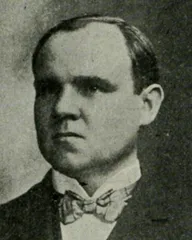
Vol. VIII. AUGUST, 1905, No. 10. IN THE LINEAGE OF THE GODS. BY DR. JAMES E. TALMAGE, F.R.S.E., ETC. Krv-v Note: —The following article has been written by request for translation into and publication in Japanese,as the first of a series of tracts intended for use in the mission field of Japan. It is presented here in deference to suggestions that it may prove of interest to our English readers. Many of the people of Japan profess no well-defined belief as to the immortality of the soul, nor have they any definite doctrine touching the relationship between man and Deity; though certain precepts of Buddhism point to a state of existence after the death of the body; and the tenets of Shintoism include,though in somewhat shadowy outline, the doctrine of the divine ancestry of man. The reference notes in connection with the article are for English readers,and do not appear in the Japanese version. The present age in human history is one of rapid growth, wide expansion, and far-reaching development, not alone in the material affairs of life, but likewise in the thoughts and aspirations of mind and soul. While among the multitudes of men some care for naught beyond the pleasure and profit of the passing present, there are many whose thoughts turn to the past, and whose aspirations point to a future full of promise.
Among the questions arising, oft-times spontaneously and unbidden, in the mind of the thoughtful man, are many concerning himself. He is conscious of his individual existence as one of a host of his kind. Reason tells him that his fellows and he did not come into being by chance, but in accordance with natural law. In his moments of quiet meditation and deep reflection, he finds himself wondering, and perchance enquiring, as to his condition in the past, the relation of the past to the present state, and the connection between the present and the unexplored future. He asks: What and who am I? Whence and for what purpose came I hither? Whither shall I go when death claims me? Let us briefly consider these questions in their order.*^ 1. WHAT AND WHO IS MAN? Students of science have long debated as to whether man is an animal and nothing more, or a being differing essentially from the animals in origin and in destiny. The man who thinks for himself feels that he is not of the brute creation; he knows that he is distinct from and superior to the beast and the bird, the reptile and the fish, the insect and the worm — that, indeed,he stands above all so-called animal forms of life. As the sky is above the earth so is man superior to them in intellectual power, in spiritual aspiration, and in his marvelous achievements resulting therefrom. True, he is not as strong as the elephant or the horse; but his superior mind has enabled him to subdue them both, and compel them to his service. He is not as fleet as the deer, nor can he pursue the wild fowl in their fashion of flight to the upper deep; but he knows how to make a gun and prepare its ammunition, — and with these he calls to the stag as it bounds, to the bird in its flight, — he commands them to stop,and they obey him. He cannot swim from continent to continent as may certain tenants of the briny waste; but he has built floating palaces equipped with locomotive power to defy the course of wind and tide; and with these he traverses amidst comfort and luxury the no longer trackless ocean. Man surpasses the animals, not in a greater development of their special powers, but in the superior endowments of his higher nature; and by these he maintains dominion over them.
— . IN THE LINEAGE OF THE GODS. 723 In achievements of a kind never attempted by beast or bird is his greatness affirmed. Consider the marvels of man's inventions, and his power of applying truths when discovered. By the telephone he transmits the very tone of his voice and is heard hundreds of miles away. His telegraphic message flashes between continents, though oceans roll and roar between. Without wires he speaks to his fellows from shore to mid-ocean; battle-ships are in communication.though each be hidden below the other's horizon; the admiral launches his commands into space, and is understood and obeyed, though invisible through distance. Man with his railways and his ships, his machinery and his mills, his newspapers and hia books, his cities and his laws, — he is a marvelous animal indeed, if animal he be. But in many respects other than those mentioned above is his superiority made plain. He is endowed with the capacity of unlimited advancement and perpetual improvement. The nest of the bird is practically of the same pattern for every generation of the species; the beasts of the forest live as they have lived during the centuries that have gone. Man has learned to improve his home, to better his surroundings, to utilize the forces of nature, in short to advance and develop. He is endowed with the faculty of abstract thought; he seeks to learn of by-gone times and ponders the possibilities of years to come. He conceives ideals of action and hope, and considers himself as child of the past and as father of the future of his race. He is conscious of the desire to worship; he is capable of spiritual aspirations; his soul yearns toward heaven. What, then, is man? —A being of growing intelligence and unlimited capacity of development; a being who has gained dominion over the beasts of the land, the birds of the air, the fish of the sea. He possesses a body which, in chemical composition, and to some extent in parts and structure, is closely akin to the bodies of certain of the higher animals; but let this great truth be kept in mind the body is not the whole man. The body is the garment in which the undying spirit is cloth- — ed a fit garb for the appointed sojourn in this inclement world We know that the mind, the spirit, may be active while the body sleep'. In every man there dwells an immortal something, a some-
— . thing that existed before the body was framed, that shall live after the body has gone to decay. And this thought brings ns to the second part of our first question Who is man? In accordance with the universal law of life, every living thing is the descendant of ancestors of the same kind, and the species of life are perpetuated each after its kind, if man be essentially an immortal spirit though clothed for a time. In a mortal body, his spirit must be of immortal parentage. Man is in very truth the child of God his spirit is literally the offspring ; of Deity. True it is that mortal man appears too weak and imperfect to claim descent through such a lineage; but does he not possess the power of eternal progression? The immediate offspring of the most gorgeous butterfly that ever sipped nectar from the flower-cup is a crawling caterpillar. But in due time the larval worm passes into the corpse-like chrysalis; its sleep resembles death; then, finally, it awakens and emerges from its pupa-shell, a winged image like unto its glorious parent. If this period of man's mortality be the larval stage of his career, the later and higher possibilities await him. If he belong not to the animal kingdom, to which kingdom does he belong? I answer you: —to the kingdom of God. Who then is man? —the son of his Eternal Father, the child of Deity, the offspring of the Almighty. II. WHENCE AND FOR WHAT PURPOSE CAME MAN HITHER? From the abode of his Heavenly Ancestor, man's spirit came to earth. The assumption that the individual was first brought into existence at the time of mortal birth is illogical, unphilosophical, untrue. This life is but one epoch in the career of the human child of God, — a period in his existence separating the eternities that have gone before, from the eternities that are to come. A veil of forgetfulness has fallen between us and the past, effectively hiding from view and shutting out from recollection the scenes of our primeval childhood, even as another veil hangs between us and the hereafter. Sometimes, perhaps as the hour of death approaches, a glimpse of the glorious future is permitted, even before the spirit has left its mortal tenement; so, too, at times, in
IN THE LINEAGE OF THE GODS. 725 Messed moments of sacred communion and holy thought, half memories of the past steal into our souls. As a European writer has declared, one seems to hear and feel the melody of songs which once he sang, but for which now he can find neither words nor music fit. Among the characteristic features of Buddhism is the recognition of the law of cause and effect. Practically all religious sects proclaim the doctrine that the future state of the soul, whether of happiness or of misery, will be the result of this earthly life. Buddha rightly taught, in addition to this solemn truth, that this life is similarly determined by causes operating in the past. Those spirits, who, in their state of primeval existence, attained to the requisite condition of worthiness, have taken earthly bodies, and thus clothed have entered the school of mortality. Herein they are tested and proved; here they learn lessons and gain experiences not elsewhere obtainable; here may they acquire strength through trials, fortitude through suffering, patience through vicissitude, wisdom through disappointment and failure. Only by these experiences can we advance to higher states; and, as a prophet of olden time has told, so highly did we esteem the privilege of taking mortal bodies that in our spirit-state we sang together and shouted for joy in happy anticipation. Whence then came man hither? —from the abode of his Almighty Father, from the home of his primeval childhood, from the realm of the spirit-children of God, to which royal family he belongs. And why came he hither? To learn the lessons that are taught in the university of earth; to imbibe that knowledge and win that wisdom without which his future advancement would be hindered or prevented; to be able to choose for himself between evil and good; to be free to act without compulsion or restraint, and then to meet the consequences of his choice. 111. AFTER DEATH, WHAT? Belief in a conscious individual existence beyond the grave is not confined to the Christian world; rather is it an intuitive con. ception, practically common to the human family, civilized and otherwise. Human reason and common sense suggest again the
— — law of cause and effect as to the relation beWeen this life and the future state; and Buddhistic precepts emphasize the application. Death does not destroy; it is no mere accident, not in and of tself a calamity; not contrary to nature, !l)ut as truly natural as is birth. It is the return of the spirit — the going home after the journey of life. Our satisfaction and happiness there, the welcome we may expect, the glory or the shame awaiting us, are all dependent on the life we have led, the deeds we have done or left undone. There is no chance, no inconsistency, no personal favor or prejudice to be expected or feared as to individual destiny; every soul shall find its place according to its purity and worthiness. Worldly rank will not avail, the wealth of earth will be left behind; the humble man and poor, if of pure heart and blameless life, will be exalted above the titled nobleman whose career has been one of sin. So, too, the millionaire and the prince who have led lives of honor will find their places among the true nobility of heaven. What, then, lies beyond the portal of the grave? Eternit}'', with its harvest of good or evil from the seed sown on earth peace for the righteous, who will continue in good works as the accepted and worthy children of God; remorse with its anguish for the wicked, whose lives have been wasted in evil deeds; eternity with its boundless possibilities of advancement and development, worlds without end. ^~3 By way of summary and inference: ""# We hold that man is literally the child of the Eternal Father; that he is truly of the lineage of the Gods; that, therefore, he is immortal; and though the body may die, the spirit still lives and again shall be united with the body. We affirm that man existed as an intelligent being prior to his earthly birth, and that he lives beyond the grave. We believe that he is responsible for his own acts, and that these shall produce their natural results of happiness or suffering^ as truly as seed that issown brings forth good grain or noxious weeds according to its kind. We believe that man may advance in righteousness and become more nearly perfect; even as the followers of Buddha teach,
kd^€ri IN THE LINEAGE OF THE GODS. 727 that by the "Holy Path" or by the "Pure Path"* men may walk in the light and become Buddha. We believe as you do, my beloved readers in Japan, that some will follow the path of Hinayana,'\ and others the higher road of Mahayana —each choosing for himself, according to inclination and capacity; and, sad to say, yet others use that God- given freedom of choice and follow the path of sin that leadeth downward to perdition. Furthermore, you teach that Buddha was man, and that by * The distinction between the course of life described in the "Pure Path" and that known as the "Holy Path" is essentially the same as that between Hinayana and Mahayana, stated in another note. t While the so-called doctrines of Hinayana and Mahayana, as expounded by their respective adherents, are described as distinct in a multitude of details, one of the essential differences appears to be this: Hinayana represents the simpler phases of the law as taught by Buddha; while Mahayana embodies the higher teachings and stricter requirements. Hinayana is the lesser law, according to which mortals may attain a certain degree of exaltation through strict compliance with the requirements; they live under the law, and do, or refrain from doing.because so commanded. Mahayana is the embodiment of the higher order of life, by strict devotion to which man may imbibe the spirit of the law, making such a part of his being, so that he naturally lives in harmony with the law. He does good and refrains from evil, not because he is commanded so to do, but in accordance with natural inclination. The law to him is a dead letter because he lives above it, yet never violates its requirements. According to Buddhistic teachings, the faithful follower of Mahayana may himself become a Buddha — the incarnation of all that is good. The distinction thus made is significant and impressive. Better to live by Hinayana — in obedience to the stern commands, "Thou shalt" and ''Thou Shalt not" — better to do good through hope of reward,and eschew evil through fear of punishment, than to do evil and reject good. But better still, far better is it, to imbibe the spirit of righteous law — to walk bv Mahayana— to make right living the natural mode of life, to advance in good works until we enjoy freedom in keeping the commandments of God, through natural inclination and love, rather than because of the law's demands.
; 728 improvement: era. eschewing evil and choosing good, by self-sacrifice and righteous deeds, by purity of thought and act, by doing good to others and seeking after God, he has risen to exalted rank. We hold that the Lord Jesus Christ, the Son of the Eternal Father, has lived the life of a man among men, and has trodden the Holy Path and the Pure Path that led to the celestial throne. You who cherish the ancient Shinto faith claim descent from divine parentage. My brothers of Shinto, or Kami-no-michi, you profess to follow the "Way of the Gods" as your name declares. Your holy Kami were the creators of the heavens and the earth, the sea and all things that in them are. We hold that the Godhead is a Trinty comprising the Eternal Father, Jesus Christ the Son, and the Holy Ghost; that by the power of the Godhead were the worlds made; and that man is the child of Deity. Shintoism enjoins toleration of the beliefs of others; freedom of thought and action; love for fellow men; kindness toward all. We profess that without these virtues we cannot please God; that ifwe love not our brother, we cannot truthfully say we love God that we must live in virtue and chastity, sobriety and honesty, and obey the law made plain by the Lord Jesus Christ, if we would -finally reach the abode of the blessed in the house of our Father* Salt Lake City, Utah,