Editor’s Table
Improvement Era, vol. 8, no. 2, December 1904, pp. 146 to 153
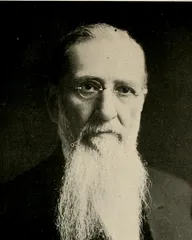
EDITOR'S TABLE.
CHRISTMAS THOUGHTS. Notwithstanding there is doubt that Christmas is the birthday of our Savior, it was nevertheless a wise provision of the early Christians to set apart a time when they should celebrate the natal day of Christ. It has had the effect of turning men's thoughts to him and to his doctrines and works. We are apt to forget the character of the structure which he built; and some are even prone to consider that his ideals are impracticable. Men have said that the theories which he taught are beautiful, but that under modern arrangements, these cannot be put into practice. In our day, there is a tendency to count men of little value who are not rich in worldly means and influence; who can not on this day bestow presents upon family and friends, and extend such acts of charity as find their way to the newspapers. But Christ, the ideal, the model, declared of himself: "The foxes have holes, and the birds of the air have nests; but the Son of man hath not where to lay his head." Yet now he is of all value, and exercises all influence, for only through him are we saved. But it was not the influence of "wealth, nor the lavish gifts of gold that made him rich and gave him power. It was the spirit of his Father, the wealth of his inner soul. Who that can not build a great house, or control vast interests, in our day, is looked upon by those who can, as of only small consequence and little use among men; but with all his poverty, Christ was rich in help, for when the tempest arose, and his disciples came to him in their anguish, calling, "Lord, save us; we perish," he arose and rebuked the wind and the sea, and there was a great calm, causing the men to marvel at his power, that even the winds and the sea obey him! .
Men spit in his face and buffeted him, and others smote him with the palms of their hands; "and when they had platted a crown
EDITORS TABLE. 147
of thorns, they put it upon his head and they bowed the knee :
before him, and mocked him, saying, Hail, King of the Jews!" They spit upon him, and took the reed and smote him, and finally led him away to crucify him. He bore men's burdens. But his prediction to the High Priest even now fulfilled: "Hereafter shall ye see is
the Son of man sitting on the right hand of power." For generations, men have acknowledged his saying, "All power is given me in heaven and in earth."
There is much to encourage the weak and the lowly, who are spiritually rich, in these incidents; and yet nothing to discourage those who have abundance, and with it are spiritually rich also. But it is good to celebrate his birthday, and to have Christmas come to call our busy attention to the loving nature of Jesus' holy life and character. It is a time when men and women may profitably turn their thoughts on themselves and their conditions, and count their blessings. For we are apt to forget the joys and comforts, and count the sorrows and disadvantages, as if there were no recompense. But even in the lives of the most humble of this people, there is a possibility that the former outnumber the latter two to one, and it is a good thing to cultivate the habit of looking for the blessings. It has a tendency to make us rich and content; and to enable us to realize that riches are not always on the outside, but rather in the heart and feelings.
There are thousands who, like Christ, are poor in outward comforts, but rich in inward wealth. These have been well likened to the Jew's house, as described by Scott in Ivanhoe. This Hebrew merchant, it will be remembered, by industry and enterprize, gathered gain at a time when society was disturbed, trade uncertain, and when men feared to buy and sell because of the revolution. When it was learned that the Jew had wealth, the people robbed him, and so he became very cautious. He formed the entrance to his home in an obscure alley, a hovel near a stable. Within were piles of hay; then, farther on, a low passage with a man at the entrance; but beyond that second door, behold! the visitor was ushered into a room splendid enough to have been the reception — room of a king or prince, a room vast and rich with all the splendid furnishings of the East, soft for the feet beneath, and glorious for the eyes above.
148 IMPROVEMENT ERA
And so, there are many people who outside are poor in the goods of this world, but whose inner souls are warmer than the palaces of princes: brilliant with true thoughts, warm with love, radiant with friendship and sympathy, whose days are devoted to good deeds, and whose lives overflow with helpfulness. Like Christ, "in whom are hidden all the treasures of wisdom and knowledge," they are the crowned kings of a better life; though outwardly, like him, they are the pilgrims and the burden-bearers. During this holiday season, these are the souls who enter into the enjoyment of the rich blessings, and who do their full share to glorify the life of their fellows. I believe that among no other community are as many of this class, in proportion, to be found as among the Latter-day Saints. It is true, however, that we have also that other class who are rich on the outside, and very poor on the inside; and still another who are poor both outside and inside. All classes may well find profit in the spirit of Christmas, and by good deeds or blessed sacrifice seek for that gift of inward wealth to be found by a close study of the life, character and gospel of Jesus Christ, and by adherence to his doctrines. To this end, as Saints, let us follow the admonition of Paul:
Put on, therefore, as the elect of God, holy and beloved, bowels of mercies, kindness, humbleness of mind, meekness, long-suffering; forbearing one another, and forgiving one another, if any man have a quarrel against any, even as Christ forgave you, so also do ye. And above all these things put on charity, which is the bond of perfectness. And let the peace of God rule in your hearts, to the which also ye are called in one body; and be ye thankful. Let the word of Christ dwell in you in allwisdom; teaching and admonishing one another, in psalms and hymns and spiritual songs, singing with grace in your hearts to the Lord. And whatsoever ye do in word or deed, do all in the name of the Lord Jesus, giving thanks to God and the Father by him. Joseph F. Smith.
NEW MISSION HOMES. The idea has prevailed in the Church in the past few years that in order to insure the greatest growth, and achieve stability
EDITOR'S TABLE. 149
and influence in the large mission fields, of which there are now some twenty in number, outside of the organized stakes of Zion, it is necessary to secure homes and churches for the accommoda-
tion of the elders, converts, and investigators. To this end a suitable building was erected, and dedicated in Copenhagen, in August, 1902; in Christiania, Norway, the Church already owned one, but rebuilt and enlarged it; new quarters were later purchased in Liverpool, England; Aarhus, Denmark; Chattanooga, Tennessee;
and Stockholm, Sweden. In 1903, a mission building was erected in Denver, Colorado, the ground having been purchased in 1901. The location is in West Denver, on the corner of the intersection of South Water Street and West Sixth Avenue, about two miles south of the Union station. The house is built of red, pressed brick, is two stories high, and measures forty-two by forty- five feet in dimensions. The ground floor contains four rooms, used for offices, Sunday school class rooms, etc., and an auditorium with a seating capacity of about two hundred. On the second floor there are nine rooms used for living apartments. The building is
warmed by a hot air system, and may be lighted by gas or electricity. The furnishings are of Mexican pine in the natural wood. The building has a flat roof, and is plain in appearance, but substantial. The dedicatory services were held on Sunday, March 13, 1904, the prayer being offered by Elder Joseph A. McRae, president of the mission. The auditorium was over-filled with people, more than half of whom were non-members of the Church. On Wednesday, August 31, the Church purchased a mission house in Chicago, of which the Era presents exterior and interior views in this number. The building was the property of the First United Presbyterian church, which sold it, owing to having joined
hands with another branch of the same denomination. Negotiations for the purchase of the church began about the middle of April, but owing to the fact that the deed had to cover many minor details, and pass through several hands, the purchase was delayed
until the above date. The building is located on the corner of Monroe and Paulina streets, two miles west of the post office. It covers seventy-five by one hundred and thirty feet, including the parsonage which is now occupied as the headquarters of the North-
150 IMPROVEMENT ERA.
em States mission. It is a two-story building, sixty by eighty feet. The main auditorium, on the upper floor, contains a gallery, on the north end, and a pipe organ and choir-loft at the south, back of the pulpit. The interior woodwork of the building, and the pews, are of walnut, of good substantial workmanship. This auditorium
will seat comfortably five hundred persons. There are several rooms on the lower floor: the chapel thirty-five by sixty feet, and
four smaller rooms for Sunday school work, a church dining room for festival purposes, and a parson's study. The parsonage faces the north, and is twenty-four by fifty-five feet, three stories high. The mission office occupies the front room, on the main floor, back of which is a reception room, and in the rear a dining room, a living room, and a kitchen. There are about fifteen rooms in this building, all of which are comfortably situated. The building is of brick, trimmed with stone, and was purchased for the sum of eighteen thousand dollars. The purchase was made under the supervision of Elder Asahel H. Woodruff who was then president of the Northern States mission. Before the transfer, Elder Woodruff obtained an architect —a friend of our people —to examine the building in
its various parts, and he ascertained that it was in a most excellent condition. The architect, who has had a great deal of experience along those lines, declared that such a structure could not be placed upon the ground for less than thirty thousand dollars. The organ cost the former owners the sum of two thousand five hundred dollars; and the pews, the sum of five thousand dollars. Meetings are held in the building, also Sunday school, each Sabbath day. The address is 149, South Paulina street, and Elder German E. Ellsworth, president of the mission, is in charge. Late in October, 1904, a suitable church was purchased for three thousand dollars in Boise, Idaho, north western states mission, now under the presidency of Elder Nephi Pratt. By letter from President C. J. A. Lindquist, of the Stockholm conference, it is learned that the new mission house in Stockholm was dedicated by Apostle Heber J. Grant, on Saturday evening, October 22, 1904. President Anthon L. Skanchy, of the Scandinavian mission, Elders Christian D. Fjeldsted, Andrew Jenson, and some sixty-seven other elders were present. On the evening of
EDITOR'S TABLE. 151
the 24th, Apostle Grant set apart Elder C. D. Fjeldsted to preside over the Scandinavian mission, to succeed Elder Skanchy.
BOOK NOTICES.
"Complete Concordance to the Book of Mormon."
This is a book of 851 large quarto pages of fine print, containing a complete classification of the words of the Book of Mormon. The enterprise has occupied the author's spare time for over twenty years, and is the most stupendous task ever heretofore attempted and completed by any writer of our Church, ranking, as it does, with the labors of the compilers of Bible concordances. There is only one man in the Church having the patience, perseverance, and unselfish devotion for the work, necessary to accomplish such a prodigious undertaking, and that man is the author, Elder George Reynolds. When it is remembered that he did practically all the work himself, every reader will partly appreciate his prefatory remarks:
"Had I known the vast amount of labor, patience and care it would take to prepare it, I should, undoubtedly, have hesitated before commencing so vast, so tedious, and so costly a work. But having commenced, and feeling its necessity as a help to the study of the Divine work whose name it bears, I have labored early and late on every available opportunity — labored and prayed—until it was prepared for the press."
We say "partly," because no person unfamiliar with the actual work can possibly fully form a conception of the amount of labor involved in the preparation of such a book. The book should be appreciated and purchased by every person, and should have a place in every M. I. A., Sunday School, public and private library in the Church. Many students have waited long for it. The Concordance will now enable them to collect all the passages in the sacred book relating toany subject therefrom, which they may have under consideration, and that in the shortest time and with the smallest amount of labor. The Era congratulates students of the Book of Mormon upon the increased facilities for
152 IMPROVEMENT ERA.
study now at hand, but most do we congratulate Elder Reynolds upon the completion of the immense task, and for the wonderful aid and impetus he has given in and to the study of the Book of Mormon. Price, full cloth, $6.00; full leather, $7.00. Order from the author, or from the Sunday School Union, Salt Lake City.
"Branches that Run Over the Wall."
The Era has received, with the compliments of the author, a neat volume of 268 pages, containing the select writings in prose and poetry of Louise L. Greene Richards. The poem from which the book takes its title is woven from the Book of Mormon, the language of which has been transposed into blank verse, but otherwise remarkably closely adhered to in the poem. The second division, "Clusters from Drooping Sprays," contains some of "Lula's" choicest miscellaneous writings in prose and poetry; while the last part, "The Children's Garland," is a collection of poems and verses for the little folks. An appropriate illustration precedes each part. A book of simple sentiments, expressed from the heart in plain, often sweet and touching language, is Branches that Run Over the Wall. Printed by the Magazine Printing Company, Salt Lake City. Price, $1.50.
THE M. I. A. LECTURE BUREAU. The Mutual Improvement Associations of the four stakes of Salt Lake City recently united in organizing the "M. I. A. Lecture Bureau." It is the purpose of the Bureau to bring to Salt Lake each
season the leading lecturers and entertainers of the United States. For this winter, eleven engagements have been arranged, to be given between November 22, and the end of next March. The following noted men and women, secured from the principal lecture bureaus of New York and Boston, will appear: Jacob A. Riis, a close friend of President Roosevelt, famous as a slum reformer in New York City, who lectures on "The Battle with the Slum;" Hamlin Garland, a western writer; Edmund Vance Cooke, a humorist and poet philosopher; Mrs. Bertha Kunz Baker, said to be America's foremost lady reader, in four recitals; E. Hopkinson Smith, artist, author, and a charming reader, and a "type of gentleman as rare as black pearls," who portrays southern life; William J.
EDITOR'S TABLE. 153
Clarke, of New York, who gives a popular lecture on radium, wireless telegraphy, etc., with numerous demonstrations; the Dufft Concert Company, including Dr. Carl E. Dufft, America's leading basso; and Lieut. Godfrey Lynet Carden, who treats the interesting subject of "America's Invasion of Europe, or the Race for Commercial Supremacy." An organization of this kind has long been needed in this city, and so far the movement has received the enthusiastic support of the public. The officers of the M. I. Associations are to be congratulated that such a series of entertainments have been arranged under their auspices.
M. I. A. CONERENCES, 1904-5.
"November 13th Emery, Juab, Malad, Parowan, Wayne. November 19th and 20th Snowflake. November 20th Alpine, Hyrum, South Davis. November 26th and 27th St. Johns.
November 27th Kanab, North Davis, Uintah. December 4th and 5th Maricopa, Panguitch. December 10th and 11th St. Joseph.
December 11th Beaver, Big Horn, Box Elder, Wasatch. December 17th and 18th Juarez, St. George. January 8th Bingham, Jordan, Oneida, South Sanpete. January 15th Granite, Millard, Morgan, Summit. January 22nd North Sanpete, San Luis, Teton, Tooele. January 29th Nebo, Pocatello, Sevier, Union. February 5th San Juan. February 12th Bear Lake, Cache, Ensign, Fremont, Utah. February 19th Blackfoot, Salt Lake, Taylor. February 26th Alberta, Bannock, Liberty. March 12th Benson, Pioneer. May 14th Cassia, Woodruff.
May 21st Weber. July 19th Star Valley.
Joseph F. Smith, Gen. Supt. Y. M. M. I. A. Elmina S. Taylor, Prest. Y. L. M. I. A. Thomas Hull, Sec. Y. M. M. I. A. Ann M. Cannon, Sec. Y. L. M. I. A.