Editor’s Table
Improvement Era, vol. 8, no. 1, November 1904, pp. 60 to 68
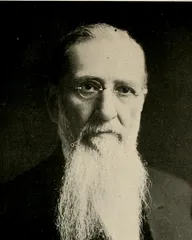
EDITOR'S TABLE.
LET YOUR LIGHT SHINE.
Christ teaching his disciples, called attention to the importance of their position and place in the world. He did this, notwithstanding men considered them of small consequence. Though poor and despised of men, yet he told them they were the salt of the earth, the light of the world. Then he encouraged them to effort and achievement by showing them that their exalted position would avail them little unless they made proper use of their high callings. It was pointed out to them that "if the salt have lost his savor, wherewith shall it [the earth] be salted?" They were called the light of the world, a city set upon a hill that cannot be hid; but were cautioned that men do not light a candle, and put it under a bushel, but rather upon a candlestick, that it may give light to all who are in the house— meaning that, while they were full of light and knowledge, it was improper to hide that knowledge. It should be diffused abroad for the benefit of all.They were then enjoined: "Let your light so shine before men that they may see your good works, and glorify your Father which is in heaven." These conditions and instructions apply admirably to the Latter-day Saints who are, indeed, the salt of the earth, and in whom is vested the gospel light of the world; who, as the apostle said of the former-day Saints, are a chosen generation, a royal priesthood, an holy nation, a peculiar people; that they should show forth the praises of him who have called them out of darkness unto his marvelous light. But all this availeth little or nothing, unless the Saints con-
EDITOR'S TABLE. 61
sider themselves of some consequence, and let their light shine, collectively and individually; unless they are model in their behavior, honest, zealous in the spread of truth, tolerant of their neighbors, "having your conversation honest among the Gentiles: that whereas they speak against you as evil-doers, they may by your good works, which they shall behold, glorify God in the day of visitation." "For so is the will of God, that with well-doing ye may put to silence the ignorance of foolish men." We are told that if we do well and suffer for it, and take it patiently, this is
acceptable with God. But there is no special promise to him who suffers, but does not do well.
One fault to be avoided by the Saints, young and old, is the tendency to live on borrowed light, with their own hidden under a bushel; to permit the savor of their salt of knowledge to be lost; and the light within them to be reflected rather than original. Such a condition is wrong. Every Saint should not only have the light within himself, through the inspiration of the Holy Spirit, but his light should so shine that it may be clearly perceived by others. Then they will not be in the very awkward and perilous position of some who are drawn hither and thither, as the clouds come and go over men from whom they borrow their light. This class of people, so driven, do not depend upon their own knowledge or judgment, or testimony, but are ever dependent upon the opinions of others. They believe this or that, passing from one belief to another, as some one else believes or disbelieves. They are always in a stew, fretting over matters religious, political and social, which men of firm convictions and self-possession count as of little or no import. They walk in borrowed light; in darkness, they are without initiative; and when clouds obscure their source of light, they lose the way. They are like the moon without the sun from which to borrow light. It is a deplorable condition to fall into. Men and women should become settled in the truth, and founded in the knowledge of the gospel, depending upon no person for borrowed or reflected light, but trusting only upon the Holy Spirit, who is ever the same, shining forever, and testifying to the
individual and the priesthood who live in harmony with the laws of the gospel, of the glory and the will of the Father. They will
^•i IMPROVEMENT ERA.
then have light everlasting, which cannot be obscured. By its shining in their lives, they shall cause others to glorify God; and by their well-doing, put to silence the ignorance of foolish men, and show forth the praises of him who hath called them out of darkness unto his marvelous light. Joseph F. Smith.
CHURCH ORGANIZATION AND PROGRESS. »<
At the first meeting of the«75th semi-annual conference of the Church, held in Salt Lake City on the 6th to 9th of October,
President Joseph F. Smith in his opening address congratulated the people upon the receipt of the many temporal and spiritual blessings bestowed during the past six months. The fields of the Saints in Arizona, Mexico, and Canada had suffered from drought in the early part of the season, but copious rains had changed conditions for the better, and given promise of luxuriant crops and abundance of water for irrigation. So that now conditions throughout all the land are favorable, and the blessings of God and his merciful hand are over all the interests of the people, to whom be praise and glory for his mercy, kindness, and favors. It is to be hoped that spiritually the Saints are prospering as in temporal things, and that they are progressing and growing in the knowledge of truth and in faithfulness before the Lord. The great consideration, after all, is the faithfulness of the people to the covenants which they have made with the Lord in righteousness. Reflecting over the status of the Church, he gave some statistics showing its condition and growth. There are 55 organized stakes of Zion in the United States, Canada, and Mexico, presided over by as many stake presidents, and double that number of counselors. Then there are 12 high priests in each stake, 660 in all, associated with the presiding stake officers and who sit as judges in counsel with them, in all the affairs of the Church, who are or should be examples of worthiness before the people, fathers and judges of righteousness in their midst. Aside from these stakes, there are 20 organized missions throughout the world, presided
EDITOR'S TABLE. 63
over by presidents and- counselors, and assisted by elders, and seventies, to the number of about 1500 traveling in the United States, Europe, Australia, the Holy Land, and the islands of the seas. There are today 626 organized wards, each with a bishop, and all with 1252 bishop's counselors, a mighty power, who come in immediate contact and intercourse with the people. They should understand the special interest of every member; they are assisted by large numbers of quorums of elders, priests, teachers and deacons, who aid in the temporal and spiritual affairs of the Church. Upon this body devolves the duty of aiding the poor and adminis. tering to the sick and the afflicted, as well as looking after the spiritual welfare of the people — to see that they are moral, pure, faithful, upright, honest with themselves and with all men, that spiritual life exists in their hearts, and that they are living the lives of Saints, as far as this is possible in mortality. All this body
labor without money, price or salary; they are not paid, though they may receive small aid as they may stand in need from time to time. There are 146 quorums of Seventy, constituting,in the present conditions of the quorums, a body numbering in the neighborhood of ten thousand minute men, who stand ready to preach the gospel free, without purse or scrip, to the world, or to the Saints: or to respond to calls to uphold and labor for the work of God, at home and abroad. They should have a testimony of Jesus burning in their souls, be full of light and knowledge, and set examples of
purity, love, honesty, uprightness and integrity to the truth before the world and the Saints. Then in each stake is a quorum of High Priests which includes also the presidency of the stake, high councilors, bishops and their counselors, and patriarchs. The high priest holds the office of presidency in the Church, when called
upon and set apart for this purpose. But in any event, these officers are not to sit idly by, but to act in the interest of the people, teaching them morality and righteousness, and to see that those who preside are upright, pure, honest, humble men. Following these are the elder's quorums, each composed of 96 men; of the number of these in the Church he was not informed, but it is the duty of this large body of men to be standing ministers at home
—
64 IMPROVEMENT ERA.
and to labor in the ministry at home or abroad, as may be required of them. There are also a number of patriarchs in the Church
whose duty it is to bless the people. They hold the evangelical' office in the Church; they are fathers, who make promises in the name of the Lord as may be given to them by the inspiration of the Spirit; they comfort the people in hours of sickness and trouble, strengthening their faith by promises made to them by the Spirit of God. Then there is the Lesser Priesthood having in charge temporal matters of the Church. It consists of priests, teachers and deacons who labor under the direction of the bishops of the wards. And so we have a brief outline of some of the organizations of the Church of Jesus Christ of Latter-day Saints. These have been established to teach the people righteousness, and the sacredness of the covenants which they have made with God in righteousness some of which covenants are that they will avoid sin and evil, work righteousness in their lives, abstain from strong drinks, and tobacco; that they will not profane the name of God, nor- bear false witness against their neighbor, but love their neighbor as themselves, and do unto others as they would that others should do unto them. These and other principles are included in the covenants made by the Saints. These officers and the presiding authorities in the Church are expected to see to it that the people will observe to keep the covenants which they have made with God; adopt them, and make them a part of their lives. This in order that the Saints may be a light to the world, that men may see their good works and glorify the Father which is in heaven. It makes little or no difference to us, to the Saints, what the world of mankind, says. We know what our mission is, and we purpose filling that mission by the help of the Almighty. It is to save men
from the snares and pitfalls of Satan, from error, darkness, wickedness, and from apostatizing from truth and righteousness, and to cause them to believe in the true and the living God, and in the redeeming sacrifice of Jesus Christ, whom to know is life eternal. We are not ashamed of the gospel, for, to those who believe and receive it in their hearts, and live it according to the law and purposes of God, it is the power of God unto salvation. And what is the priesthood? The power of God delegated to
:
EDITOR'S TABLE. 65
man by which men may legitimately act in the name of the Father and the Son and the Holy Ghost for the salvation of the human family. This authority has been given in this day by ministering angels and spirits, direct from the presence of Almighty God, authorizing baptism for remission of sin, and the laying on of hands for the reception of the Holy Ghost. It is the same power and Priesthood that was committed to the disciples of Christ, while he was upon the earth: that whatever should be bound on earth should be bound in heaven, and whatever should be loosed on earth should be loosed in heaven, and whomsoever they should bless should be blessed; and if they cursed, in the spirit of righteousness and meekness before God, he would confirm that curse. But men are not called upon to curse mankind; that is not our mission: it is our mission to preach righteousness to them. It is our business to save men, to bless men, and to redeem them from the faults and wickedness of the world. This is our mission and our special calling. God will curse, and will exercise his judgment in those matters. We are perfectly willing to leave that in his hands, and to let him judge between us and our enemies.
QUESTIONS AND ANSWERSThe Discovery of Chloroform.
L. V. Guthrie, of Mesa, Arizona, writes: I notice in September number of Era, page 848, that Dr. J. X. Allen makes the statement: 'In 1844 Dr. Simpson made the discovery of chloroform, which has proved such a blessing to all flesh." The records of the Guthrie family, of which I send you pages 24 and 25, show that Dr. Samuel Guthrie, of Sacketts Harbor, New York, is entitled to this
honor. Dr. Guthrie is a brother to the writer's great-grandfather.
The copy of the record was forwarded to Dr. Allen, who writes I had not read up on the history of chloroform, but simply had in
mind the general notion entertained by physicians. I find in the encyclopedia that "Dr. J. Y. Simpson introduced chloroform into surgical
practice." This is why physicians speak of the honor as belonging to Dr. J. Y. Simpson.
Our correspondent is correct in the statement that Dr. Samuel
66 IMPROVEMENT ERA.
Guthrie is the discoverer of chloroform, the fact being so stated in the latest scientific works and dictionaries. There are three claimants to the honor, however —Liebig of Germany, Souberan of France, and Guthrie of America. The Chicago Medical Society investigated the claims, and their committee appointed to consider the subject of the discovery of chloroform, submitted the following statement taken from their report, dated Chicago, February 6, 1888, furnished the Era by L. V. Guthrie. Our correspondent adds that Dr. Guthrie was also the first inventor of percussion powder, and, in 1826, at Madison barracks, fired the first cannon ever fired by this means. He was a direct descendant of the martyr James Guthrie, whose name appears on the monument In the Grey Friars' churchyard, Edinburgh, Scotland, as one slain for the testimony of Jesus. Dr. Samuel Guthrie was born in Brimfield, Mass., 1782; was examining surgeon in the war of 1812, and died October 19, 1848. Judge Robinson, of New York, said of him, that he was a great man, but his greatness was not to be compared to his goodness, his devotion to his mother being admired by all.
(from the report CHICAGO MEDICAL SOCIETY). liebig's claim:
Liebig claims to have published his discovery in November, 1831. (See Liebig's Annalen, vol. 162, page 161.)
souberan's claim: Souberan claims to have published his paper on Ether Biclorique in October, 1831, in the Annales de Chimie et de Physique. Liebig shows (see Liebig's Annalen, vol. 162, page 161,) that the October number of the Annales de Chimie et de Physique was delayed in its publication, and that it did not appear until January, 1832; it certainly is evident that it was not published in October, as it contained the meteorological report for the entire month of October.
GUTHRIE'S claim: In the January number of Siliman's American Journal of Science and Art we find an article by Dr. Samuel Guthrie, dated September 12, 1831, in which he says: "A bottle and phial contain alcoholic solution of chloric ether, the contents of the phial are as strong as I could conveniently prepare them, but not equal to some which I made not long ago." In the October number, 1831, of the same journal (page 64, vol.
:
EDD [TOR'S TABLE. 67
21,) we find an article by Dr. Guthrie, without date, upon a "New mode of preparing a spirituous solution of chloric ether," in which he says: "During the last six months, a great number of persons have drunk of the solution of chloric ether, not only freely, but frequently, to the point of intoxication." We find a notice to contributors in Siliman's Journal, in which he says: "Communications to be in hand six weeks, or when long, and especially with drawings, two months before publication day." Dr. Guthrie's paper on chloric ether must then have been in the hands of the printer in July or August, 1831, and if people had drunk his chloric ether for six months, it would place the date of his discovery to be in the early part of 1831. We, therefore, conclude that Dr. Samuel Guthrie is justly entitled to the honor of first discovering chloroform, and that the publication of his discovery antedates that of either Liebig or Souberan. Respectfully submitted, F. E. Waxham, N. S. Davis, Jr., E. Wyllys Andrews. On motion, the report of the committee was accepted, and ordered printed in the transactions of the society. Wm. Belfield, President. Frank Billings, Secretary.
Two Questions. Did Senator Dubois exercise good taste, when he came out of his way to Salt Lake to prejudge that little affair before the Senate Committee on Privileges and Elections? Do you think he is really earnest in his fight, or has he some personal, hidden motive.?
The Bra will not talk politics, but when Senator Dubois, who isa member of a committee that is yet to render an unprejudiced opinion on a matter not decided, comes out of the way to prejudge the affair, as he did when he appeared and spoke in Salt Lake City, we may perhaps be permitted to say that he is out of order. And then, further, when people, like himself and his good ministerial lecherous following, prate of broken promises, undue influence, the inconduct, and commercial dishonesty, wrongfully accusing nocent, we may perhaps be permitted to apply the poet to them "For often vice provoked to shame. Borrows the color of a virtuous deed; Thus libertines are chaste, and misers good, A coward valiant, and a priest sincere."
OUR WORK.
SENIOR CLASS STUDY^AIM. General aim for last and this season: To prove the origin of the Book, of Mormon to be what the Latter-day Saints say it is; and the book itself to be what we proclaim it to be — a revelation from God. Development: From text and references of Manuals No. 7 and 8. Application: This ability and knowledge will enable every individual who possesses it to combat error, to become independent of false arguments against the book, to strengthen their faith, and to increase their power for good in the Church. Special aim this season: To become conversant with the external evidences bearing upon the authenticity of the Book of Mormon. Development: From text and references of Manual No. 8. Application: It will enable you to present reasonable arguments, in support of the book, that intelligent men will listen to; make you conversant with the ancient American history bearing on the subject;: broaden your views, and increase your admiration for the book.
VALUE OF THE ERA. When officers of the M. L A. go out to ask for subscriptions to the Era, from people who may be unfamiliar with its value, letters like the following are good arguments in favor of our magazine. We get them every day, and thereby feel; encouraged in the