Editor’s Table: Moderation
Improvement Era, vol. 6, no. 11, September 1903, pp. 857 to 858
CURRENT STORY OF THE WORLD. 855
did much to stimulate public sentiment in this country against the Russian policy of closing the doors of our commerce in Manchuria, and we now have the assurance that Russia will
maintain the open door policy hereafter in that Chinese province. For the present the questions arising out of the Jewish petition concerning Kishineff and the open door policy in Manchuria may be looked upon as closed.
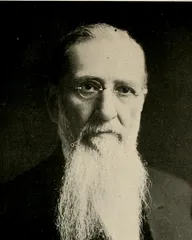
Pope Pius X.
Cardinal Giuseppe Sarto, Patriarch of Venice, and now Pope Pius X of the Roman Catholic church, was born at Riese, north of Venice on June 2nd, 1835. He is, therefore, a little more than 68 years of age, a little older than Leo XIII when the latter was elected Pope. Sarto was born of peasant parents and without a university education. He studied in the seminaries of Treviso and Padua and was ordained a priest in- 1858, and on June 12, 1893, was created a Cardinal by Pope Leo. He has always been known as a man of simple habits and of fervent piety. His ambitions have been rather to promote piety and devotion to the church than to distinguish himself in its political and literary fields. It is said that during a recent visit of the present King of Italy to Venice, Sarto paid his respects to the King by calling on him and did so in disobedience to the instructions of Pope Leo XIII who forbade Sarto recognizing the King of Italy in any way. This would indicate that hereafter a more friendly attitude would exist between King and Pope than has been heretofore the case. While the Pope was a compromised candidate, it does not
indicate that he is without strength of character and without
great learning. He has never been ambitious to receive honors in the church, and even after he was made a Cardinal it is said that he pursued many of the prastices of a simple parish priest. He has always been regarded as a sympathizing friend of the poor and was much beloved in Venice. It is said that on one occasion while he was walking the streets of Venice he met a poor woman with a babe in her arms. She was in quest of aid. The Cardinal love and stopped and listened to the story of her misplaced confidence, and of her downfall. She said that she was desirious
856 IMPROVEMENT ERA.
of obtaining employment to support herself and child. After administering substantial assistance he is said to have given to the unhappy woman these comforting words: "All mothers are good and no queen is greater than a good mother."
Almost too Good to be True.
News comes from the most fashionable summer resort in America that the young women of Ne vport have recently introduced the custom of going bareheaded. In these days of sky rocket prices for ladies' head-gear, many a man will have a sigh of sincere and heartfelt relief over the announcement of the removal of the financial hydraulic pressure that has been squeezing every possible penny out of him in order to balance his account at the milliner store. Let Utah follow the fashion! Why not? History approves the custom of bareheads, and the greatest people in the world, the Romans, achieved their greatness by and through the practice of uncovering their heads to the elements^ With long flowing curly hair, with shield and sword, and hatless, they carried their irresistible conquest from the shores of the Atlantic, on the west, to the ancient valley of the Mesopotamia, on the east; from the Libyan Desert, on the south, to Charing Cross on the north. Hathood certainly had something to do with the decline and fall of the Roman Empire. In the far-off, mysterious past, amid the decadences of nations, the time-honored phrase, "as mad as a hatter," had its origin. Not the one who made the hats was mad, but the one who wore them. Are these not sufficient evidences in favor of the new custom which our sisters at Newport in the interest of civilization, and in other interests, introduced. Hail the day! Maybe after all we shall postpone the day of the decline and fall of our great republic; at least the decline and fall of many a bewildered hus- band and father may be postponed if not wholly averted.