History of the Prophet Joseph
Improvement Era, vol. 5, no. 12, October 1902, pp. 913 to 938
THE flIO GRAflDE WESTERN . . . AfiD . . .
THE DEflVER A|Wl|IOGOTDE Best Itoeal Train Service in Utah.
From ten to forty minutes the fastest line between Ogden, Salt Lake City, Lehi, Ameri- can Fork, Provo, Mammoth, Eureka and all points in Sanpete, Sevier and south.
3 FAST TRAINS DAILY through sleeping to all Eastern points, with and dining cars to Denver, Omaha, Kansas City, St. Louis and Chicago. MAGNIFICENT SCENERY EN ROUTE. & & J* For Rates, etc., enquire of Local Agent or write ^—^^—^^ GEO. W. HEINTZ, Assistant General Passenger Agent, Salt Lake City.
The Chicago & North-Western Double
Track to Omaha
One of the most striking pieces of railroad advertising seen recently is
an interesting eight-page article in
the Review of Reviews entitled "From Prairie Schooner to Overland Limited." It is profusely illustrated and refers entirely to the history and develop- ment of the Chicago & North-Western Railway System The recent comple- tion of the North-Western's double track line from Chicago to the Miss- ouri River makes the publication of BICYCLES. the article especially timely. Everything in Sporting Goods. A special edition of the article has been bound in regular Review of Re- BASE BALLS, CAMERAS, views covers. Copies can be secured PHOTOGRAPHIC SUPPLIES, Etc from representative of the North- western Line, WESTERN ARMS & SP0RTIN6 GOODS CO., MR. C A. WALKER, SALT LAKE CITY. 115 South Main Street
(when writing to advertisers please mention the era.)
CHANGED HANDS. THE SfliiT MKE BUSINESS GOItltEGE
Is now controlled by the following
board of directors
ANTHON H. LUND, President ANGUS M. CANNON, Vice-President JOHN NICHOLSON, JOHN C. CUTLER, Directors. GEORGE H. TAYLOR,
Taltion has bsen Greatly Pedaeed. Send fo* Catalogue:
JOSEPH HEUSOfl, President,
Templeton Building, - - Salt Lake Gity.
SAVE YODR MOHEY, AND WHEN YOD GET A DOLLAR DEPOSIT IT WITH
ziorsrs savings bank & trust coriPANY. 4 Per Cent Interest Paid on $i. to $5,000.
officers. Joseph F. Smith, President Anthon H. Lund Vice-President. George M. Cannon, Cashier. Lewis M. Cannon, Asst. Cashier. DIRECTORS. Joseph F. Smith Anthon H. Lund George M. Cannon T. G. Webber James Jack John T. Caine Angus M. Cannon Francis M. Lyman George Reynolds L. John Nuttall Angus J. Cannon A. O. Woodruff Hyruno M. Smith No 1, MAIN STREET, SALT LAKE CITY UTAH. (WHEN WK.TTINO TO A.DVERTTSEH8 PLEASE MENTION THE ERA.)
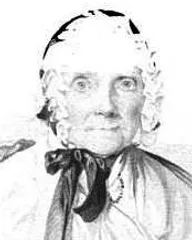
HISTORY OF THE PROPHET JOSEPH. BY HIS MOTHER, LUCY SMITH.
CHAPTER L. REMOVAL OP THE SMITH FAMILY TO ILLINOIS.
At the time when Joseph went into the enemy's camp, Mr.
Smith and myself stood in the door of the house in which we were then living, and could distinctly hear their horrid yellings. Not knowing the cause, we supposed they were murdering him. Soon after the screaming commenced, five or six guns were discharged. At this, Mr. Smith, folding his arms tight across his heart, cried out, "Oh, my God! my God! they have killed my son! they have murdered him! and I must die, for I cannot live without him!" I had no word of consolation to give him, for my heart was
— broken within me my agony was unutterable. I assisted him to the bed and he fell back upon it helpless as a child, for he had not strength to stand upon his feet. The shrieking continued; no tongue can describe the sound which was conveyed to our ears; no heart can imagine the sensations of our breasts, as we listened to those awful screams. Had the army been composed of so many
blood-hounds, wolves, and panthers, they could not have made a sound more terrible. My husband was immediately taken sick, and never after- wards entirely recovered, yet he lived about two years, and was occasionally quite comfortable, and able to attend meetings. When they were about starting from Far West, a messenger came and we ever saw o„ir sons alive we must go told us that if immediately to them, for they were in a wagon that would start in a few minutes for Independence, and in all probability they would never return alive. Receiving this intimation, Lucy and my- self set out directly for the place. On coming within about a hundred yards of the wagon, we were compelled to stop, for we could press no further through the crowd. I thetef ore appealed to those around me, exclaiming, "I am the mother of the Prophet — there not a gentleman here, who is will assist me to that wagon,
that I may take a last look at my children, and speak to them onca more before I die?" Upon this, one individual volunteered to make a pathway through the army, and we passed on, threatened with death at every step, till at length we arrived at the wagon. The man who led us through the crowd spoke to Hyrum, who was sit- ting in front, and, telling him that his mother 1 ad come to see him, requested that he should reach his hand to me. He did so, but I was not allowed to see him; the cover was of strong cloth, and nailed down so close, that he could barely get his hand through. We had merely shaken hands with him, when we were ordered away by the mob, who forbade any conversation between us, and, threa'ening to shoot us, they ordered the teamster to drive over us. Our friend then conducted us to th i back part of the wagon, where Joseph sat, and said, "Mr. Smith, your mother and sister
are here, and wish to shake hands with you." Joseph crowded his hand through between the cover and wagon, and we caught hold of it; but he spoke not to either of us, until I said, "Joseph, do speak to your poor mother once more— I cannot bear to go till I hear your voice." "God bless you, mother!" he sobbed out. Then a cry was raised, and the wagon dashed off, tearing him from us just as Lucy was pressing his hand to her lips, to bestow upon it a sister's last kiss — for he wt-s then sentenced to be shot. For some time our house was filled with mourning, lamenta-
HISTORY OF THE PROPHET JOSEPH. 915
tion, and woe; but, in the midst of my grief, I found consolation that surpassed all earthly comfort. was filled with the Spirit of I
God, anl received the following by the gift of prophesy: "Let your heart be comforted concerning your children, they shall not be harmed by their enemies; and, in less than four years, Joseph shall peak before the judges and great men of the land, for bis t
voice shall be heard in their councils. And in five years from this time he will have power over all his enemies." This relieved my mind, and I was prepared to comfort my children. I told them
what had been revealed to me, which greatly consoled them. As soon as William was able to stir about a li: tie he besought his father to move to Illinois, but Mr. Smith would not consent to this, for he was in hopes that our sons would be liberated, and
peace again be restored, but finally said that the family might get ready to move, and then, if we were obliged to go, there would be nothing to hinder us. Our business in Far West had been trading in corn and wheat, as well as keeping a boarding house. When the mob came in, we had considerable grain on hand, but very little flour or meal, there- fore we sent a man who was living with us to mill with fourteen sacks of grain; but the miller considered it unsafe to allow the brethren to remain about his premises, as the mob were near at hand, and he was afraid they wou d burn his buildings. Conse- quently, the young man returned without his grain, and, for bread- stuff, we were for a long time obliged to pound corn in a samp- mortar. Many subsisted altogether upon parched corn for some length of time. The brethren were all driven in from the country. There was an acre of ground in front of our house, completely covered with beds, lying in the open sun, where families were compelled to sleep, exposed to all kinds of weather; these were the last who came into the city, and, as the houses were all full, they could not find a shelter. It was enough to make the heart ache to see the children,
sick with colds, and crying around their mothers for food, whilst their parents were destitute of the means of making them com- fortable. It may be said that, if Joseph Smith had been a Prophet, he would have foreseen the evil, and provided against it. To this I
reply, he did all that was in his power t:> prevail upon his brethren to move into Far West, before the difficulty commenced, and at a meeting, three weeks previous, he urged the brethren to make all possible haste in moving both their houses and their provisions into the city. But this counsel appeared to them unreasonable and in- consistent, therefore they did not heed it. If the brethren at Haun's Mill had hearkened to counsel, it would, without doubt, have saved their lives; but, as the consequences of their negligence are already published, and as my mind is loth to dwell upon these days of sorrow, I shall only give those facts which have not been published. While the mob was in the city, William went out one day to feed his horse, but the horse was gone. It was not long, however,
before a soldier, who had been abs:nt on a dispatch, rode him into the yard. William took the horse by the bridle, and ordered the soldier to dismount, which he did, and left the horse in William's hands again. The brethren were compelled to lay down their arms, ard sign away their property. This was done quite near our house. I dis- tinctly heard General Clark's notable speech; and, without any gre it degree of alarm, I heard him declare, concerning Joseph and Hyrum, that "their die was cast, their doom was fixed, and their fate was sealed." Not long after Hyrum was taken, Joseph Fielding, his young- est son, was born. This was Mary's first child. She never saw her husband but once after she became a mother before leaving the state. She suffered beyond description in her sickness, but, in all her afflictions, her sister, Mrs. Thompson, stood by her to nurse and comfort her, and, by the best of attention, she gained sufficient strength to accompany Emma to the prison once before she left the state. At this time, my husband sent to Joseph to know if it was the will of the Lord that we should leave the state. Whereupon Joseph sent him a revelation which he had received while in prison, which satisfied my husband's mind, and he was willing to remove to Illinois as soon as possible. After this, William took his own family, without further de-
HISTORY OF THE PROPHET JOSEPH. 917
lay, to Quincy, thence to Plymouth, where he settled himself, and afterward 3 sent back the team for his fathar's family. Just as we got our goods into the wagon, a man came to us and said, that Sidney Rigdon's family were ready to start, and must have the wagon immediately. Accordingly, our goods were taken out, and we were compelled to wait until the team could come after us again. We put our goods into the wagon a second time, but the wagon was wanted for Emma and her family, so our goods were again taken out. However, we succeeded, after a long time, in getting one single wagon to convey beds, clothing, and provis- ions for our family, Salisbury's family, and Mr. McLeries' family, besides considerable luggage for Don Carlos, who, with his family and ihi remainder of his baggage, was crowded into a buggy, and went in the same company with us. The first day we arrived at a place called Tinney's Grove, where we lodged, over night, in an old log house, which was very uncomfortable. Half of the succeeding day I traveled on foot. That night we stayed at the house of one Mr. Thomas, who was then a member of the Church. On the third day, in the afternoon, it began to rain. At night we stopped at a house, and asked per- mission to stay till morning. The man to whom we applied showed us a miserable out-house, which was filthy enough to sicken the stomach, and told us, if we would clean this place, and haul our own wood and water, we might Ldge there. To this we agreed, and, with much trouble, we succeeded in making a place for our beds. For the use of this loathsome hovel, he charged us seventy- five cents. We traveled all the next day in a pouring rain. We asked for shelter at many places, but were refused. At last we came to a place, quite like the one where we spent the previous night. Here we spent the night without fire. On the fifth day, just before arriving at Palmyra, in Missouri, Don Carlos called to Mr. Smith, and said, "Father, this exposure is too bad, and I will not bear it any longer; the first place that I come to that looks comfortable, I shall drive up and go into the house, and do you folio v me." We soon came to a farm house, surrounded with every appear- ance of plenty. The house was but a short distance from the road, having in front of it a large gate. Through this Don Carlos drove,
without hesitating to ask the privilege, and, after assisting us through, he started to the house, and, meeting the landlord, he said, "I do not know but that I am trespassing, but I have with me an aged father, who is sick, besides my mother, and a number of women, with small children. We have traveled two days and a half in this rain, and if we are compelled to go much further, we shall all of us die. you will allow us to stay with you over If
night, we will pay you almost any price for our accommodation." "Why, what do you mean, the gentleman, "Do you sir!" said
not consider us human beings? Do you think that we would turn anything that is flesh and blood from our door, in such a time as this! Drive up to the house and help your wife and children out; I'll attend to your father and mother and the rest of them." The landlord then assisted Mr. Smith and myself into the room in which his lady was sitting, but as she was rather ill, and he feared that the dampness of our clothing would cause her to take cold, he ordered a black servant to make a fire for her in another room. He then assisted each of our family into the house, and hung up our cloaks and shawls to dry. At this house we had everything which could conduce to com- fort. The gentleman, who was Esquire Mann, brought us milk for our children, hauled us watar to wash with, and furnished us good beds to sleep in. In the evening, he remarked that he was sent by his county, the year before, to the House of Representatives, where he met one Mr. Carroll, who was sent from the county in which the "Mor- mons" resided; "and if ever," said Esquire Mann, "I felt like fighting any man, it was him. He never once raised his voice, nor even his hand, in behalf of that abused people, once while the House was in session. I was never a member of the House before, and had not sufficient confidence to take a stand upon the floor in their behalf, as I should have done, had I been a man of a little more experience." After spending the night with this good man, we proceeded on our journey, although it continued raining, for we were obliged to travel through mud and rain to avoid being detained by high water. When we came within six miles of the Mississippi river, the weath- er grew colder, and, in the place of rain, we had snow and hail;
HISTORY OF THE PROPHET JOSEPH. 919
and the ground between us and the river was so low and swampy, that a person on foot would sink in over his ankles at every step, yet we were all of us forced to walk, or rather wade, the whole six miles. On reaching the Mississippi, we found that we could not cross many Saints were there be- that night, nor yet find a shelter, for fore us, waiting to go over into Quincy. The snow was now six inches deep, and still falling. We made our beds upon it, and went to rest with what comfort we might under such circum- stances. The next morning our beds were covered with snow, and much of the bedding under which we lay was frozen. We rose and tried to light a fire, but, finding it impossible, we resigned our- selves to our comfortless situation. Soon after this, Samuel came over from Quincy, and he with the assistance of Seymour Brunson, obtained permission of the ferryman for us to cross that day. About sunset, we landed in Quincy. Here Samuel had hired a house, and we moved into it, with four other families.
CHAPTER LI. JOSEPH AND HYRUM ESCAPE FROM THEIR PERSECUTORS, AND RE- TURN TO THEIR FAMILIES. We spent the evening after we arrived in Quincy in relating our adventures and escapes, while making our exit from the land of Missouri, and the following circumstance, during our evening's conversation, was related by Samuel, who, in company with a num- ber of others, fled for his life before the enemy: He said that they traveled the most secluded route that they could find, as they considered it unsafe to be seen by the inhabi- tants of the country. Game being very scarce, they soon lacked for provisions, and finally ran out altogether: yet they pursued their journey, until they became so weak that they could proceed no further. They then held a council, in which Samuel was appointed to receive the word of the Lord, and they united in prayer to God, that he would make known to them the means and time of their deliverance.
After a short supplication, it was manifested to Samuel that they might obtain sustenance by traveling a short distance in a certain direction. This he made known to the company, and immediately set out with two others in quest of the promised food. After traveling a short time, they came to an Indian wigwam, and made known to the Indians by signs that they were hungry. Upon this the squaw, with all possiblespeed, baked them some cakes, and gave each of them two; after which she sent the same num- ber to those who remained in the woods, giving them to under- stand that she would send more, but she had very little flour, and her papooses would be hungry. From this time onward, the brethren succeeded in getting food sufficient to sustain them, so that none of them perished.
In a few days, Samuel moved his family into another house, and we were then less crowded. Soon after he left, Lucy was taken violently ill, and for several days she refused to take any kind of nourishment whatever. I had not long the privilege of
taking care of her, as was I shortly seized with the cholera myself, and, although I suffered dreadfully with the cramp, which usually attends this disease, it was nothing in comparison to another pain, which operated upon the marrow of my bones. It seemed some- times as though it would almost burst the bones themselves asunder. Everything that could be obtained which was considered good for such diseases was administered in my case, but without effect At length we applied to a young botanic physician, who gave me some herb tea that relieved me immediately. During my sickness, Samuel brought Lucy down stairs several times in his arms to see me, as they did not expect me to live any length of time, and they were willing that she should be gratified. When I recovered, I found that she had taken nothing but ice water while I was sick, but her fever was broken, and, by careful nursing, she was soon able to walk about. Whilst we were sick, the ladies of Quincy sent us every deli-
cacy which the city afforded; in fact, we were surrounded with the kindest of neighbors. One Mr. Messer and family, in particular sought every opportuuity to oblige us while we remained in the place.
HISTORY OF THE PROPHET JOSEPH. 921
Previous to our sickness in Quincy, my husband sent Brother Lamoreaux to Missouri, under strict injunctions to see Joseph and Hyrum, or find out where they were before he should return. About the time that Lucy began to walk about a little, Brother Partridge and Brother Morley came to our house from Lima, to see if Brother Lamoreaux had either written or returned. When they came we had heard nothing of him, but while they were with us he arrived in Quincy, and sent us word that he had seen neither Joseph nor Hyrum. At this information Brother Partridge was h despair, and said that, when another messenger was to be sent, hb would go himself, as he was instructed. I listened to him some time in silence; at last the Spirit, which had so often comforted my heart, again spoke peace to my soul, and gave me an assur- ance that I should see my sons before the night should again close over my head. ''Brother Partridge," I exclaimed, in tears of joy, "I shall see Joseph and Hyrum before tomorrow night." "No, mother Smith," said he, "I am perfectly discouraged; I don't believe we shall ever see them again in the world. At any rate, do not flatter yourself that they will be here as soon as that, for I tell you that you will be disappointed. I have always believed you before, but I cannot see any prospect of this prophecy being ful- filled, but, if it is so, I will never dispute your word again." I
asked him if he would stay in town long enough to prove my say- ings whether they were true or false. He promised to do so. Brothers Partridge and Morley soon afterwards left the house, in order to get further information upon the subject. After falling asleep that night, I saw my sons in vision. They were upon the prairie traveling, and seemed very tired and hungry. They had but one horse. I saw them stop and tie him to the stump of a burnt sapling, then lie down upon the ground to rest themselves; and they looked so pale and faint that it dis- tressed me. I sprang up, and said to my husband, "Oh, Mr. Smith, I can see Joseph and Hyrum, and they are so weak they can hardly stand. Now they are lying asleep on the cold ground! Oh, how I wish that I could give them something to eat!" Mr. Smith begged me to be quiet, saying that I was nervous; but it was impossible for me to rest —they were still before my eyes — saw them I lie there full two hours; then one of them went
away to get something to eat, but not succeeding, they traveled on. This time, Hyrum rode and Joseph walked by his side, holding himself up by the stirrup leather. I saw him reel with weakness, but could render him no assistance. My soul was grieved, I rose from my bed, and spent the remainder of the nig it in walking
the floor. The next day I made preparations to receive my sons, confi- dent that the poor, afflicted wanderers would arrive at home before sunset. Sometime in the afternoon, Lucy and I were coming down stairs — she was before me. When she came to the bottom of the steps she sprang forward, and exclaimed, "There is Brother Baldwin. My brothers —where are they?" This was Caleb Bald- win, who was imprisoned with them. He told us that Joseph and Hyrum were then crossing the river and would soon be in Quincy. Lucy, hearing this, ran to carry the tidings to Hyrum's family, but the excitement was not sufficient to keep up her strength. When she came to the door she fell prostrate. After recovering a little, she communicated the welcome news. When Hyrum and Joseph landed, they went immediately to see their families, and the next day, they, together with their wives and the rest of our connections, visited us. The Quincy Grays also came to our house, and saluted my sons in the most polite manner. During the afternoon, I asked Joseph and Hyrum, in the presence of the company, if they were not on the prairie the night previous in the situation which I have already related. They replied in the affirmative. I then asked Brother Partridge if he believed what I told him two days before. He answered that he would for ever after that time acknowledge me to be a true prophetess. The day passed pleasantly, and my sons returned to their homes, happy in their freedom and the society of their friends. In a short time after Joseph and Hyrum landed in Illinois, George Miller, who is now the second Bishop of the Church, came and informed us that he had a quantity of land in his possession: also, that upon this land were a number of log houses, which the brethren might occupy if they chose, and that he would charge them nothing for the use of them, unless it would be to repair them a little, as they needed something of this kind.
HISTORY OF THE PROPHET JOSEPH, 923
My sons were pleased with his offer, and Samuel, Don Carlos, and W. J. Salisbury, renting some land of him, moved upon his premises as soon as preparations could be made for their fa-nilies.
CHAPTER LII.
A PURCHASE MADE IN — THE TOWN OF COMMERCE JOSEPH THE PROPHET GOES TO — WASHINGTON THE DEATH OF JOSEPH SMITH, SENIOR.
In the spring of 1839, Joseph and Hyrum made a purchase of a tract of land in Commerce, of one Mr. White, and after moving their families thither, sent Brother Jacob G. Bigler back for Mr. Smith and myself. When our good friend, Mr. Messer, learned that we were about leaving Quincy, he came and spent a whole day with us. The next day we set out for Commerce. After proceeding about ten miles, our carriage broke down, and, although my husband was quite sick, we were compelled to remain in the sun at least three hours before another vehicle could be procured. After this we started on, and soon arrived at Bear Creek, below Lima. We found this stream so high that it was dangerous to ford, especially for those who were unacquainted with the crossing place, but, fortunately, we took the right direction, and, with much difficulty, succeeded in getting across. That night we stayed with Sister Lawrence, and the next day arrived in Commerce, where we found our children in good health. We moved into a small room attached to the house in which Joseph was living. Here we might have enjoyed ourselves, but Mr. Smith continued to sink, his health constantly failing, until we found that medicine was of no benefit to him. As the season advanced,the brethren began to feel the effect's of the hardships which they had endured, and also the unhealthi- ness of the climate in which we were then situated.They came down with the agues and bilious fevers to such an extent that there were whole families in which not one was able to help him- self to a drink of cold water. Among the sick were Hyrum and his family, also my daughter Lucy. Joseph and Emma, seeing the
distress, commenced taking the sick into their own house, with the view of taking care of them, and making them more comfortable. This they continued to do, until their house became so crowded that they were compelled to spread a tent for that part of the family who were still on their feet, in order to make room in the house for the sick. During this time of distress, Silas Smith, my husband's brother, came up from Pike county, Illinois, to consult with Mr. Smith in relation to some Church business, and returned with the intention of bringing his family hither, but was taken sick and died before he could accomplish it, and we never saw him again. My son William also came from Plymouth about this time, and informed us that our provisions and furniture, all had been destroyed in Missouri by the mob. When he returned home he took Lovina, Hyrum's eldest daughter, with him, hoping, as she was sick, that the ride would be a benefit to her In this he was disap- pointed, for she grew worse instead of better, so that in a short time he considered it necessary to send for her father, as she was not expected to live. As her father was not able to sit up when the messenger arrived, myself and Lucy went in his stead. On our arrival at Plymouth, we found Lovina better, and she continued to mend until she regained her health. But the ague took a fresh hold on Lucy, and she remained completely under the power of the desease until the sickness in Commerce had so abated that Joseph was able to make us a visit. When he arrived, Lucy was lying up stairs in a high fever. Upon hearing his voice below, she sprang from her bed and flew down stairs, as though she was altogether well, and was so re- joiced to hear that her relatives were all still living, and in better health than when she left them, that the excitement performed an entire cure. She soon regained her strength and we returned home. It now became necessary for Joseph to take a journey to the city of Washington, for he had been commanded of the Lord, while in prison, to pray for redress at the feet of the President, as well as Congress, when his family should be so situated that he could leave home. Accordingly, Joseph started, in company with Sidney Rigdon, Elias Higbee, Dr. Foster and Porter Rockwell,to fulfill this injunc-
HISTORY OF THE PROPHET JOSEPH. 925
tion. After arriving in Washington, Joseph and Sidney waited upon his Excellency Martin Van Buren, but it was some time be- fore they had an opportunity of laying their grievances before him; however, they at length succeeded in getting his attention. After listening to the entire history of the oppression and abuse, which we had received at the hands of our enemies, he replied, "Gentlemen, your cause is just; but i can do nothing for you !" The matter was, however, laid before Congress. They, too, concluded that our cause was just, but that they could do nothing for us, as Missouri was a sovereign, independent state; and that the "Mormons" might appeal to her for redress, for, in their opin- ion, she neither wanted the power nor lacked the disposition to re-
dress the wrongs of her own citizens. During Joseph's absence, Mr. Smith was at times very weak, and coughed dreadfully, so that some nights we had to lift him out of bed. On one occasion of this kind he expressed a fear that he should die with me alone. I told him that this would not be the case, for it was impressed up- on my mind that, when he died, he would have his children around him. This comforted him much, for he was very anxious to live until Joseph should return, that he might bless him again before he should die. This was in the winter of 1840. Before spring he got some better, so that he was able to walk about a little, and attend a few blessing meetings, in one of which he blessed Mrs. Page, the wife of one of the Twelve, and a young woman whom Brother Page had baptized and confirmed on Bear Creek but a few days previous. In blessing the latter, Mr. Smith repeated a prophecy which had been pronounced upon her head in her confirmation, as precisely as though he had been present when it was uttered, stat- ing that the Spirit testified that these things had been predicted upon her head in her confirmation, which very much surprised her, as she knew that he had not received any intimation of the same, except by the Spirit of God. In March, 1840, Joseph returned from the city of Washington. At this time Mr. Smith had suffered a relapse, and was confined to his bed. On Joseph's arrival, he administered to him, and, for a 3hort time, my husband was better. In the ensuing April a Con-
ference was held in Nauvoo (formerly Commerce) during which the result of Joseph's mission to Washington was made known to the brethren; who, after hearing that their petition was rejected, concluded, as they had now tried every court which was accessible to them on earth, to lay their case before the Court of Heaven, and leave it in the hands of the great God. Joseph, soon after his arrival, had a house built for us near his own, and one that was more commodious than that which we previously occupied. When the heat of the ensuing summer came on, my husband's health began to decline more rap dly than before. ; This was per- haps caused, in part, by the renewal of the Missouri persecutions, for our sons were now demanded of the authorities of Illinois, as fugitives from justice. In consequence of which, they were com- pelled to absent themselves from the city, until the writs which were issued for their arrest, were returned. About this time John C. Bennett came into the city, and undertook to devise a scheme whereby Joseph and Hyrum, besides other brethren who were perse3uted in like manner, might remain at home in peace. I do not know what he did, I only know that he seemed to be engaged in the law, as well as the gospel. My heart was then too full of anxiety about my husband, for me to enquire much into matters which I did not understand; however, the result was, Joseph returned from Iowa. On the evening of his return, my husband commenced vomit- ing blood. I sent immediately for Joseph and Hyrum, who, as TT soon as they came, gave him something that alle iated his dis- tress. This was on Saturday night. The next morning Joseph came in and told his father, that he should not be troubled any more for the present with the Missourians; "and," said he, "I can now stay with you as much as you wish." After which, he in- formed his father that it was then the privilege of the Saints to be baptized for the dead. These two facts Mr. Smith was de- lighted to hear, and requested that Joseph should be baptized for Alvin immediately; and, as he expected to live but a short time, desired that his children would stay with him, as much as they could consistently. They were all with him, except Catharine, who was detained
HISTORY OF THE PROPHET JOSEPH. 927
from coming by a sick husband. Mr. Smith being apprised of this, sent Arthur Miliken, who, but a short time previous, was married to our youngest daughter, after Catharine and her children; but, before he went, my husband blessed him, fearing that it would be too late when he returned. He took Arthur by the hand, and said:
My son, I have given you my youngest, darling child, and will you be kind to her ? "Yes, father," he replied, "I will." Arthur, he con- tinued,you shall be blessed, and you shall be great in the eyes of the Lord; and if you will be faithful, you shall have all the desires of your heart in righteousness. Now, I want you to go after my daughter Catharine, for I know, that because of the faithfulness of your heart, you will not come back without her.
Arthur then left, and my husband next addressed himself to me: Mother, do you not know, that you are the mother of as great a family as ever lived upon the earth ? The world loves its own, but it does not love us. It hates us because we are not of the world; there- fore, all its malice is poured out upon us, and they seek to take away our lives. When I look upon my children, and realize, that although they were raised up to do the Lord's work, yet they must pass through scenes of trouble and affliction as long as they live upon the earth; and I dread to leave them surrounded by enemies.
At this Hyrum bent over his father and said: — "Father, if
you are taken away, will you not intercede for us at the throne of grace, that our enemies may not have so much power over us ?" He then laid his hands upon Hyrum's head and said: My son, Hyrum, I seal upon your head your patriarchal blessing, which I placed upon your head before, for that shall be verified. In ad- my dying blessing. dition to this, I now give you You shall have a season of peace, so that you shall have sufficient rest to accomplish the work which God has given you to do. You shall be as firm as the pillars of heaven unto the end of your days. I now seal upon your head the patriarchal power, and you shall bless the people. This is my dying blessing upon your head in the name of Jesus. Amen.
To Joseph he said: Joseph, my son, you are called to a high and holy calling. You are even called to do the work of the Lord. Hold out faithful and you
shall be blest and your children after you. You shall even live to finish your work. At this Joseph cried out, weeping, "Oh my father, shall !
I ?" Yes, said his father, you shall live to lay out the plan of all the work which God has given you to do. This is my dying blessing on your head in the name of Jesus. I also confirm your former blessing upon
your head; for it shall be fulfilled. Even so. Amen.
He then in turn pronounced blessings upon San uel, William, Don Carlos, Sophronia, Catharine and Lucy. After this he spoke to me again, and said:
Mother, do you not know, that you are one of the most singular women in the world ? "No," I replied, "I do not." Well I do, he con- tinued, you have brought up my children for me by the fireside, and when I was gone from home, you comforted them. You have brought up all my children, and could always comfort them when I could not. We have often wished that we might both die at the same time, but you must not desire to die when I do, for you must stay to comfort the chil- dren when I am gone. So do not mourn, but try to be comforted. Your last days shall be your best days, as to being driven, for you shall have more power over your enemies than you have had. Again I say, be com- forted.
He then paused for some time, being exhausted. After which he said, in a tone of surprise, "I can see and hear, as well as ever [ could." [A second pause oj considerable length] "I see Alvin." [Third pause.] "I shall live seven or eight minutes." Then straightening himself, he laid his hands 1 ogether; after which he began to breathe shorter, and in ab >ut eight minutes, his breath stopped, without even a struggle or a sigh, and his spirit took its flight for the regions where the justified ones rest from their labors. He departed so calmly, that, for some time, we could not believe but that he would breathe again. Catharine did not arrive until the evening of the second day; stillwe were compelled to attend to his obsequeis the day after his decease, or run the risk of seeing Joseph and Hyrum torn from their father's corpse before it was interred, and carried away by their enemies to prison. After we had deposited his last re- mains in their narrow house, my sons fled from the city, and I re- turned to my desolate home; and I then thought that the greatest grief which it was possible for me to feel, had fallen upon me in
HISTORY OF THE PROPHET JOSEPH. 929
the death of my beloved husband. Although that portion of my life which lay before me, seemed to be a lonesome, trackless waste, yet I did not think that I could possibly find, in traveling
over it, a sorrow more searching, or a calamity more dreadful, than the present. But, as I hasten to the end of my story, the reader will be able to form an opinion with regard to the correct- ness of my conclusion.
CHAPTER LIII. JOSEPH ARRESTED AT QUINCY —DISCHARGED AT MONMOUTH JOSEPH CHARGED WITH AN ATTEMPT TO ASSASSINATE EX- GOVERNOR BOGGS. In the month of December, 1840, we received for Nauvoo, a city charter with extensive privileges; and in February of the same winter, charters were also received for the Nauvoo Legion, and for the University of the city of Nauvoo. Not long after this the office of Lieutenant-General was con- ferred upon Joseph, by the vote of the people and a commission from the Governor of the state. In the early part of the same winter, I made Brother Knowlton a visit on Bear-Creek. While there I had the misfortune to sprain one of my knees, in getting out of a wagon, and, a cold settling in the injured part, rheuma- tism succeeded. Soon after I returned home, I was confined to my bed, and for six weeks I had watchers every night. Sophronia was then with me, her husband being absent on a mission, and she assisted Lucy and Arthur in taking care of me. They were inde- fatigable in their attentions, and by their faithful care I was enabled, after a long season of helplessness, to stand upon my feet again. On the twenty-fifth of January, 1841, Mary Smith, Samuel's wife, died, in consequence of her exposures in Missouri. On the fifth of June the same year, Joseph went, in company with several others, on a visit to Quincy. As he was returning, Governor Carlin sent one of the Missouri writs after him, and had him arrested for murder, treason, etc., etc. Joseph choosing to be tried at Monmouth, Warren county, the officers brought him to Nauvoo. and, after procuring witnesses, they proceeded to Mon-
•930 IMPROVEMEN1 ERA.
mouth. Esquire Browning spoke in Joseph's defense, and was moved upon by the spirit that was given him, in answer to the
prayers of the Saints; and, suffice it to say, he gained the case. The opposing attorney tried his utmost to convict Joseph of the crimes mentioned in the writ, but before he had spoken many minutes, he turned sick, and vomited at the feet of the judge; which, joined to the circumstance of his advocating the case of the Missourians, who are called pukes by their countrymen, ob- tained for him the same appellation, and was a source of much amusement to the court. When Joseph returned, the Church was greatly rejoiced, and besought him never again to leave the city. About the first of August, Don Carlos was taken sick, and on the seventh he died. The particulars of his death will be given hereafter. On the first day of September, Robert B. Thompson, who was Hyrum's brother-in-law, and associate editor with Don Carlos of the Times and Seasons, died of the same disease which carried Carlos out of the world —supposed to be quick consumption. On the fifteenth of September Joseph's youngest child died: he was named Don Carlos, after his uncle. On the twenty- eighth of September, Hyrum's second son, named Hyrum, died of a fever. The succeeding winter we were left to mourn over the ravages which death had made in our family, without interruption; but sickness ceased from among us, and the mob retired to their homes. On the sixth of May, 1842, Lilburn W. Boggs, ex-governor of Missouri, was said to have been shot by an assassin. And, in con-
sequence of the injuries which we had received, suspicion imme- diately fastened itself upon Joseph, who was accused of having committed the crime. But, as he was on that day at an officers'
drill in Nauvoo, several hundred miles from where Boggs resided, and was seen by hundreds, and, on the day following, at a public training, where thousands of witnesses beheld him, we supposed that the crime, being charged upon him, was such an outrage upon common sense, that, when his persecutors became apprised of these facts, they would cease to accuse him. But in this we were
HISTORY OF THE PROPHET JOSEPH. 931
disappointed, for when they found it impossible to sustain the charge in this shape, they preferred it in another, in order to make it more probable. They now accused my son of sending 0. P. Rockwell into Missouri, with orders to shoot the ex-governor; and, from this time, they pursued both Joseph and Porter, with all diligence, till they succeeded in getting the latter into jail
in Missouri. Joseph, not choosing to fall into their hands, fled from the city, and secreted himself, sometimes in one place, sometimes in another. He generally kept some friend with him, in whom he had confidence, who came frequently to the city. Thus communi- cation was kept up between Joseph, his family, and the Church. At this time, Brother John Taylor lay very sick of the fever, and was so reduced that he was not able to stand upon his feet. Joseph visited him, and, after telling him that he wished to start that night on a journey of fifty miles, requested Brother Taylor to accompany him, saying, if he would do so, he would be able to ride the whole way. Brother Taylor believing this, they set out together, and p:rformed the journey with ease. This time Joseph remained away two weeks; then made his family and myself a short visit, after which he again left us. In this way he lived, hiding first in one place, and then in another, until the sitting of the Legislature, when, by the advice of Governor Ford, he went to Springfield, and was tried before Judge Pope for the crime alleged against him; namely, that of being accessory to the attempted assassination of ex-Jovernor Boggs. He was again discharged, and, when he returned home, there was a jubilee held throughout the city. The remainder of the winter, and the next spring, we spent in peace. "About the middle of June, 1843, Joseph went with his wif 3 to visit Mrs. Wasson, who was his wife's sister. Whilst there, an attempt was made to kidnap him, and take him into Missouri, by J.H. Reynolds, from that state, and Harmon Wilson, of Carthage, Hancock coun'y, Illinois, who was a Missourian in principle. You have read Hyrum's testimony, and can judge of the treatment which Joseph received at their hands. Suffice to say, he was shamefully abused. Wilson had authority from the governor of Illinois to take Joseph Smith, Junior, and deliver him into the
hands of the before named Reynolds; but as neither of them showed any authority save a brace of pistols, Joseph took them for false imprisonment. He then obtained a wiit of habeas cor- pus of the master in chancery of Lee county, returnable before the nearest court authorized to determine upon such writs; and the Municipal Court of Nauvoo being the nearest one invested with this power, an examination was had before said court, when it was made to appear that the writ was defective and void: furthermore, that he was innocent of the charges therein alleged against him. It was in this case that Hyrum's testimony was given, which is rehearsed in a preceding chapter. Not long after this I broke up house-keeping, and at Joseph's request, I took up my residence at his house. Soon after which I was taken very sick, and was brought nigh unto death. For five nights Emma never left me, but stood at my bed-side all the night long, at the end of which time, she was overcome with fatigue, and taken sick herself.Joseph then took her place, and watched with me the five succeeding nights, as faithfully as Emma had done. About this time I began to recover, and, in the course of a few weeks, I was able to walk about the house a little,
and sit up during the day. I have hardly been able to go on foot further than across the street since. On the third day of October, 1843, Sophronia, second daugh- ter of Don Carlos, died of the scarlet fever, leaving her widowed mother doubly desolate.
CHAPTER LIV. JOSEPH AND HYRUM ASSASSINATED.
About the time that John C. Bennett left Nauvoo, an election was held for the office of mayor, and Joseph, being one of the candidates, was elected to that office. I mention this fact, in
order to explain a circumstance that took place in the winter of 1843 and 1844, which was as follows. Joseph, in organizing the city police, remarked, that, "were it not for enemies within the city, there would be no danger from foes without," adding, "If it were not for a Brutus, I might live as long as Caesar would have lived."
HISTORY OF THE PROPHET JOSEPH. 933
Some one, who suspected that Joseph alluded to William Law, went to the latter and informed him that Joseph regarded him as a Brutus; and, that it was his own opinion, that he (Law) was in imminent danger. Law, on hearing this tale, went immediately to Joseph, who straightway called a council, and had all that knew anything concerning the matter brought together, and thus suc- ceeded in satisfying Law, that he intended no evil in what he had said. About this time, a man by the name of Joseph Jackson, who had been in the city several months, being desirous to marry Lovina Smith, Hyrum's oldest daughter, asked. her father if he was willing to receive him as a son-in-law. Being answered in the negative, he went and requested Joseph to use his influence in his favor. As Joseph refused to do that, he next applied to Law, who was our secret enemy, for assistance in stealing Lovina from her father, and from this time forth, he continued seeking out our enemies, till he succeeded in getting a number to join him in a con- spiracy to murder the whole Smith family. They commenced hold- ing secret meetings, one of which was attended by a man named Eaton, who was our friend, and he exposed th3 plot. This man declared that the Higbees Laws and Fos'ers were all connected with Jackson in his operations. There was also another individual, named Augustine Spencer, a dissolute char- acter, (although a member of an excellent family,) who, I believe, was concerned in this conspiracy. About the time of Eaton's dis- closures, this man went to the house of his brother Orson, and abused my sons and the Church at such a rate, that Orson finally told him that he must either stop or leave the house. Augustine refused, and they grappled. In the contest Orson was consider-
ably injured. He went immediately to Joseph, and, stating the case, asked for a warrant. Joseph advised him to go to Dr. Foster, who was a justice of the peace. Accordingly, he went and demanded a warrant of Foster, but was refused. On account of this refusal, Foster was brought befor Esquire Wells, and tried for non-performance of duty. At this trial Joseph met Charles Foster, the doctor's brother, who attempted to shoot him, as soon as they met, but was hindered by Joseph's catching his hands, and holding
him by main force, in which way Joseph was compelled to confine him above an hour, in order to preserve his own life. Jackson and the apostates continued to gather strength, till, finally, they established a printing press in our midst. Through this organ they belched forth the most intolerable, and the black- est lies that were ever palmed upon a community. Being advised by men of influence and standing, to have this scandalous press re- moved, the city council took the matter into consideration, and finding that the law would allow them to do so, they declared it a nuisance, and had it treated accordingly. At this the apostates left the city, in a great rage, swearing
vengeance against Joseph and the city council, and, in fact, the whole city. They went forthwith to Carthage, and got out writs for Joseph and all those who were in any wise concerned in the de- struction of the press. But, having no hope of justice in that place, the brethren took out a writ of habeas corpus, and were tried before Esquire Wells, at Nauvoo. With this the apostates were not satisfied.They then called upon one Levi Williams, who was a bitter enemy to us, whenever he was sufficiently sober to know his own sentiments, for he was a drunken, ignorant, illiter- ate brute, that never had a particle of character or influence until he began to call mob meetings, and placed himself at the head of a rabble like unto himself, to drive the "Mormons," at which time he was joined by certain unmentionable ones in Warsaw and Carth- age; and xor his zeal in promoting mobocracy, he became the inti- mate acquaintance and confidential friend of some certain preach- ers, lawyers, and representatives, and, finally, of Joseph Jackson and the apostates. He, as Colonel Levi Williams, commands the militia, (alias mob) of Hancock county. On this man, I say, they called for assistance to drag Joseph and Hyrum, with the rest of the council, to Carthage. Williams swore it should be done, and gathered his band together. Joseph, not wishing to fall into the hands of wolves or tigers, called upon the Legion to be in readi- ness to defend the city and its chartered rights. Just at this crisis,Governor Ford arrived in Quincy. The apostates then ap pealed from the mob to the Governor. At this time he came into the midst of the mob, and asked them if they would stand by him in executing and defending the law. They said they would; and
HISTORY OF THE PROPHET JOSEPH. 935
so he organized them into militia, and then demanded the brethren for trial upon the warrant issued by Smith; (as he did not choose to recognize the right of habeas corpus granted us in the city charter). At the same time he pledged the faith of the state that the brethren should be protected from mob violence. Those called for in the warrant, made their appearance at Carthage, June 24, 1844. On the morning of the twenty-fifth, Joseph and Hyrum were arrested for treason, by a warrant founded upon the oaths of A. 0. Norton and Augustine Spencer. I will not dwell upon the awful scene which succeeded. My heart is thrilled with grief and indignation, and my blood curdles in my veins whenever I speak of it. My sons were thrown into jail, where they remained three days in company with Brothers Richards, Taylor and Markham. At the end of this time, the Governor disbanded most of the men, but left a guard of eight of our bitterest enemies over the jail, and sixty more of the same character about a hundred yards dis- tant. He then came into Nauvoo with a guard of fifty or sixty men, made a short speech, and returned immediately. During his absence from Carthage, the guard rushed Brother Markham out of the place at the point of the bayonet. Soon after this, two hundred of those discharged in the morning rushed into Carthage, armed, and painted black, red and yellow, and in ten minutes fled again, leaving my sons murdered and mangled corpses !
In leaving the place, a few of them found Samuel coming into Carthage, alone, on horseback, and, finding that he was one of our family, they attempted to shoot him, but he escaped out of their hands, although they pursued him at the top of their speed for more than two hours. He succeeded the next day in getting to Nau- voo in season to go out and meet the procession with the bodies of Hyrum and Joseph, as the mob had the kindness to allow us the privilege of bringing them home, and burying them in Nauvoo, not- withstanding the immense reward which was offered by the Mis- sourians for Joseph's head. Their bodies were attended home by only two persons, save those that went from These were Brother Willard this place.
Richards and a Mr. Hamilton; Brother John Taylor having been
shot in prison, and nearly killed, he could not be moved until some time afterwards. After the corpses were washed and dressed in their burial clothes, we were allowed to see them. I had for a long time
braced every nerve, roused every energy of my soul, and called upon God to strengthen me; but when I entered the room, and saw my murdered sons extended both at once before my eyes, and heard the sobs and groans of my family, and the cries of "Father !
Husband Brothers !" from the lips of their wives, children, broth- !
ers and sisters, it was too much, I sank back, crying to the Lord, in the agony of my soul, "My God, my God, why hast thou for-
saken this family !" A voice replied, "I have taken them to my- self, that they might have rest." Emma was carried back to her room almost in a state of insensibility. Her oldest son approached the corpse, and dropped upon his knees, and laying his cheek against his father's, and kissing him, exclaimed, "Oh, my father !
my father !" As for myself, I was swallowed up in the depths of my afflictions; and though my soul was filled with horror past im- agination, yet I was dumb, until I arose again to contemplate the spectacle before me, Oh at that moment how my mind flew !
through every scene of sorrow and distress which we had passed, together, in which they had shown the innocence and sympathy which filled their guileless hearts. As I looked upon their peace- ful, smiling countenances, 1 seemed almost to hear them say,
"Mother, weep not for us, we have overcome the world by love; we carried to them the gospel, that their souls might be saved; they slew us for our testimony, and thus placed us beyond their power; their ascendency is for a moment, ours is an eternal triumph." I then thought upon the promise which I had received in Mis- souri, that in five years Joseph should have power over all his enemies. The time had elapsed and the promise was fulfilled. I left the scene and returned to my room, to ponder upon the
calamities of my family. Soon after this, Samuel said, "Mother, I have had a dreadful distress in my side ever since I was chased by the mob, and I think I have received some injury which is going to make me sick." And indeed he was then not able to sit up, as he had been broken of his rest, besides being dreadfully fatigued in