Jesus Christ: The Revelation of God
Improvement Era, vol. 5, no. 10, August 1902, pp. 787 to 798
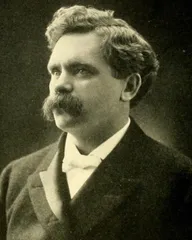
:
JESUS CHRIST: THE REVELATION OF GOD.* BY B. H. ROBERTS.
And this is life eternal, that they might know thee, the only true God, and Jesus Christ, whom thou hast sent. (St. John's Gospel xvii: 3).
And we know that the Son of God is come, and hath given us an understanding, that we may know him that is true, and we are in him
that is true, even in his Son Jesus Christ. This is the true God, and eternal life. (I John v: 20.)
It will be taken for granted that the primary object of the mission of the Lord Jesus Christ was to redeem mankind, to be the Savior of the world. We have the warrant of scripture for that. It is shadowed forth in the words that God spoke in Eden to the ' 'Serpent," and having in mind the Lord Jesus
And I will put emnity between thee and the woman, and between thy seed and her seed; it shall bruise thy head, and thou shalt bruise his heel.f
Turning to the New Testament, we read:
For God so loved the world, that he gave his only begotten Son, that whosoever believeth in him should not perish, but have everlasting life. For God sent not his Son into the world to condemn the world; but that the world through him might be saved.J
*A discourse delivered in the Tabernacle, Ogden, Utah, Tuesday evening, April 22, 1902, under the auspices of the Young Men's Mutual Improvement Association of the Weber Stake of Zion. fGen. iii: 15. JSt. John iii: 16, 17.
— 788 IMPROVEMENT ERA.
I say to be the Savior of the world was the primary purpose of Christ's mission. But there is another purpose spoken of in scripture concerning the mission of the Lord Jesus. To one of the old prophets in Israel this was said: "Behold, a virgin shall con- ceive, and bear a son, and shall call his name Immanuel,"* "which," says Matthew in his Gospel, "being interpreted, is God
with us."t
In connection with this there is one more scripture I desire to call your attention to, this:
Great is the mystery of godliness: God was manifest in the flesh, justified in the Spirit, seen of angels, preached unto the Gentiles, believed on in the world, received up into glory.J
That this passage has direct reference to the Lord Jesus Christ no one can doubt; for to none but to him does the language apply. Here let me say with reference to the Bible statement that Christ was God "manifest in the flesh," we are told in a marginal rendering of the Greek word translated "manifest," in our English Bible, that it should be rendered "manifested," a stronger word; so that Jesus Christ, if the marginal rendering of the Greek be true, according to the teachings of Paul, was God "manifested" in the flesh. With this brief scriptural introduction to the subject, and with the statement clearly before you that Jesus Christ is God, and, moreover, is God manifested in the flesh, I desire to call your attention to the ideas prevailing in the world respecting Deity at the time of Messiah's advent among men; and this to show you there certainly was a very great necessity for a revelation of God being given; for men knew Him not; nor had they by searching been able to find him out. Men were without the knowledge of God, when it pleased God to reveal himself to them through his only begotten Son, Jesus, the Christ. I first direct your attention to India and Egypt. In these two countries what is commonly called Pantheism prevailed. Now, I
*Isaiah vii: 14. tMatt. iii: 23. JI Tim. iii: 16.
JESUS CHRIST: THE REVELATION OF GOD. 789
know that word represents complex rather than simple ideas to you, and needs a little explanation. Pantheism, speaking in a general way, is of two kinds: First, the Pantheism that sinks all nature into one substance, one essence, and then concludes that that one substance or essence is God. Such Pantheism as this is the purest Monism —that is, the one substance theory; and is
spoken of by some of our philosophers as the purest Theism — that is, faith in one God. Indeed, Pantheism, in this aspect of it, is
looked upon as a sort of exaggerated Theism; for it regards "God" as the only substance, of which the material universe and man are but ever-changing manifestations. It is the form of Pantheism which identifies mind and matter, the finite and infinite, making them but manifestations of one universal being; but in effect it denies the personality, by which I mean the individuality, of God. This was, and, for matter of that, is now, the general belief of many millions in India. The Pantheism which expands the one substance into all the variety of objects that we see in nature, is the second kind of Pantheism referred to a moment since, and re- gards those various parts as God, or God expanded into nature. This leads to the grossest kinds of idolatry, as it did in Egypt,
at the time of which I am speaking. Under this form of Panthe- ism men worshiped various objects in nature; the sun, moon and stars; in fact, anything and everything that bodied forth to their minds some quality, or power, or attribute of the Deity. This was the Pantheism of Egypt, and led to the abominable and disgusting idolatry of that land. Turn your attention now northward from India, and take into account those great masses of our race inhabiting China; and you shall find, according to the statement of Max Muller:
A colorless and unpoetical religion; a religion we might almost venture to call monosyllabic, consisting of the worship of a host of single spirits, representing the sky, the sun, storms and lightning, mountains and rivers; one standing by the side of the other without any mutual attraction, without any higher principle to hold them together. In addition to this, we likewise meet in China with the worship of an- cestral spirits, the spirits of the departed, who are supposed to retain some cognizance of human affairs, and to possess peculiar powers which they exercise for good or evil. This double worship of human and nat-
790 IMPROVEMENT ERA.
ural spirits constitutes the old and popular religion of China, and it has lived on to the present day, at least in the lower ranks of society, though there towers above it a more elevated range of half religious and half philosophical faith, a belief in two higher Powers, which, in the language of philosophy, may mean Form and Matter, in the language of ethics, Good and Evil, but which in the original language of religion and mythology are represented as Heaven and Earth.*
Such was the ancient religion of China; and such, to a very large extent, is the religion of China to this day. It must be re-
membered that the great Chinese philosopher Confucius did not disturb this ancient religious belief. He did not, in fact, profess to be a teacher of religion at all, but was content if he could but influence men to properly observe human relations. On one occasion he was asked how the "spirits could be served," to which he made answer, "If we are not able to serve men, how can we serve the spirits?" On another occasion he said to his follow- ers, "Respect the Gods, and keep them at a distance."
Let us now enter Northern Europe, among the Germanic tribes, and make inquiry as to what conceptions of God they held. Here you find a shadowy, undefined, and not well understood belief in the existence of an all-pervading influence, or spirit; a Supreme Being, to whom the Goths, at least, gave the name of "Alfader," meaning the father of all; yet, strange to say, they paid him no divine honors, gave him no worship; but contented themselves in worshiping inferior deities, their old war heroes in the main, whom they had apotheosized and who, it must be acknowledged, repre- sented the national qualities of that people at that time. Having thus briefly mentioned the faith of the people of north Europe —and can do no more than I this in each instance — next I in-
vite your attention to the ideas about God that obtained among the highly civilized Romans. And, by the way, the Romans accepted the mythology and the religion of the Greeks, for the most part, so that when we consider the ideas that prevailed among the Romans about God, it must be remembered that we are at the same time considering — the views of God that were entertained by the Greeks a people noted for the subtlety of their intellect, for their powers both of analy-
*Sciehce of Religion (Muller) pp. 61, 62.
JESUS CHRIST: THE REVELATION OF GOD. 791
sis and of synthesis; and for intuition of intellect which made them
well nigh prophets, at least of an intellectual, if not of a spiritual order. The Romans, for the most part were divided into the two great schools of philosophy, the Epicurean and the Stoic. Some of our young students will be telling me perhaps that I have over- looked the Academics. I do not mention them as a school of philosophy for the reason that, in my judgment, they had no phil- osophy; they advocated nothing; they were the agnostics of their — time that is, they were people who did not know, and like our modern agnostics, had a strong suspicion that nobody else knew. They represented merely the negative attitude of mind in their times. Still, they numbered in their following some of the most
considerable men of Rome, Cicero being among the number. By the way, it is through the writings of Cicero— especially through his Tusculan Disputations— that we become best acquainted with the theories of the two chief schools of philosophy I have men- tioned. And it is from his writings that I shall here condense what I have to say of the creeds of these schools of philosophy, or at least that part which concerns us here— the part relating to their conceptions of Deity, and first as to the doctrine of Epicurus: The Epicureans held that there were Gods in existence. They accepted the fact of their existence from the constant and universal opinion of mankind, independent of education, custom or law. "It must necessarily follow," they said, "that this knowledge is implanted in our minds, or, rather, innate in us." Their doctrine was: "That opinion respecting which there is a general agree- ment in universal nature must infallibly be true; therefore it must be allowed that there are Gods." "Of the form of the Gods, they held that because the human body is more excellent than that of other animals, both in beauty "All and for convenience, therefore the Gods are in human form. men are told by nature that none but the human form can be ascribed to the Gods; for under what other image did it ever ap-
sleeping or waking?" Yet these forms of pear to anyone either but "something like body;" "nor do they the Gods were not "body," contain blood, but something like blood." "Nor are they to be or reducible to number." "Nor considered as bodies of any solidity, the senses, is the nature or power of the Gods to be discerned by
:
792 IMPROVEMENT ERA.
but by the mind." They held, moreover, that the universe arose from chance; that the Gods neither did nor could extend their providential care to human affairs. The duty of worshiping the Gods was based upon the fact of their superiority to man. "The superior and excellent nature of the Gods requires a pious adoration from men, because it is pos- sessed of immortality, and the most exalted felicity; for whatever
excels has a right to veneration." Yet "all fear of the power and anger of the Gods should be banished; for we must understand that anger and affection are inconsistent with the nature of a happy and immortal being. These apprehensions being removed, no dread of the superior powers remains." On the same principles that the existence of the Gods was allowed, that is, on the pre-notion and universal belief of their existence, it was held that the Gods were happy and immortal, to which the Epicurians added this doctrine "That which is eternally happy cannot be burdened with any labor itself, nor can it impose any labor on another; nor^can it be injfiuenced
by resentment or favor; because things which are liable to such feel- ings must be weak and frail." It was generally held by the opponents of Epicurus that, as a matter of fact, he did not believe in the existence of the Gods at all; but dared not deny their existence for fear of the Athenian law against impiety, and because such denial would render him un- popular. But after becoming acquainted with his views as to the nature of the Gods, one is prepared to accept the criticism of his doctrines which Cicero puts in the mouth of Gotta, in his Tusculan Disputations, viz., "Epicurus has allowed a deity in words but destroyed him in fact." He rendered his Gods as intangible, as useless, as far removed from exciting adoration, or of controlling the universe, as have the orthodox Christian sects their Deity, who is said to be without body, or parts, or passions; which, if such be his nature, leaves him without quality through which he may affect humanity or the universe either for good or evil. I next take up the school of the Stoics. The Stoics believed (1) that there were Gods; (2) they undertook to define their char- acter and nature; (3) they held that the universe is governed by them, and (4) that they exercise a superintendency over human affairs.
—
JESUS CHRISl: THE REVELATION OF GOD. 793
The evidence for the existence of the Gods they saw primarily in the universe itself. "What can be so plain and evident," they argued, "when we behold the heavens and contemplate the celes- tial bodies, as the existence of some supreme, divine intelligence by which these things are governed?" "Were it otherwise," they added, "Ennius would not with universal approbation have said,
"Look up to the refulgent heavens above Which all men call unanimously Jove ******* Of Gods and men the sire.*'
Of the nature of the Deity they held two things: First of
all, that he is an animated though impersonal being; secondly, that there is nothing in all nature superior to him. "I do not see,"
says one well versed in their doctrines, "what can be more con- sistent with this idea and pre-conception than to attribute a mind and divinity to the world, the most excellent of all beings." The God of the Stoics is further described as a corporeal being, united to matter by a necessary connection; and, moreover, as subject to fate, so that he can bestow neither rewards nor punishments. That this sect held to the extinction of the soul at death, is allowed by all the learned. The Stoics drew their philosophy mainly from Socrates and Aristotle. Their cosmology was pantheistic, matter and force being the two ultimate principles, and God being the working force of the universe, giving it unity, beauty and adaptation. I shall finish this brief review of the prevailing ideas about Deity at the advent of Messiah by reference to the state of belief respecting God among the Jews at this period. I have reserved the consideration of their views upon the subject until the last advisedly, chiefly for the reason that to their ancestors, in very ancient times,
a knowledge of the true God was revealed. Their ancestors consti- tuted a nation, a people, peculiarly related to God; chosen by him, it would seem, to stand as his witnesses among the nations of the
earth. But at the time of the advent of Jesus Christ, the Jews were in an apostate condition, and ready to reject their Deity when taking he should come. Moreover, their leading teachers were the every step that their ingenuity could devise for harmonizing truths which God had made known to them with the more fashion-
able conceptions of God as entertained by one or the other of the
— 794 IMPR VEMENT ERA.
great sects of philosophy among the Romans. One Aristobulus, a hundred and fifty years before the advent of Christ, was exerting in Alexandria all his powers of scholarship to erase from the pages
of the Jewish scriptures, or destroy by a process of spiritualization, every idea that God was in human form, or that man had been created in the image of God. Every anthropomorphic^utterance of the patriarchs or of the prophets was studiously purged from the scriptures he undertook to revise. A little later, Philo — the great Jewish scholar of his age, born between the years 20 and 10 B.C. is engaged in the same work, undertaking to put the revelations of the Jews in harmony with the teachings of the Greeks. I read you an authority upon that subject:
Philo's doctrine starts from the idea that God is "being" absolutely bare of all quality. All quality in finite beings has limitation, and no limitation can be predicated of God, who is eternal, unchangeable, simple substance, free, self-sufiicient. To predicate any quality of God would be to reduce Him to the sphere of finite existence. Of him we can only say that he is, not what he is, and such purely neg- ative predictions as to His being appear to Philo * * * ^jjg Q^iy
way of securing His absolute elevation above the world [that is, above and outside of the material universe]. A consistent application of Philo's abstract conception of God would exclude the possibility of any active relation of God to the world, and therefore of religion; for a being absolutely without quality and movement cannot be conceived as actively concerned with the multiplicity of individual things. And so, in fact, Philo does teach that the absolute perfection, purity, and lofti- ness of God would be violated by direct contact with imperfect, impure, and finite things. But the possibility of a connection between God and the world is reached through a distinction which forms the most import- ant point in his theology and cosmology. The proper being of God is distinguished from the infinite multiplicity of divine ideas or forces: God himself is without quality, but he disposes of an infinite variety of divine forces, through whose mediation an active relation of God to the world is brought about. In the details of his teaching as to these me- diating entities Philo is guided partly by Plato and partly by the Stoics; but at the same time he makes use of the concrete religious conceptions of heathenism and Judaism. Following Plato, he first calls them "Ideas," or patterns of all things; they are thoughts of God, yet possess a real existence, and were produced before the creation of the sensible world,
JESUS CHRIST: THE REVELATION OF GOD. 795
of which they are the keys. * * * philo maintains that the divine forces are identical with the "demons" of the Greeks and the "angels'' of the Jews, i. e., servants and messengers of God, by means of which he communicates with the finite world. * * * Philo regards all in- dividual "ideas" as comprehended in one highest and most general "idea" or force —the unity of the individual idea — which he calls the "logos" or "reason" of God, and which is again regarded as operative "reason," The logos, therefore, is the highest mediator between God and man, the world, the first-born son of God, the archangel, who is the vehicle of all revelation, and the high priest who stands before God on behalf of the world. Through whom the .world was created.*
In all this one may see only too plainly the effort to harmon- ize Jewish theology with Greek philosophy —the plain anthro- morphism of the Hebrew scriptures with the fashionable deism of the Stoics. Thus the Jews —the people who had been chosen to be wit- nesses for God to the world — appeared to have grown weary of the mission given to them. Tired were they of standing in a position where their hands seemed to be raised against all men, and all men's hands against them. They had lost the spirit that had supported their fathers, and hence were searching out these cowardly compromises by which harmony could be shown to exist between the philosophy of the Gentiles and the revelations of God to their fathers. This completes the survey I intended to make of this field. Nowhere have we found a knowledge of the true and living God. Nowhere a teacher who comes with definite knowledge of this subject of all subjects— a subject so closely related to
eternal life, that to know God is said in the scriptures to be life
eternal; and, of course, the corollary naturally follows, viz., not to know God is not to possess eternal life. We can form no other conclusion from the survey we have taken of the world's ideas respecting the existence and nature of God, than that forced upon — us the world stood in sore need of a revelation of God. He whom the Egyptians and Indians sought for in their Pantheism, must be made known. God, whom Confucius would have men
- Professor B. Schurer, of University of Giessen, art. Philo in Encyclo.
Brit.
796 IMPROVEMENT ERA.
respect, but keep at a distance, must draw near. The "Alfader*' of the Goths, undefined, must be incomprehensible to them, brought out of the northern darkness into glorious light. The God-idea that prevailed among the Greek philosophers must be brought from the mists of their idle speculations and made to stand before the world. He whom the Jews were seeking to deny and forsake must be revealed again to the children of men. And lo! when the vail falls from the revelation that God gives of himself, what form is that which steps forth from the background of the world's ignorance and mystery? A man, as God lives! — Jesus of Nazareth the Great Peasant Teacher of Judah! They who thought God impersonal, without form, must know him hence- forth as both a person and in the form of man. They who have held him to be without quality, must henceforth know him as possessed of the qualities of Jesus of Nazareth. They who have regarded him as infinitely terrible, must henceforth know him also as infinitely gentle. Those who would hold him at a distance, will now permit him to draw near. This is the world's mystery re- vealed. This is God manifested in the flesh. This is the Son of God, who comes to reveal the Father, for he is the express image and likeness of that Father's person, and the reflection of that Father's mind. Henceforth when men shall say, Show us the Father, he shall point to himself as the complete revelation of the Father, and say, "He that hath seen me, hath seen the Father also."
Henceforth, when men shall dispute about the "being" and "na- ture" of God, it shall be a perfect answer to uphold Jesus Christ as the complete, perfect revelation and manifestation of God, and through all the ages it shall be so; there shall be no excuse for men saying they know not God, for all may know him, from the least to the greatest, so tangible, so real a revelation has God given of himself in the person and character of Jesus Christ. Mark you, in all this there is not a word about the mysterious, ineffable generation of the Son of God from the Father,together with all the mysteries that men have gathered together in their learned disqusitions about God. No queston is raised as to whether Jesus was made out of nothing or begotten by ineffable gene- ration from the substance of the Father. Whether he is consub- stantial, that is, of the same substance with the Father, or only of
JESUS CHRIST: THE REVELATION OF GOD. 797
a similar substance. Nor is there any question raised as to whether Jesus was "begotten" before or after time began. All these and a hundred other questions arose after the Christian doctrine of Deity began to come in contact with the Greek and other philosophies. Jesus accepted the existence of God as a settled fact, and proclaimed himself to be the Son of God; offend- ing the Jews by so doing, for they saw that he made himself equal with God;* and being a man, held forth himself to be God.t Slow indeed were they to learn the great truth plainly revealed in Jesus Christ, that God is a perfect man. Such was Jesus Christ, and he was God manifested in the flesh. "Was," did I say? Nay, "is," I should have said; and such will he remain for ever; a spirit he is, clothed with an immortal body, a resurrected body of tangible flesh and bones, made eternal, and now dwelling in heaven with his Father, of whom he is the express image and likeness; as well now as when he was on earth; and hence the Father also must be a personage of flesh and bones, as tangible as the exalted man, Christ Jesus the Lord.
Right at this point there comes to my mind a thought which I did not making any part of this discourse; but since it intend comes ,1 will welcome it, and give it also to you. It is this: The revelations that God has given of himself and of the creation of the heavens and of the earth, are by no means an attempt to ex- plain the whole universe. I think on former occasions, in your presence, I have called attention to the vastness of the universe by which we are surrounded, compared to which this little earth of ours is grain of sand upon an endless seashore, or a but as a single mote floating in God's sunbeam, one of the very least of his mighty creations. Through means of telescopes, men of science have brought within the range of our vision the existence of whole galaxies of stars which the human eye unaided has never seen, —galaxies as immense . as that to be seen by our unaided eyes, so remote in distance from us that it would require a million years for a ray of light, moving as it does with almost incredible speed, to reach us from them; consequently they must have been in ex-
- John v: 18.
t John x: 30-33.
798 IMPROVEMENT ERA.
istencerthrough all those years. In a little work I was reading the other day, called "A Short View of Great Questions," I found the following statements:
Sir Robert S. Ball, President of the Royal Astronomical Society of England, has recently made the statement, that the existence of thirty million suns has now been demonstrated by scientific processes. If
there be an average of ten planets to each sun, then there are known to be about three hundred million worlds in existence. An unimpeded tele- graphic message, which could girdle the earth eight times in one second, and reach our sun from the earth in eight minutes, would require eighteen hundred years to reach the more remote of the other known suns. * * * The three hundred million worlds, of which we on this
earth are dimly conscious through the eye of science, are in reality no appreciable part of the universe. The great space which has been opened to our vision cannot be considered even as the vestibule of the greater domain of the Eternal Power. Our own world, in comparison with the universe, is 'bot even as one drop of water to all the water of all the oceans of this globe.*
The little volume of revelation that we have, the Bible, is no attempt to tell about the "beginnings" of all these worlds —of the whole universe, the laws that obtain therein, or about the races of beings that inhabit them, or the Gods that rule there. The rev- elations that we have received are those that pertain to our earth, and to its heavens; and to our God. Our revelations are but local in their character, being confined to us, and pertain solely to our earth and the heavens associated with it, not to all the vast creations of the Gods. I trust that this explanation, merely mentioned in passing, will help our young men to compre- hend better the scriptures they are studying.*
- A Short View of Great Questions, p. 61.
- See Pearl of Great Price, chapter I, verses 31-39, and chapter II verse 1. (To be concluded next number.)