History of the Prophet Joseph
Improvement Era, vol. 5, no. 3, January 1902, pp. 161 to 170
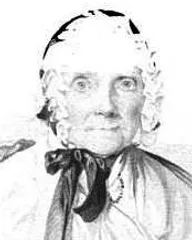
HISTORY OF THE PROPHET JOSEPH. BY HIS MOTHER, LUCY SMITH. CHAPTER XIII. THE AUTHOR'S DREAM. While we were living in the town of Tunbridge, my mind became deeply impressed with the subject of religion; which, prob- ably, was occasioned by my singular experience during my sickness at Randolph. I commenced attending Methodist meetings, and in order to oblige me, my husband accompanied me; but when this came to the ears of his oldest brother, he was so displeased, and said so much in regard to the matter, that my husband thought it best to desist. He said that he considered it hardly worth our while to attend the meetings any longer, as it would prove of but little advantage to us; besides this, it gave our friends such dis- agreeable feelings. I was considerably hurt by this, yet I made no reply. I retired to a grove not far distant, where I prayed to the Lord in behalf of my husband — that the true gospel might be presented to him, and that his heart might be softened so as to receive it, or, that he might become more religiously inclined. After praying some time in this manner, I returned to the house,
162 IMPROVEMENT ERA. much depressed in spirit, which state of feeling continued until I retired to my bed. I soon fell asleep, and had the following dream: — I thought that I stood in a large and beautiful meadow, which lay a short distance from the house in which we lived, and that everything around me wore an aspect of peculiar pleasantness. The first thing that attracted my special attention in this magnificent meadow, was a very pure and clear stream of water, which ran through the midst of it; and as I traced this stream, I discovered two trees standing upon its margin, both of which were on the same side of the stream. These trees were very beautiful, they were well proportioned, and towered with majestic beauty to a great height. Their branches, which added to their s)Tnme- try and glory, commenced near the top, and spread themselves in luxur- ious grandeur around. I gazed upon them with wonder and admira- tion; and after beholding them a short time, I saw one of them was surrounded with a bright belt, that shone like burnished gold, but far more brilliantly. Presently, a gentle breeze passed by, and the tree encircled with this golden zone, bent gracefully before the wind, and waved its beautiful branches in the light air. As the wind increased, this tree assumed the most lively and animated appearance, and seemed to express in its motions the utmost joy and happiness. If it had been an intelligent creature, it could not have conveyed, by the power of language, the idea of joy and gratitude so perfectly as it did; and even the stream that rolled beneath it, shared, apparently, every sensation felt by the tree, for, as the branches danced over the stream, it would swell gently, then recede again with a motion as soft as the breathing of an infant, but as lively as the dancing of a sunbeam. The belt also par- took of the'same influence, and, as it moved in unison with the motion of the stream and of the tree, it increased continually in refulgence and magnitude, until it became exceedingly glorious. I turned my eyes upon its fellow, which stood opposite; but it was not surrounded with the belt of light as the former, and it stood erect and fixed as a pillar of marble. No matter how strong the wind blew over it, not a leaf was stirred, not a bough was bent; but obstinately stiff it stood, scorning alike the zephyr's breath, or the power of the mighty storm. I wondered at what I saw, and said in my heart. What can be the meaning of all this? And the interpretation given me was, that these personated my husband and his oldest brother, Jesse Smith; that the stubborn and unyielding tree was like Jesse; that the other, more pliant
HISTORY OF THE PROPHET JOSEPH. 163 and flexible, was like Joseph, my husband; that the breath of heaven, which passed over them, was the pure and undefiled gospel of the Son of God, which gospel Jesse would always resist, but which Joseph, when he was more advanced in life, would hear and receive with his whole heart, and rejoice therein; and unto him would be added intelligence, happiness, glory, and everlasting life. CHAPTER XIV. FIRST VISION OF JOSEPH SMITH, SENIOR — THE BOX — SECOND VISION — THE TREE AND THE SPACIOUS BUILDING. After selling the farm at Tunbridge, we moved only a short dis- tance, to the town of Royalton. Here we resided a few months, then moved again to Sharon, Windsor county, Vermont. In the latter place, my husband rented a farm of my father, which he cultivated in the summer, teaching school in the winter. In this way my husband continued laboring for a few years, during which time our circumstances gradually improved, until we found ourselves quite comfortable again. In the meantime, we had a son whom we called Joseph, after the name of his father; he was born December 23, 1805. I shall speak of him more particularly by and by. We moved thence to Tunbridge. Here we had another son, whom we named Samuel Harrison, born March 13, 1808. We lived in this place a short time, then moved to Royalton, where Ephraim was born, March 13, 1810. We continued here until we had another son, born March 13, 1811, whom we called William. About this time my husband's mind became much excited upon the subject of religion; yet he would not subscribe to any particular system of faith, but contended for the ancient order, as established by our Lord and Savior Jesus Christ, and his Apostles. One night my husband retired to his bed, in a very thoughtful state of mind, contemplating the situation of the Christian religion, or the confusion and discord that were extant. He soon fell into a sleep, and before waking had the following vision, which I shall relate in his own words, just as he told it to me the next morning:^ "I seemed to be traveling in an open, barren field, and as I was traveling, I turned my eyes towards the east, the west, the north and the
164 IMPROVEMENT ERA. south, but could see nothing save dead, fallen timber. Not a vestige of life, either animal or vegetable, could be seen; besides, to render the scene still more dreary, the most death-like silence prevailed, no sound of anything animate could be heard in all the field. I was alone in this gloomy desert, with the exception of an attandant spirit, who kept con- stantly by my side. Of him I inquired the meaning of what I saw, and why I was thus traveling in such a dismal place. He answered thus: 'This field is the world, which now lieth inanimate and dumb, in regard to the true religion, or plan of salvation; but travel on, and by the wayside you will find on a certain log a box, the contents of which, if you eat thereof, will make you wise, and give unto you wisdom and understanding.' I carefully observed what was told me by my guide, and proceeding a short distance, I came to the box. I immediately took it up, and placed it under my left arm; then with eagerness I raised the lid, and began to taste of its contents; upon which all manner of beasts, horned cattle, and roaring animals, rose up on every side in the most threatening manner possible, tearing the earth, tossing their horns, and bellowing most terrifically all around me, and they finally came so close upon me, that I was compelled to drop the box, and fly for my life. Yet, in the midst, of all this I was perfectly happy though I awoke trembling." From this forward, my husband seemed more confirmed than ever, in the opinion that there was no order or class of religionists that knew any more concerning the Kingdom of God, than those of the world, or such as made no profession of religion whatever. In 1811, we moved from Royalton, Vermont, to the town of Lebanon, New Hampshire. Soon after arriving here, my husband received another very singular vision, which I will relate: — "I thought," said he, "I was traveling in an open, desolate field, which appeared to be very barren. As I was thus traveling, the thought suddenly came into my mind that I had better stop and reflect upon what I was doing, before I went any further. So I asked myself, 'What motive can I have in traveling here, and what place can this be?' My guide, who was by my side, as before, said, 'This is the desolate world; but travel on.' The road was so broad and barren, that I wondered why I should travel in it; for, said I to myself, 'Broad is the road, and wide is the gate that leads to death, and many there be that walk therein; but narrow is the way, and strait is the gate that leads to everlasting life, and few there be.that go in thereat.' Traveling a short distance further.
HISTORY OF THE PROPHET JOSEPH. 165 I came to a narrow path. This path I entered, and, when I had traveled a little way in it, I beheld a beautiful stream of water, which ran from the east to the west. Of this stream, I could see neither the source nor yet the mouth; but as far as my eyes could extend I could see a rope, running along the bank of it, about as high as a man could reach, and beyond me, was a low, but very pleasant valley, in which stood a tree, such as I had never seen before. It was exceedingly handsome, insomuch that I looked upon it with wonder and admiration. Its beautiful branches spread themselves somewhat like an umbrella, and it bore a kind of fruit, in shape much like a chestnut bur, and as white as snow, or, if possible, whiter. I gazed upon the same with considerable interest, and 3,s I was doing so, the burs or shells commenced opening and shedding their particles, or the fruit which they contained, which was of dazzling whiteness. I drew near, and began to eat of it, and I found it delicious beyond description. As I was eating, I said in my heart, 'I cannot eat this alone, I must bring my wife and children, that they may partake with me.' Accordingly, I went and brought my family, which consisted of a wife and seven children, and we all commenced eating, and praising God for this blessing. We were exceedingly happy, insomuch that our joy could not easily be expressed. While thus engaged, I beheld a spacious building standing opposite the valley which we were in, and it appeared to reach to the very heavens. It was full of doors and win- dows, and they were all filled with people, who were very finely dressed. When these people observed us in the low valley, under the tree, they pointed the finger of scorn at us, and treated us with all manner of dis- respect and contempt. But their contumely we utterly disregarded. I presently turned to my guide, and inquired of him the meaning of the fruit that was so delicious. He told me it was the pure love of God, shed abroad in the hearts of all those who love him, and keep his com- mandments. He then commanded me to go and bring the rest of my children. I told him that we were all there. *No,' he replied, 'look yonder, you have two more, and you must bring them also.' Upon raising my eyes, I saw two small children, standing some distance off. I imme- diately went to them, and brought them to the tree; upon which they com- menced eating with the rest, and we all rejoiced together. The more we ate, the more we seemed to desire, until we even got down upon our knees, and scooped it up, eating it by double handfulls. After feasting in this manner a short time, I asked my guide what was the meaning of the spacious building which I saw. He replied, 'It is Babylon, it is Babylon, and it must fall. The people in the doors and windows are the
166 IMPROVEMENT ERA. inhabitants thereof, who scorn and despise the Saints of God, because of their humility.' I soon awoke, clapping my hands together for joy." CHAPTER XV. SICKNESS AT LEBANON— SOPHRONIA'S MIRACULOUS RECOVERY. We moved, as before-mentioned, to the town of Lebanon, New Hampshire. Here we settled ourselves down, and began to contemplate, with joy and satisfaction, the prosperity which had attended our recent exertions; and we doubled our diligence, in order to obtain more of this world's goods, with the view of assist- ing our children, when they should need it; and, as is quite natural, we looked forward to the decline of life, and were provid- ing for its wants, as well as striving to procure those things which contribute much to the comfort of old age. As our children had, in a great measure, been debarred from the privilege of schools, we began to make every arrangement to attend to this important duty. We established our second son Hy- rum in an academy at Hanover; and the rest, that were of sufficient age, we were sending to a common school that was quite conven- ient. Meanwhile, myself and companion were doing all that our abilities would admit of for the future welfare and advantage of the family; and were greatly blessed in our labors. But this state of things did not long continue. The typhus fever came into Lebanon, and raged tremendously. Among the number seized with this complaint were, first, Sophronia; next Hy- rum, who was taken while at school, and came home sick; then Alvin; in short, one after another was taken down, till all the fam- ily, with the exception of myself and husband, were prostrated upon beds of sickness. Sophronia had a heavy siege. The physician attended her eighty-nine days, giving her medicine all the while; but on the ninetieth day, he said she was so far gone, it was not for her to receive any benefit from medicine, and for this cause he discontin- ued his attendance. The ensuing night, she lay altogether motion- less, with her eyes wide open, and with that peculiar aspect which bespeaks the near approach of death. As she thus lay, I gazed upon her as a mother looks upon the last shade of life in a darling
HISTORY OF THE PROPHET JOSEPH. 167 child. In this moment of distraction, my hnsband and myself clasped our hands, fell upon our knees by the bedside, and poured out our grief to God, in prayer and suppUcation, beseeching him to spare our child yet a little longer. Did the Lord hear our petition? Yes; he most assuredly did, and before we rose to our feet, he gave us a testimony that she would recover. When we first arose from prayer, our child had, to all appearance, ceased breathing. I caught a blanket, threw it around her, then, taking her in my arms, commenced pacing the floor. Those present remonstrated against my doing as I did, say- ing, "Mrs. Smith, it is all of no use; you are certainly crazy, your child is dead." Notwithstanding, I would not, for a moment, re- linquish the hope of again seeing her breathe and live. This recital, doubtless, will be uninteresting to some ; but those who have experienced in life something of this kind are susceptible of feeUng, and can sympathize with me. Are you a mother who has been bereft of a child? Feel for your heart-strings, and then tell me how I felt with my expiring child pressed to my bosom! Would you at this trying moment feel to deny that God had "pow- er to save to the uttermost all who call on him"! I did not then, neither do I now. At length she sobbed. I still pressed her to my breast, and continued to walk the floor. She sobbed again, then looked up in- to my face, and commenced breathing quite freely. My soul was satisfied, but my strength was gone. I laid my daughter on the bed, and sunk by her side, completely overpowered by the intensity of my feelings. From this time forward Sophronia continued mending, until she entirely recovered. CHAPTER XVI. THE SUFFERINGS OF JOSEPH SMITH, JUNIOR, WITH A FEVER SORE — EXTRACTION OF LARGE FRAGMENTS OF BONE FROM ONE OF HIS LEGS. Joseph, our third son, having recovered from the typhus fever, after something like two weeks' sickness, one day screamed
168 IMPROVEMENT ERA. out while sitting in a chair, with a pain in his shoulder, and, in a very short time, he appeared to be in such agony, that we feared the consequence would prove to be something very serious. We immediately sent for a doctor. When he arrived, and had exam- ined the patient, he said that it was his opinion that this pain was occasioned by a sprain. But the child declared this could not be the case, as he had received no injury in any way whatever, but that a severe pain had seized him all at once, of the cause of which he was entirely ignorant. Notwithstanding the child's protestations, still the physician insisted that it must be a sprain, and consequently, he anointed his shoulder with some bone linament, but this was of no advan- tage to him, for the pain continued the same after the anointing as before. When two weeks of extreme suffering had elapsed, the attend- ant physician concluded to make closer examination: whereupon he found that a large fever sore had gathered between his breast and shoulder. He immediately lanced it, upon which it discharged fully a quart of matter. As soon as the sore had discharged itself, the pain left it, and shot like lightening (using his own terms) down his side into the marrow of the bone of his leg, and soon became very severe. My poor boy, at this, was almost in despair, and he, cried out "Oh, father! the pain is so severe, how can I bear it!" His leg soon began to swell, and he continued to suffer the greatest agony for the space of two weeks longer. During this period, I carried him much of the time in my arms, in order to mitigate his suffering as much as possible; in consequence of which I was taken very ill myself. The anxiety of mind that I experienced, together with physical over-exertion, was too much for my consti- tution, and my nature sank under it. Hyrum, who was rather remarkable for his tenderness and sympathy, now desired that he might take my place. As he was a good, trusty boy, we let him do so; and, in order to make the task as easy for him as possible, we laid Joseph upon a low bed, and Hyrum sat beside him, almost day and night, for some considerable length of time, holding the affected part of his leg in his hands, and pressing it between them, so that his afflicted
HISTORY OF THE PROPHET JOSEPH. 169 brother might be enabled to endure the pain, which was so excru- ciating that he was scarcely able to bear it. At the end of three weeks, we thought it advisable to send again for the surgeon. When he came, he made an incision of eight inches, on the front side of the leg, between the knee and ankle. This relieved the pain in a great measure, and the patient was quite comfortable until the wound began to heal, when the pain became as violent as ever. The surgeon was called again, and he this time enlarged the wound, cutting the leg even to the bone. It commenced healing the second time, and as soon as it began to heal, it also began to swell again, which swelling continued to rise till we deemed it wis- dom to call a council of surgeons; and when they met in consulta- tion, they decided that amputation was the only remedy. Soon after coming to this conclusion, they rode up to the •door, and were invited into a room, apart from the one in which Joseph lay. They being seated, I addressed them thus: "Gentle- men, what can you do to save my boy's leg?" They answered, "We can do nothing; we have cut it open to the bone, and find it so affected that we consider his leg incurable, and that amputation is absolutely necessary in order to save his life." This was like a thunderbolt to me. I appealed to the princi- pal surgeon, saying, "Dr. Stone, can you not make another trial? Can you not, by cutting around the bone, take out the diseased part, and perhaps that which is sound will heal over, and by this means you will save his leg? You will not, you must not, take off his leg, until you try once more. I will not consent to let you enter his room until you make me this promise." After consulting a short time with each other, they agreed to do as I had requested, then went to see my suffering son. One of the doctors, on approaching his bed, said, "My poor boy, we have come again." "Yes," said Joseph, "I see you have; but you have not come to take off my leg, have you, sir?" "No," replied the surgeon, "it is your mother's request that we make one more effort, and that is what we have now come for." The principal surgeon, after a moment's conversation, ordered cords to be brought to bind Joseph fast to a bedstead; but to this Joseph objected. The doctor, however, insisted that he must be
170 IMPROVEMENT ERA. confined, upon which Joseph said very decidedly, "No, doctor, I will not be bound, for I can bear the operation much better if I have my liberty." "Then," said Dr. Stone, "will you drink some brandy?" "No," said Joseph, "not one drop." "Will you take some wine?" rejoined the doctor. "You must take something, or you can never endure the severe operation to which you must be subjected." "No," exclaimed Joseph, "I will not touch one particle of liquor, neither will I be tied down; but I will tell you what I will do — I will have my father sit on the bed and hold me in his arms, and then I will do whatever is necessary in order to have the bone taken out." Looking at me, he said, "Mother, I want you to leave the room, for I know you cannot bear to see me suffer so; father can stand it, but you have carried me so much, and watched over me so long, you are almost worn out." Then looking up into my face, his eyes swimming in tears, he continued, "Now, mother, promise me that you will not stay, will you? The Lord will help me, and I shall get through with it." To this request I consented, and getting a number of folded sheets, and laying them under his leg, I retired, going several hundred yards from the house in order to be out of hearing. The surgeons commenced operating by boring into the bone of his leg, first on one side of the bone where it was aflfected, then on the other side, after which they broke it oflf with a pair of forceps or pincers. They thus took away large pieces of the bone. When they broke off the first piece, Joseph screamed out so loudly, that I could not forbear running to him. On my entering the room, he cried out, "Oh, mother, go back, go back; I do not want you to come in — I will try to tough it out, if you will go away." When the third piece was taken away, I burst into the room again — and oh, my God! what a spectacle for a mother's eye! The wound torn open, the blood still gushing from it, and the "bed literally covered with blood. Joseph was pale as a corpse, and large drops of sweat were rolling down his face, whilst upon every feature was depicted the utmost agony! I was immediately forced from the room, and detained until the operation was completed; but when the act was accomplished,