Characteristics of Deity, from a “Mormon” Viewpoint II: Plurality of Gods and Future Possibilities for Man
Improvement Era, vol. 5, no. 2, December 1901, pp. 119 to 130
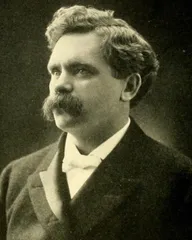
CHARACTERISTICS OF DEITY, FROM A ^^MORMON^' VIEWPOINT. BY B. H. ROBERTS.
PART II— PLURALITY OF GODS, AND FUTURE POSSIBILI- TIES FOR MAN.
But there are some expressions of scripture to consider which speak of the "oneness" of God. Speaking of the question which agitated the early Christian Church about eating meats offered to idols, Paul says: "We know that an idol is nothing in the world, and that there none other God but one."* Moreover, Jesus is
himself — made this rather strange remark that is, strange until one understands it: "I and my Father are one;" and so much one that he said, "He that hath seen me hath seen the Father. * *
Believest thou not that I am in the Father, and the Father in me? the words that I speak unto you I speak not of myself: but the Father that dwelleth in me, he doeth the works. BeHeve me that I am in the Father, and the Father in me."t Consequently our philosophers, especially those who lived when the present Christian creeds concerning God were formulated, thought that by some legerdemain or other they must make the three Gods —the Father, the Son and the Holy Ghost — just one person — ^being; and therefore
they set their wits at work to perform the operation. But let us seek out some reasonable explanation of this lan- guage. I refer again to the passage I just quoted from the writ-
- I Cor. 8:4. • tJohn 14.
:
120 IMPROVEMENT ERA.
ings of Paul with reference to there being "none other God but one." Immediately following what I read on that point comes this language For though there be that are called Gods, whether in heaven or in earth, (as there be Gods many, and Lords many.) But to us there is \mt one God, the Father, of whom are all things, and we in him; and one Lord Jesus Christ, by whom are all things, and we by him.*
Now I begin to understand. "To us," that is, pertaining to us, "there is but one God." Just as to the English subject there is but one sovereign, so "to us" there is but one God. But that no more denies the existence of other Gods than the fact that to the Englishman there is but one sovereign denies the existence of other rulers over other lands. While declaring that "to us there is but one God," the passage itself also plainly says that there be "Gods many and Lords many," and it is a mere assumption of the preachers that reference is made only to heathen gods. Again, we shall find help in the following passage in the 14th chapter of John: At that day ye shall know that I am in the Father, and ye in me, and I in you. Observe this last scripture, I pray you, "I in you," and "ye in me," as well as Jesus being in the Father. This oneness existing between God the Father and God the Son can amount to nothing more than this: that Jesus was conscious of the indwelling presence of the Spirit of the Father within him, hence he spoke of. himself and his Father as being one, and the Father within him doing the works. But mark you, not only are the disciples to know that the Father is in him, that is in Christ, and that Jesus is in the Father, but the disciples also are to be in Jesus. In what way? Jesus himself has furnished the explanation. When the solemn hour of his trial drew near, and the bitter cup was to be drained to the very dregs, Jesus sought God in secret prayer, and in the course of that prayer he asked for strength of the Father, not only for himself, but for his disciples also. He said: And now I am no more in the world, but these [referring to his dis- ciples] are in the world, and I come to Thee. Holy Father, keep through
- I Cor,, viii, 4-6.
:
CHARACTERISTICS OF DEITY. 121
thine own name those whom thou hast given me, that they may be one, as we are.*
Now I begin to see this mystery of "oneness." What does he mean when he prays that the disciples that God had given him should be one, as he and the Father are one? Think of it a mo- ment, and while you are doing so I will read you this
Neither pray I for these alone, but for them also which shall believe on me through their word; that they all may be one: as thou Father, art in me, and I in Thee, that they also may be one in us.f
Does that mean that the persons of all these disciples, whose resurrection and immortality he must have looked forward to, shall all be amalgamated into one person, and then that one fused into him or he into that one, and then the Father consolidated into the one- ness of the mass? No; a thousand times no, to such a proposition as that. But as Jesus found the indwelling Spirit of God within him, so he would have that same Spirit indwelling in his disciples, as well as those who should believe on him through their testi- mony, in all time to come; and in this way become of ©ne mind, actuated by one will. It must have been thoughts such as these that prompted Paul to say to the Ephesians:
For this cause I bow my knees unto the Father of our Lord Jesus Christ, of whom the whole family in heaven and earth is named, that he would grant you, according to the riches of his glory, to be strengthened with might by his Spirit in the inner man; that Christ may dwell in your hearts by faith; that ye, being rooted and grounded in love, may be able to comprehend with all saints what is the breadth, and length, and depth, and height; and to know the love of Christ, which passeth knowledge, that ye might be filled with all the fullness of God.
So that this oneness is not a oneness of persons, not a oneness of individuals, but a oneness of mind, of knowledge, of wisdom, of purpose, of will, that all might be uplifted and partake of the divine nature, until God shall be all in all. This is the explanation of the mystery of the oneness both of the Godhead and of the dis- ciples for which Jesus prayed. There are several other items in this branch of the subject
- John 17.
t John 17.
122 IMPROVEMENT ERA.
that would be of interest to discuss: but I must pay a little atten- tion to the second indictment brought against us by sectarian min- isters on the question of the plurality of Gods. We have already shown that the Father, the Son, and the Holy Ghost are three separate and distinct persons, and, so far as personaHty is concerned, are three Gods. Their "onenes" consists in being possessed of the same mind; they are one, too, in wisdom, in knowledge, in will and purpose, but as individuals they are three, each separate and distinct from the other, and three is plural. Now, that is a long way on the road towards proving the plurality of Gods. But, in addition to this, I would like to know from our friends — the sectarian ministers who complain of this part critical
of our faith — the meaning of the following expressions, carefully selected from the scriptures: "The Lord your God is God of Gods, and Lord of Lords."* That is from Moses. "The Lord God of Gods, the Lord God of Gods, he knoweth, and Israel he shall know."t That is from Joshua. "0 give thanks unto the God of Gods! * * give thanks to the Lord of Lords !"| That is David. "And shall speak marvelous things against the God of Gods."§ That is Daniel. "The Lamb shall overcome them: for he is Lord of Lords and — King of Kings."|| That is the beloved disciple of Jesus John the Revelator. Had I taken such expressions from the lips of the pagan kings or false prophets who are sometimes represented as speaking in the scriptures, you might question the propriety of making such quotations in support of the doctrine I teach; but since these ex- pressions come from prophets and recognized servants of God, I
ask those who criticise our faith in the matter of a plurahty of Gods to explain away these expressions of the scriptures. Furth- ermore, there is Paul's language, in his letter to the Corinthians^
*Deut. 10: 17. t Josh. 22:22. $Psalml36:2, 3. §Danielll: 36. II Rev. 17: 14.
:
CHARACTERISTICS OF DEITY. 123
already quoted, where he says, "that there be Gods many, and Lords many, whether in heaven or in earth." Had his expression been confined to those that are called gods in earth, it is possible that there might be some ground for claiming that he had reference to the heathen gods, and not true Gods; but he speaks of those that 'are Gods in heaven" as well as of gods in earth. Right in line with this idea is the following passage from the Psalms of the Prophet David: "God standeth in the congregation of the mighty; he judgeth among the Gods."* These undoubtedly are the Gods in heaven to whom Paul alludes, among whom the God referred to stands; among whom he judges. This is no reference to the heathen gods, but to the Gods in heaven. In this same Psalm, too, is the passage which seems to intro- duce some telling evidence from the Lord Jesus Christ himself, viz., "I have said ye are Gods; and all of you are the children of the Most High." You remember how on one occasion the Jews took up stones to stone Jesus, and he called a halt for just a moment; for he wanted to reason with them about it. He said: Many good works have I showed you from my Father; for which of those works do ye stone me?
Their answer was
For a good work we stone thee not; but for blasphemy; and because that thou, being a man, makest thyself God.
What an opportunity here for Jesus to teach them that there was but one God! How easily, too, had he been so disposed, he could have explained about his "human nature" and his "divine nature," and showed to them the distinction; for these words have become part of the phraseology of Christian polemics. But he did not do that. On the contrary, he affirmed the plurality of Gods. He said to them: 7s it not written in your law, I said, Ye are Gods? If he called them
Gods, unto whom the word of God came, and the scripture cannot be
broken; say ye of him, whom the Father hath sanctified, and sent into the world. Thou blasphemest; because I said, I am the Son of God? If I
- Psalm 82: 1.
124 IMPROVEMENT ERA.
do not the works of my Father, believe me not. But if I do, though ye believe not me, believe the works. .
Higher authority on this question cannot be quoted than the Son of God himself. While there is much more that could and doubtless ought to be said on that branch of the subject, I must leave it here^ because I have still another matter to present to you, on another branch of the subject; and that is, our third offense, namely, our belief that there is a possibility, through development, through growth, through doing what Jesus admonished his disci- ples to do— ''Be ye perfect, even as your Father in heaven is per- fect" —that the sons of God, somewhere and some time, may rise to a dignity that the Father and our Elder Brother have alreadj attained unto. Is there any doubt about men being the sons of God? If I
thought there was any in your mind, I would like to read to you the words of an authority upon the question. Paul, in speaking of the unknown God to whom the Athenians had erected an altar, said to them:
God that made the world and all things therein * * * ^a^h made of one blood all nations of men for to dwell on all the face of the earth, and hath determined the times before appointed, and the bounds of their habitation; that they should seek the Lord, if haply they might feel after him, and find him, though he be not far from every one of us: For in Him we live, and move, and have our being; as certain also of your own poets have said, For we are also his offspring. Forasmuch then as we are the offspring of God, we ought not to think that the Godhead is like unto gold, or silver, or stone, graven by art and man's device.*
Why ought they not to think that the Godhead is like unto gold or silver, graven by art and man's device? Because the very divinity within them, their own origin from God, ought to have taught them better than to bow down to images of wood and stone, the creations of man's hands. "Ye are the offspring of God," said the apostle. And David as quoted a moment ago, said: "I have said: ye are Gods, and all of you are children of the Most High." Upon which passage, it must be remembered, Jesus fixed the seal of his
Acts 17: 24-29;
CHARACTERISTICS OF DEITY. 125
approval as shown a moment ago, where he quotes it in controversy with the Jews. Is it a strange and blasphemous doctrine, then, to hold that man at the last shall rise to the dignity that the Father has attained? Is it "heathenish" to believe that the offspring shall ultimately be what the parent is? My soul, I wonder why men at all conscious of the marvelous powers within themselves should question this part of our faith. Think for a moment what progress a man makes within the narrow limits of this life. Regard him as he lies in the lap of his mother, a mere piece of organized, red pulp —a new-born babe There are ! eyes, indeed, that may see, but can- not distinguish objects; ears that may hear, but cannot distinguish sounds; hands as perfectly fashioned as yours or mine, but' helpless withal; feet and limbs, but they are unable to bear the weight of his body, much less walk.There lies a man in embryo, but helpless. And yet within the span of three score years and ten, by the mar- relous working of that wondrous power within in that little mass of pulp, what a change may be wrought! From that helpless babe may arise one like Demosthenes, or Cicero, or Pitt, or Burke, or Fox, or Webster, who shall compel listening senates to hear him, and by his master mind dominate their intelligence and their will, shall mark out for and compel them to think in channels that he them. Or from such a babe may come a Nebuchadnezzar, or an Alexander, or a Napoleon, who shall found empires and give direc- tions to the course of history. From such a beginning may come a Lycurgus, a Solon, a Moses, or a Justinian, who shall give consti- tutions and laws to kingdoms, empires and republics — blessing happy millions unborn in their day, and directing the course of nations along paths of orderly peace and virtuous liberty. From the helpless babe may come a Michael Angelo, who from some crude mass of stone from the mountain side shall work out a heaven-born vision that shall hold the attention of men for genera- tions,and make them wonder at the God-like powers of man that has created an all but living and breathing statue. Or a Mozart, a Beethoven, or a Handel, may come from the babe, and call out from the silence those melodies and the richer harmonies that lift the soul out of its present narrow prison house, and give it fellow- ship for a season with the Gods. Out from that pulp-babe may arise a master mind who shall seize the helm of the ship of state
126 IMPROVEMENT ERA.
and give to a nation course and direction through troublesome times, and anchor it at last in a haven of peace, prosperity and liberty; crown it with honor, too, and give it a proud standing amoung the nations of the earth; while he, the savior of his country, is followed by the benedictions of his countrymen. And all this may be done by a man in this life! Nay, it has been done, — between the cradle and the grave within the span of one short life. Then what may not be done in eternity by one of these God- men? Remove from his path the incident of death; or, better yet, contemplate him as raised from the dead; and give to him in the full splendor of manhood's estate an immortality — en.dless exist-
ence —what may we not hope that he shall accomplish? What limits can you venture to fix as marking the boundary of his devel- opment, of his progress? Are there any limits that can be con- ceived? Why should there be any limits thought of? Grant im- mortality to man and God for his guide, what is there in the way of intellectual, moral and spiritual development that he may not aspire to? If within the short space of mortal life there are men who rise up out of infancy and so become masters of the elements of fire and water and earth and air that they well-nigh rule them as Gods, what may it not be possible for them to do in a few hundreds or thousands of millions of years? What may they not do in eternity? To what heights of power and glory may they not ascend? It is idle today to ask men to be satisfied with the old sec- tarian notions of man's future life, where at best he is to be but one of a minstrelsy, twanging harps and singing to the glory of an incorporeal, bodiless, shapeless, passionless, immaterial, incompre- hensible God. Such conceptions of existence no longer satisfy the longings of the intelligent or spiritual-minded man. Growth, enlargement, expansion for his whole nature, as he recognizes that nature in its intellectual, moral, spiritual and social demands, are what his soul calls for; and the systems of theology that rise not to the level of these hopes are not worthy man's attention. Keep these thoughts in mind for a moment, I pray you. That is, remember the powers in man, what he has attained to in this
life, and what it is conceivable for him to attain unto after the
resurrection of the dead, when death shall have been removed from
CHARACTERISTICS OF DEITY. 127
Ws pathway. Keep this in mind, while I bring to bear on the theme under consideration another line of facts. Let us consider, just for a moment, and in a very simple man- ner, the universe in which man lives.And let us start with what we know, and keep well within those lines. First of all, then, as to the earth itself: Thanks to the knowledge man now has re- specting the earth, it is no longer regarded as the center of the universe, around which revolves sun and moon and stars, that in the ages of darkness were thought to have been created for the sole purpose of giving light by day and by night to the earth. No, friends, man has learned the true relation of the earth to these other objects in the universe. He knows that the earth is but one of a number of planets— one of a group of eight—that revolve regularly around the sun — and one of the smallest of the group at that. Outside of this group of planets, with whose motions and the laws thereof man has become familiar, is a vast host of fixed stars; that is, stars that apparently have no motion, or if they do, their orbits are so immense that man with the unaided eye can not discern it —hence we call them fixed stars. Our astronomers have learned that these fixed stars are not like the planets which move in their orbits about our sun, but, on the contrary, are like the sun itself, self-luminous bodies, and doubtless like the sun the center of opaque planetary groups; ar at least we may say that reasoning from analogy, that is regarded as a very probable fact. On this subject Richard A. Proctor, in his "Other Worlds Than Ours," remarks:
To sum up what we have learned so far from the study of the starry heavens — we see that, besides our sun there are myriads of other suns in the immensity of space; that these suns are large and massive bodies, capable of swaying by their attraction systems of worlds as important as those which circle around our own sun; that these suns are formed of elements similar to those which constitute our own sun, so that the worlds which circle round them may be regarded as in all probability similar in constitution to this earth; and that from these suns all forms of force which we know to be necessary to the existence of organized beings on our earth are abundantly emitted. It seems reasonable to conclude
that these suns are girt round by dependent systems of worlds. Though we cannot, as in the case of the solar system, actual see such worlds, yet
128 IMPROVEMENT ERA.
the mind presents them before us, various in size, various in structure, infinitely various in their physical condition and habitudes.*
With the unaided eye there is ordinarily within the range of our vision some five or six thousand of these fixed stars. With the aid of the telescope, however, there is brought within the range of man's vision between forty and fifty millions of fixed stars, with the probability existing that all these, as well as those fixed stars of sufficient magnitude to be within the range of our unaided vision are, like our own sun, the centers of groups of opaque planets, which, because they are opaque, cannot be seen by us. But this is but the beginning of the story of the universe. Immense as are the numbers of fixed stars to which I have called attention, and their distances so great that in some cases it would take a ray of light a million years to reach us from them, though light moves through space at such speed that it will travel some eight times around the earth in a single second —immense, I say, as are these numbers of fixed stars discovered to man by the telescope, they are after all but as the first "street lamps" of God's great universe —but a few of the motes in God's sunbeam. Let me explain. You have seen a ray of sunlight dart into a room through the half drawn curtains, and have observed that it reveals the existence of innumerable motes floating about in the sunbeam. You know that if the sunbeam should shift into another part of the room it will reveal the existence of motes in that part of the room also mil- — lions of them. So you know that the atmosphere in the whole room is filled with such motes; that the atmosphere in every room in your house is in that same condition — that is, filled with motes; so all the rooms in all the houses of your friends, or in the city; so also the whole circumambient air of the whole earth. Well, what man has discovered in space pertaining to the existence of fixed stars—great, self-luminous bodies, unquestionably the centers of planetary systems the same as our sun — is all but this, I say, is as the sunbeam revealing the existence of a few of the motes that exist in some little corner of a room: for out on the farthest edge of space explored by man's vision aided by the most power- ful helps he csn use, man in contemplation can stand and con-
'Other Worlds Than Ours," p. 248.
— !
CHARACTERISTICS OF DEITY. 129
ceive of still greater stretches of space filled by still more numer- ous suns, the centers of planetary systems, than has yet come within the range of man's vision. And standing thus in the midst of the universe, he begins to comprehend that great truth uttered by Joseph Smith when he contemplated the creations of the Gods. "There is no space," said he, "where there is no kingdom [created world], and there is no kingdom where there is no space, either a greater or a lesser space." But this is beside the subject. What I want you to do is to think how small and insignificant this earth of ours is, even in comparison with some of the planets of our own system, some of which are hundreds of times larger than our earth. And then the sun, the center of the system, itself what a speck it is in the universe! Though outweighing the com- bined mass of all the planets of which he is the center seven hun- dred and thirty times over, still he is but a point in the universe To quote the words of an eminent author: Thus extending our view from the earth to the solar system, from the solar system to the expanse of the group of stars to which we belong, we behold a series of gigantic nebular creations rising up one above an- other, and forming greater and greater colonies of worlds. No numbers can express them, for they make the firmament a haze of stars. Uni- formity, even though it be the uniformity of magnificence, tires at last, and we abandon the survey, for our eyes can only behold a boundless prospect and conscience tells us our own unspeakable insignificance.*
And the earth itself, then, what of that? What an insignifi- cant thing it is in the creations of God! With all its islands and continents; its rivers, lakes and mighty oceans; its mountains and its valleys; its towns, cities and all the tribes of men, together with
all their hopes and fears and petty ambitions — all is but a mote in God's sun-beam — less than a single grain of sand on the sea shore.
What I want to ask in the light of these reflections is this: Is it such a wonderful thing to believe that at the last, one of God's sons shall preside over this little earth as the God-president or God of it? That our Father Adam, the "Grand Patriarch" of our race — the "Ancient of Days" — "Michael, the Archangel," give him — what title you will — is it so hard to believe that he shall event-
Draper's "Intellectual Development of Europe," vol 2: p. 292.
130 IMPROVEMENT ERA.
ually attain to the dignity of the governorship of this earth, when it is redeemed and sanctified and become one of the glorified spheres of God? Some of the sectarian ministers are saying that we "Mormons" are ashamed of the doctrine announced by President Brigham Young to the effect that Adam will thus be the God of this world. No, friends, it is not that we are ashamed of that doctrine. If you see any change come over our countenances when this doc- trine is named, it is surprise, astonishment, that any one at all cap- able of grasping the largeness and grandeur of existence and the possibilities in man for growth, for progress, should be so lean of intellect, should have such a paucity of understanding, as to call it in question at all. That is what our change of countenance means —not shame for the doctrine Brigham Young taught. I feel that I must have wearied you with so long a discourse; I know very well I have wearied myself; and yet I am loth to quit this splendid field for thought. The subject, and our conception of it, must ever rise up grander than our expression of it is. It is
beyond our power to grasp it and make it plain in words. I can see in this "Mormon" doctrine of God the highest spirituality which the mind of man is capable of grasping. If our sectarian friends think that in us there is any drifting from the teachings of our prophets upon this subject, and that we of modern days are growing more spiritual than were they, it is not that we are chang- ing, or leaving the old moorings of our faith; but it is because they themselves are giving a little more careful attention to our doctrines, and begin to catch their first sight of the grand spirit- uality which all the while has pervaded our belief in the Gods and their government, and the heights of glory to which men — the off-
spring of the Gods —may finally attain. May the Lord bless jou. Amen.