The Story of “Mormonism”, III
Improvement Era, vol. 4, no. 10, August 1901, pp. 725 to 739
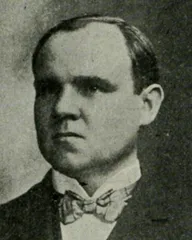
THE STORY OF "MORMONISM."* BY DR. JAMES E. TALMAGE, OF THE UNIVERSITY OF UTAH.
( Continued from page 698.)
But the expulsion from Jackson County was but a prelude to the tragedy soon to follow. A single scene of the bloody drama is known as the Haun's Mill massacre. A small settlement had been founded by "Mormon" families on Shoal Creek, and here on the 30th of October, 1838, a company of two hundred and forty fell upon the hapless settlers and butchered a score. No respect was paid to age or sex, gray heads, and infant lips that scarce had learned to lisp a word, vigorous manhood and immature youth, mother and maiden, fared alike in the scene of carnage, and their bodies were thrown into an old well. In October, 1838, the Governor of Missouri, the same Lilburn W. Boggs, issued his infamous exterminating order, and called upon the militia of the state to execute it. The language of this docu- ment, signed by the executive of a sovereign state of the Union, declared that the "Mormons" must be exterminated or driven from the state. Be it said to the honor of some of the officers entrusted with the terrible commission, that as they learned the true signifi- cance they resigned their authority rather than have anything to do with what they designated a cold-blooded butchery. But tools were not wanting, as indeed they never have been, for butchery and its kindred outrages. What the heart of man can conceive, the
*A lecture delivered by invitation at the Jniversity of Michigan, at Cornell University, and elsewhere.
726 IMPROVEMENT ERA.
hand of man will find a way to execute. The awful work was carried out with dread despatch. Oh, what a record to read; what — a picture to gaze upon; how awful the fact! an official edict offering expatriation or death to a peaceable community with no crime proved against them, and guilty of no loffense other than that of choosing to differ in opinion from the masses. American school boys read with emotions of horror of the Albigsnses driven, beaten and killed, with a pope's legate directing the butchery; and of the Vaudois, hunted and hounded like beasts as the effect of a royal decree; and they yet shall read in the history of their own country of scenes surpassing even these in their injustice and the depths of the inhuman hate which created them. In the dread alternative offered them, the Saints determined again to abandon their homes; but whither should they go? Al- ready they had fled before the lawless oppressor over well nigh half a continent; already were they on the frontiers of the country which they regarded as the land of promised liberty. Thus far every move had carried them westward, but farther west they could not go unless they forsook entirely the land of their birth, and aban- doned all hope of protection under the Constitution, which to them had ever been an inspired instrument, the majesty of which, as they had never doubted, would be some day vindicated, even to giving them the rights of American citizens. This time their faces were turned toward the east; and a host numbering from ten to twelve thousand, including many women and children, abandoned their homes and fled before their murderous pursuers, reddening the snow with bloody footprints as they journeyed. They crossed the Mississippi and sought protection on the soil of Illinois. Here their sad condition evoked for a time general commiseration. The press of the state denounced the treatment of the people by theMissourians; and vindicated the character of the "Mormons" as peaceable and law-abiding citizens. College professors published ex- pressions of their horror over the godless crusade; state officials,
including even the governor, gave substantial evidence of their sympathy and good feeling. This lull in the storm of outrage that had so long howled about them offered a strange contrast to their usual treatment. L3t it not be thought that all the people of Illinois were their friends; from the first, opposition was manifest,
THE STORY OF "MORMONISM." 727
but their condition was so greatly bettered that they might have thought the advent of their Zion to be near at hand. I stated that professional men, and even college professors raised their voices in commiseration of the "Mormon" situation and in denouncing the "Mormon" oppressors. Professor Turner of Illinois College wrote:
Who began the quarrel? Was it "Mormons?" Is it not notorious on the contrary that they were hunted like wild beasts from county to county before they made any resistance? Did they ever, as a body, re- fuse obedience to the laws, when called upon to do so, until driven to desperation by repeated threats and assaults by the mob? Did the state ever make one decent effort to defend them as fellow-citizens in their rights or to redress their wrongs? Let the conduct of its governors and attorneys and the fate of their Have any final petitions answer!
who plundered and openly insulted the "Mormons" ever been brought to the punishment due to their crimes? Let boasting murderers of begging and helpless infancy answer! Has the state ever remunerated even those known to be innocent for the loss of either their property or their arms? Did either the pulpit or the press through the state raise a note of re- monstrance or alarm? Let the clergymen who abetted and the editors who encouraged the mob answer!
As a sample of the press comments against the brutality of the Missourians I quote a paragraph from the Quincy Argus, March 16, 1839:
We have no language sufficiently strong for the expression of our indignation and shame at the recent transaction in a sister state, and that state, Missouri, a state of which we had long been proud, alike for her men and history, but now so fallen that we could wish her star stricken from the bright constellation of the Union. We say we know of no language sufficiently strong for the expression of our shame and abhorrence of her recent conduct. She has written her own character in letters of blood, and stained it by acts of merciless cruelty and bru- tality that the waters of ages cannot efface. It will be observed that an organized mob, aided by many of the military and civil and military officers of Missouri.with Governor Boggs at their head,have been the promi-
nent actors in this business, incited too it appears, against the "Mor- mons," by political hatred and by the additional motives of plunder and revenge. They have but too well put in execution their threats of ex-
728 IMPROVEMENT ERA
termination and expulsion and fully wreaked their vengeance on a body industrious and enterprising men, who had never wronged nor wished of themselves as to wrong them, but on the contrary had ever comported good and honest citizens, living under the same laws, and having the
same right with themselves to the sacred immunities of life, liberty and property.
Settling in and about the obscure village of Commerce, the "Mormon" refugees soon demonstrated anew the marvelous recuper- ative power with which they were imbued, and a city seemed to spring from the earth. Nauvoo— the City Beautiful—was the name given to this new abiding place. It was situated but a few miles from Quincy, in a bend of the majestic river, giving the town three water fronts. It seemed to nestle there as if the
Father of Waters was encircling it with his mighty arm. Soon a glorious temple crowned the hill up which the city had crept in its rapid growth. Their settlements extended into Iowa, then a terri- tory. Governor Lucas, the chief executive of Iowa, and later a governor of Ohio, testified to their worthiness as citizens, and pledged them the protection of the commonwealth. The city of Nauvoo was chartered by- the state of Illinois, and the rights of local self government were assured to its citizens. A military or- ganization, the "Nauvoo Legion," was authorized, and the estab- lishment of a university was provided for; both these organizations were successfully effected. It was here that the memorial was prepared and sent to the national government, reciting the out- rages of Missouri, and asking reparation. Joseph Smith himself, the head of the delegation, had a personal interview with Presi- dent Van Buren, in which the grievances of the Latter-day Saints were presented. Van Buren replied in words which have since be- come famous in "Mormon" literature, "Your cause is just, but I can do nothing for you." The peaceful conditions at first characteristic of their Illinois settlement were not to continue. The element of political influ- ence asserted itself, and the "Mormons" bade fair to soon wield the balance of power in local affairs. The characteristic unity so marked in connection with every phase of the people's existence, promised too much immigration to Hancock county was continu- ;
THE STORY OF "MORMONISM." 729
011s, and the power of the Saints seemed likely to be soon of for- midable proportions. With this as the true motive, many pretexts for annoyance were found; and arrests, trials, and acquitals were common experiences of The Church officers. A charge, which promised to prove as devoid of foundation as had the excuse for the fifty arrests preceding it, led Joseph Smith, President of The Church, and Hyrum Smith, the Patriarch, to again surrender themselves to the officers of the law. Thpy were taken to Carthage, Joseph having declared to friends his belief that they were going to the slaughter. Governor Ford gave to the prisoners his personal guarantee for their safety; but mob violence was — supreme more mighty than the power of the state militia placed there to guard the prison, and these men were shot to death, even while under the governor's plighted' pledge of protection. Hyrum fell first; and Joseph, appearing at one of the windows in the sec- ond story, received the lead of the besieging hordes, led by a recreant though professed minister of Christ. But the brutish passion of the mob was not yet sated: propping the body against a well curb in the jail-yard, the murderers poured a volley of bullets into the corpse, and fled. Thus was the unholy vow of the mob fulfilled, that as law could not touch the "Mormon" leaders, powder and ball should. John Taylor, who became years afterward Presi- dent of The Church, was in the jail at the time, received four bul- lets, and was left supposedly dead.
Until this time, Joseph Smith had been more than the chief ecclesiastical officer; his presence and personality had been ever powerful as stimuli in the people's hearts; none knew his personal power better than the members of his own flock, unless indeed it were the wolves who were ever seeking to harry the fold. It had been the boast of anti-"Mormons" that with Joseph Smith removed, The Church would crumble to pieces of itself. In that personality of their leader, it was thought the secret of the people's strength lay; and, like the Philistines, the enemy struck at the supposed bond of strength. Terrible as was the blow of the fearful fatality, The Church soon emerged from the despairing state of poignant grief, and rose in power mightier than before. It is the faith of this people that while the work of God on earth is carried on by men, yet mortals are but the instruments n the hands of the Divine power
730 IMPROVEMENT ERA.
for the accomplishment of high and mighty purposes. The death of the President disorganized the First Presidency of The Church; but the quorum next in authority stepped to the front/and the prog- ress of The Church was in no way hindered. The actual work of the ministry was not arrested, the people paused but long enough to bury their dead and clear their vision from the blinding tears that fell. Let us take a backward glance, though it be but a brief one, at this strange man. Though his opponents deny him the divine commission with which his friends believe he was charged, they all, friends and foes alike, admit that he was a great man. By the testimony of his life's work and the sanctifying seal of his mar- tyrdom, thousands have come to acknowledge him all that he pro- fessed to be —a messenger from God to the people. He is not without admirers among men who deny the truth of his principles, and the faith of his people. A historical writer of the time, Josiah Quincy, a few weeks after the martyrdom, wrote:
It is by no means improbable that some future text book for the use of generations yet unborn, will contain a question something like this: "What historical American of the nineteenth century has exerted the most powerful influence upon the destinies of his countrymen?" and it is by no means impossible that the answer to that interrogatory may be
thus written — 'Joseph Smith, ' the Mormon Prophet." And the reply, ab- surd as it doubtless seems to most men now living, may be an obvious commonplace to their descendants. History deals in surprises and para- doxes quite as startling as this. A man who established a religion in this age of free debate, who was and is today accepted by hundreds of thousands as a direct emissary from the Most High such a rare human — being is not to be disposed of by pelting his memory with unsavory epithets. * * * The most vital questions Americans are asking each other today, have to deal with this man and what he has left us. * * * Joseph Smith, claiming to be an inspired teacher, faced adversity such as few men have been called to meet, enjoyed a brief season of prosperity such as few men have ever attained, and finally * * * went cheerfully to a martyr's death. When he surrendered his person to Governor Ford, in order to prevent the shed- ding of blood, the Prophet had a presentiment of what was before him. 'I am going like a lamb to the slaughter," he is reported to have said,
THE STORY OF "MORMONISM." 731
"but I am as calm as a summer's morning. I have a conscience void of offense, and shall die innocent."
The "Mormon" people regarded it as a duty to make every proper effort to bring the perpetrators of the foul assassination of their leaders to justice; sixty names were presented to the local grand jury, and of the persons so designated, nine were indicted. After a farcical semblance of a trial, these were acquitted, and thus was notice, sanctioned by the constituted authority of the law, served upon all anti-' 'Mormons" of Illinois, that they were safe in any assault they might choose to make on the subjects of their hate. And the mob proved to be composed of apt pupils in the conning of this lesson. Personal outrages were of every- day occurrence; husbandmen were captured in their fields, beaten, tortured, until they barely had vitality left to promise compliance with the demands of their assailants, viz. that they would leave :
the state. Houses were fired while the tenants were wrapt in un- easy slumber within; indeed, one entire town, that of Morley, was by such incendiarism reduced to ashes. Women and children were aroused in the night, and compelled to flee unclad, or perish in their burning dwellings. But what of the internal work of The Church during these trying periods. As the winds of winter, the storms of the year's deepest night, do but harden and strengthen the mountain pine, whose roots strike the deeper, whose branches thicken, whose twigs multiply by the inclemency that would be fatal to the exotic palm, raised by man amid artificial surroundings, with hot-house nursing, so the new sect continued its growth, partly in spite of, partly because of, the storms to which it was subjected. It was no green-house growth, struggling for existence in a foreign clime, but a fit plant for the soil of a free land; and there existed in the minds of unprejudiced observers not a doubt as to its vitali-
ty. The Church soon found its equilibrium again after the terri- ble shock of its cruel experience. Brigham Young, who for a de- cade had been identified with the cause, who had received his full share of persecution at mobocratic hands, now stood at the head of the presiding quorum in the priesthood of The Church. The effect of the man's wonderful personality, his surprising natural
732 IMPROVEMENT ERA.
ability,"and to the Saints, the proofs of his divine acceptance, were apparent from the first. Immigration from other states and from foreign shores continued to swell the "Mormon" band, and this but maddened the oppressors the more. The Saints, recognizing the inevitable, long before declared in prophecy by their murdered President, that the march of The Church would be westward still, redoubled their efforts to complete the grand temple upon which they had not ceased to work through all the threatening fury of the murderous storms. This structure, solemnly dedicated to their God, they entered, and there received their anointings and their blessings; then they abandoned it to the desecration and self-con- demning outrages of their foes. For the mob's decree had gone forth, that the "Mormons" must leave Illinois. After a few san- guinary encounters, The Church leaders acceded to the demands of their assailants and agreed to leave early in the following spring; but the departure was not speedy enough to suit, and the lawless persecution was waged the more ruthlessly. Soon the soil of Illinois was free from "Mormon" tread; Nauvoo was deserted, her 20,000 inhabitants expatriated. Col. Thomas L. Kane, a conspicuous figure in this stage of our country's history, was traveling eastward at the time, and reached Nauvoo shortly after its evacuation. In a lecture before the Historical Society of Pennsyl- vania, he related his experience in this sometime abode of the Saints. I paraphrase a portion of his eloquent address. Sighting the city from the western shore of the mighty Mississippi, as it nestled in the river's encircling embrace, he crossed to its principal wharf, and, there to his surprise, found no soul to meet him. The still- ness that pervaded everywhere was painful, broken only by an oc- casional faint echo of boisterous shout or ribald song from a dis- tance. The town was as in a dream, and the warrior trod lightly lest he wake it in affright, for he plainly saw that it had not slumbered long. No grass grew in the pavement joints; recent footprints were still distinct in the dusty thoroughfares. The visitor made his way unmolested into workshops and smithies; the tools lay as last used; on the carpenter's bench was the unfinished frame; on the floor were the shavings fresh and odorous; the wood was piled in readiness before the baker's oven; the blacksmith's forge was cold, but the shop looked as though the occupant had
THE STORY OF "MORMONISM." 733
just gone off for a holiday. The soldier entered the garden un- challenged by owner, human guard, or watchful dog; he might have supposed the people hidden or dead in their houses; but the doors were not fastened, and he entered to explore; there were fresh ashes on the hearth; no great accumulation of the dust of time on floors or furniture; the awful quiet compelled him to tread a-tip-toe as if threading the aisles of an unoccupied cathedral. He hastened to the graveyard, though surely the city had not been de- populated by pestilence; no; there were a few stones newly set, some sods freshly turned in this sacred acre of God, but where can you find a cemetery of a living town with no such recent evidences There !
were fields of heavy grain, the bounteous harvest rotting on the ground; there were orchards dropping their plump and rosy fruit to spoil beneath; not a hand to gather or to save. But in a sub- urban corner, he came across the smoldering embers of a barbecue fire, with fragments of flesh and other remnants of a wild feast. Hereabouts houses had been demolished; and there around the great temple that had first attracted his attention from the Iowa shore, armed men were bivouacked. This worthy representative of our country's service was challenged by the drunken hordes, and made to give an account of himself, and to answer for having crossed the river without a permit from the head of the band. Finding that he was a stranger, they related to him in fiendish glee their recent exploits of pillage, rapine, and murder. They con- ducted him through the temple; everywhere were marks of their brutish instincts; its altars of prayer were broken; the baptismal font had been so "diligently desecrated as to render the apartment in which it was contained too noisome to abide in." There in the steeple, close by the "scar of divine wrath" left by a recent thun- derbolt, were broken covers of liquor and drinking vessels. Sickened with the sight, disgusted with this spectacle of hell- ish rage, the colonel recrossed the river at nightfall, beating up- ward, for the wind had freshened. Attracted by a faint light near the bank, he approached the spot, there to find a few haggard faces surrounding one who seemed to be in the last stages of a remittent fever. The sufferer was partially protected by some- thing like a tent made from a couple of bed sheets; and with such surroundings, the spirit was pluming itself for flight. Making his
734 IMPROVEMENT ERA.
way through this camp of misery, he heard the sobbings of children hungry and sick; of men and women dying from wounds or distress, without a semblance of shelter or a single physical comfort; wives in the pangs of maternity, ushering into the world innocent babes doomed to be motherless from their birth. And at intervals, to the ears of these outcasts, the sick and the dying, the wind brought the soul-piercing sounds of the revelling mob in the distant city; the scrap of vulgar song, the shocking oath, shrieked from the temple tower in the madness of brutal orgies. This, however, was but the rear remnant of the expatriated, Christian band. The van was already far on its way toward the invit- ing wilderness of the all but unknown west. But the wanderers were not wholly without friends; certain Indian tribes, the Omahas and the Pottawattamies welcomed them to their lands, inviting them to camp within their territory during the coming winter. "Wel- come," said these children of the forest, "we too have been driven from our pleasant homes east of the great river, to these damp and unhealthful bottoms; you now, white men, have been driven forth to the prairies; we are fellow-sufferers. Welcome, brothers." And in return, much assistance was rendered by the white refugees to their, shall I say, savage friends? If it was civilization the wanderers had left, then indeed might the red men of the forest have felt proud of their distinction. But the Indian agent, a Chris- tian gentleman, ordered the "Mormons" to move on, and leave the reservation which a kind government had provided for its red chil- dren. A command from President Polk, who had been appealed to by Colonel Kane, gave the Saints permission to remain. The gov- ernment of Iowa had courteously assured them protection while passing through that territory. As soon as the people were well under way, a thorough organization was effected. Remembering the toilsome desert march from Egypt to Canaan, the people as- sumed the name, "Camp of Israel." The camp consisted of two main divisions, each was sub-divided into companies of hundreds, fifties, and tens, with captains to direct. An officer with one hun- dred volunteers went ahead of the main body to select a route and prepare a road. At this time, there were over one thousand wag- ons of the "Mormons" rolling westward, and the line of march soon reached from the Mississippi to Council Bluffs. There were in the
THE STORY OF "MORMONISM." 735
company not half the number of draft animals required for the arduous march, and but an insufficient number of able-bodied men to attend the camps. The women had to assist in driving teams and stock, and in other labors of the march. Yet with their char- acteristic cheerfulness, the people made the best, and that proved to be a great deal, out of their lot. When the camp halted, a city seemed to spring as if by magic from the prairie soil. Concerts and social gatherings marked the most of the evening rests. But another great event disturbed the equanimity of the camp. War had broken out between Mexico and the United States. Gen- eral Taylor's victories in the early stages of the strife had been all but decisive; but the Republic was on its march to the western ocean, and the provinces of New Mexico and California were in her path; and these two provinces comprised in addition to the territory now designated by those names, Utah, Nevada, portions of Wyoming and Colorado, as also Arizona; while Oregon, then claimed by Great Britain, included Washington, Idaho, and por- tions of Montana and Wyoming. It was the plan of the national administration to occupy these provinces at the earliest moment possible, and a call was made upon the "Mormon" refugees to con- tribute to the general force by furnishing a battalion of five hun- dred men to take part in the war with Mexico. The surprise which the message of the government officerproduced in the camp amounted almost to dismay. Five hundred men fit to bear arms to be drafted from that camp! What would become of the rest? Already women and boys had been pressed into service to do the work of men; already the sick and the halt had been neglected; and many a grave marked the path they had traversed, the ten- ants having gone to their silent abodes through lack of needed care. But how long did they hesitate? Scarcely an hour; it was the call of their country. True, they were even then leaving the national soil, but not of their own will. To them this was and is the promised land. The Lord's chosen place, the land of Zion. "You shall have your battalion," said Brigham Young to Captain Allen, the muster officer, "and if there are not young men enough, we will take the old men, and if they are not enough, we will take the women." Within a week from the time President Polk's mes-
736 IMPROVEMENT ERA.
sage was received, the entire force, in all five hundred and forty- nine souls, was on the march to Fort Leavenworth. Their path from the Missouri to the Pacific led them over two thousand miles, much of this distance being measured through wildernesses, which prior to that time had not been trodden by civilized foot. Colonel Cooke, the commander of the "Mormon" Battalion declared, "His- tory may be searched in vain for an equal march of infantry." Many were disabled through the severity of the march, and many cases of sickness and death were chronicled. General Kearney and his successor Gov. R. B. Mason as military commandant of California, spoke in highest praise of this organization, and in their official reports declared that the officers had made strenuous efforts to prolong the battalion's term of service; but most of the men chose to return as soon as they could secure their honorable dis- charge. But to return to the Camp of Israel: A pioneer party, con- sisting of,a hundred and forty and four, preceded the main body, and the line of the emigrating hosts soon stretched from the Mis- souri to the valley of the Great Salt Lake. Wagons there were, some horses and men, but all too few for the journey; and a great part of the company walked the full thousand miles across the great plains and the forbidding deserts of the West. In the Black Hills region, the pioneers were "delayed a week at the Platte, a stream which, usually f ordable at this point, was now so swollen as to make fording impossible. Here, too, their provisions were well nigh exhausted. Game had not been plentiful, and the "Mormon" pioneers were threatened with the direst privations. In their slow march, they had been passed by a number of well-equipped parties, some of them from Missouri, en route for the Pacific; but most of these were overtaken on this side of the river. Amongst the effects of the "Mormon" party was a leathern boat which on water served the legitimate purpose of its maker, and on land was made to do service as a wagon box. This, together with rafts specially constructed, was now put to good use in ferrying across the river not alone themselves and their little property, but the other companies and their loads. For this service they were paid in camp provisions.
The Saints found themselves relieved from want with their
—
THE STORY OF "M0RM0N1SM." 737
meal sacks replenished in the very heart of the wilderness. Many may call it superstition, but some will regard it as did the pioneers — an interposition of Providence, and an answer to their prayers an event to be compared they said, to the feeding of Israel with manna in the wilderness of old. After over three months journeying, the pioneer band reached the valley of the Great Salt Lake; and at the first sight of it,
— Brigham Young declared it to be the halting place, the gathering center for the Saints. And what was there inviting in this wilder- — ness spread out like a scroll barren of inviting message and empty, but for the pictures it presented of wondrous scenic gandeur ? Looking down from the Wasatch barrier, they gazed upon a scene of entrancing though of forbidding beauty. A barren, arid plain, rimmed by mountains, like a literal basin, still occupied in its lowest parts by the dregs of what had once filled it to the brim; no green meadows, not a tree worthy the name, scarce a patch of green-sward to entice the adventurous wanderers into the valley. The slopes were covered with sage brush, relieved by patches of chapparal oak and squaw bush; the wild sunflower lent its golden hue to intensify the sharp contrasts. Off to the westward lay the lake, making an impressive, uninviting picture in its severe unliv- ing beauty; from its blue wastes, sombre peaks arose as precipi- tous islands, and about the shores of this dead sea were saline flats, that told of the scorching heat and thirsty atmosphere of this parched region. A turbid river ran from south to north athwart the valley, "dividing it in twain," as a historian of the day has written, "as if the vast bowl in the intense heat of the Master Potter's fires, in process of formation, had cracked asunder." Small streams of water started in joyful enthusiasm from the snow caps of the mountains toward the lake, but most of them were de- voured by the thirsty sands of the valley before their journey was half completed. Such was the scene of desolation that greeted the pioneer band. A more forsaken spot they had not passed in all their wan- derings. And is this the promised land? Why this is the very place of which Bridger spake when he proffered a thousand in gold for the first bushel of grain that could be raised here. With such a Canaan spread out before them, was it not wholly pardonable if some did
738 IMP BO VEMENT ERA
sigh with longing for the flesh-pots and the leeks of Egypt they had left, or wished to pass by this land and seek a fairer home? Two of the three women who belonge'd to the pioneer party were utterly disappointed; "Weak, worn, and weary as I am," said one of these heroines, "I would rather push on another thousand miles than stay here." But the voice of their leader was heard, "The very place," said Brigham Young, and in his prophetic mind there arose a vision of what was to come. Not for a moment did he doubt the future. He saw a multitude of towns and cities, hamlets and villas filling this and neighboring valleys, with the fairest of all, a city whose beauty of situation, whose wealth of resource should become known throughout the world, rising from the most arid site of the burning desert before him, hard by the barren salt shores of the watery waste. There in the very heart of the parched wilderness should stand the temple of his people, with other sim- ilar shrines in valleys beyond the horizon of his gaze.
Within a few hours of the arrival of the vanguard upon the banks of what is now known as City Creek, —the mountain stream which today furnishes Salt Lake City her water supply — plows were put to work; but the hard-baked soil, never before disturbed by the efforts of man to till, refused to yield to the share. A dam was thrown across the stream and the softening liquid was spread upon the flat chosen for the first fields. The planting season had al- ready well nigh passed, and not a day could be lost. Potatoes and other crops were put in, and the land was again flooded. And such was the beginning of the irrigation system, which soon became co- extensive with the lands occupied by the "Mormon" settlers, a sys- tem which under the blessing of Providence, has proved to be the veritable magic touch by which the desert has been made a field of richness and a garden of beauty, a system which now after over fifty years of successful trial is held up by the nation's wise and
great ones to be the one practicable method of reclaiming our country's vast domains of arid lands. It was on the 24th of July,
1847, that the main part of the pioneer band entered the valley of the Great Salt Lake, and that day of the year is observed as a legal holiday in Utah. From that time to the present, the stream of immigration to those valleys has never ceased. (To be continued.)
"