The Church of Jesus Christ of Latter-day Saints at the Parliament of Religions
Improvement Era, vol. 2, no. 12, October 1899, pp. 893 to 906
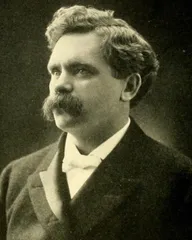
CHURCH OF JESUS CHRIST OF LAT- TER-DAY SAINTS AT THE PARLIA- MENT OF RELIGIONS, BY B. H. ROBERTS.
V.
WOMAN'S PLACE IN "MORMONISM."
The Woman's Auxiliary to the Parliament of Religions ex- tended an invitation to some ofthe prominent women of the Church of Jesus Christ of Latter-day Saints to participate in their deliberations, and speak upon some subject of interest con- nected with "Mormonism." Since there had been much misunder- standing of the position ofwoman in the "Mormon" Church, and as it was generally believed that in "Mormon" theology woman occupied a very inferior station compared with that assigned to man, it was decided that the subject treated should be, "Woman's Place in 'Mormonism,' " and the following paper was read by Sister Emily S. Richards in one of the departments of the Woman's Auxiliary to the Parliament.
"MORMONISM."
Before discussing the place which the "Mormon" Church assigns woman in religion, it will be proper to say something about "Mormon- ism" in general. The necessity for doing so arises from the misconcep-
894 IMPROVEMENT ERA.
tions which exist in respect to the "Mormon" religion, —misconceptions, we are sorry to say, that have their foundation in the misrepresentations of its opponents. "Mormonism" is usually regarded as a new religion, a kind of in- truder into a field already well occupied ; a rude disturber of the religious peace of the world. If it has been the latter, it has been so on the same ground that Jesus, —whose very birth was hailed with shouts of "Peace on earth, good will to man," —became a disturber of religious harmony and brought a sword and not peace into the world: (Matthew x: 34-36.) But the sword was found in the hands of those who opposed the religion of Jesus, not in the hands of Christians. So with "Mor- monism." It has been its who have opponents, and not its advocates made whatever of disturbance has existed by reason of its coming into the world. Its mission, like that of Messiah's, is to raise a standard of peace unto all people. "Mormonism" is not a new religion. Describing it negatively, I may say it brings forth no new God for the adoration of mankind; it commands man to worship God who created heaven and earth, whose existence is from eternity, whose beneficence and power are universal. Neither does "Mormonism" introduce a new Redeemer for man's accept- ance. It teaches that Jesus of Nazareth is the Son of God; that he is the Redeemer of the world and that through him and his power alone can man hope for a resurrection from the dead, and a sure entrance into eternal life. God the Father, the Lord Jesus Christ, and the Holy Ghost, in "Mormon" theology, constitute the Godhead or the Grand Presidency of the world; separate in their persons, but one in attributes, one in purpose. As "Mormonism" sets forth no new Gods, neither does it teach any other Gospel than that which Jesus Christ taught; faith in God, belief in Christ's atonement, repentance of sin, baptism for the remis- sion thereof, and the reception of the Holy Ghost by the laying on of hands, coupled with a godly walk and conversation, are recognized by it as the terms of salvation, —the means through which the grace of God is applied to man for his justification and sanctification. This to "Mor- monism" is the Everlasting Gospel, the plan devised by God and accepted by his children before the foundations of this earth were laid for man's redemption. The inquiry will arise, however, since it is insisted upon that "Mor- — monism" is not a new religion, how it came to so regarded, what foundation exists for the supposition? It came about in this way: A century or two after Jesus, by his personal ministry among men, taught the Gospel and founded his Church, men began to depart from his moral
THE CHURCH AT THE PARLIAMENT OF RELIGIONS. 895
precepts, corrupt his doctrines, change or ignore the Gospel ordinances, destroy the form and depart from the spirit of true church government, until the religion of Jesus Christ was subverted, and finally buried beneath the rubbish of pagan superstition. "Mormons do not stand alone in making these assertions. The New Testament prophecies foretell in great clearness this awful apostasy, and great Protestant Christian sects and scholars affirm it. In her homily on the "Perils of Idolatry," the Church of England says: "Laity and Clergy, learned and unlearned, all ages, sects and degrees, have been drowned in abominable idolatry most detested by God and damnable to man for eight hundred years and more," while Dr. Smith, in his dictionary of the Bible, and that work, by the way, is endorsed by very many learned divines and Bible scholars, says: "We must not expect to see the Church of Christ existing in its perfection on the earth. It is not to be found thus
perfect, either in the collected fragments of Christendom, or still less in any one of those fragments." John Wesley, in discussing the reasons why the extraordinary gifts of the Holy Ghost were discontinued in the Church after Constantine became a Christian and loaded the clergy with honors and wealth, says :
"From this time they (the spiritual gifts, such as healing the sick, prophecy, etc.) almost totally ceased, very few instances of the kind were found. The cause of this was not (as has been supposed,) because there was no more occasion for them, because all the world was become Christian. This is a miserable mistake; not a twentieth part of it was even nominally Christian. The real cause of it was the love of many almost all Christians, so-called, was waxed cold. The Christians had no more of the Spirit of Christ than the other heathens. The Son of Man when he came to examine his Church, could hardly find faith upon the earth. This was the real cause why the extraordinary gifts of the Holy Ghost were no longer to be found in the Christian Church, because the Christians were turned heathens again and only had a dead form left." (Works of Wesley, Vol. VII, Sermon 89, pages 26, 27.) Since the Christian religion was destroyed, and divine authority to administer the ordinances of the Gospel taken from among men, there was but one way in which it could be restored; and that was by a re-opening of the heavens, the giving of a new dispensation of the Gos- pel to man. This the prophecies of the scriptures promised. It is
written that in the hour of God's judgment, an angel would be sent out from heaven, having the Everlasting Gospel to preach to them that dwell upon the earth, — to every nation, kindred, tongue and people. (Revelation xiv, 6. 7.)
896 IMPROVEMENT ERA.
This is what "Mormonism" claims to be, the Gospel of Jesus Christ, restored to the earth; hence, not a new religion, but the old religion, the Everlasting Gospel, brought again to man in all its fullness, possessed of all its ancientsimplicity of doctrine, of its graces, its gifts, its hopes, its powers and all its ancient glory; nothing diminished, but revealed in greater fullness than ever before, which taken in connection with the fact that the world has not known for many centuries the religion of Jesus Christ, accounts for •'Mormonism" being regarded as a new re- ligion.
That Joseph Smith, when but a boy, sought the Lord in prayer for religious light, and in answer to his prayer, saw in vision the Lord, and his Son Jesus Christ, and from them learned that men had departed from the truth and were teaching for doctrine the commandments of men, and that the time was near at hand when the Gospel would be restored to the earth, —may be generally known. Following this, three years later, came the visitation of the angel Moroni, one of the prophets who lived among the ancient inhabitants of America. He revealed the existence of a record that contained an abridged history of the ancient peoples of America, of whom the Indians are the degenerate and the barbarized descendants. But more valuable than its historical information, is the fullness of the Gospel of Jesus Christ which the record contains as taught to the ancient inhabitants of America by Messiah, after His res- urrection from the dead and departure from his disciples at Jerusalem. After the coming of Moroni, came other angels from heaven, who gave divine authority to Joseph Smith and others to preach the Gospel and administer the ordinances thereof. Guided by the instructions of these angels and by direct revelation from God, the youthful prophet, Joseph Smith, established the Church of Christ in the earth; and it is doing its work by carrying the Gospel to every nation, and by nourishing in faith all those who receive it. Of the difficulties which "Mormonism" has encountered in the course of its development, of the persecution endured by those who have received it, there is not time to speak here. It would require volumes to tell how hatred dogged the footsteps of Joseph Smith and those who received his message, how falsehood belied them, how ignorance misun- derstood, how bigotry refused to hear them and how intolerance perse- cuted them to the death. All this I have not time to relate; and shall only pause in my haste to arrive at the central thought of this writing to day that in the winter of 1833-4 twelve hundred '"Mormons" were driven from their homes in Jackson County, Missouri, under circum- stances of the utmost cruelty. Five years later, the tragedy on a larger
THE CHURCH AT THE PARLIAMENT OF RELIGIONS. 897
scale was repeated, and without warrant of law, or any circumstances whatever to justify it, about twelve thousand "Mormons" were forcibly dispossessed of the lands they had purchased of the general government. Mobs wantonly destroyed their crops, wasted the rest of their substance, and after murdering scores of them, compelled the rest to flee from the state for safety. The exiles found an asylum in Illinois but here the deep-seated hatred of religious intolerance, coupled with political jeal- ousy, followed them. Sectarian Christians of Illinois could not endure to be told that their creeds were false, and political demagogues hated a people whose vote they could not control. So long as the "Mormons" were stricken and helpless exiles, they were safe; but when by enterprise and industry they raised themselves from a dependent condition to one of independence, trouble threatened. Their success produced danger, and five years after settling in Illinois, the Prophet Joseph Smith and his brother Hyrum were murdered while in the custody of the officers of the law and the honor of the state pledged by the governor for their pro- tection. Two years after this tragedy, when it was observed that the perpetrators of it went unwhipped of justice, and it became apparent that "Mormonism" would survive the man who, under God, had founded it, then hatred armed again the cruel hand of persecution, and a deep resolve was formed to expel from the state the people who had built on the banks of the Mississippi the beautiful and prosperous city of Nauvoo. The resolution of the people of Illinois was carried into effect. The "Mormons" were driven from the city founded by their industry and from the splendid Temple built to the name of God in the days of their poverty. We can not stop even to glance at the journey of the exiles through the wilderness of the then territory of Iowa, nor relate what they suf- fered from exposure to the rains and snows of the winter and spring during which the journey was made on foot and by teams from Nauvoo to Council Bluffs. It is equally impossible to attempt any description of
that still more wonderful journey through the thousand miles of wilder- ness and desert then lying between the Missouri River and the Rocky Mountains; nor can we stop to relate how, when it was determined upon by their leaders, to settle in Salt Lake and surrounding valleys, the ''Mormon" people, like drilled cohorts, made war upon the sterility of the land and by dint of hard work, perseverance and high faith in God, made the wilderness a garden and the desert fruitful. Let it be enough to say here that they triumphed over all the difficulties that environed them. Neither hunger nor nakedness daunted their courage. Hardships — might break down their physical powers they could not crush their
898 IMPROVEMENT ERA.
spirits. Starvation leered at them from within, and enemies gloated over the prospect of their destruction from without, but the Pioneers of Utah, sustained by holy faith and trust in God disappointed those who prophecied their destruction, and, under the blessings of God, made the once barren waste of Utah the most desirable part of all our favored land. Here it may not be out of place to say that the achievements of the "Mormons" in settling Utah, in converting the wilderness into farms and gardens, into meadows and orchards, filling the land with peaceful homes, quiet hamlets, prosperous villages and towns, and providing as they have for the intellectual, social, moral and spiritual welfare of their inhabitants, — all this, I think it proper here to say, may be taken as a
complete and successful answer to the charges of licentious immorality so commonly made against the first settlers of Utah. The licentious are not pioneers, they are parasites that thrive on effete civilization. They are not to be found in the wilderness building homes. Their haunts are in crowded cities where leachery may thrive unheeded, or defy detec- tion. Their place is not where^ daily toils call her sons early to shop or field and holds them late to complete the appointed task; they are rather the offspring of luxury, the sons and daughters of bloated ease and mis- chief-making leisure. The licentious find no joys in the family circle the sweet laughter of children is not music to their ears; the wife, blessed into the mother and holding to the full, rich throbbing fountain of life her babe, is no picture holy and pure to them; they delight rather in the vulgar charms of barren mistresses, the loud laughter of harlots, the voluptuous pleasures of the harem, or conquests over fallen inno- cence! To say, therefore, that the early settlers of Utah inhabited the wilderness, that there they were; home-makers, founders of a common- wealth, that daily toil called them early and kept them late employed,, that the home circle was the chief scene of their joys and the prattle and laughter of babes their only music; to say this is to say that the "Mormons" are not a licentious people, as is commonly charged and be- lieved. Nor were the first settlers of Utah the low, debased creatures in other respects they are so often reputed to be. It should be remem-
bered that they, for the most part, were Americans from the New Eng- land and Northern States, that they possessed the proverbial industry, honesty and morality characteristic of the inhabitants of those states- sixty years ago; that while it was true that the educational advantages of many of them had not been all that could be desired, yet among them- were many who were educated and refined. Indeed, I may say, in con- clusion upon this head, the character of the people, no less than the-
THE CHURCH AT THE PARLIAMENT OF RELIGIONS. 899
work they have accomplished, confutes the charges of ignorance, depravity and licentiousness made against them. So much I have thought necessary to say by way of preface. It may be tedious to you, and cause you to think if so much is but a pre- face, how wearysome in length must be the main subject; but knowing the general lack of correct information upon "Mormonism" and the character of those who have accepted that faith, I could do no other than say so much in explanation of "Mormonism," and in defense of its adherents. But we come now to the main purpose of this writing.
"Mormon" theology recognizes man as a dual being, composed of spirit and body; and to the spirits of all men assigns a divine origin. God is the Father of the spirits of all men. Not in a doubtful, mysti- cal sense, but in reality.The phrase "Our Father which art in Heaven/' to "Mormons" is no meaningless or mystical utterance, but expresses an actual relationship as tangible and real, as that which subsists between earthly parents and children. Nor does the word "Spirit" convey to them the idea of immateriality. On the contrary, "Mormon" theology teaches that man's spirit is a substance, and while not tangible to the grosser senses (except when those senses are quickened by the power of God), is yet none the less real on that account; and it possesses some properties in common with all matter, such as form, extension, limita- tion, etc., "Mormonism" teaches that the spirit of man in its general outlines, proportions and expression, is in the form of man, and hence, since man was created in the image of his Maker, in the form of God also. The spirit of man being the offspring of God, an emination from Deity, he possesses the attributes, undeveloped it is true, of His Father; and since Jesus Christ being in the form of God, thought it not robbery to be equal with God (Philippians xi : 6.), so it is not presumption to believe that man, also created in the image of God, and being his off- spring, shall at last become like him, and dwell in his presence. Encour- agement to such a belief is given in the scriptures, by such expressions as "The Spirit itself beareth record to our spirit that we are the children of God, and if children, then heirs; heirs of God, and joint-heirs with Jesus Christ, (Romans 8; 16, 17), and I will add, if heirs of God and joint-heirs with Jesus Christ, then entitled eventually to all that the Father hath, not omitting the power of the Godhead. Such doctrines as these may sound strange to those not of our faith. Yet why should it be accounted a strange thing that at last the child shall arrive at the same exaltation, and partake of the same intelligence and glory with the Father? Why should it be thought blasphemous to
900 IMPROVEMENT ERA. teach that men by faith and righteousness and following the counsels of God shall at last become like him and share in his power and glory? I grant to you the heighth from our present position looks tremend-
ous; yet it is not impossible of attainment, since we have eternity in which to work, and a God and heavenly influences instead of the human parent and earthly means to bring to pass the necessary develop- ment. Such is the origin and I may say, too, the destiny which the "Mor- mon" theology assigns to man. It gives no less glorious origin, or less high destiny to woman. If it teaches that man is the Son of God, it teaches also that woman is the daughter of God; if it teaches that in the great future men will become kings and priest unto God, it teaches also that women will become queens and priestesses. If it teaches that a woman is dependent upon an eternal union with man in order to attain to a fullness of exaltation and glory in heaven, it teaches no less em- phatically that man is equally dependent upon woman for a fullness of glory and exaltation. To one accepting "Mormon" theology, the sexes are not made to walk separately and alone, either in time or in eternity, but hand in hand; believing with Paul that the man is not without the woman, neither the woman without the man in the Lord (I Cor. xi: 11), that is, it will require the union of the two to complete the happiness and the fullness of glory and exaltation of each. Neither one can say to the other, "I have no need of thee!" Speaking of the dependence of each of the sexes upon the other for a fullness of joy and glory in heaven, makes it necessary to explain that to the "Mormon" heaven is a reality, and the existence in the future life a tangible one. He regards the resurrection as a fact. The body and the spirit, after death shall have done its work of dissolution, will be reunited and become a living soul. Man thus resurrected and made immortal, will be in full possession of all the powers of mind and body he enjoyed in his mortal life. He will build and inhabit, plan and accomplish. The relationship of husband and wife with all the endear- ing affections growing out of it, he regards as eternal. The command- ment, "Be fruitful and multiply" to the "Mormon" is a law no less righteous than that which says "repent and be baptized." He therefore looks to an endless increase of lives as among the blessings of heaven, and the family circle as one of the chief sources of his enjoyment. As over his ever increasing posterity man presides as patriarch, and watches over their development and progress with all the anxious solicitude with which God hath watched over him, woman will be by his side partaking of his solicitude, but also participating in his glory; and ever as his
THE CHURCH AT THE PARLIAMENT OF RELIGIONS. 901
kingdom grows and his exaltation becomes greater, the glory thereof shall fall upon her equally with him. "Mormon" theology, in a word, places woman by man's side, neither exalting her above him nor placing her under his feet, and only together can they work out their highest destiny. In the "Mormon" Church organization proper, woman holds no official position. That is, she may not hold the office of an Apostle, nor a High Priest, nor a Seventy, nor a Bishop, nor a Deacon, nor any other office in the Priesthood. But in choosing the officers of the Church by a vote of popular acceptance, woman's vote is as potential as man's, and in auxiliary societies in the Church, especially those organized for charita- ble purposes and for the improvement of her own sex and the teaching of children, women hold official positions to which they are set apart by the laying on of hands and prayer by the proper officers of the Church. Thus women are ordained to be officers of the Woman's Relief Societies, the said officers consisting of a president, two counselors, secretary and treasurer. The purposes for which the Relief Societies are organized as may be inferred from their name, are charitable; they are designed to assist the poor, care for the sick and minister to the unfortunate. The Young Ladies Mutual Improvement Associations are societies organized within the Church for the intellectual, social, moral and spir- itual improvement of young ladies, and, like the Woman's Relief Socie- ties, are officered by women, who are also set apart by prayer and the laying on of hands. Both of these societies hold regular meetings and conferences at which lectures, essays, readings, recitations, conversa- tions, music, both vocal and instrumental, occupy their time, and con- tribute alike to their enjoyment and improvement. There is no limit pre- scribed as to subjects they shall consider. The whole world of science, religion, philosophy, politics, history, art and literature are open to them, and they may wander in these limitless fields of knowledge when and how and to what extent they choose. The Primary Associations are also officered by women. These associations are designed to instruct young children of both sexes in the rudiments of knowledge, good behavior, morals and religion; and to women is assigned this noble work. Women are also employed as teach- ers in the Sabbath Schools, and there, as in the private walks of life,
they may teach doctrine, expound scripture, bear witness of the truth, invite all to come unto Christ, and exhort to righteousness of life. Nor is there anything in the "Mormon" religion or in the "Mormon" Church discipline which forbids woman appearing upon the public lecture platform in advocacy or defense of her religious faith, or any
902 IMPROVEMENT ERA.
other subject. In these respects, she is free, her own discretion and good taste marking the limit to which she shall go. "Mormonism" in its educational system gives the same advantages to girls as to boys, to women as to men. No distinctions are made; they are educated side by side in the same schools, attend the same classes, and are encouraged, nay, I may say urged, not only to follow the same studies but to attain to the same distinction in them. "Mormon" leaders recognize the potent influence of woman, especially of intelligent, edu- cated women, and give full encouragement to what ever promises to increase her influence for good. Never was graver mistake made than to suppose that "Mormonism" enslaves its women. "Mormon" men know, just as well as civilized man everywhere knows, that to enslave woman is to degrade man and to blight future generations. They do not enslave them, they make companions of them, and in honoring them they honor themselves. Women in the "Mormon" Church, as in all other churches, will influence very largely the character of succeeding generations; and "Mormon" leaders have, from the first, appreciated the importance of having that influence not only highly moral and spiritual in its nature, but intelligently applied. Whatever the world may have been led to believe on the subject, the "Mormons" themselves do not look upon superstition or ignorance either in men or women as essential to the success of their institutions. On the contrary, to them the very glory of God is intelligence. How much more must it be the glory of man? Joseph Smith taught that man could not be saved in ignorance. We further hold that whatever principle of intelligence men attain unto in this life, it will rise with them in the resurrection; and if one man gains more knowledge and intelligence in this life through diligence and obedience than another he will have so much the advantage in the world to come. Essentially a missionary people, with a special message to deliver to mankind, and compelled to meet the world in a mighty contest, it would be a poor policy on their part to put their trust in ignorance or make superstition their refuge. They could hope for no permanent success from such a course, and indeed it would be contrary to the genius of the "Mormon" religion to do so. "Mormonism" demands that its followers shall persistently seek for knowledge, intelligence, and wisdom, and it requires this of women no less than of men. Intelligence being the glory of God, and the glory of man, it is no less the glory of women. These remarks in respect to women and her place in the "Mormon" Religion, may create astonishment in the minds of our sisters who have
THE CHURCH AT THE PARLIAMENT OF RELIGIONS. 903
looked upon us from afar, and have neither understood us nor our religious faith; but have looked upon us through eyes blinded by prejudice born of misrepresentation. The bigoted have scorned us; even those not disposed to be unfair have thoughtlessly condemned us without a hearing; the more benevolent have pitied us. But know, 0, my sisters, that "Mormon" women need not your pity, they are above the scorn of the bigoted, they ask but a hearing on the part of those disposed to be fair minded, to disabuse their minds of false conceptions respecting their character, their religion and the position it assigns to woman. The one thing which you may consider incompatible with this presentation of Woman's place in "Mormonism" is the fact that for well nigh half a century the "Mormon" Church taught the practice of a plurality of wives. Confounding the "Mormon" system of plural marriage with the polygamous practices of the Orient, accompanied as it is by the semi-enslavement and degredation of women, or what is equally wrong* assigning no other reason for its existence than man's selfish lusts, "Mormon,, plural marriage has been considered incompatible with the freedom and dignity of woman, and that honorable place in the "Mormon" Church which is here said to be hers. But "Mormon" plural marriage was not the polygamy of the Orient, the "Mormon" home was not the harem of the east. "Mormon" plural marriage, though taught as a religious duty, was not forced upon woman. From the very nature of our west- ern civilization, and the enactments of congress on the subject, it could not be forced upon her. "Mormon" women were as free as their sisters in the eastern states in their choice of husbands. The existence of the plural wife system was due as much to the women of that faith as to the men. It was accepted by both sexes as part of their religious faith
and the religious sentiment sanctified all its relations. If it was a trial to some, it was patiently endured as among those self-denials and sacrifices demanded by religion. The deep obligation it brought upon men, the increased cares, the multiplied responsibilities, made it no more attractive to men than it was to women. And the deep sense of duty to carry out the will of God will be found to be the incentive which prompted both men and women to accept it. It was in answer to the question of Joseph Smith how the Lord
justified Abraham, Isaac and Jacob, as also Moses, David and others in having a plurality of wives, that the revelation asserting the rightfulness of this form of marriage was given. Its practice was begun in Nauvoo,
about 1841. It came in conflict with the education and tradition of the
"Mormon" people and the sentiments of the age. Still, God had com.
904 IMPROVEMENT ERA.
manded it through his prophet, and though their prejudices, the fruit of their tradition, revolted against it, the faithful to whom it was revealed resolved to obey it. After The Church settled in Salt Lake Valley, the rightfulness of a plurality of wives was publicly proclaimed as a doctrine of The Church. The practice of it was open and above board, the whole Church, and at that time the members of the Church comprised nearly the whole com- munity, approving the principle and the practice of it. For ten years the practice in Utah of this system of marriage met with no opposition from the United States. But in 1862 a law was enacted by Congress to punish and prevent the practice of polygamy in the territories of the United States. The penalties fixed were a fine, not to exceed five hundred dollars, and imprisonment not to exceed five years. For twenty years, however, the law remained practically a dead letter. It was claimed by the "Mormons" that it was an inf rigement of the
religious liberty guaranteedby the Constitution of the United States, since it prohibited the free exercise of religion. For twenty years no pronounced effort was made by the officers of the general government to enforce the law. In 1882, however, the law enacted twenty years before was supplemented by what is known as the Edmunds Law. In addition to defining the crime of polygamy, — for which it retained the — same penalties as the law of 1862, the Edmunds law also made the cohabiting with more than one woman a crime, punishable by a fine not to exceed three hundred dollars, and by imprisonment not to exceed six months. This law also rendered persons who were living in polygamy, or who believed in its rightfulness, incompetent to act as grand or petit jurors; and also disqualified all polygamists from voting or holding office. This law of 1882 was supplemented by the Edmunds-Tucker Law — — enacted in 1887 which made the legal wife or husband, in cases of polygamy or unlawful cohabitation, a competent witness, provided the accused consented thereto; it also enlarged the powers of the United States commissioners and marshals, and required certificates of allmarriages to be filed in the office of the Probate Court. Violations of this last provision are punished by a fine of one thousand dollars, and imprisonment for two years. The law disincorporated The Church, and ordered the Supreme Court to wind up its affairs, and take possession of the escheated property. The laws were rigorously enforced by the United States officials, .
special appropriations being made by Congress to enable them to carry on a judicial crusade against the "Mormons." The prominent church officials were driven into retirement; others into exile. Homes were
THE CHURCH AT THE PARLIAMENT OF RELIGIONS. 905
disrupted; family ties were rent asunder. Upwards of eleven hundred men endured fines and imprisonments in the penitentiary rather than be untrue to their families. Every effort of the government to deprive the people of what was considered their religious liberty was stubbornly contested in the courts, until the decision of the Supreme Court of the United States was obtained. While some of the proceedings of the courts in Utah in enforcing the anti-polygamy laws were condemned, the laws were sustained as constitutional. The court held that the first
amendment to the Constitution which provides that Congress shall not prohibit the free exercise of religion, can not be invoked against legis- lation for the punishment of plural marriages. Meantime government was relentless, and still more stringent measures than those already enacted were threatened. In the midst of these afflictions and threatening portents, President Wilford Woodruff besought the Lord in anguish and in prayer, and the Lord inspired him to issue a manifesto which discontinued the practice of plural marriages. At the Semi-annual Conference in October follow- ing (1890), the action of President Woodruff was sustained by a unani- mous vote of the conference, and plural marriages are discontinued in The Church. In this matter of plural marriage, the "Mormons" are neither responsi- ble for its introduction nor for its discontinuance. The Lord commanded its practice, and in the face of the sentiment of ages, and in opposition to the teachings of their own traditions, many of the Saints obeyed the commandment, and in the midst of weakness, difficulties and dangers, sought to carry out that law as revealed to them. For about half a century they maintained its practice in the face of opposition sufficient to appall the stoutest hearts. They defended it in the public press,
proclaimed it from the pulpit, debated it on the platform with all
who chose to assail it, and practiced it in their lives, notwithstanding fines and imprisonments threatened; and when the power of the govern-
ment was vigorously employed to enforce its laws against this institu- tion, hundreds of men cheerfully endured both fine and imprisonments rather than be untrue to it. A whole generation had been born and had grown to manhood and womanhood in this marriage system, and the affection of family ties were entwined with it. Then, under the pressure of suffering brought upon the people through the laws of the United States, the Lord inspired the President of the Church to proclaim its discontinuance, and the people, with hearts bursting with grief sub- mittted to the will of heaven, and there the matter rests. If the labors
and sufferings of "Mormon" men and women for this principle have done
906 IMPROVEMENT ERA.
nothing more, this much, at least has been accomplished, —they have borne testimony to the truth; and it is for God to vindicate His own law and open the way for its establishment on the earth, which doubtless He will do, when His kingdom shall come in power, and when His will shall be done in earth, as it is in heaven. Meantime, no reproach can attach to the women of the "Mormon" Church for the part they have taken in supporting this marriage system. They have not lent themselves to minister to the base passions of men, the consciousness of womanly purity has never been sacrificed by them on the debased altar of man's lust. The institution brought to them the acknowledged honorable relationship of wife and mother. The community honored the plural wife equally with the first; no distinction was made with respect to her children, they were looked upon as the legitimate fruit of holy affections. Conscious of the rectitude of their own intentions, having before them the example of the holiest women of Bible fame; sustaining, as they believed, a holy commandment of God; loved by the men to whom they had consecrated their affections; respected by the community in which they lived; and above all, blessed with an approving conscience, and the favor of God, do you wonder that "Mormon" women feel unmoved by the scorn of the bigoted or the pity of the misinformed? "Mormon" women are content with the place assigned them in the 'Mormon" Church. It opens to woman a sphere which, while it differs somewhat from that which it opens to man, yet has much in common with his, and is equally essential, equally noble. There is room in it for the development of all her faculties, all the powers of her intellect, all the noble sentiments of her heart; and in it she will yet realize all the longings of her soul, and attain to all the dignity, honor and glory with which man or Deity can clothe a splendid womanhood.