The Church of Jesus Christ of Latter-day Saints at the Parliament of Religions
Improvement Era, vol. 2, no. 9, July 1899, pp. 673 to 685
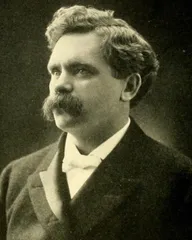
THE CHURCH OF JESUS CHRIST OF LAT- TER-DAY SAINTS AT THE PARLIA- MENT OF RELIGIONS. BY B. H. ROBERTS.
II.
PRELIMINARY AGITATION.
At the time the press of the country was discussing pro and con, during the summer of 1891, the advantages and disadvantages of the proposed Parliament of Religions, the writer was employed as associate editor of the Salt Lake Herald, and it occurred to him at that time that the parliament would aiford a splendid opportunity to the Mormon Church to represent its history, doctrine and achievements before the world through that parliament, and likewise deliver its important message to mankind, and accordingly in the issue of the Salt Lake Herald on July 15th, 1891, the following editorial appeared:
''A RELIGIOUS CONGRESS. "An important matter connected with the World's Columbian Exposition, yet forming no part of it, will be a world's congress, the special purpose of which will be to arrange conventions in which the most eminent men of different religious faiths may meet in frank and friendly conference in regard to the great truths and the great problems of the age* There will be as many special conventions of different churches, denomi-
674 IMPROVEMENT ERA.
nations, etc., as may be desired, but the great features will be a central religious congress on a wider basis —a representative gathering of men united for the attainment of great moral ends. The subjects to be dis- cussed cover the relation of religion to every department of life in every portion of the globe. Already responses have been received from lead- ing theologians, statesmen, jurists and scholars in all departments, and
the committee, which represents nearly all the different denominations, and of which the Rev. John H. Barrows, D. D., is chairman, are anticipat- ing that the congress of 1893, will mark an important epoch in the his- tory of the human mind. It is announced in the circular of the commit-
tee that any persons wishing to arrange for special conventions are requested to communicate directly with the chairman. "This congress will doubtless be one of the most interesting features, if not of the great exhibition itself, then one of the most interesting auxiliary features —at least to religious people—that will spring up around it in Chicago during the eventful year of 1893. Mention of this great religious congress reminds us that Mormonism is an American product, one of which all the inhabitants of the earth have heard, and about
which they all have a curiosity if not an interest; and it appears to us that a good thing for the Mormons to do would be to seek a place in that congress and a hearing in respect to their religion — a theme that could not fail to command interest. The Mormon Church has complained, and that justly, of a misrepresentation of its faith — wilful, persistent misrepresentation made for the purpose of undoing its fair fame with the world, or, rather, to prevent it from acquiring such fair fame. But it has weathered the storms, and in spite of falsehood, of calumny and abuse, it stands unmoved amid threatening elements, the ark of safety to scores of thousands in this great inter-mountain region, while tens of thousands in foreign lands look upon it in the same way, and fondly anticipate the day when they can connect themselves with the great body of the Church. The Church, then, should seek to make itself heard in that congress, and since it has justly complained of misrepresentation from others, let it seek in such an important gathering, to represent itself by sending to that congress its most competent men as delegates. "A church with such a remarkable origin as the Mormon Church has, with so remarkable a history as it has back of it, could not well be denied a hearing in its own behalf in the religious congress, unless, indeed, a narrow and most ungenerous prejudice should prevail in the councils of those having the arrangement and management of the congress a thing — most unlikely with men adjudged capable of taking the oversight of such a gathering. But if a sectarian bigoted prejudice should bar the Mormon
—
THE CHURCH AT THE PARLIAMENT OF RELIGIONS. 675
Church from a hearing in the congress, there is still the bar of public opinion in the world — the center of which will be in Chicago in 1893 before which it may plead its cause, before which it should plead it, and in such form as it never has done before. "If denied admission in the religious congress, or whether it gains admission or not, it should certainly secure a fine public hall during the continuance of the exhibition, erect a pulpit, and fill it with its ablest men, who, in a course of lectures and by holding religious services could make the visitors from other nations and the uninformed of our own nation, acquainted with the Mormon religion. In connection with that labor might be established a bureau of information in relation to Mormonism, where Mormon literature could be on sale, and where its representatives
could be found by the inquiring foreigner or native seeking information on so interesting a subject. In addition to that a periodical could be published during the existence of the great exhibition, expounding the doctrine of the Church and defending its faith; for of one thing the Mormons may be assured, and that is, their faith, in some way or other, will be assailed, and it should be defended. The Mormon Church owes it to itself to make this effort, it owes it no less to the country. "Much bitterness exists in religious circles against Mormonism and its devotees;yet when people of the world become conversant with the former and familiar with the latter, their prejudices are softened and their bitterness vanishes; may not similar results, to some extent, at least be obtained by affording the people who visit Chicago in 1893 an opportunity to acquire some correct information on the subject of the Mormon religion."
At the priesthood meeting held during the semi-annual Conference of the Church in October following, the writer also invited the attention of the Church leaders to the importance of being properly represented at this World's Parliament of Religions. But very little interest, however, was manifested in the subject. In the following Conference, held in April, 1892, the subject was again introduced in the priesthood meeting, and a committee was appointed to take the matter under advisement, but nothing was done, and the general feeling prevailed that the matter was unimportant, and therefore no preliminary steps were taken looking to the representation of the Church, either in the exposition in the World's Columbian Exhibition proper or in the Parliament of Religions.
676 IMPROVEMENT ERA.
When, however, the fair was opened in the summer of 1893, and Utah people visited the Exposition and found that nearly every other religious denomination had its special booth in one of the main exposition buildings — — the Liberal Arts Building and was setting forth its educational, missionary and other achievements to the millions who visited the fair, letters began to pour into the Church headquarters, and to the Salt Lake papers, expressing regret that nothing had been done to represent the Mormon Church and its achievements. These letters awakened an interest in the subject which the efforts of the writter had failed to do; and as a result an effort was made to secure both representation in the main Exposition and the Parliament of Religions. The interest which the writer had manifested in this subject a year or two before, was perhaps at this point remembered, and he received an appointment from the First Presidency of the Mormon Church to represent it in this matter, and under instructions proceeded to Chicago to see what could be done. The promoters of the Parliament of Religions had failed for some cause to send any literature, or any invitation whatever,to the authorities of the Church of Jesus Christ of Latter-day Saints, to participate in that great world's gathering; and accordingly after it had been determined to get representation for the Church in the
Parliament, the following letter was addressed to Mr. Charles C. Bonney:
Dear Sir: Our attention has recently been called to the importance of the World's Congress of all religions to be held at the World's Fair in Chicago during the month of September. We are given to understand that an invitation is extended to all denominations of Christians and to all religions of the earth to meet "in friendly conference, * * * not for debate, but to speak of what are them the supreme truths, and to to show the relation of these truths to the practical problems of modern life. In a word to illustrate their own religion and show its value to believers and to the world." Appreciating the value and importance of such a parliament as this is set forth to be, we are solicitous that the Church of Jesus Christ of Latter-day Saints should be represented; and present for the consideration of the eminent religionists who will in this Congress be assembled,
THE CHURCH AT THE PARLIAMENT OF RELIGIONS. 677
what we regard as the "supreme truths," and the "distinguishing characteristics" of our faith. It will be scarcely necessary for us to call your attention to the fact that an abiding interest centers in what the world calls "Mormonism;" that its purely American origin will make it of special interest in such a religious parliament as that proposed; that its success in the face of the stupendous opposition it has encountered gives it the right to be heard in such an assembly by its own accredited representatives. All this we believe will be patent to you, and we therefore respectfully ask that the privilege be accorded us of sending a delegation to represent the Church of Jesus Christ of Latter-day Saints at the World's Religious Congress. If the opportunity herein asked is accorded us, would you be kind
enough to inform us of the privileges that would be extended to our representatives; what time would be allowed for speaking or presentation of papers, etc.; and especially if a committee room in the building
where the Congress is to be held would be at their service where they could meet their friends, and converse with those who might wish to make inquiry concerning our faith, etc. Indeed, we should appreciate any information you could communicate to us in respect to this matter; and you will pardon our lack of information on the subject since none of the literature treating of the movement has been forwarded to us. Hoping to hear from you at your earliest convenience we are, Most respectfully yours, WiLFORD Woodruff, George Q. Cannon, Joseph F. Smith, Presidency of the Church of Jesus Christ of Later-day Saints.
To this letter it was expected that an immediate reply would be received, but after waiting ten days and hearing nothing of it, the writer, under instructions from the First Presidency of the Church, started for Chicago, on July 20th, 1893, where he arrived on the morning of July 25th. Among other letters of introduction to prominent people in Chicago, the writer held one from Hon. Moses Thatcher to a relative of his residing in Chicago, Solomon Thatcher, Esq., one of the United States Commissioners of the World's Columbian Exposition. Through his kindness, the writer received an introduction to and obtained an interview with General Director Davis. We made
678 IMPROVEMENT ERA.
application to him for space in which to erect a booth that would be furnished with a library of "Mormon Church" publications, books, tracts, engravings, etc.; an educational display, Sunday School work, etc.; explaining also that it was our purpose to establish a bureau of information concerning "Mormon" affairs. His treatment of us was cordial, but there was no space then at his disposal in the Liberal Arts Building or elsewhere for such an exhibit; and he was kind enough to express his regrets that our application for space had not been made earlier. Through the same gentleman, Mr. Thatcher, the writer managed after considerable effort and many provoking delays, to obtain an interview with Mr. Charles C. Bonney, the prime mover in the Parliament of Religions. The writer was informed before meeting the gentleman that he could be accorded an interview of only five minutes. I found Mr. Bonney to be a small and very nervous man, and not at all one that would be suspected of being either intellectually capable or as possessing weight of character sufficient to stand at the head of such an undertaking as the World's Congresses proved to be. On meeting him he at once made reference to the letter he had received from the First Presidency of the Church, asking for admission into the Parliament, and which he had failed, up to that time, to answer. He had intended to answer it, so he said, but there had been considerable difference of opinion in the general committee of the management of the Parliament, to which the letter, it seems, had been referred, as to just what reply ought to be made. There was a very general opinion that the Church ought not to be admitted to representation for the reason that it would doubtless prove to be a disturbing element in the Parliament, and it was doubtful in their minds if any good would come from its admission. The writer asked Mr. Bonney on what grounds the committee had based the conclusion that the Mormon Church would be a disturbing element in the Parliament. His answer was, because of the great prejudice that existed against the Mormons on account of their plural marriage system. The writer asked him if he did not think that the "Mormon Church" should be admitted for the very purpose of dispelling, if possible, that prejudice which now arose to bar it from explaining its position to the world. He ad-
THE CHURCH AT THE PARLIAMENl OF RELIGIONS. 679
mitted that he was persuaded so far as he was concerned that common fairness to our people demanded that they have representation in the Parliament. He then put the following question to the writer: "How would you answer the objection urged against the representation of your Church in the Parliament, because of its belief and practice of polygamy?" The answer was that such an objection to our admission to such a Parliament as was to assemble ought not to be considered for a moment. The oriental religions, many of which at least tolerated the practice of polygamy, were not barred from representation in the parliament on that account; and if they admitted unchristian and polygamous religions from the East they ought not to bar those that were considered unchristian and polygamous from the West.* In the second place, the Mormon Church had officially announced the discontinuance of plural marriages and therefore it was not a matter that should be considered when the question was discussed as to whether it should be admitted to the Parliament, as reference to our marriage system need form no part of the statement of our faith further than to announce the discontinuance of the practice. It was further urged upon Mr. Bonney's attention that the Mormon Church had been accused of prosecuting its work only among the ignorant and that it would not dare to come in contact with the enlightenment of our age and civilization; but now it proposed to come where the rays of religious light and truth were supposed to be focused, and place a statement of its creed side by side with the creeds of all other religions; and for the Parliament to object to its admission after the charges, as above explained, had been
- As a matter of fact, the management of the parliament had been at great pains to induce representatives of oriental religions tolerating polygamy, to be present and participate in the parliament, and they actually admitted to the parliament a representative of the Mohammedan faith —Mohammed Alexander Russell Webb—who was permitted to deliver two addressed in explanation and defense of his religion, including polygamy; his speech being reported in the official record of the parliament, published by Rev. John H. Barrows, chairman of the general committee of religious congresses, p.p., 989-96, and 1040-52.
680 IMPROVEMENT ERA.
made against the "Mormons" would be inconsistent with the character of the great gathering and come with bad grace. Mr. Thatcher* ably seconded my explanations and reasons as to why we should be heard, and I think together a favorable impression upon Mr. Bonney was made. In any event, he promised that the committee's attention should again be called to our application for admission. I asked him if it would be in keeping with the character of the committee's meetings for me to be present when the matter should come up for discussion. This proposition he did not favor, but asked me to state in writing the reason why the Mormon Church should be admitted, and also furnish an outline of what the address on paper would be. The interview lasted nearly thirty instead of five minutes. I prepared the papers he requested, but unfortunately the one
setting forth the reasons why we should be admitted into the parliament has been misplaced. A copy of the outline of the address I proposed making in the Parliament, and which was sent to him with the reasons why we should be admitted, is as follows:
SUMMARY OP PAPER TO BE READ BY REPRESENTATIVE OF THE CHURCH OF JESUS CHRIST OF LATTER-DAY SAINTS (cOMMONLY KNOWN AS THE MORMON CHURCH) BEFORE THE PARLIA- MENT OF RELIGIONS HELD IN CONNECTION WITH THE world's congress AUXILIARY:
I.
A brief statement of origin and subsequent history of the Mormon Church — its organization in New York, its migration westward to Ohio
and Missouri; its expulsion from Missouri; its settlement in and final banishment from Illinois; its exodus from the United States to Salt Lake Valley, in 1847 —then Mexican territory— its struggle for existence in the midst of sterile elements— victory. its
- I shall always feel under deep obligation to Mr. Solomon Thatcher
for the very great interest he manifested in our cause, and the generous help he afforded me in the discharge of the duties of my mission to this Parliament. Several months after the close of the "World's Fair," the worthy gentleman died.
THE CHURCH AT THE PARLIAMENT OF RELIGIONS. 681
II.
Summary of its Articles of Faith — its belief in God, the Father, in Jesus Christ, in the Holy Ghost. Its atonement of Jesus belief in the Christ, and in the Gospel as the power of God unto salvation, unto all who believe and obey it. Its belief in the Bible as containing the word of God, and in the Book of Mormon as a true history of Ancient America, and also as containing the fullness of the Gospel of Jesus Christ. Its belief in present and continuous revelation, upon which the Church is founded, by which it was brought into existence, and by which it is guided. Its belief in the literal restoration of Israel; the founding of the City of Zion upon this continent, and the coming and reign of Messiah on earth. Its belief in universal religious liberty, and freedom of conscience. Its belief in being obedient to the law of the land — honoring and sustain- in ing it, and in being subject to presidents, kings, rulers and magistrates. Its belief in being honest, true, chaste, benevolent, virtuous, and in doing good to all men — there if is anything virtuous, lovely or of good report, or praiseworthy, Mormonism seeks after these things.
III.
— The organization of the Church. Its recognition of two orders of priesthood — Melchizedek and Aaronic, The officers of the first— the First Presidency, the Twelve Apostles, the Seventies, High Priests and Elders. — The officers of the second the Bishopric, general and local; Priests, Teachers and Deacons. Its organization as to territory —into stakes of Zion, wards and branches. Its numerical strength as represented by its
officers and lay members.
IV.
The home work of the Church as represented in its provisions for the care of the poor, and providing instruction for the young. The National Woman's Relief Society; the Mutual Improvement Associations for young men and women; Sunday Schools and Primary Associations.
V.
The Foreign Work of the Church —the labors of Missionaries, and its
the work accomplished —the foreign countries, which they have preached in
the Gospel —the has encountered difficulties it work — in thismartyrs. its
VI.
The Mormon view of the application of the Gospel of Jesus Christ to
682 , IMPROVEMENT ERA.
the human race —the reasons for Mormon temple building—the salvation of the dead —the vindication of both the justice and mercy of God the in
redemption of mankind through the Gospel of Jesus Christ.
VII.
Conclusion —Mormon solution of the problems that confront the religious world; recognizing unrighteousness, individual and national, as the cause of all evils existing in the world; and recognizing faith as the incentive to all action, and faith in God, as the foundation of all righteousness —Mormonism makes war upon unrighteousness, and consequently upon all the evils of the world, by teaching faith in God, and in the Gospel of Jesus Christ, as to the embodiment of all God's laws to man. And by increasing the testimony of God's existence through modern revelation, and especially through the entire volume of scripture, which it pre-
sents to the world in the record of the ancient people of America — so it
increases the evidence of God's existence, of the Messiahship of Jesus Christ, and of the truth of the Gospel that the foundation for faith is broadened, and the eternal foundation of righteousness made more sure.
After sending these papers to the reverend gentleman, I waited some ten days for a reply, but received none; and considering that the opportunity for a hearing in the Parliament for the Church was very remote, I addressed a letter to Mr. Bonney, informing him of my intentions to return to Salt Lake City, and that lie could forward to me by letter a statement of the action of the committee with reference to our application for a hearing; I also expressed
to him the hope that our application would be favorably acted upon. Some two or three weeks after returning to Salt Lake City, and after all hope had been abandoned that we would hear favorably from the committee, I received the following communication from Mr. Bonney:
Chicago, U. S. A., August 28, 1893. Elder B. H. Roberts, 334 Constitution Building, Salt Lake City, Utah. My Dear Sir: My delay in writing you has arisen from linavoidable causes, and I now write in much haste to say that the Rev. Dr. John Henry Barrows, chairman of the general committee on religious con-
THE CHURCH AT THE PARLIAMENT OF RELIGIONS. 683
gresses of 1893, is willing to receive from your Church the statement of its faith and achievements, as proposed in your first communication; and will make such use of it as, under the circumstances, may seem wisest and best. In view of the full explanation made to you when you called in company with Mr. Thatcher, I need not say more on this point. Your communication to which I have referred is in Dr. Barrows' hands, and I cannot therefore refer to it when writing this letter. The Parliament of Religions will open on September 10th, and I trust this notice will be ample time for the preparation of the paper you desire to present. Please explain to President Woodruff, and his associates, the reasons for the delay in replying to their communication of July 10th, and ask them to receive this information with the explanation you will make, as a sufficient answer thereto. Very respectfully yours, Charles C. Bonney, President World's Congress Auxiliary.
By the time this letter arrived the First Presidency had gone East with the Tabernacle Choir to attend the World's Fair, and I referred Mr. Bonney's letter to President Lorenzo Snow, who was then in charge of the affairs of the Church during the absence of the First Presidency. He advised me to prepare an address which it was proposed I should write, but instead of mailing it to Mr. Bonney he suggested that I go with it personally, "for," said he, "if you merely send your paper they will pigeon-hole that, but if you go down for the purpose of reading it they will not pigeon-hole you so easily." Accordingly the paper was prepared, though on account of having learned that only about twenty to thirty minutes would be accorded for the reading of each paper, the scope of our presentation as sent to Mr. Bonney had to be somewhat cut down, and the paper was prepared on somewhat different lines to those furnished Mr. Bonney. On the 8th of September I arrived in Chicago, (the Parliament was appointed to assemble on the 11th,) and I presented myself at the office of the Rev. John Henry Barrows, chairman of the Parliament. He seemed both somewhat surprised and annoyed at seeing me, and reminded me of the very guarded promise made by President Bonney of the acceptance of my paper. This introduced a somewhat earnest conversation between us in which pretty much
684 IMPROVEMENT ERA.
the same ground was gone over as to why the Mormon Church should be admitted to representation in the Parliament as at the first conversation with Mr. Bonney, and feeling somewhat impatient
at the treatment accorded the Church I represented, I took occasion to remind the reverend gentleman that there was a public opinion that beyond all question would pass upon the unfairness of a rejection of the application of the Mormon Church for hearing in that Parliament, and that if we were not granted the right of a hearing, the world at least should know of the narrow, sectarian bigotry which had denied to us that right. This ended our interview, but he accepted my paper for inspection, promising to give me an answer the next day as to whether we would be permitted to read it in the Parliament or not. On calling at Mr. Barrows' office the next day, I found that he was not in, but Mr. Mervin Marie Snell, his secretary, was present and invited me to wait until the Doctor should arrive. Mr. Snell was a professor in the science of Comparative Religions, and for a time editor of the Oriental Magazine published in Washington, D. C, a periodical devoted to the treatment of Comparative Religions. In the course of his religious studies he had made some acquaintance with Mormonism and manifested a deep interest in securing for it representation in the Parliament. We engaged in conversation pending the arrival of Dr. Barrows, and as Mr. Snell had been present at some of the committee meetings, where the propriety of admitting the Mormon Church to representation in the Parliament had been discussed, he gave me some very interesting accounts of the stormy discussions that had taken place with reference to this subject. Among other things he said that it had developed that from the earliest agitation of the propriety of holding the Parliament it had been at least tacitly understood that the Mormon Church would not be admitted. In some of the meetings the matter had come up in this form: Some one urging the objection to the Parliament had said: If you hold such a Parliament of Religions you would be under the necessity of admitting the representatives of the Mormon Church, and who would want to meet on the same platform with the representative of such a faith? The answer to this objection was represented to me as being, that Mormonism was not a religion and therefore the Parliament would not be under obligations to
THE CHURCH AT THE PARLIAMENT OF RELIGIONS. 685
admit its representatives. While this was not any formal action on the part of any authorized committee connected with the organization of the Parliament, it does at least represent the sentiment upon which the committee afterwards seems to have acted, and may account for the fact that the authorities of the Mormon Church received no literature on the subject of this great religious gathering, and no invitation to participate in the same. Mr. Snell represented that in some of the meetings of the committee he had urged our right to be heard. At about this point in our conversation, Dr. Barrows came in with a number of representatives of the
oriental faiths, and hurriedly informed me that he himself had not had time to read my paper, but others in whose judgment he had great confidence had read it and informed him that it was altogether unobjectionable in its character, and the paper would be read in the Parliament. He was also kind enough to extend to me an invitation to be present at a reception tendered the foreign delegates to the parliament, at the beautiful home of Mr. and Mrs. A. C. Bartlett, on Prairie Avenue, Chicago, on the evening of the 11th of September. When I informed him that the First Presidency of the Church were also in Chicago visiting the World's Fair, he extended a like invitation to them, but it transpired that their engagements would not permit of their acceptance. I went to the reception in company with Mr. Thatcher and his wife, and had the pleasure of meeting the distinguished gentlemen who represented nearly all the faiths of the world, an event that was especially interesting to me, as in a sense it seemed to bring one in contact with all shades of religious opinions in the world.