The Leaven of the Gospel
Improvement Era, vol. 2, no. 7, May 1899, pp. 504 to 511
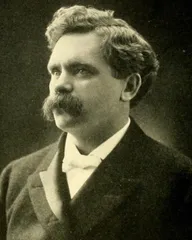
THE LEAVEN OF THE GOSPEL. BY B. H. ROBERTS.
"Whereunto shall I liken the kingdom of God? It is like leaven, which a woman took and hid in three measures of meal until the whole was leavened." (Luke 13: 20, 21. "Know ye not that a little leaven leaveneth the whole lump?" (I
Cor. 5: 6.)
In the last volume of the Era attention was called to a series of brief articles written by George H. Hepworth, and published in the New York Sunday Herald; and there was quoted with approval part of one of these articles that appeared under the title, "We Belong to Two Worlds." Shortly afterwards there appeared another article from the same writer under the title,
"Christ's Religion," which is in every way to be commended for the strong, hopeful spirit it breathes, and the evidence it gives of the advancement that is being made, at least in some minds, towards a better conception of the religion of Jesus Christ, and the force of the Gospel as the "power of God unto salvation." It is so excellent in these respects, that I shall offer no apology for quoting it inextenso in the pages of the Era, and I especially invite the attention of the readers of the Era to its excellence, as it clearly shows in the changed conception of the religion of Jesus Christ, that a powerful leaven is at work in the religious thought of our age; that imperceptibly men are being drawn towards the better and higher truths of the Christian religion; that they are accepting, in fact, though perhaps unwittingly, the great truths that God has revealed through the Prophet Joseph Smith; and to call attention to that fact is one of the main reasons for reproduc-
THE LEAVEN OF THE GOSPEL. 505
ing the article here and making these comments upon it. Here is the article in question:
CHRIST'S RELIGION.
"The kingdom of God is come unto you. —Matthew xii: 28.
I have recently been pondering some phases of modern religious •thought. What a new light it throws on our struggles and bereavements! what encouragement and happiness it brings, and what a bright outlook it gives us for the future, both the future of this life and that
of the next life! What would our fathers say if they could come back and see how which saddened their lives! It may different our theology is from that almost be said that our God is not the God whom they worshiped. Our attitude toward him and his attitude toward us have been so widened and so brightened that religion has positively ceased to be a duty, and has become a privilege. We stand in no fear for the word "King" has been changed to "Father." There was a certain hardness in the conceptions of him which were once entertained which has all disappeared, and an uplifting tenderness has taken its place. They of the olden time approached him with such a sense of awe that a kind of cathedral gloom spread over their lives. They emphasized might, and thought only of what omnipotence could do. They regarded themselves as worthless atoms, and pictured the next world as a strange, unnatural place in which it would he impoosible for a soul accustomed to the things of this life to feel at home. Heaven would undoubtedly be beautiful with its golden streets and jasper gates, but an altogether new country, with curious habits and customs which caused it to be regarded with a feeling akin to terror. There was so much thunder and lightning in the creed that one accepted it with blanched cheek and trembling lips —accepted it because he dared not do otherwise, because the consequences of doubting it were too terrible to describe or contemplate. The progress which has been made in these matters has been like the rising of the sun over the hill tops. The genial rays of a larger knowledge have dissipated the darkness, and we have come into the almost perfect day. Our worship is the worship of thanksgiving, and we are like children who sit at the father's knee to tell the doings of the day and to receive such warning and advice as may seem to be necessary. Religion is full of good cheer and gladness. It is not a preventive of possible ills whichmay befall us after death, but a philosophy of the present which teaches us to make the best of our human experience and
—
506 IMPROVEMENT ERA.
tells us that he who loves God today will surely be loved of God tomor- row — the little tomorrow and the great tomorrow, I am profoundly convinced that there is more real religion today than ever before, a deeper thirst for religious knowledge and a stronger desire to make religon the practical basis of everyday action. In a word, we are slowly groping through the gloom of theological speculation into the divine presence of the Christ. We are not very close to him as yet, but near enough to dream of the blessedness which will fill the world when we shall come to really understand his words. He was a mystery to our fathers, he is more or less of a mystery to us, but the time is coming when the New Testament will be embodied in a new life, social and political, and when our poor humanity will be irradiated with divine influences which have scarcely crossed the threshold of humanity as yet. Religion —the religon which our children's children will enjoy will be the perfect day, in the morning twilight of which we are nowliving. If there are some who think that we have outgrown the Christ,. Ican only answer that we have not touched the lower hem of his garment; that he is still the world's great puzzle; that we have almost no conception at all of that wondrous philosophy, proclaimed by the lips of revelation, which will do away with all physical disease by the mastery of the spirit over the body, and which will lift our souls, shrivelled by base thoughts and ignoble purposes, into a manhood and womanhood which today are only the dream of the poet or the vision of the prophet. It makes life brighter to think of God as friend and father, to be able to go to him in a prayer which, like an outstretched hand, grasps a sure support. And not only brighter but stronger. Great deeds are possible, great temptations can be resisted, great suffering can be borne when to your feeble heart God is not a myth but a reality. To be sure of him is to make him sure of you. He is willing to give you all you need if you will put yourself into condition to receive the gifts. I scarcely dare think of what the real man of God may be able to do, for even Christ has only darkly hinted at it. But of this I am sure— he will live in perfect health, and he will die as one goes to sleep and wakes up in heaven.
And to feel that his providence is round about you, that you are never alone, never enjoy or suffer alone, that he is glad with you and is sorry with you How the thought lightens your burdens and doubles !
your happiness! What inspiration in the thought that the omnipotence of the universe is in a large sense at your command; that you can eke out your human weakness with a strength that comes willingly and
THE LEAVEN OF THE GOSPEL. 507
gladly, and is inexhaustible; that what you are called on to bear is not the result of accident, but of eternal wisdom! How your nerves tingle as the conviction steals into your mind, and what consciousness of power it affords!
And then one other thought. Suppose we felt sure that he really does send his angels to guard our footsteps, that the partition wall between us and the other world is merely a fabric of the imagination, that the two worlds are practically one, and that all about you, in your home, your struggles, your business, your sorrows, are invisible beings, who know you as you do not know them, who are interested in your welfare, and who surround you with influences whose energy is incalculable and whose kindliness is unfathomable! The thought is like the parting of the clouds; it is like a starlit night; it is like distant music, whose echoes reach your ears and fill the heart with hope. When shall we believe all this? The Christ believed it and went to Calvary without a murmur, because Calvary was on the road to heaven. We must believe it also, or we can never become his true followers. Our path, too, leads through Gethsemane, but it is only a resting place on the road to glory. We want more of the Christ, more and still more, and then our lives will be transfigured. It is to be observed that all these beautiful thoughts and con-
clusions cluster around the following changes which the writer observes to have taken place in the religious thought of our times: 1. Men's views respecting God have changed. They recognize him as being infinitely nearer to them than the fathers did. He is no longer a God afar off, but one near by, and one who possesses a close relationship and tender sympathy with men and their affairs.
- The changed view in relation to man. Men in religious
thought are no longer regarded as "worthless atoms," but are looked upon as closely allied to God, and the possibilities of their future is so great that Mr. Hepworth dare not think of what the "real man of God may be able to do; for even Christ has only darkly hinted at it." 3. The next world in religious thought is no longer regarded as a strange or unnatural place in which it would be impossible for a soul accustomed to the things of this life to feel at home. 4. Religious creeds are no longer accepted with blanched cheek and trembling lips through fear —accepted because men
—
508 IMPROVEMENT ERA.
dare not do otherwise, because the consequences of doubting them are too terrible to describe or contemplate. I do not say that Joseph Smith has been the only agent in bringing to pass these changes in religious conception and thought in the world, but this can be safely affirmed, that no other single agency has done so much to bring about the change as his teachings have done. The doctrine he taught in relation to God is, that the first principle of the Gospel is to know for a certainty the character of God
And to know that we may converse with him as one man converses with another; and that he was once a man like us, yea that God himself, the Father of us, dwelt on an earth the same as Jesus Christ did. The Scriptures inform us that Jesus said that "as the Father hath power in himself even so hath the Son power" — to do what? that which the — Father did, the answer is obvious in a manner to lay down his body and take it up again. Jesus, what are you going to do? To lay down my life as my Father did and take it up again. Do you believe it? If you don't believe it you don't believe the Bible.* * * * * * * * *
God himself was once as we are now and is an exalted man, and sits enthroned in yonder heavens. That is the great secret. If the veil was rent today and the great God who holds the world in its orbit, and who upholds all worlds and all things by his power, was to make himself visible, — sayI if you were to see him today, you would see him like a man in form — like yourselves, in all the person, image and very form as a man, for Adam was created in the very fashion, image and likeness of God and received instructions from and walked and talked, and conversed with him, as one man talks and converses with another.
Joseph Smith delivered the discourse from which the above is quoted, on the 7th of April, 1844, and ever since that time, and even before, the Elders of the Church of Jesus Christ taught the doctrine of the nearness of God to man, and the likeness of
- The argument here made by the Prophet is very much strengthened by the following passage: "The Son can do nothing of himself, but
what he seeth the Father do: for what things soever he (the Father) doeth, these also doeth the Son likewise." (St. John v: 19.) Indeed the whole chapter from which the above is taken is in point.
THE LEAVEN OF THE GOSPEL. 509
the real man of God to God; and it has had its effect, not only directly, as in the case where men hearing the message of the Gospel proclaimed have accepted it outright, but indirectly, where men have become acquainted with these thoughts, have quietly and almost imperceptibly modified their views as to God being a person without body, without parts, and without passions, an incorporeal substance, and have come to regard him more as a personage of form and substance, with affections from which spring sympathies, and, withal, somewhat closely related to man and interested in him and his affairs. But though this change has been brought about indirectly, it is none the less real and it is easily traceable to the teachings of the Prophet Joseph Smith and the Church which he established. In like manner the teachings of the Prophet respecting man and his relationship to God, has had its effect in bringing about the change noticed by Mr. Hepworthon this subject; for the necessary corollary of the doctrine "that God himself was once as we are now," is that, "as God now is man may become;" and while that time of exaltation may be very, very far removed from even the "real man of God" as he is today, yet with the possibilites that Mr. Hepworth notes in relation to what the future man of God — may do and become especially if you take into account the fact that this "real man of God" has before him an absolutely unlimitednumber of years —nay, of millions of years which to work in out destiny; that he his have God for will guide and the his influ-
ence of heaven for environment—not even the imagination his can trace the heights he may scale and the exaltation to which he may attain. Hear the Prophet on this subject of man and the possibilities that lie before him:
"Here then is eternal life, to know that only wise and true God, and you have got to learn how to become gods yourselves, and to be kings and priests unto God, the same as all gods have done before you, viz., by going from one small degree to another, and from a smaller capacity to a greater one, from grace to grace, from exaltation to exaltation, until you attain to the resurrection of the dead, and you are able to dwell in everlasting burnings, and to sit in glory as do those who sit enthroned in everlasting power."
510 IMPROVEMENT ERA.
I know of DO teachings outside those of the Prophet Joseph
Smith so bold and lofty as these in regard to man and the possibilities that are his in the course of God's eternities; and these man being merely a grovdoctrines shatter the old time notion of eling worm in the presence of God; who, if he were such a thing
as the theologians of a hundred years ago describe, could certainly only excite the contempt of God. In the Prophet Joseph man is regarded teachings of the as the offspring of Deity, and as possessing in embryo, all the attributes of his Father, which only need development in order to bring him to the plain on which his Father stands; and this doctrine so boldly taught by the "Mormon Prophet" has both directly and indirectly affected the faith of the Christian world, as his doctrine in relation to the reality and nearness of God has affected that subject. It was left for this great Prophet of the nineteenth century to change the views of men also in respect to heaven.He it was who brought heaven from beyond the bounds of time and space, by teaching that it was the destiny of our earth to pass through such changes as would ultimately result in its becoming a glorified, celestial sphere, to be inhabited by those who lived in accordance with the laws of celestial worlds; that here on this earth in its perfected state, would be the heaven of such men as would be worthy of the celestial glory; here they would receive the visitation of God, the Father, and his Son Jesus Christ; and live in harmony with the laws and in communication with the inhabitants of all worlds that had been brought into the same state of perfection;
that here, on this earth, when so perfected and glorified, men would build and inhabit, and associate eternally with their live loved ones in all the fond endearments that those relationships bring and which have tended so much to the uplifting of man in this life. Heaven, in the teachings of the Prophet, is to be truly no strange place "in which it would be impossible for a soul accustomed to the things of this life to feel at home;" no place of mere idleness with seats in the clouds and naught for occupation but the twanging of harps and singing of psalms, which however pleasant for a pastime, would be woefully dull as a steady occupa-
THE LEAVEN OF THE GOSPEL. 511
tion. The doctrines of the Prophet on this head are tangible and as real as the life immortal. It was also this great Prophet who did most to drive the darkness and fear from the creeds of men. He taught that the immediate future of all humanity was not the highest heaven or the lowest hell ; but that there were varying degrees of glory in the life to come, suited to the degree of development in righteousness and the intellectual capacity of those who entered them. He taught, also.that the mercy of God endures forever; that the blessed privilege of repentance with power to turn away from evil, is eternal with most of God's children; that forgiveness with God is always a possibility, attended with reconciliation and the power of reaping the benefits of well doing. He went so far as not only to breathe into the hearts of men this glorious hope, but through him it was revealed that even the sacraments of the Gospel could be made available to those who were dead; and indeed much of his time in the later years of his life and ministry was devoted to the development of this phase of the great work of the last days. Since his day, other men have taken up this thought of the "larger hope" for humanity, as it is sometime called, and have preached the doctrine of the possibility of "repentance after death," until the whole face of the "old theology" is being changed, and the old-time terror of God's eternal punishment, and the consequent acceptance of the creeds of men through fear, and a service of God born of terror are passing away. Truly, as Mr. Hepworth remarks, "the genial rays of a larger knowledge have dissipated the darkness, and we have come into the almost perfect day." Yes, the leaven of the Gospel is working, and eventually it
will leaven the whole lump. The truth which God first revealed to his great Prophet and mouth-piece, cannot be stayed in its conquest of the world. Directly and indirectly, too, it is making its way among men. Sometimes it is preached, as it is accepted, in its fullness, and sometimes it is preached, as it is accepted, only in part. But whether preached in fullness or only in part, whether of good will or of contention, it is, nevertheless, preached; and whether it is accepted in its fullness or only in part, it is nevertheless being accepted in whole or in part; and in either event will act like the leaven in the measures of meal — it will leaven the