A Case of Special Providence
Improvement Era, vol. 1, no. 8, June 1898, pp. 563 to 577
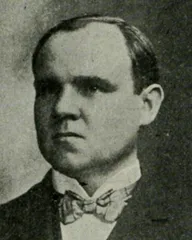
A CASE OF SPECIAL PROVIDENCE, CONNECTED WITH THE ERUPTION OF MOUNT TARAWERA, NEW ZEALAND, 1886. BY DR. JAMES E. TALMAGE. Editors Improvement Era:— With the consent of the writer, I send you herewith copy of a letter addressed to a member of Leland Stanford, Jr. University, by Bishop F. H. Wright of Coalville, Utah. Some time ago the Department of Education in the university named sent out circular letters asking for information regard- ing certain points of enquiry, with the purpose as declared of investigating "that phase of religious experience known in a general way as Special Providence." While the questions propounded by the investigators at Stanford University were fresh in my mind, I learned in the course of a conversation with Bishop Wright the principal incidents of that gentle- man's experience in New Zealand as related in the enclosed communication; and I took the liberty of requesting him to send a statement of the circumstances to Stanford University. The providential protection of our missionary brother and his associates in a time of such peril, and the full acknowl- edgment of the over-ruling power of God in the event, may be of interest to the elders now in the field of mission ser- vice, and to many others of your readers. The occasion to which reference is made in the Bishop's letter, received extended notice in the press of the time, and the occurrence is now treated as a historic event of importance in the geological writings of the present. The beauties of the
5G4 IMPROVEMENT ERA. New Zealand lake district within which Mount Tarawera is situated, have been described by many admiring and enthusi- astic visitors. Previous to 1886, the mountain had been long quiet, and was generally regarded as an extinct volcano. True there were geysers in the neighborhood, as also hot springs, some of which were large enough to be called lakes; and such occurrences known to the geologist as secondary volcanic phenomena, told of residual internal heat in the vicinity of the mountain. Between 1884 and 1886 there had been occasional manifestations of disturbed igneous energy; some of the hot springs showed a rise in temperature, and the water of Lake Rata Kakahi, usually cold, became hot. On June 10, 1886, after a few premonitory earth shocks, a powerful explosive eruption from Tarawera took place. A description published by Mr. Everett Hayden in Science, July 23, 1886, says: "A bright red glow became visible about the top of the mountain, and vivid flashes of light seemed to shoot up into the air. In an hour the flashes of light became what seemed a massive pillar of fire, rising, increasing and extending along the range. A dull rumbling accompanied it and become a terrific war, with continuous explosions, loud thunder and vivid lightning, till heaven and earth seemed to be torn asunder. The air was filled with sulphurous odors, 'falling stones, mud and lava. The village [Wairoa] was an- nihilated, more than a hundred natives perished, and the fer- tile plains were buried in mud and ashes." Later and more complete observation has demonstrated the probability of Mr. Hayden's error in including lava among the ejecta; but in other respects his description has been confirmed. The finely divided rock, commonly called volcanic ash, was thrown to a great height, and drifting with the wind fell as a layer several inches deep over a width of many miles, reaching the sea shore. According to a meas- urement made by an officer of the survey department of New Zealand, the result quoted by Professor Dana, the ashes were thrown to a height of 44,700 feet. So violent was the erup- tion that no cinder cones were found about any of the vents. A great chasm was opened near the summit of the range, fully 200 yards wide. The magnificent geyserite deposits,
A CASE OF SPECIAL PROVIDENCE. 565 known as the "Pink Terraces," and the "White Terraces" were entirely destroyed. These formations had been de- servedly famed; indeed, while they existed, the well-known traverture terraces at Mammoth Hot Springs in our own, Yellowstone Park held but second place among the hot water deposits of the world. Lake Rotamahana, situated between the Pink and the White Terraces named above, lost its water just before or during the eruption, and this circumstance, with others of the sort offers a key to an explanation of the prob- able cause of the outbreak. It has been suggested that the sudden formation of a subterranean fissure admitted water to an interior reservoir of lava. The destructive disturbance began and ended within six hours, but what a change was brought about during those hours of terror! Certain after effects have been recently noted. Mr. H. M. Cadell, through the transactions of the Edinburgh Geo- logical Society, 1897, describes some of these. The fine ashes which coated the region have become compacted through the action of rain, and now appear as a clay-like layer impervious to water. The surface is described as being water-tight "like the slated roof of a house," and the rain fall flows off in powerful torrents, excavating in their course, deep ravines and gorges in the sometime beautiful valley. Lake Rotom- ahana has been replaced by two lakes, which with a com- bined area of twenty-five acres after the eruption in 1886 had risen so as to cover 5,600 acres in 1893. The outburst at Tarawera will be remembered as one of the violent projectile eruptions of modern time. Respectfully yours, J. E. Talmage. BISHOP WRIGHT'S LETTER. Coalville, Utah, March 17, 1898. Mr. Newall Harris Bullock, Stanford University, California, Dear Sir:—Through the kind suggestion of Dr. J. E. Talmage of the University of Utah, I take pleasure in relat- ing to you what I term a miraculous occurrence within my
566 IMPROVEMENT ERA. personal experience, and which I acknowledge as an evidence of providential care. In the spring of 1885 I was chosen and set apart like a great many other young elders of the Church, of Jesus Christ of Latter-day Saints, to which I belong, to sacrifice for a time, home, friends, and family to devote my energies to the work of God, the purpose of which is to bene- fit the whole human family. The spirit of our church teaches that its members having freely received the word of God, ought freely to impart the same to others. It fell to my lot to labor among the natives of New Zealand, the Maoris, and with them I spent a little over three years of my life. I was assigned to the district of Tauranga or Rotorua, in the Bay of Plenty. No doubt you are acquainted with the accounts of the great eruption of Mount Tarawera, which borders on the shores of Rotomahana (the hot lake). This occurred on June 10, 1886. As I was there at the time I am familiar with all the circumstances. After having spent about ten months in that locality, and having become acquainted with the natives and their peculiar 'anguage, my missionary companion and I were desirous of visiting the Pink and White Terraces, which nature has formed near the Rotomahana. Many tourists from all parts of the world used to visit the place on account of the beauti- ful scenery, and to enjoy the healing virtues of the water, which is good for rheumatism, etc. At a village called Wairoa, located on the shores of a beautiful lake, I have often received the kind hospitality of the natives, extended in] their rude but hearty way. A government school is estab- lished there for the education of the native children, and. there are two large tourist hotels kept by Europeans. Wairoa is the terminus of the stage line, and from this point thet tourists are conveyed in canoes across the lake, a distance ofj nine or ten miles, to the Terraces. The boat journey is made in care of the native guides, and the* cost to each person is! about 25 shillings. We had received a promise from thej natives that they would take us across the lake when we de-j sired to go. About 150 natives lived on the other side of thel lake and these we wanted to visit for the purpose of preach-i ing to them. About the 5th day of June, 1886, we again)
A CASE OF SPECIAL PROVIDENCE. 567 trisited the natives of Wairoa fully intending to cross the lake, spend a few weeks with the natives in the hope of mak- ing some converts among them, and take in the beautiful Terraces which we had longed to see. But to our great sur- prise, when we arrived at Wairoa, we found a feeling mani- fested among the people toward us different from any we had ever experienced before. At this particular time there hap- pened to be a Tangi or feast going on, the occasion being the death of one of their number, and many visitors were present. Among that people one notices that the more of them there are together, the more hospitable they are, and the better are the opportunities for preaching; this I knew from having witnessed a number of Tangis previous to this one. We were therefore very much surprised at the strange reception which they gave us on this occasion. It was only through the influence of a few members of our own church, who were among the visitors at the feast, that we were granted the privilege of staying over night. We had no opportunity to preach, nor were we allowed to conduct their morning and evening prayer services, as we had done on other occasions. I am thoroughly convinced that it was a special interference of providence that aroused that feeling among those natives which caused us to be directed away out of danger. On the following morning we concluded that we could not succeed in completing our anticipated trip, so we journeyed back, stopping over night at two places, and finally reaching Tepuke, our headquarters, 25 miles away from the place of the feast. We arrived there on the evening of the 9th of June, and during the night the great catastrophe occurred, about 109 natives and 14 Europeans losing their lives. Sand and mud from the eruption covered the country 6 to 7 inches deep where we were. Complete darkness reigned until n a. m. the next day and a dismal twilight the balance of the day. Twenty-seven heavy shocks of earthquake were felt during twelve or fourteen hours from the time it commenced. Shocks were felt almost daily for a number of weeks follow- ing. One result of this was that the cattle, sheep, and horses had to be driven out of that part of the country so that they could obtain food. A few days after the eruption
508 1MPROVEMENT ERA . we again journeyed back to the lake country on our way to the interior of the island. We visited Wairoa, finding the Maori village, hotels, and school house badly demolished. The Echool teacher was one of the number killed. The erupted material at Wairoa was ten feet deep. Large trees had been knocked or blown down and the roads through the bush or timbers were obstructed and travel was very difficult. An estimate of the dirt and rock thrown from Mount Tarawera Was made as one square half mile covered to the depth stated. I left home to perform my mission with a blessing pro- nounced upon me by a servant of God that if I would go and perform an honorable mission to the best of my ability, I should be aided by the spirit and power of God and that I would return home in safety. I am here a living witness; and do testify to you and to the world that these facts did occur, and that I was guided by the kind hand of providence to escape that dreadful calamity. The influences that determined my attitude towards Special Providences:—In my boyhood days I always enjoyed the pleasures of life in an innocent way, yet at the same time I had a natural inclination toward a reverence for an Al- mighty Being. I was free to choose my own course to wor- ship, and through reflection and comparison, and by obeying the simple commands of God, and by living in accordance with the same, my faith in God increased. I appreciate and acknowledge the circumstance I have related in connection with others as Special Providences. My age is 46 years. I am a native of England, and a member of the Church of Jesus Christ of Latter-day Saints. Very Respectfully, F. H. Wright.
YOUNG CHARACTERS IN HISTORY. BY PROFESSOR WILLARD DONE, PRESIDENT OF THE LATTER-DAY SAINTS' COLLEGE, SALT LAKE CITY. VII. FREDERICK THE GREAT. If in general, youth is an index to the book of manhood, a striking exception must be made in the case of the subject of this sketch. In its most essential features, his life in its maturity seemed a contradiction, rather than a fulfillment, of the promises of youth. Weaknesses of early youth were superseded by sturdy, unexpected strength; amiable quali- ties, by gruff, surly eccentricities; financial freedom by close, calculating economy; love of finery and foppery, by a deep hatred of shams. How much of this metamorphosis was due to the nature of the individual, and how much to his educa- tion, can best be judged after the history of his youth has been studied. Karl Frederick was the son of King Frederick William, of Prussia, and was born in 1712. At the time of his birth Prussia was emerging from a condition of obscurity into a state of active interest in the political affairs of Europe. This was due to the governmental skill and untiring zeal of King Frederick William, whose rigid discipline and other eccen- tricities have rendered him famous under the title "The Great drill Sergeant." This tendency toward thorough drill was not confined to the army he commanded, but extended to his entire realm, being especially concentrated in his own family. The one who felt its severity most, was Frederick, the heir
570 IMPROVEMENT ERA. apparent. The king seems to have intended the boy to be a copy of himself, in order that the son might be depended upon to fill the kingly position as the father had done. In order to do this, it was necessary that a great change be wrought in the nature of the boy. During his childhood he was noted as a vivacious, affectionate, lovable boy, yield- ing willingly to the teachings and persuasions of those he loved and taking kindly to studious lines. The refined French element was introduced into his study by one of his tutors, the rougher, more rugged German element by another. To the first he seems to have taken much the more kindly. So marked was this preference that the king early became alarmed at the habits the boy was forming. With some of his young companions, boys of equally fine temper as him- self, the prince yielded to the allurements of gentle learning, and allowed these tastes full sway. Flute playing was one of his favorite pastimes, indulged, indeed, during the absence of his father, lest the offending instrument should be confis- cated. Strange as the fact may seem to those who have struggled through the meshec of Latin grammar, the study of that language was one of his forbidden pleasures, rendered sweet by secrecy. Added to these was an excessive foppery in dress, copied from the French (then the teachers of Europe) and displayed to the almost frantic disgust of his father. It would be amusing, were we not considering the de- velopment of a human soul, to read of the half-ferocious, half-comical attempts made by the king to check these youth- ful tendencies, and turn the young mind into sterner chan- nels. The great king storming around the palace at the sight of an innocent volume of French poetry, giving way to paroxysms of anger over a lace-trimmed coat of velvet, or raising a whirlwind of rage at a copy of Vergil, was calculated to overturn the dignity of any court. Add to this the frantic efforts of Frederick's mother and his sister Wilhelmina to shield their youthful idol from parental wrath, and a "tragi- cal-comical-historical scene" is presented which would satisfy the critical soul of a Polonius. Yet this play was acted out several times a year at Potsdam, the players being the sole
YOUNG CHARACTERS IN HISTORY. 571 spectators. Worst of all, the boy took to writing poetry. I am not sure but the phrase "worst of all" may be applied to the poetry itself. Some of his prose reached the height of mediocrity;—his poetry was always far below that point. It is no wonder that, possessed of traits so objectionable in the heir apparent, Frederick should have fallen into dis- favor with his father, nor that it required all the tact and in- fluence of his mother to protect him from early disgrace and even violence. True, in some particulars the boy fulfilled his father's hopes. Notwithstanding the empty, barren drill, in both secular and religious matters, provided by the schools of that day, Frederick, through his wonderful assimilative power, was able to gain great good from his youthful training. Especially was this the case in his study of history. In ad- dition to the romantic element of his nature already out- lined, he developed a liking for stern, stubborn facts He delved into history, making a special study of his own and sur- rounding countries, which proved of incalculable value to him in the days of his absolute power. Not an important point was lost with reference to the political relationships of Euro- pean countries. Like the skillful ruler he afterward proved himself, he laid his plans for future action, basing them on the principle of the aggrandizement of Prussia, at the ex- pense of all Europe, if need be. Like his father, he was a perfect Gradgrind for facts, especially useful ones. But his romantic temperament prevented him from despising such fiction as suited his fancy, and especially such as helped him to assimilate the truths he expected to use subsequently. The king had no use for untried theories, and tried and proved theories are always facts. To these he turned im- mediately, choosing and rejecting with admirable skill. In this direction his son was trained. Strict economy and prac- tical authority in governmental affairs marked the reign of this eccentric king. He would brook no extravagance, no fancies, no useless, doubtful experiments. In him the affairs of state were reduced to a mathematical precision which al- lowed of no element of doubt. Thus the son was trained. It is to be expected that the youthful mind would rebel against such strong, solid food; and herein commenced the early
572 IMPROVEMENT ERA. troubles of the prince. He formed in youth a strong attach- ment for the writings of the Frenchman Voltaire. The fanci- ful theories and brilliant imagination of that writer were wonderfully fascinating for the boy, and threatened the de- struction of the facts already assimilated. This strong ten- dency on the party of Frederick still farther aroused the ire of his father, and rendered more necessary the protection of his mother. Partly to remove him from these dangerous influences, and partly for politic reasons, the king took Frederick with him on a visit to the king of Poland, Augustus the Strong. This man was as strong in passion as in body. Giving way to all forms of licentiousness himself, he thought it a light matter to introduce the sternly moral king and the impulsive prince of sixteen years, into the amorous intrigues of his court. From these temptations the king of Prussia turned away in indignant disgust. Not so with the prince. Dazzled by intoxicating beauty and unaccustomed luxury, the boy "ran riot in forbidden fields." This unfortunate fact was as effectual as anything else could have been, in increasing the estrangement between father and son. In view of these ex- cesses, it is not to be wondered at that some of his exper- ienced acquaintances should have foretold that the boy would always remain a slave to his passions—a prediction that flew as wide of the mark as any prediction could. But the un- fortunate estrangement was real, and the weed distrust was rapidly choking out the flowers of love in the king's heart. It was on a subsequent journey with his father that an event occurred which almost made the chasm between them impassable, and all but cost the prince his life. The stern drill and freedom-killing discipline of Frederick William had become unbearable to the boy, now eighteen years old. Aided by some of his young friends, he determined to run away and take refuge at his uncle's court in England. Dur- ing a diplomatic journey he laid his plans, day after day, but they came to successive failure. At length everything aug- ured success. Horses were harnessed to the coach. Fred- erick had entered it, and his friend was about to drive the equipage away when prince and abettors were arrested by
YOUNG CHARACTERS IN HISTORY. 573 the king's vigilant officers. Pity the poor boy now! If his previous acts had savored of disobedience to his father, this one partook of the nature of desertion from the post of duty — treason to the state. And as treason the king must treat it. No matter how heart-strings might be torn, his own among them, the father was now only the king, the son only his subject, and a disloyal one. As such he should be pun- ished. He was at once placed under arrest, and the home- ward journey was completed. Space will not permit a full treatment of the other scenes in this act of the serio-comedy. The anguish of the mother; the uncontrollable grief of the sister; her punishment by im- prisonment for daring to pity a felon under sentence of death; the conflict of the king with the father; and the grief and gloomy forebodings of the prince, as from his grated window, he saw his dear friend, who had aided him in his plans, dragged off to execution; all these are beyond my power. The boy's life was in the balance. Had not the crowns of Sweden and Poland been thrown into the pan with it, the wrath and the sense of justice of the king would have out- weighed it. Yet the execution of the prince was averted by so narrow a margin that it makes one dizzy to think how nearly he approached the abyss. But, fortunately for his father as for him, he escaped it, through the intervention of the kings named above. His discipline was now more severe than ever. Every movement was watched, and, in order that other ties might be formed, a wife was chosen for him. Love cut no figure in the matter. What has a loyal prince to do with love? At the age of twenty-one, a very respectable, rather unattractive girl was given to him. She was thenceforth known as his wife; recognized but not treated as such. For her company he cared nothing. The domesticity of his life was in an- other direction, —he was now able, being of age and mar- ried, to follow his natural bent, toward study and kindred enjoyment. In that particular and to that extent, wedlock made him happy. The few years that elapsed before his elevation to the throne, spent in his favorite studies and in correspondence with Voltaire, were the happiest of his life.
574 IMPKOVEMENT ERA. Thus was the youth of Frederick the Great, passed amid close restraints, severe discipline, and clandestine pleasures.1 It now remains to be seen in what particulars his manhood and his kingship fulfilled, in what they exceeded, the promiJ ses of youth. Before proceeding to this account, let us take another brief glance at the father, in order to know what kind of king Frederick must succeed. An incident which occurred just before Frederick's at- tempted flight, well illustrates one phase of the king's charac- ter. While heartily afraid that the prince will flee, his father taunts him for enduring such tyranny as he was subjected to. These are his words: "Can you not renounce the heir-ap- parentship? Your little brother is a fine youth. Give it up, and go unmolested to the !" The prince's answer is worthy of a prince: "If your majesty, against the honor of my mother, declare that I am not your eldest son, yes; not otherwise!" It seems eccentric, if not actually unkind, for a father to address his son in such terms. Another idiosyn- crasy of the king was his intense desire to secure for his guard as many tall men as possible. These he would get at any expense or by any means. It is stated that the zeal of one of his recruiting officers led him to order a tall carpen- ter to make a box of a certain length (his own) and then get in it to prove that it was of the right dimensions. The lid was at once clapped on, and the poor carpenter was carried off to be a "long soldier" for the king. He was smothered to death on the way; the recruiting officer was imprisoned for life. It is fair to suppose that the other peculiarities of the king have been fairly detailed in the history of the youth of the prince. This was the man who had occupied the king- dom and made it what it was; this the sort of place our prince must fill. When Frederick came to the throne, the kingdom of Prussia was in need of a man of even greater strength and ability than the former king. We have seen that Frederick's youth gave little promise of these qualities. The rising power of Prussia must either be hastened or completely checked. Which of these fates should attend it would de- pend entirely on the king. Frederick did not hesitate to
YOUNG CHARACTERS IN HISTORY. 575- seize the uncertain sceptre; in his hands it was no longer un- certain. The day he mounted the throne, the destiny of Prussia was fixed. She must develop from an obscure,, poverty-stricken province of two million people into a nation of eight millions, with wealth and influence sufficient to lift her into the active affairs of Europe and make her the nucleus of united Germany. For this work no fitter instrument than Frederick could have been found. He had thoroughly learned his father's lessons. Self-centered, frugal, severe, absolute in his rule, interested in his own realm alone, wasting no time himself, and desiring that his people should waste none, he stalks through Prussian history, a veritable eighteenth century Bismarck. Distasteful as military drill had been to the boy, the king recognized its cultivation as his only safe-guard. Therefore, he organized one of the finest armies and became one of the greatest generals in Europe. Nor did he allow this military power to be wasted. His forces were seldom idle. While we cannot concede the justness of all his wars, there is no denying their fortunate outcome. No matter what motive prompted him to commence hostilities, their close was always marked by some material advantage to Prussia. Whether fighting with Maria Theresa to gain possession of Silesia; or with half of Europe to retain it; or joining with Austria and Russia to dismember helpless Poland; he always saw that his own Prussia came out of the contest enlarged and enriched. His frugality was as marked as his father's. He allowed himself none of the refined luxuries which his youth promised. No magnificent receptions, no expensive dress, no kitchen or drawing-room extravagance—everything on the basis of strictest thrift. Bachelors declare that he was able to be economical because but few women frequented his court, and he gave only a limited allowance to his wife. He died the happy possessor of one suit of clothes, and was buried in a shirt belonging to a servant. The prediction that he would be the slave of his passions has been referred to. He found himself so beset with difficulties, and necessarily so devoted to the affairs of his realm, that no undue consideration could
576 IMPROVEMENT ERA. be given to any personal luxuries. He seemed to be as ab- solute a ruler over his desires as over his kingdom. This latter absolutism was subject to some modification. He was peculiarly democratic, and frequently walked through the streets, directing the thought and habits of his people into useful, industrious channels. At the same time, by al- lowing free speech and a free press, he made his subjects be- lieve that they were entirely free. "My people and I," said he, "understand each other. They are to say what they like and I am to do what I like." While in many respects un- just in international matters, he had a strong feeling of justice toward his own people. The famous windmill story illus- trates this. A windmill stood at Potsdam on some ground which he desired to use as a park. The miller refused to sell. "Not at my price?" said the king's agent. "Could not the king take it from you for nothing if he chose?" "Have we not the court of appeal at Berlin?" said the miller, a re- ply apparently treasonable in its nature, yet so pleasing to Frederick that he allowed the windmill to stand. Another incident illustrating his occasional indulgence of the people is related. A crowd of men surrounding a place, attracted his attention. "See what it is," he said to his groom. It was found to be a caricature of the king, dressed most shabbily and with a coffee mill between his knees, diligently grinding with one hand and carefully pick- ing up all stray kernels with the other. This illustration of his proverbial stinginess, instead of incensing the king ap- pealed to his grim sense of humor, "Hang it lower that they may not have to hurt their necks about it, "he said as he rode slowly away. The crowd tore the cartoon to pieces and followed the king with the cry "Our Frederick forever!" One of the traits of his youth which occasionally cropped out in manhood was his passion for writing alleged poetry. He turned to this for solace in his difficulties. Says Macau- lay, "We hardly know any instance of the strength and weak- ness of human nature so striking and so grotesque as the character of this haughty, vigilant, resolute blue-stocking, bearing up against a world in arms, with an ounce of poison in one pocket, and a quire of bad verses in the other. " In flute-
YOUNG CHARACTERS IN HISTORY. 577 playing he was more skillful, and that pastime formed the chief solace of his mature years. But the "weighty business of life," was to him so serious and important that he gave himself up to it entirely; and in misanthrope, slovenliness, taciturnity, despotism, atheism, selfishness, and unscrupu- lousness, he forced his way through to his one purpose, the aggrandizement of Prussia. What a contrast to the foppish, frivolous, sentimental youth we first knew! Yet he could recognize talents in men and justice in causes, if they were remote from his own interests. He sent to George Washington a sword inscribed, "The oldest gen- eral in the world to the bravest;" and just before his death, he made a treaty with our new republic. Religious freedom was allowed in his realm, because it did no harm, and he had no religious faith. There is no denying his genius. He did for Prussia what few other men have done for their native land. Yet his pol- icy was essentially selfish, while "his infidelity, his hatred of woman, his disregard of the feelings and lives of others, and his share in the spoliation of Poland, form the dark side of this brilliant character, and leave us no chance to love, how- ever highly we may admire." -44